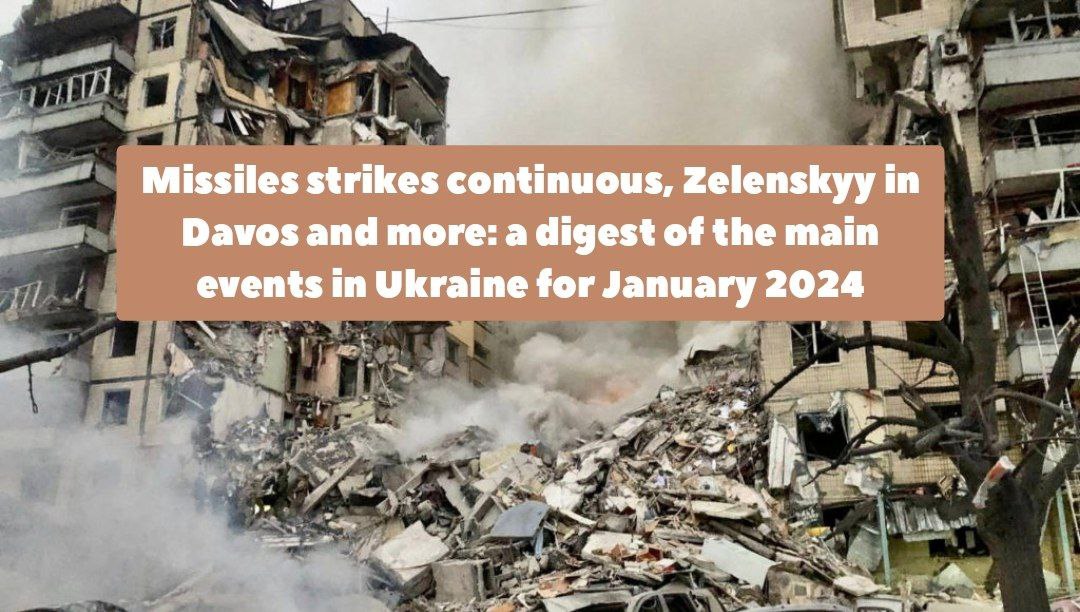


During January 2024, several important events took place in Ukraine. At the beginning of the month, it was possible to return home the largest number of prisoners of war since the beginning of the full-scale invasion. Volodymyr Zelenskyy and his government managed to make several political moves and, in particular, temporarily resolve the conflict between carriers on the border with Poland and Romania. A new ally of Russia emerged from the shadows, which sees its interests in the war in Ukraine. You can read more about all this in the monthly digest by The Ukrainian Review.
More than 70 dead in January: Russia continues to kill Ukrainians
During January 2024, Russia carried out missile strikes on Ukraine. Cities such as Kyiv, Kharkiv, and Donetsk were the most affected.
- On January 2, Russia carried out a mass attack on the territory of Kyiv and Kharkiv – 6 people died, and another 115 were injured.
- On January 4, Kropyvnytskyi was attacked – 1 dead, 8 injured;
- On January 6, the occupier struck the Pokrovsky district of Donetsk region – 11 people died.
- On January 8, Kharkiv, Zaporizhzhia, Kryvyi Rih, and Khmelnytskyi regions were hit by Russian missiles. The total number of dead – 4 people, and another 45 were injured.
- On January 13, a rocket attack injured 1 woman in Shostka.
- On January 21, the Russians attacked the local market in the Kirovsky district of Donetsk. This was the largest terrorist act since the beginning of the occupation – 27 people were killed and 25 were injured.
- On January 23, the Russians shelled Kyiv, Kharkiv, and Pavlograd. 24 people died, and another 110 were injured.
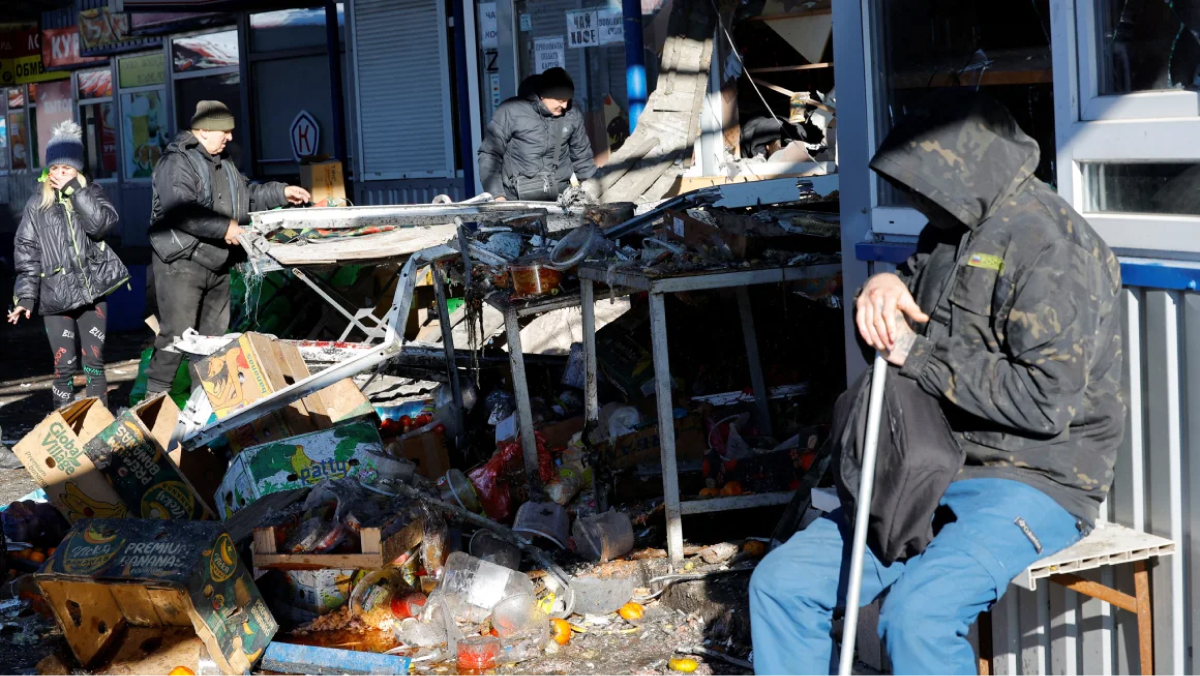
At the time of writing (January 26, 2024), 74 people have been killed and 303 injured as a result of Russian attacks in January. The Ukrainian Review collected this data to remind the international community that the war continues, and innocent people are still dying. At the same time, the highest institutions hesitate in making important decisions for us.
The largest exchange of prisoners
On January 3, 230 soldiers returned to Ukraine as part of the 49th exchange of prisoners of war with Russia. Among them: were 130 military personnel, 55 National Guardsmen, 38 border guards, one from the National Police, and six civilians. 48 of exchanged persons had the status of “disappeared”.
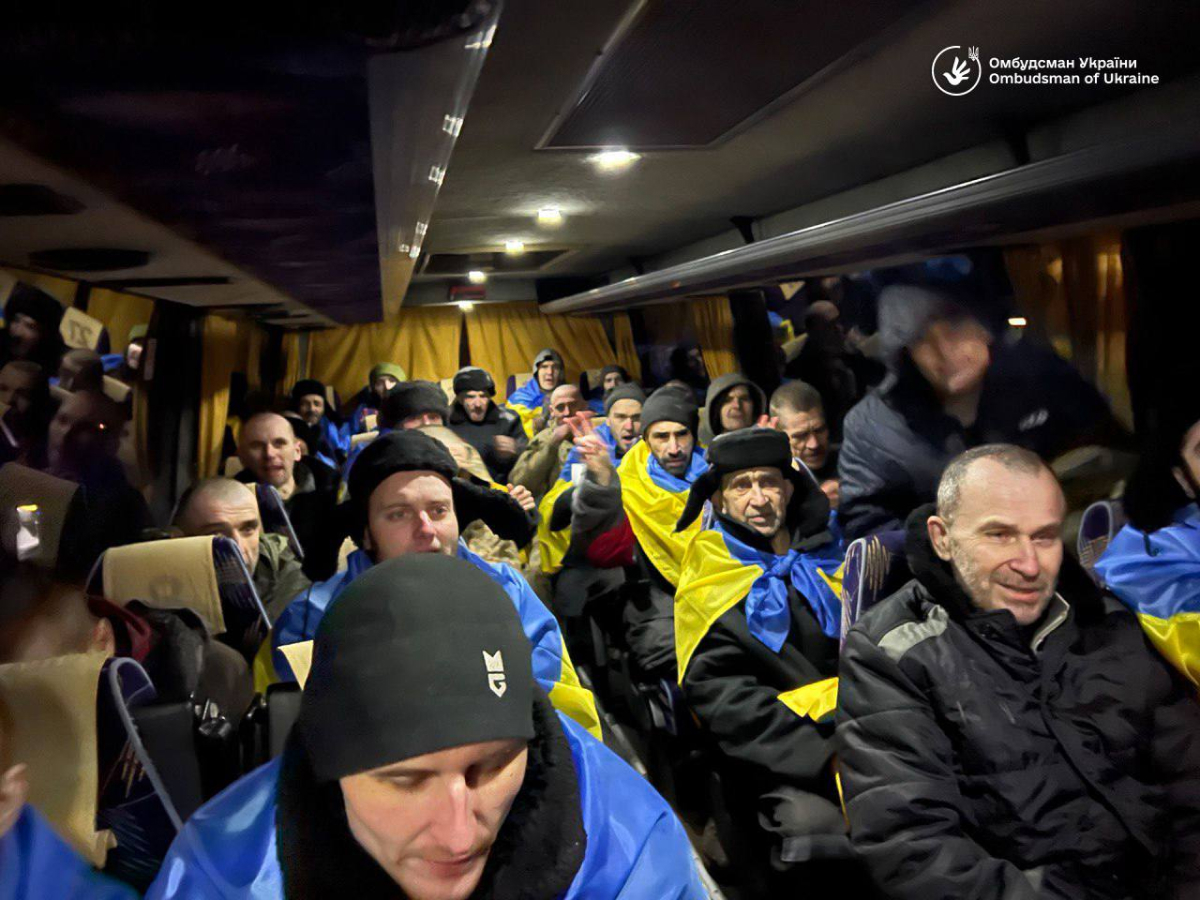
“These are defenders of the city of Mariupol, Snake Island… Some defenders were at the Azovstal plant. These are the soldiers of the Armed Forces of the Ukrainian Armed Forces, the DPSU, the National Guard, and the Territorial Defense…”, – said Ombudsman Dmytro Lubinets.
This is the first exchange after a long hiatus since August 7, 2023. In total, since the start of the full-scale invasion on February 24, 2022, Ukraine managed to return 2,828 defenders through joint efforts.
Investigation into cooperation between the DPRK and Russia
At the beginning of January 2024 reports began to appear in the world media that Russia had started receiving ballistic missiles from the DPRK and was negotiating with Iran on the purchase of such weapons. Allegedly, in the last few weeks of December, Russia received several dozen missiles and launchers from North Korea and has already started launching ballistic missiles over Ukraine. This happened during the mass terrorist attacks in late December and early January.
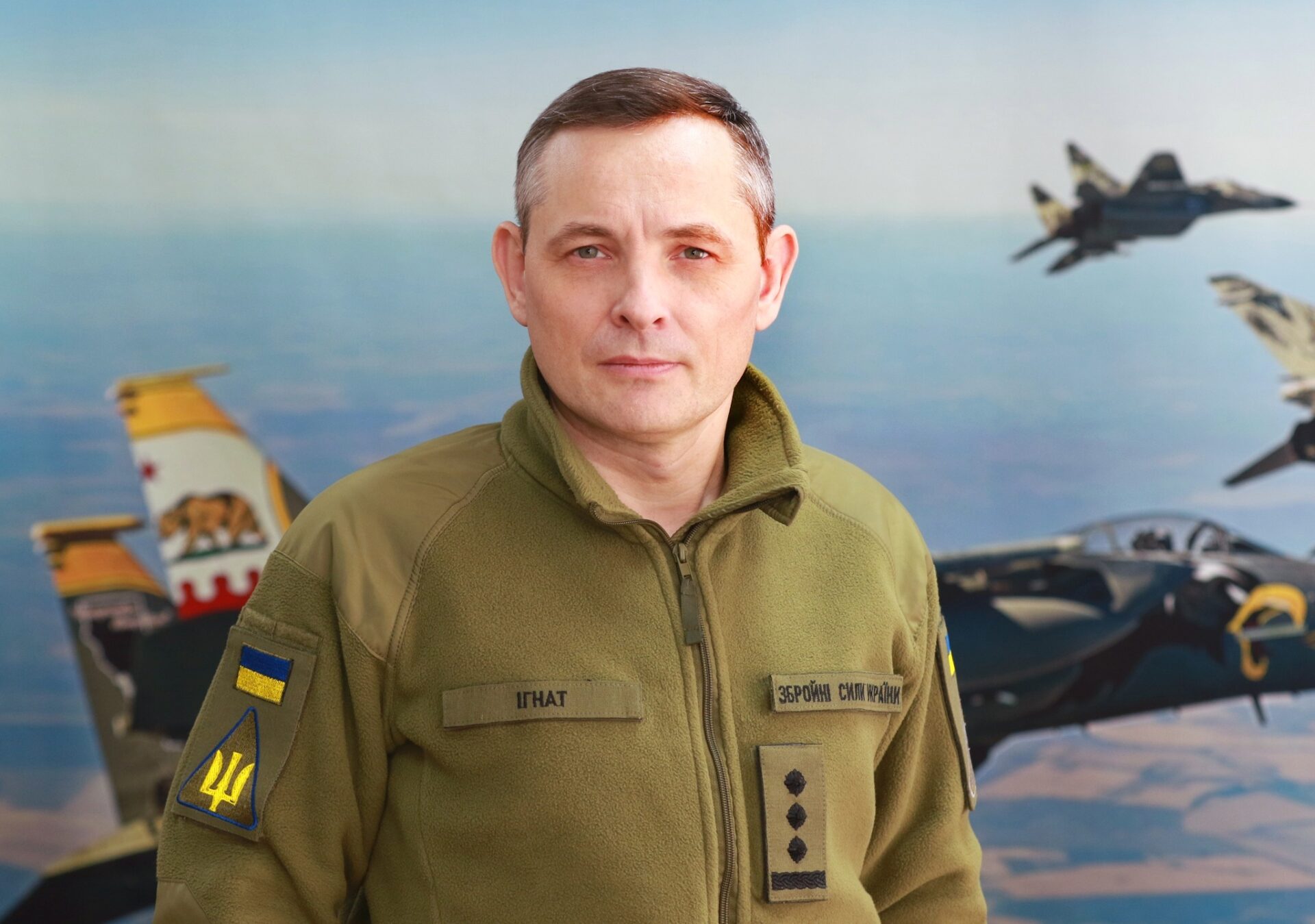
However, the Air Force of Ukraine did not confirm this information, spokesman Yuriy Ignat said that specialists will study the situation.
“I think that the weapons they have are taken from the DPRK, there is a lot of Soviet stuff, a lot of technology was transferred to the USSR. Maybe even identical. Therefore, it is hardly worth expecting something newer. From the same “Iskander”, maybe it differs somewhat, but not too much”, – Ignat answered the question about the danger of such weapons.
Subsequently, Kyrylo Budanov stated that the DPRK is the largest supplier of weapons to Russia. North Korea handed over a significant amount of artillery ammunition, which allowed the occupiers to breathe a little.
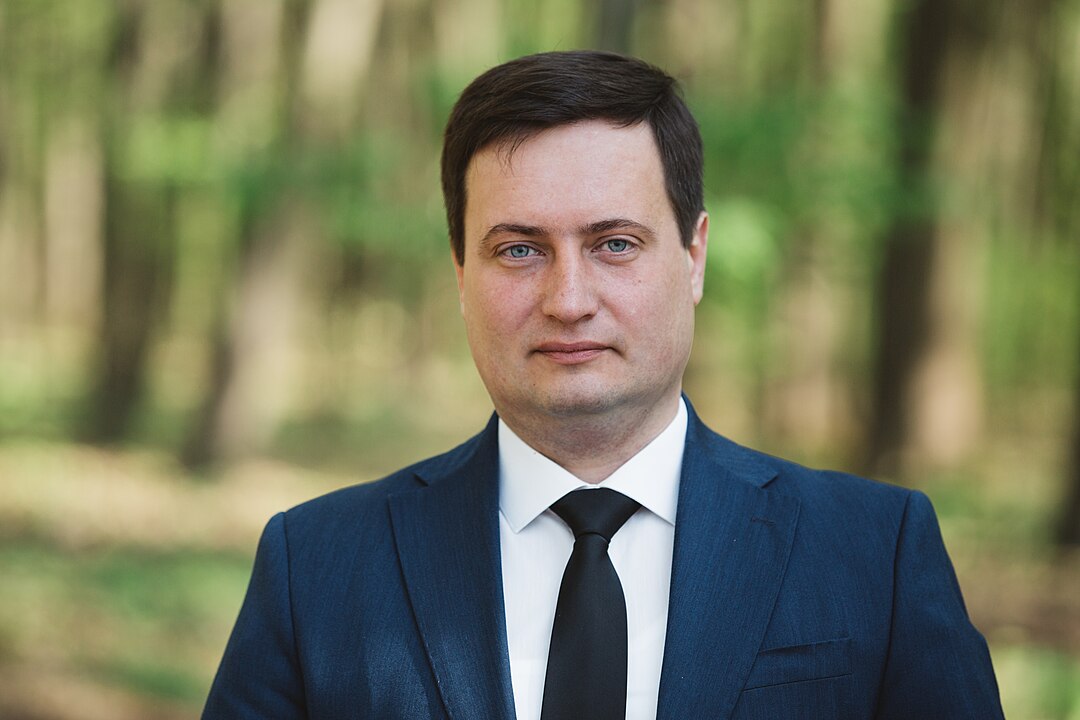
Andriy Yusov, a representative of the Main Intelligence Directorate of the Ministry of Defense of Ukraine, said that the Main Intelligence Directorate of the Ministry of Defense of Ukraine is verifying information about North Korea’s supply of ballistic missiles to Russia and their use for attacks on Ukrainian cities.
«Defense cooperation took place and continues. It mainly concerned artillery stocks and ammunition and other elements related to artillery and armored vehicles. In terms of ballistics, these are desirable requests for Russia to North Korea and Iran. Yes, this information was there. Regarding the receipt and use of these funds, the information is being checked» — said Yusov.
At the moment, only the Prosecutor General of Ukraine Andriy Kostin has confirmed that Russia is already using missiles from North Korea in the war against Ukraine. He explained that to confirm the data on the origin of the weapons used to attack Ukraine, joint systematic work of prosecutors, investigators, and experts is needed.
«Regarding North Korea, the other day we received the first evidence of the Russian army’s use of missiles manufactured in this country. The results of the preliminary scientific and technical examination confirm that the Kharkiv missile launched on January 2, 2024, over the central part is a short-range missile developed by North Korea,» — emphasized Kostin.
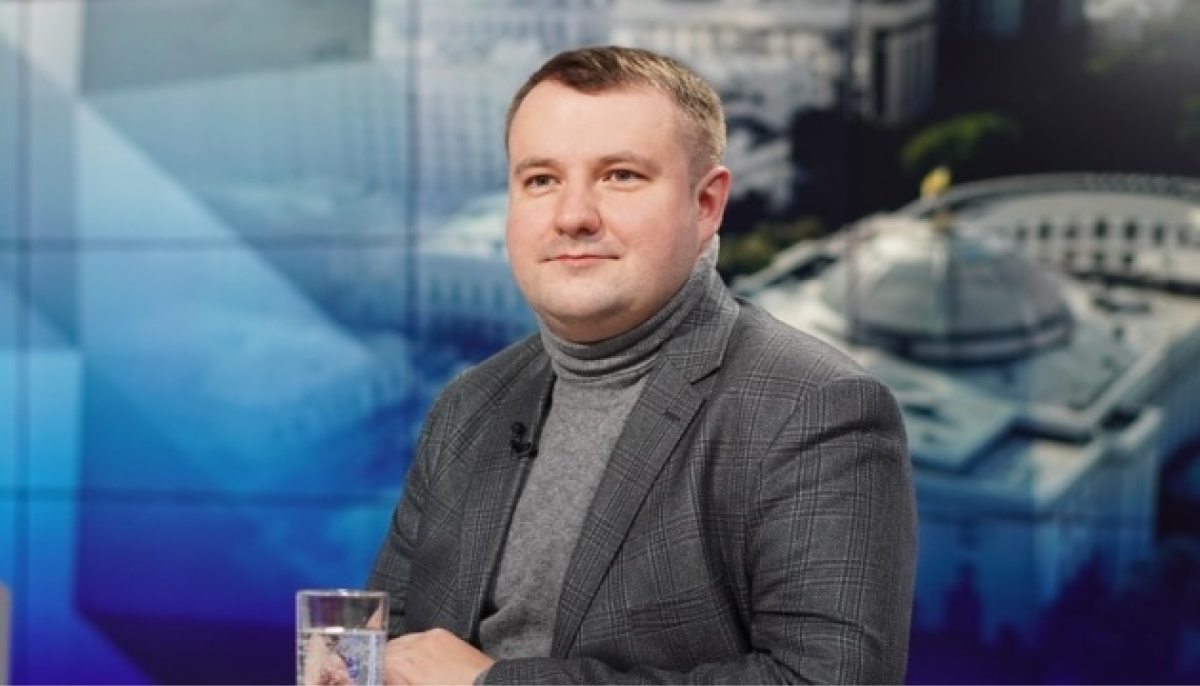
Regarding the production of weapons based on North Korean factories for Russia, Petro Oleschuk said for “The Ukrainian Review”, that the eastern country is not afraid of the consequences of such cooperation.
«They will not be particularly concerned about this — they are quite isolated. Their key partner is China, which will not impose any sanctions on them, and as long as they maintain relations with China, I think that they will not see any special obstacles for themselves. Their only limitation is relations with South Korea and the need to maintain this balance» — he said.
We also asked the political scientist what benefits North Korea pursues in such cooperation with Russia. He said:
«The most pragmatic goal is to receive some benefits. And benefits are not necessarily money. It can be technology or equipment. For example, they may be interested in Russian aviation or missile technologies and, ultimately, technologies related to the production of nuclear weapons. Here they will get something from Russia. In addition, for them, it is a breakthrough of the corresponding diplomatic isolation because they have been under UN sanctions for about 20 years. By the way, they were implemented with the participation of Russia as a member of the UN Security Council. So now this member of the UN Security Council is reestablishing relations with them and, despite all these sanctions, trades with them, buys weapons, sells something. That is, for them, this is a corresponding change in status».
He added that they might also be interested in testing their missiles in practice. This, by the way, is the position expressed at the UN by the representative of South Korea, who stated that North Korea is thus testing its missiles, which can be used in the future, including for launching nuclear strikes — at least theoretically. That is, for them, it is a kind of test, also at the expense of Russia.
The conflict on the border with Poland and Romania has temporarily paused
Also, in January, the situation with Polish carriers on the border with Ukraine reached its final stage. First, on January 6, Polish protesters suspended the protest action at the “Medyka-Sheghini” point. This was the result of the signing of an agreement between them and the Minister of Agriculture of Poland.
The agreement states that the minister accepts all three demands of farmers: the introduction of a subsidy for corn, an increase in liquidity lending, and the maintenance of the amount of the agricultural tax at the level of 2023.
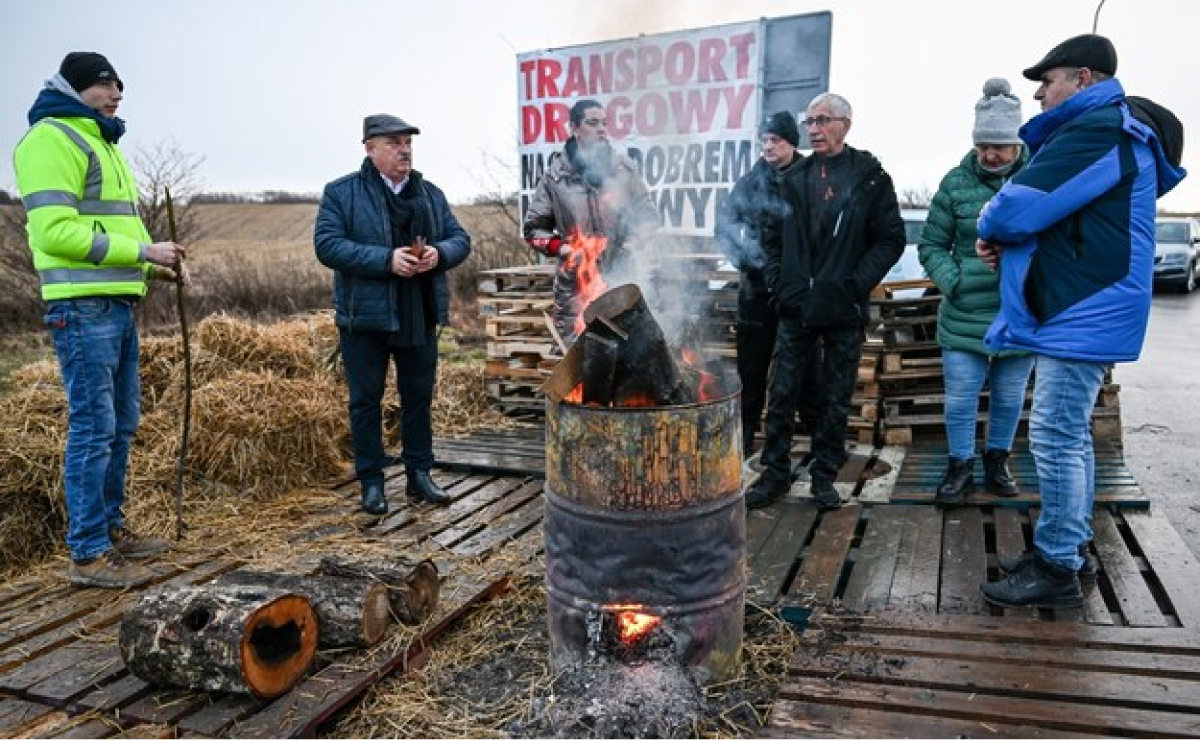
Already on January 16, the Polish government reached an agreement with carriers at the border on the suspension of strikes from January 17, 1:00 p.m. Kyiv time.
Instead, on January 14, in Romania, farmers again blocked the movement of trucks through the Siret checkpoint. However, already on January 16, the country’s authorities reached a compromise with the protesters at their border, who promised to suspend the strike.
On the same day, the blockade of the Ukrainian border on the Polish side was completely lifted. The last crossing point “Yagodin-Dorogusk” was unlocked. And already on January 20, the movement of trucks at the Porubne checkpoint (on the border with Romania) was also completely unblocked.
Prime Minister of Ukraine Denys Shmyhal announced on January 22, 2024 that he discussed with his Polish colleague Tusk the creation of four more checkpoints on the Polish-Ukrainian border. Politicians also want to implement joint border control, exchange of databases, and continue modernization of checkpoints.
We asked Yaroslaw Bozhko, Head of the Center for Political Studies “Doctrine”, and coordinator of the Taras Shevchenko KNU Political Club, whether this agreement is the final line in the conflict with the carriers. He replied that it was not quite so.
“In my opinion, this was a temporary measure, because we will be able to talk about the end of the conflict when new Ukrainian-Polish rules will be adopted according to which agricultural products are imported into Poland. The main thing is that these rules protect Polish interests and be realistic for Ukraine so that we can export something. Until they are adopted, it is clear that the Polish agricultural sector will consider any stoppage of these protests as a temporary phenomenon,” – he said.
Volodymyr Zelenskyy’s political visits
During January, 2024, the President of Ukraine Volodymyr Zelenskyy visited several countries for political purposes. In particular, he visited three Baltic States and Switzerland.
On January 10, the President of Ukraine arrived in Lithuania, where he held a meeting with President Gitanas Nauseda. Zelenskyy also met with the Speaker of the Seimas of Lithuania Viktoria Chmilitie-Nielsen and the Prime Minister of Lithuania Ingrida Šimonite.
However, the very next day he visited Latvia, where he met with the president of the republic, Edgars Rinkevičs, together with the Prime Minister of Estonia, Kaya Kallas.
Politicians discussed defense cooperation, joint infrastructure projects, and joining NATO.
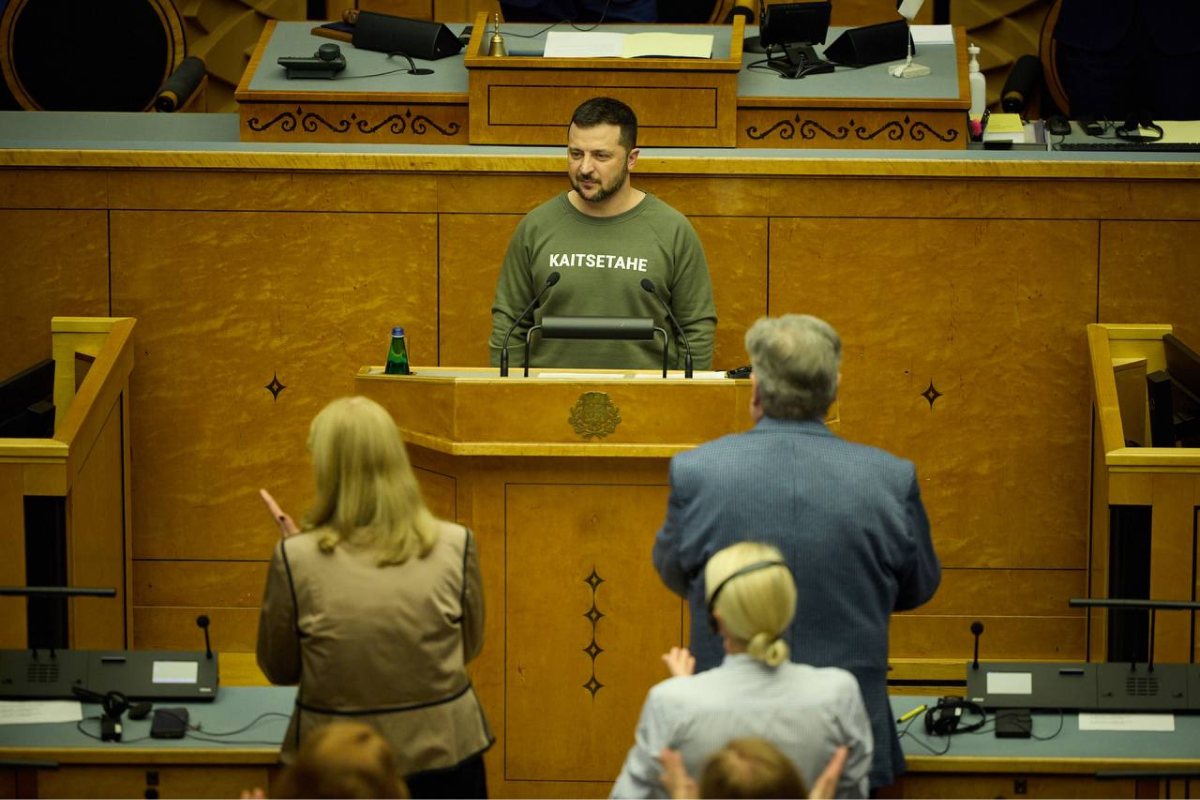
On January 15, Zelenskyy arrived in Switzerland to participate in the Davos Forum. On this day, he managed to meet with the Chairman of the National Council of the Swiss Federal Assembly, the Chairman of the Council of Cantons, and the heads of parties and factions of the Swiss Federal Assembly.
“I will meet with the country’s leaders and take part in the Davos Forum. In Bern, I will hold negotiations with the heads of both houses of parliament, heads of parties and factions, Mrs. President Viola Amherd… In Davos, I will hold important bilateral meetings with representatives of the EU and NATO to support the dynamics of our Euro-Atlantic integration, as well as with the leaders of states and big businesses to strengthen the defense and economic stability of Ukraine”, – Volodymyr Zelenskyy.
The next day, he met with the President of the European Commission, Ursula von der Leyen. They discussed the key priorities of relations between Ukraine and the EU for the near future. They agreed on the start of the screening of Ukrainian legislation.
On the same day, the first meeting with the President of Rwanda, Paul Kagame, took place. The leaders discussed the implementation of the Peace Formula. The voice of African countries is important in this matter.
Zelenskyy also had time to talk with:
- King of Belgium Philip I and the Prime Minister of Belgium Alexander De Croo;
- Prime Minister of Vietnam Pham Minh Chin;
- President of Ghana, Nana Akufo-Addo;
- President of Poland, Andrzej Duda.
Yaroslaw Bozhko explained to The Ukrainian Review what significance these political visits have for Ukraine:
“Our work at the international level is based on certain current trends. We cooperate with the Baltic countries to promote our political line within the EU and NATO. That is, these countries act as an outpost of our interests. Those inside Western countries can present them most realistically and profitably. Here, we often talk with the Baltic States about the most important things – providing us with weapons, speeding up integration into the EU, training our military, etc. Therefore, the visits to the Baltics are not for decisions, but to present us better,” – he said.
He added that it is very relevant now because Russia poses an increasing threat to the Baltic States. It is actively strengthening the Leningrad Military District, transferring tactical nuclear weapons to Belarus, and making many political statements and preparations, which may indirectly testify to its preparations for an invasion of the Baltic States. Even the risk itself already significantly changes the situation. We see how Russia is deliberately engaging in various types of hybrid operations in the Baltic region and increasing the participation of Belarus in its aggressive actions. This determines the interest of the Baltic countries in cooperation with Ukraine because we understand what Russia is and how it works.
A large tranche from Great Britain
Prime Minister of Great Britain Rishi Sunak during his visit to Kyiv announced a large package of military aid for Ukraine worth £2.5 billion.
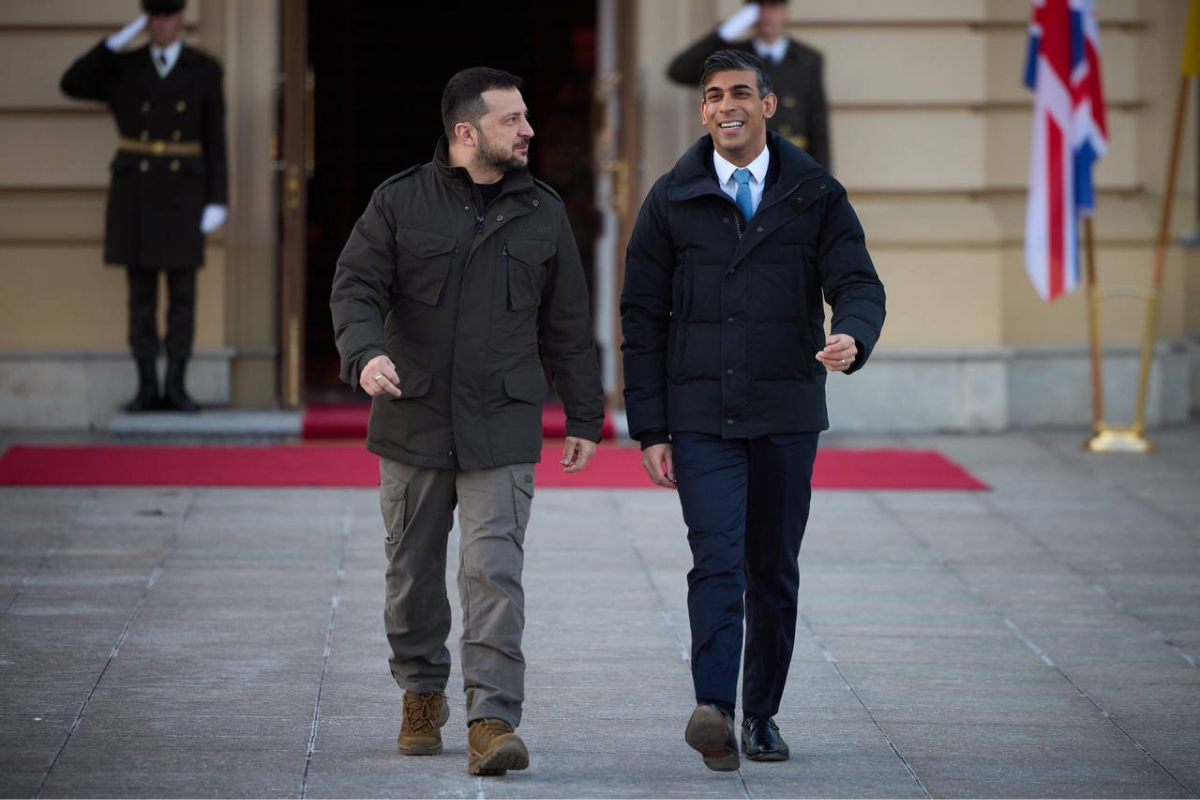
“It will include additional equipment for air defense, additional anti-tank weapons, additional long-range missiles, and thousands of projectiles. Training will also be conducted for thousands more Ukrainian soldiers,” – the British prime minister said.
According to President Volodymyr Zelenskyy, aid from Britain will continue to come in the following years: “Britain guarantees 2.5 billion for this year, and this aid will continue in the following years. The validity period is ten years”.
In addition to these events, during January, 2024 the Ukrainian military was also able to destroy the A-50 and Il-22 aircraft, which repeatedly launched missile strikes on the civilian infrastructure of our country. Also, Polish Prime Minister Donald Tusk arrived in Kyiv, where he announced that his country has joined the G7 declaration on “security guarantees” and will also provide Ukraine with a new package of military aid. In general, this month can be characterized as a period of new political agreements and decisions. However, already in February it will become known what will happen with macro-financial assistance to Ukraine, so this month will be no less important.
Tetiana Stelmakh