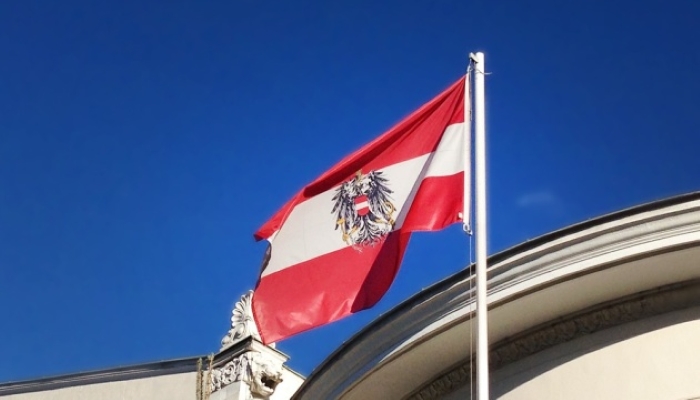


Russia established a disinformation network in Europe to discredit Ukrainian refugees and Ukraine as a state. This network operated most actively in Austria. An Austrian national coordinated the operation and had cooperated with Russian special services for many years.
Since 2022, he and a Bulgarian citizen, later detained in London, organized the production and placement of stickers and graffiti displaying far-right and neo-Nazi symbols in public spaces. The organizers deliberately designed these actions to create the impression that Ukrainians themselves spread such symbols.
Alongside physical provocations in public areas, the campaign’s participants created a network of websites that imitated European branches of Ukraine’s Azov Regiment.
The scheme was exposed back in March, but now journalists have revealed the details and brought more attention to the problem. he Austrian magazine profil, together with Süddeutsche Zeitung, NDR, and WDR, analyzed materials from Austria’s Federal Office for Security and Intelligence (DSN). In March, the DSN reported the exposure of a large-scale Russian disinformation campaign operating inside the country.
Attitudes Toward Ukrainians in Austria
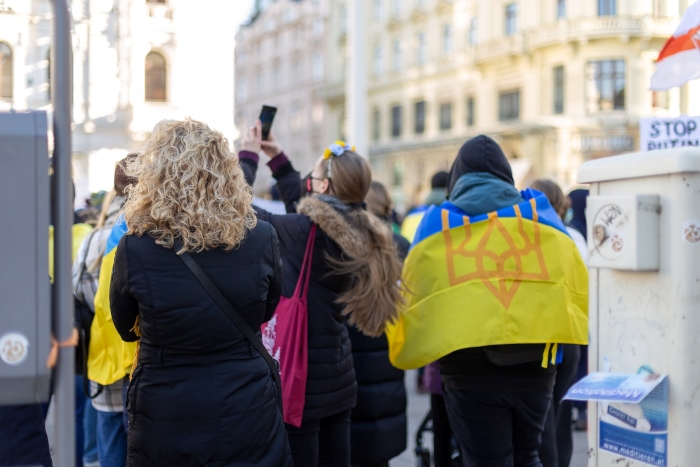
Data from the Austrian Federal Integration Fund and preliminary registration results as of January 1, 2025, indicate a sharp increase in the number of people of Ukrainian nationality residing permanently or temporarily in Austria. This number reached 87,949 Ukrainians.
Austria’s attitude toward Ukraine is ambivalent: on the one hand, there is strong political and humanitarian support such as sanctions against Russia, support for resolutions, assistance to refugees, but on the other hand, due to its neutrality and certain economic dependence, Austria does not provide military assistance and seeks to maintain dialogue with Russia.
The Russian Intelligence Network in Austria
In 2024, Hungarian investigative journalist Szabolcs Panyi reported that roughly 100 of the estimated 250–300 Russian diplomatic staff members in Austria may belong to Russian intelligence services.
Also, one recent example from autumn 2025 involved the Austrian energy and chemical company. The company dismissed a senior employee on suspicion of transferring sensitive information to Russian intelligence after contacts with a Russian embassy staff member.
Conclusion
Hostile efforts to destabilize European societies and promote discrimination against Ukrainians remain widely underestimated. When actors attempt to discredit Ukraine, they often project features of Russian political and social reality onto Ukrainian society. T Without investigative journalism and institutional oversight, such cases would likely have attracted little attention.
Russian operatives intentionally exploit Europe’s most painful historical traumas. They diversify narratives and tactics to maximize impact. While the USSR relied heavily on espionage, contemporary Russia has not only inherited these practices but expanded them significantly. These actions now combine informational manipulation with real security threats. European states must respond decisively and ensure that such cases do not fade into silence.