


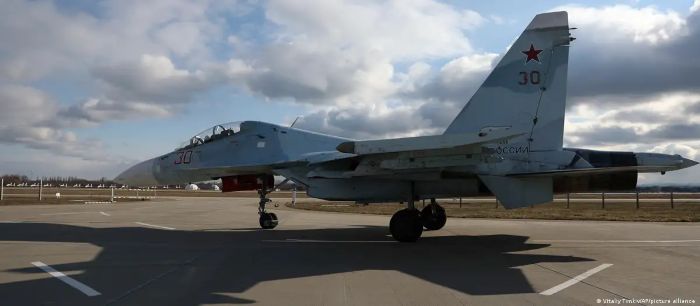
On the night of December 20–21, 2025, a fire broke out at a Russian military airfield near Lipetsk. Two high-value fighter jets — two Su-30 — were destroyed. Russia’s losses are estimated at up to $100 million. According to Ukrainian sources, a representative of the Resistance Movement infiltrated the Lipetsk-2 military airfield. Preparation for the operation reportedly took around two weeks.
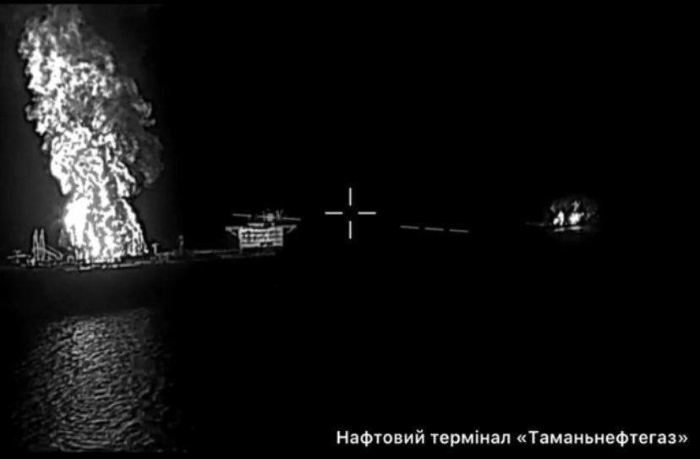
This night, Ukraine’s Defense Intelligence has also hit the Tamanneftegaz offshore oil terminal in Russia’s Krasnodar Krai. The Taman transshipment complex, operated by Tamanneftegaz, is one of the largest in the Black Sea.
These episodes illustrate dimensions of the Main Intelligence Directorate’s (DIU) activities. These range from incidents deep behind enemy lines to frontline operations and information exposure of Russians.
Attacks in Depth
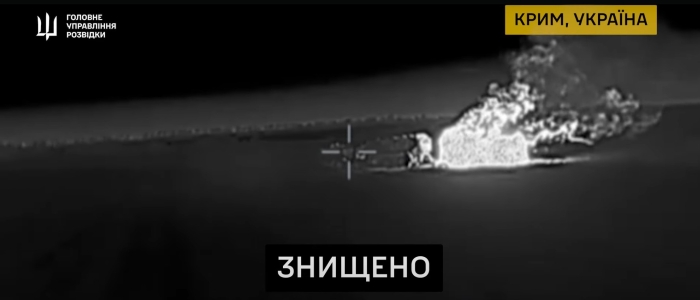
December proved to be a particularly productive month for neutralizing enemy aircraft. As reported by DIU, a Russian MiG-29 was destroyed on December 4. The strike took place at the Kacha airfield. It was carried out by soldiers of the DIU special forces unit “Primoriya.” In addition, Ukraine’s Defense Intelligence forces struck a radar complex at the Irtysh airfield. The facility is located near occupied Simferopol.
The Department of Active Operations of the Main Intelligence Directorate also conducted precision strikes in November 2025. The targets were Russian air defense assets in occupied Crimea. According to the DIU press service, Ukrainian intelligence officers destroyed a 92N6E radar. Elements of an S-400 air defense system were also eliminated. Other critical radar equipment was damaged as well. These losses significantly reduced the Russian forces’ ability to counter Ukrainian air operations.
Frontline Operations
DIU units are also active near the front line. In November 2025, the Main Intelligence Directorate reported a complex special forces operation in the Donetsk region. The operation took place near Pokrovsk. It included an airborne landing and a breakthrough into the enemy’s rear.
After the successful landing, a corridor for reinforcements was established. DIU’s “Timur” units then took up designated positions. Fierce fighting with Russian occupation forces continues in these areas.
Earlier, in May 2025, another operation was carried out in the Kupiansk direction. Fighters from a DIU special forces unit were deployed by helicopter behind enemy lines. Their mission was to disrupt Russian preparations. The goal was to prevent a crossing of the Oskil River.
Exposing the Reality of Russian Forces
Another important area of DIU’s work is the publication of intercepted Russian communications. These materials serve several purposes. They provide insight into operational planning. They also document evidence of war crimes. In addition, they help expose the true nature of Russian forces.
Recently, DIU released fragment proving of cannibalism among Russian soldiers. The material reinforced the image of systemic degradation within the occupying forces.
Conclusion
DIU is a multifunctional structure. It consistently demonstrates tangible results. Many of these achievements gain significant public attention. When Ukraine’s Security Service conducted the “Spiderweb” operation, Ukrainians joked that while some were feared for Russia’s response, others waited for the reaction from DIU. This reaction highlighted a healthy competition between Ukraine’s security structures.
One of DIU’s defining features is its ability to combine classical military intelligence with high-risk special operations. Unlike traditional intelligence agencies, DIU goes beyond collection and analysis. It also plans and executes strikes.