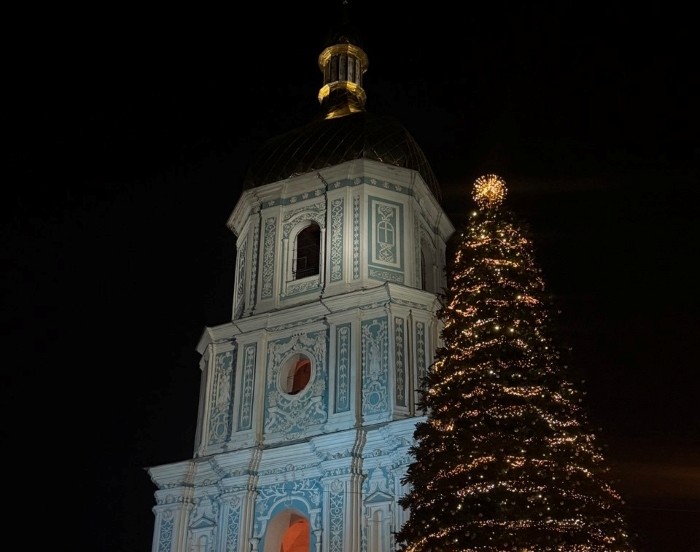


Ukraine officially began celebrating Christmas on December 25 as a public holiday in 2017, introducing an additional day off. Later, in 2023, the Verkhovna Rada made December 25 the official date for celebrating Christmas nationwide.
This change is symbolic. It reflects Ukraine’s broader decolonization and its choice to celebrate the most significant winter holiday with the civilized world. Russia, however, cannot accept this choice and continues to manipulate the issue of dates.
Christmas Truce
German Chancellor Friedrich Merz urged Russia to declare a Christmas truce with Ukraine. President Volodymyr Zelenskyy supported the idea, though he expected Russia to reject it. At the end of their joint press conference on December 15, Merz expressed hope that Russians still have “remnants of humanity.” Zelenskyy responded briefly: “There are no remnants.”
Dmitry Peskov, spokesperson for Russian dictator Vladimir Putin, said:
We want peace; we don’t want a truce to give Ukraine a break and prepare for the continuation of the war.
On December 23, Russia conducted another mass attack, proving the emptiness of such statements.
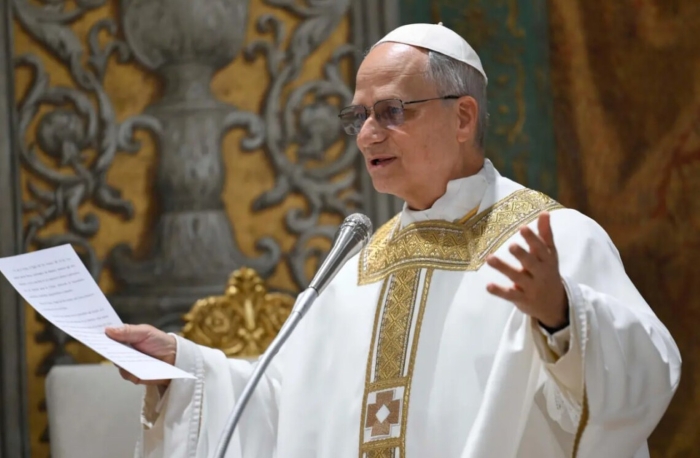
Pope Leo XIV also criticized Russia for refusing a Christmas ceasefire. He again called for 24 hours of peace.
I appeal once again to all people of good will: observe at least one day of peace on the feast of the Savior’s birth, Leo XIV said during his address from Castel Gandolfo on the evening of December 23.
History offers examples of ceasefires during World War I. Short-term truces appeared during the holiday period, mainly on the Western Front. The Eastern Front remained under active attacks. Russia’s refusal today seems consistent with that approach.
Russia avoids a one-day pause in shelling for two reasons. First, attacks on holidays are what they find cynically symbolic. Second, in Russia, Christmas falls on January 7. Paradoxically, a country that absorbed dozens of nations with different religions cannot tolerate alternative Christmas dates.
The Difference Between Dates
The difference between Christmas dates December 25 and January 7 arises from using different calendars. Nowadays, most Christians follow the Gregorian calendar (new style), while the Julian calendar accumulated an error over time.
Countries still using the old style include Belarus, Serbia, Georgia, and others under strong Russian influence.
During the Ukrainian Revolution of 1917–1921, the Ukrainian People’s Republic (UNR) switched to the Gregorian calendar. Previously, Ukrainian territories under the Austro-Hungarian Empire already used it. However, the revolution failed, and the reforms failed with it.
So this is the artificial divide, which Russia uses only to create hostile “we” VS “they” attitude.
Ukraine’s Global Christmas Heritage
UNR leaders also understood the value of culture for asserting sovereignty internationally.
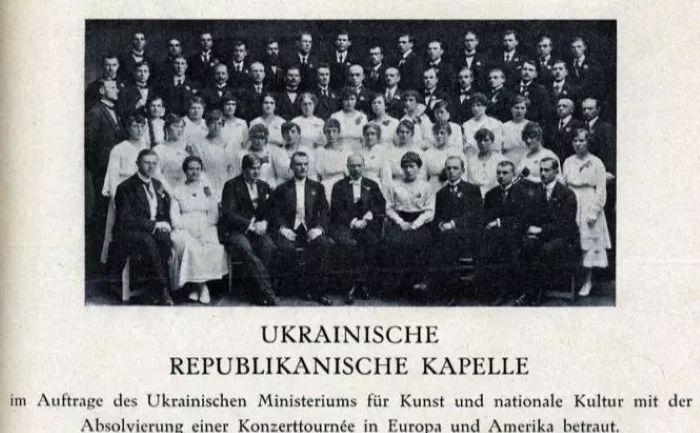
Composer Mykola Leontovych arranged Shchedryk as a choral version of a Ukrainian folk song. Its premiere took place in Kyiv in 1916. After proclaiming the Ukrainian People’s Republic, Symon Petliura, head of the Directory, promoted cultural diplomacy. In 1919, he organized an international tour of the Ukrainian Republican Capella under conductor Oleksandr Koshyts. The choir performed Shchedryk in Czechoslovakia, Austria, France, Switzerland, Belgium, and later in the United States.
In 1936, Ukrainian American conductor Peter Wilhousky wrote English lyrics to Leontovych’s melody, creating Carol of the Bells. The song became part of Western popular culture and one of the most recognizable Christmas melodies. Leontovych never witnessed this global fame. On January 23, 1921, a Soviet agent murdered him in his parents’ home. This act aimed to eliminate Ukraine’s intelligentsia.
Today, Russia continues destroying Ukrainian culture. Thousands of cultural figures died—some during attacks, some tortured under occupation, and many defending the front lines.
Leontovych spent four years in Hryshyne (now Pokrovsk, Donetsk Region) as a music teacher and choir organizer. In July 2024, the battle for Pokrovsk began. The city is now largely ruined, and control remains partial, making it one of Ukraine’s hottest points on the map.
Who knows how many more songs Leontovych could have composed? Who knows how many future Christmas anthems and other masterpieces the world will never hear because of Russia’s war against Ukraine?