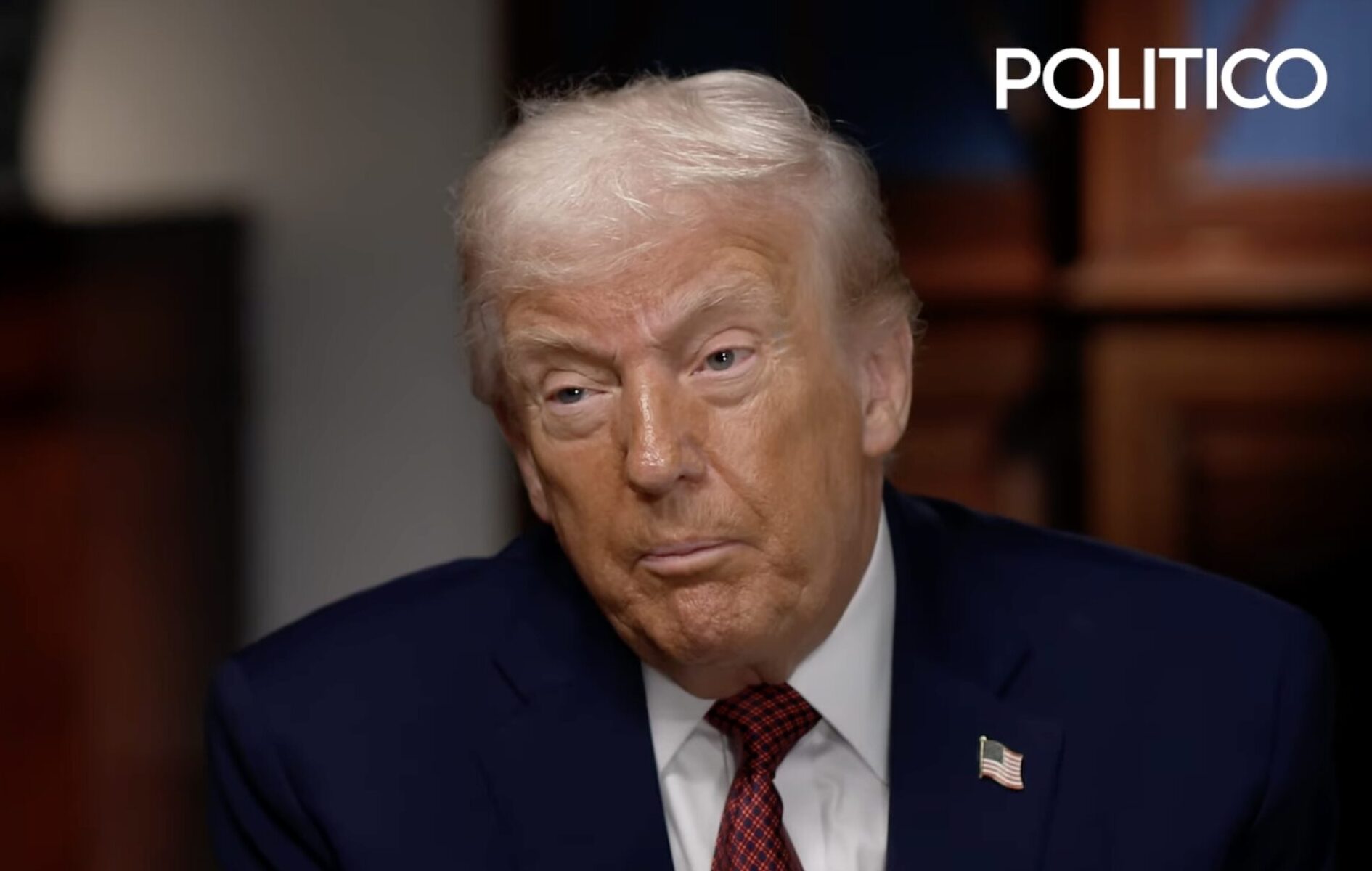


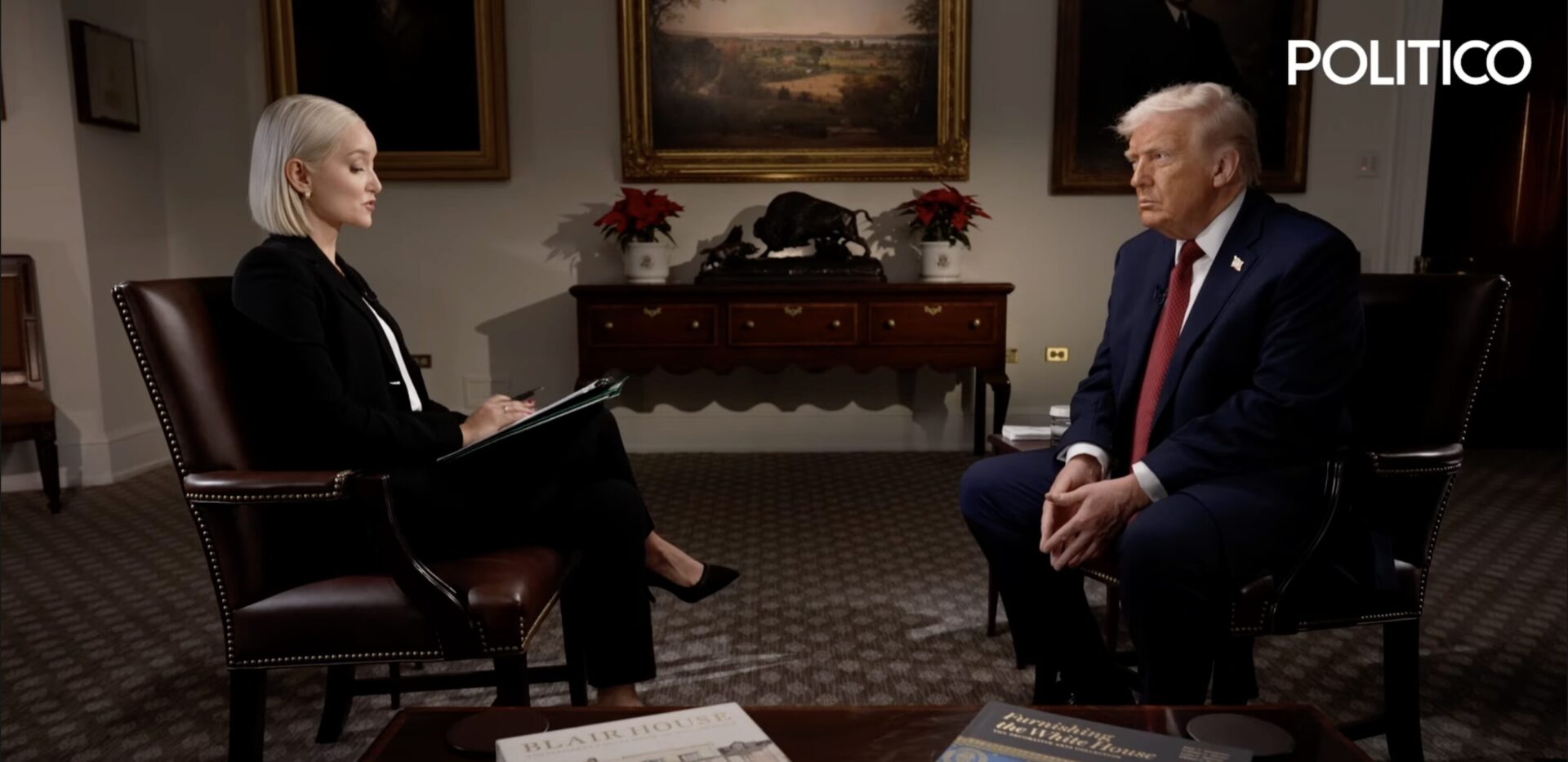
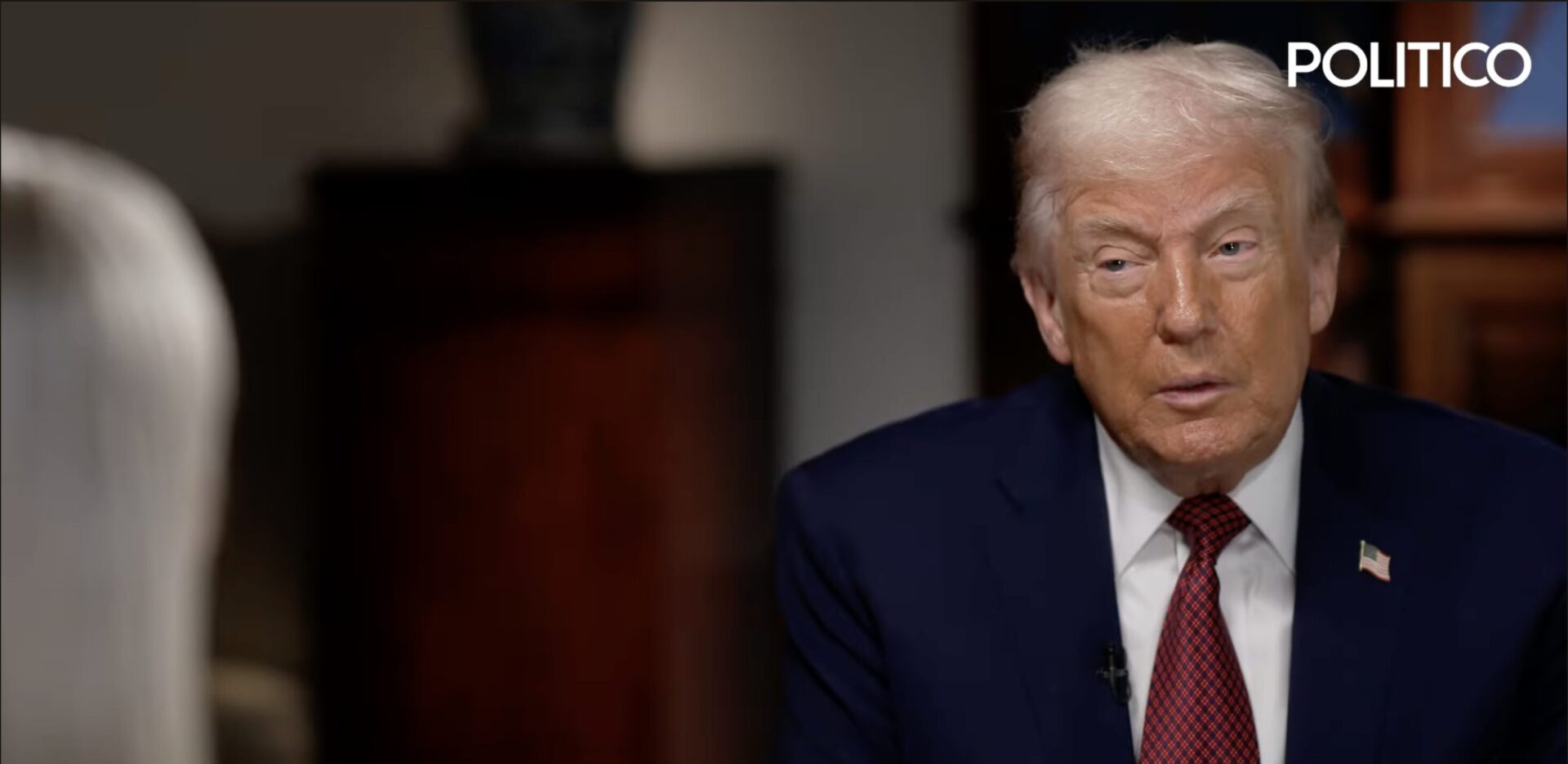
In a new interview with Politico, Donald Trump spoke sharply about Russia’s war against Ukraine, negotiations to end the conflict, and the positions of Kyiv and Moscow. He claimed that Russia holds a stronger negotiating position, that Ukraine is “losing territory,” and that the delay in adopting a peace plan is the responsibility of President Zelensky. Trump’s comments have sparked a wave of debate in Europe, which continues to support Ukraine. Here is a breakdown of the main points from the politician’s interview and his assessment of the situation in Ukraine.
“Russia in a Stronger Position”
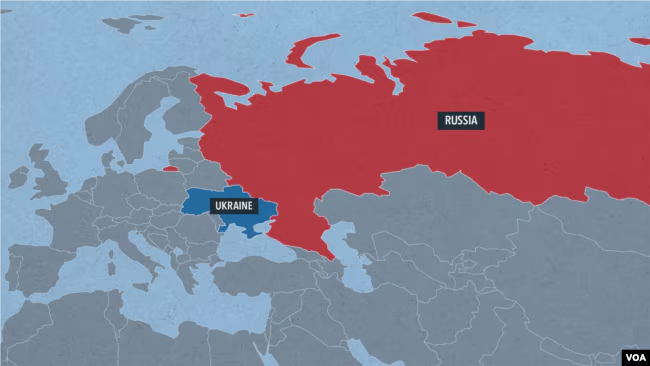
Trump said that Russia is currently in a more advantageous position because it is a “much bigger country.” He repeated his claim that the war “would have never happened” if he had been president.
He also emphasized that Ukraine lost significant territory even before he took office in the White House. In his view, this shows that Kyiv is in a losing position.
This rhetoric contrasts with the assessments of the U.S. and NATO, which believe Ukraine can regain control over most of its territories. Trump’s perspective also raises questions about the unity of the transatlantic alliance. If the U.S., under Trump, were to support a “quick peace” with concessions to Russia, it would shift the balance of negotiating power in Europe and weaken Kyiv’s position at the talks.
Pressure on Ukraine and the “Peace Plan”
Zelensky Allegedly Delays the Process
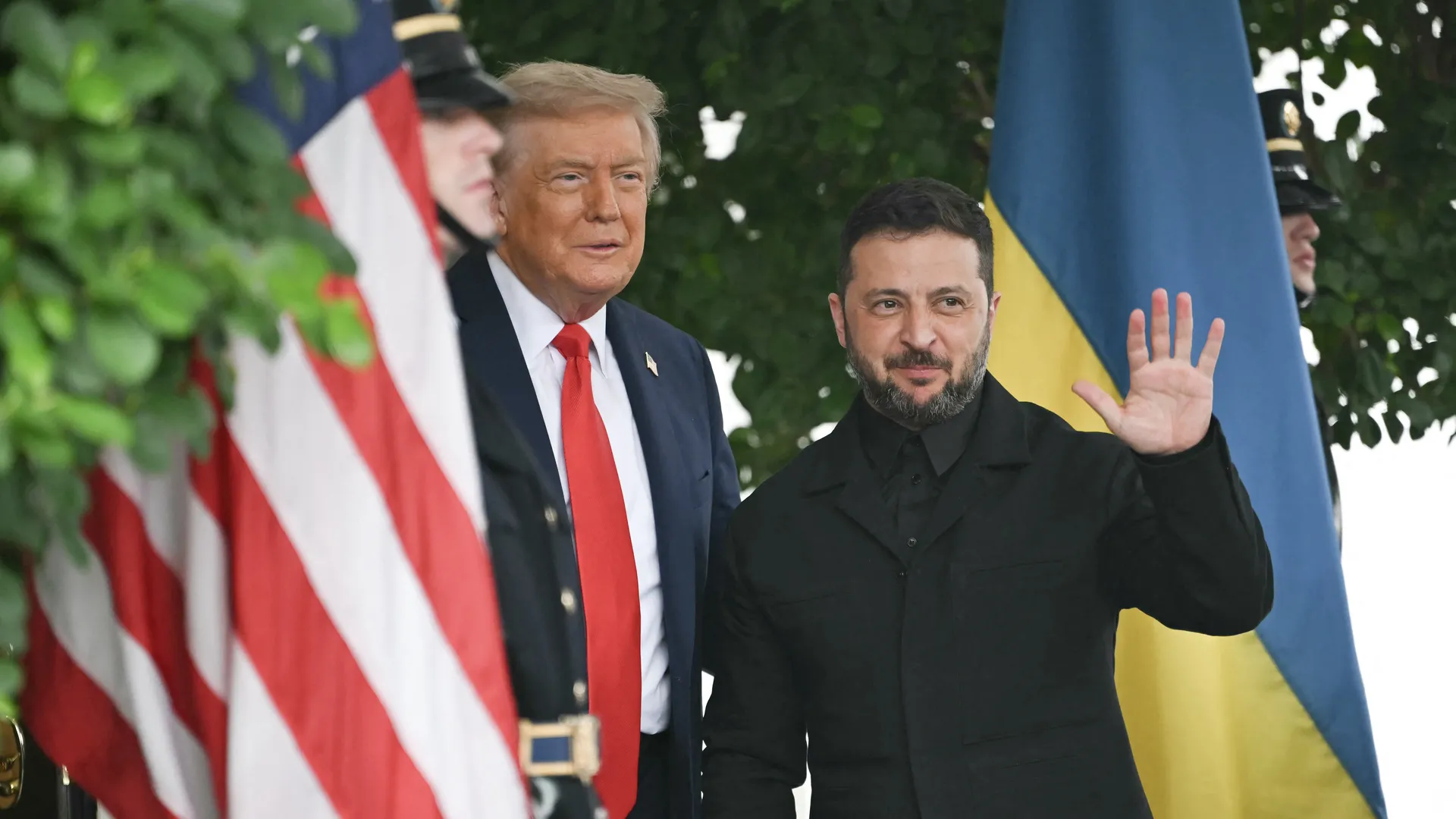
Trump said that his team delivered the latest version of a “peace proposal” to Ukraine. According to him, Zelensky had “not yet read” the document at the time of the conversation, while the president’s close circle supposedly supported the plan. He added that Zelensky needs to “find the time to read it” because “people are dying.”
Will the U.S. Step Back From Ukraine?
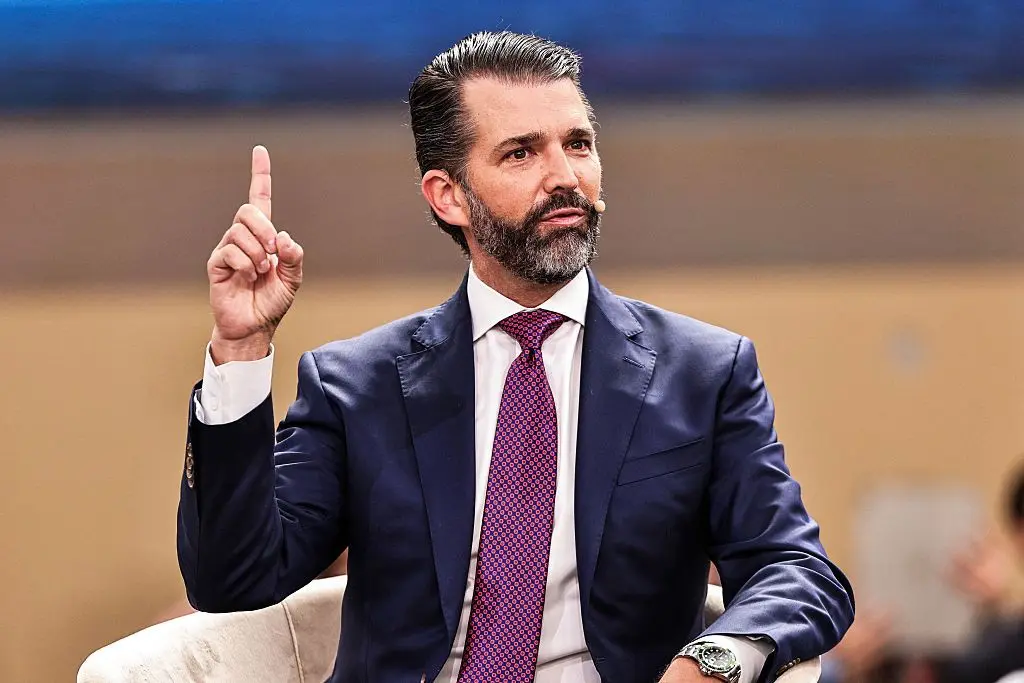
When asked if the U.S. might “walk away from Ukraine,” as his son had said, Trump replied, it is “not correct, but not exactly wrong.” He stressed that Ukraine “have to play ball” and accept the proposals because Russia is “still bigger and stronger.”
This approach directly contradicts the official U.S. policy of actively supporting Kyiv. It could indicate a potential shift in strategic priorities if he were to become president.
Comments on Elections in Ukraine
Trump said that it is time for Ukraine to hold elections, despite the full-scale war. He accused Kyiv of “using war not to hold an election,” although he acknowledged that Zelensky “would win.”
Criticism of Zelensky and Repeating Old Narratives
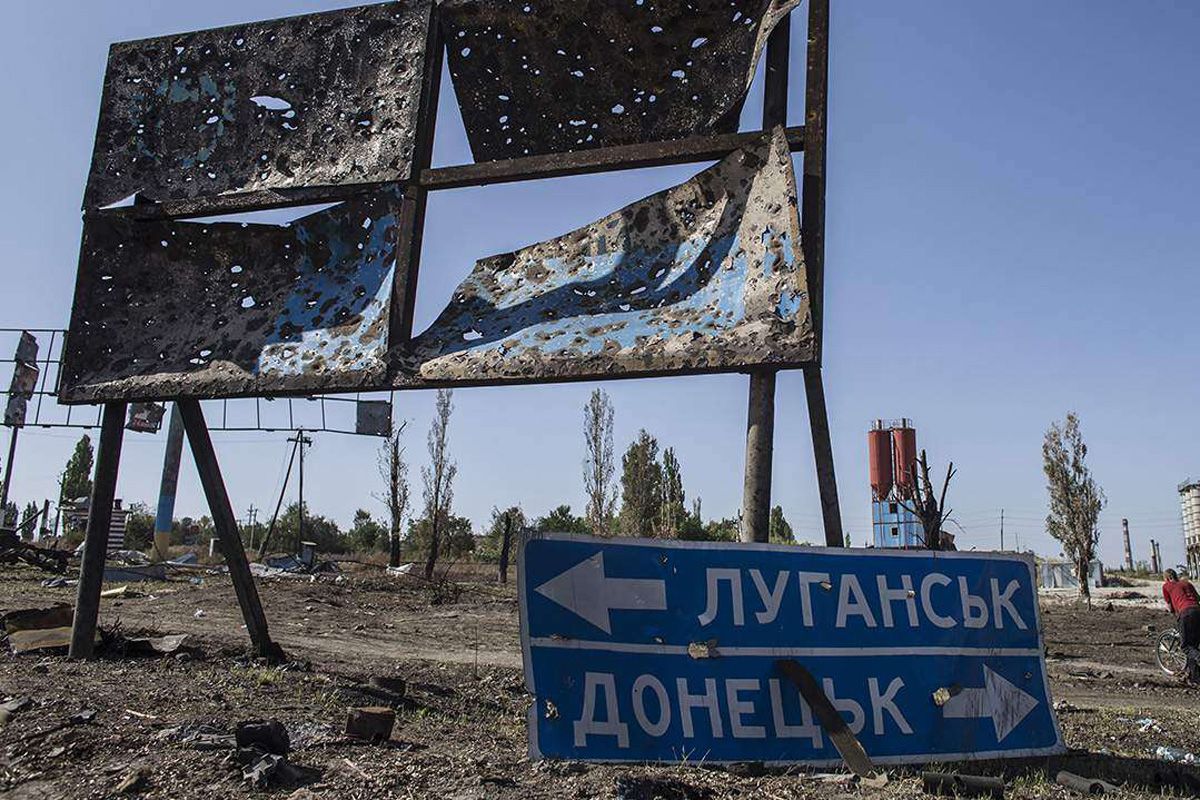
The White House chief sharply criticized the Ukrainian president, calling him “P.T. Barnum”—a man who “can sell any product at any time.” According to Trump, Zelensky “got 350 billion dollars from Biden,” part of Ukraine is already lost, and “another 25% of his country is missing.” He also claimed that Ukraine “lost Crimea because of Obama.” This stance could create tension between the U.S. and European allies because it contradicts the collective security policy.
Europe Wants to Support Ukraine—but Trump Is Skeptical
Trump said that Europe “talks a lot but does little.” He added that if European countries want to support Ukraine—“let them support it.” He called the war “not mine” but “Joe Biden’s war.”
Acknowledging the Bravery of Ukrainians
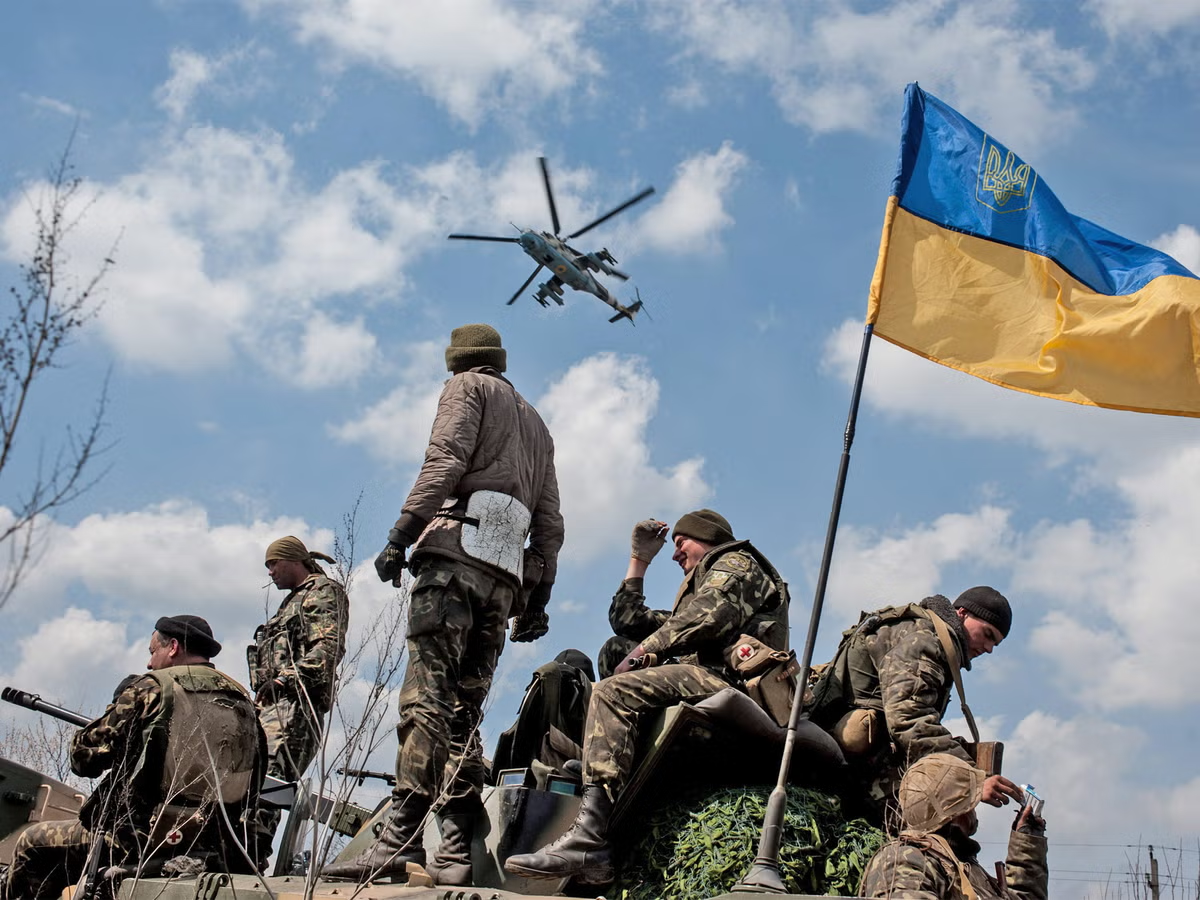
Despite his criticism of the Ukrainian government, Trump repeatedly recognized the courage of Ukrainian troops. He said he respects their bravery and considers them “extremely courageous.” At the same time, he noted that “the size of Russia ultimately wins,” highlighting the immense challenges Kyiv faces in the war. He implied that even the heroism of Ukrainian soldiers cannot change the broader geopolitical situation.
Position on NATO and Ukraine’s Membership
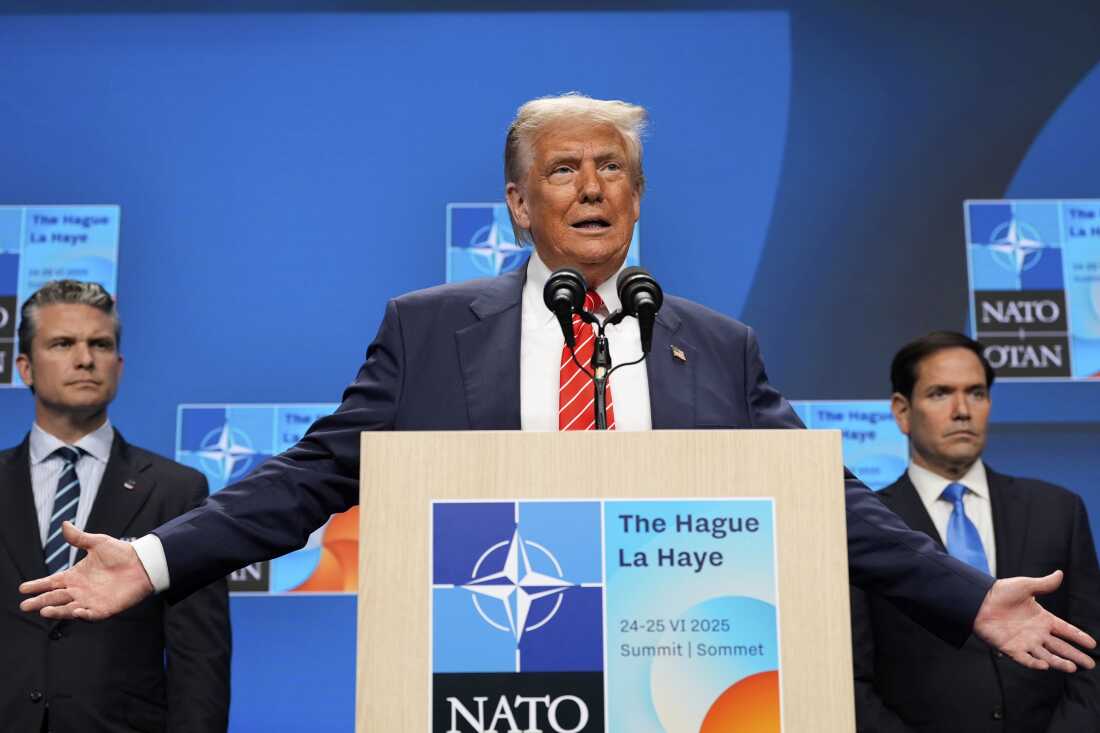
Trump also repeated his longstanding view that Ukraine “would not be going into NATO.” He claimed that Zelensky allegedly told Putin about Ukraine’s intentions to join the Alliance, which, in Trump’s view, may have “provoked” Moscow.
He also said that he does not want NATO expansion and considers it “a risk.” This position could potentially create tension between the U.S. and European allies because it contradicts collective security policy.
On Ukraine’s “Losses”
During the conversation, Trump repeatedly cited unverified and exaggerated numbers, including “millions of deaths” and “27,000 per month.” These statements align with Russian disinformation and do not match U.S. or EU estimates. Official data indicate much lower losses, highlighting the contrast and the potential for Trump’s statements to mislead media and political audiences about the war.
Conclusions
Donald Trump’s position in the Politico interview shows his willingness to pressure Ukraine to adopt his “peace plan” and effectively acknowledges Russia’s stronger position in the war. His comments about Zelensky, which include accusations of delaying the process and exaggerated claims of losses, contrast with the stance of most European countries and the current U.S. administration. Trump’s rhetoric may indicate a potential shift in U.S. strategy regarding support for Kyiv, including a willingness to pursue a “quick peace” that carries the risk of territorial concessions. The interview also emphasizes that the Ukrainian issue could remain one of the key points of tension in transatlantic relations if Trump’s influence on U.S. policy continues to grow.