

Russia’s war against Ukraine has become a moment of truth for Europe — a test of its ability to defend its values, act decisively, and bear the real costs of security. From the first days of the full-scale invasion, European capitals have supported Kyiv diplomatically, militarily, and economically. However, now in its third year, the war has exposed a paradox: Europe wants to be both a bastion of support for Ukraine and preserve its own economic stability, energy security, and internal political balance.
Support for Ukraine: weapons, sanctions, political shield
The European Union has become one of Ukraine’s main donors. Member states have allocated billions of euros in military aid: from howitzers and air defense systems to ammunition, drones, and repair programs. European institutions are launching unprecedented financial packages to keep the Ukrainian economy afloat and support the work of public services.
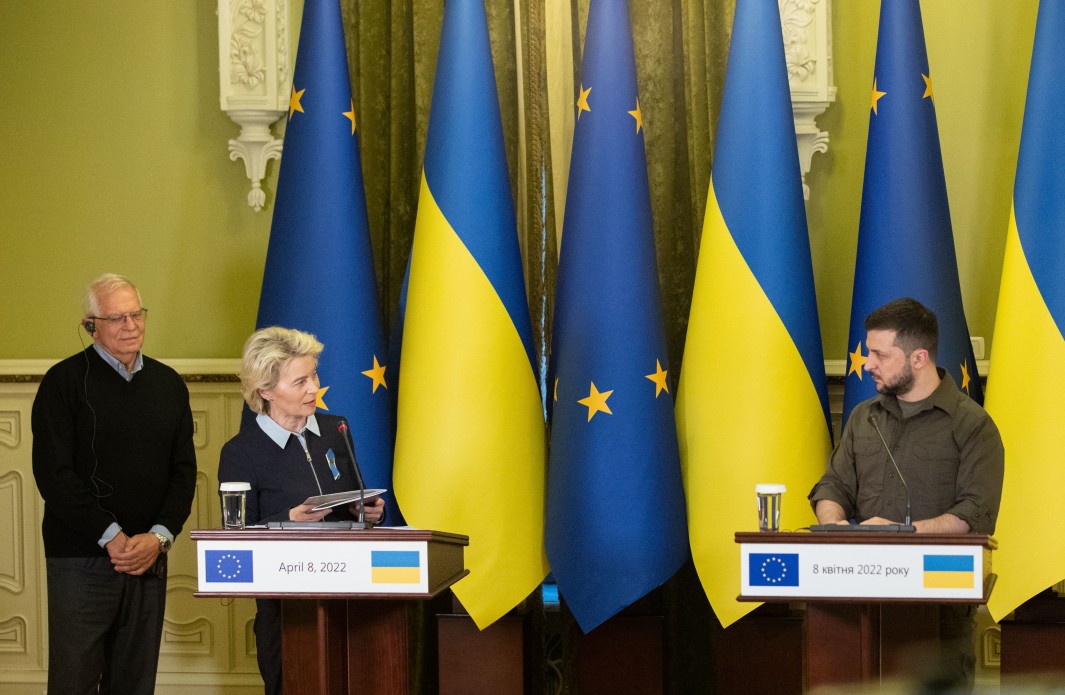
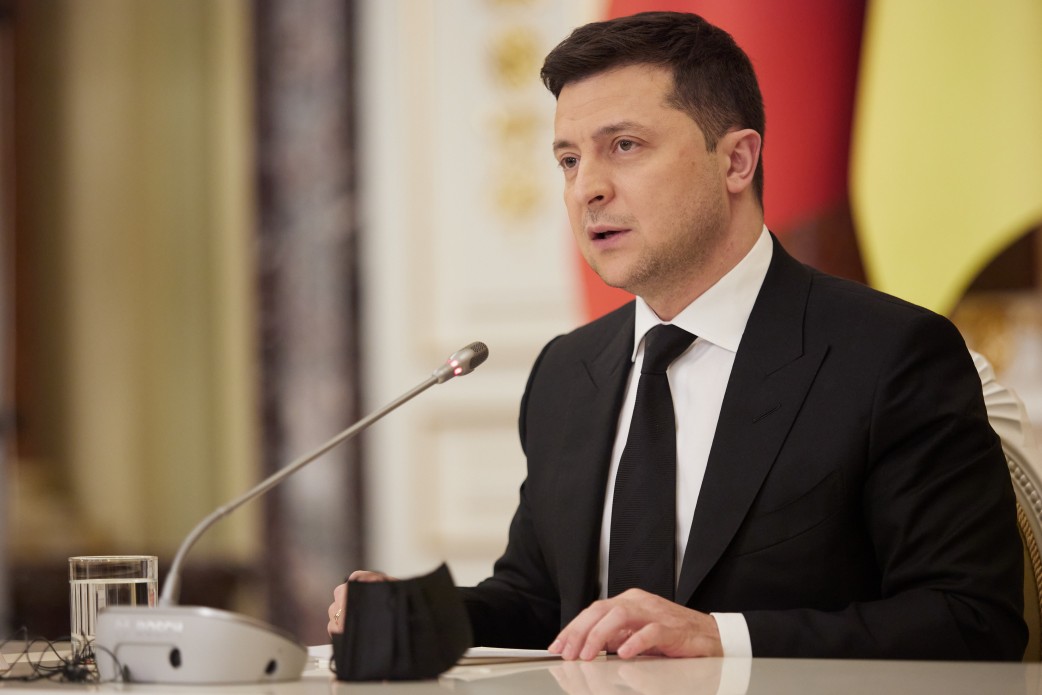
At the summit in 2024, during a meeting with Volodymyr Zelensky, President Ursula von der Leyen said:
“We are currently sending mobile gas turbines and solar panels. We also discussed measures to protect power plants.”
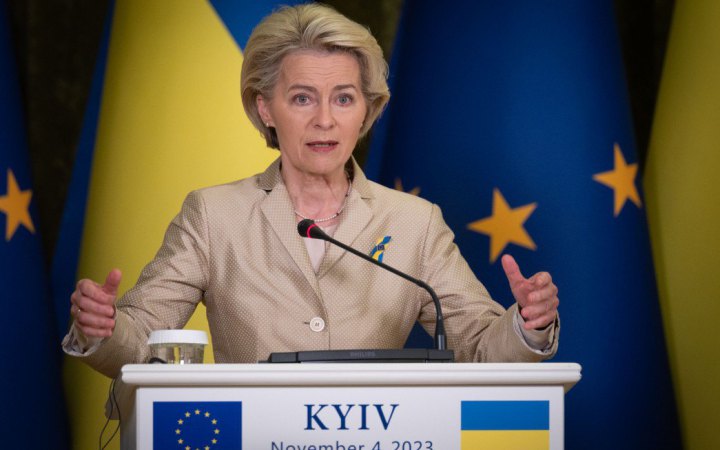
This was supposed to be aid to Ukraine on the eve of winter, when the security of energy infrastructure is extremely critical. Zelensky himself emphasized at the time:
“Our priorities are clear — the protection of Ukraine. Our positions, our soldiers, and fair pressure on Russia … Now, more than ever, it is important to protect and restore our energy sector.”
Europe has also made several political statements about its unwavering support for Ukraine, sanctions against Moscow, and the use of frozen Russian assets for the benefit of Kyiv.
However, at the same time, there is the cold logic of self-interest
Europe has never acted solely on emotion. It is guided by balance: supporting Ukraine enough to restrain Russia, but not going beyond the limits that could provoke direct confrontation or collapse its own economy.
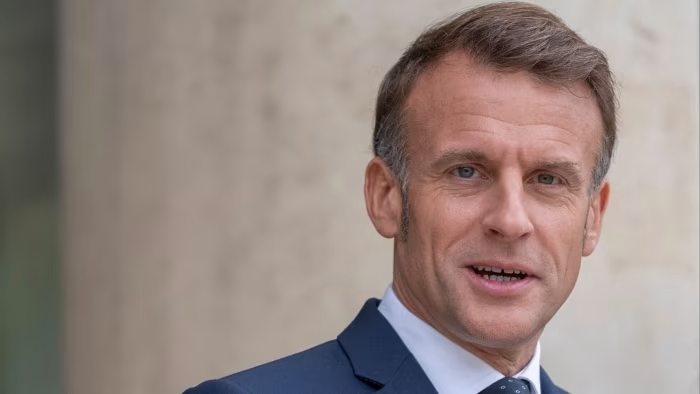
This is evident in everything from the pace of military supplies to rhetoric on defense capabilities and the role of its own armies. For example, Emmanuel Macron said that European countries should increase their defense spending rather than simply relying on external aid:
“For three years, the Russians have been spending 10% of their GDP on defense… we must prepare for what comes next.”
At the same time, Macron noted that, despite all the support, “nothing can be done without guarantees”:
“We want peace, but not at any price.”
This reflects a delicate balance: we are helping, but cautiously, so as not to drag Europe into direct war.
Less gas, but money still flows to Moscow
Despite sanctions and a large-scale reduction in imports, Europe continues to purchase some Russian energy resources. Formally, this is significantly less than in 2021-2022. However, the continent has not yet been able to completely abandon Russian resources.
According to data from 2025, some countries have even increased their purchases of Russian oil and gas compared to the previous year.
Yannis Bassias, an energy expert and analyst at Amphorenergy, noted:
“Yes, it is true that Europe increased its imports of Russian gas in 2023 and 2024, and imports will be even higher in 2025 because the US cannot supply more.”
This creates what Ukrainian experts call “Europe’s energy schizophrenia”: with one hand, the EU is financing Ukraine’s resistance to Russia, and with the other, it is partially allowing the Russian budget to support the war.
Continental security: Europeans are assisting Ukraine because it is in their own defense
In Brussels, Paris, Berlin, and Warsaw, politicians are increasingly saying openly that Ukraine is holding the front line that should be somewhere near the Elbe or the Baltic Sea. Therefore, aid is not charity, but a strategic investment in their own future.
At the same time, however, Europe is not ready to act as radically as the US in certain cases. European governments are much more sensitive to domestic political resistance — from farmers’ protests to right-wing populist parties that are constantly raising the stakes.
As a result, Europe is moving forward, but with cautious steps. It is strengthening its defense industry, increasing shell production, and imposing new sanctions, but it is doing so in a way that avoids excessive internal turmoil.
Conclusion
Europe wants Ukraine to win, but fears what it will have to do to achieve this. It wants to break its dependence on Russian energy, but does not want a sharp economic shock. It understands that Ukraine’s defeat would mean the end of European security, but at the same time avoids steps that might appear too “escalatory.”
This is a complex, contradictory, but entirely realistic European position: help Ukraine, yes, but always through the prism of its own interests. And the reactions, statements, and actions of European politicians are often a compromise between solidarity and fear, between ideology and pragmatism.
The future of the continent depends on whether Europe can find the courage to take the next step. Because the war that Ukraine is waging is not just its struggle. It is a battle for what Europe will be like in the 21st century: strong and principled, or cautious and divided.