

Odesa
Early summer has arrived on the Black Sea coast, with sunny days, with lush fields and bright forests, with wounded, but vibrant cities. Ukrainians are tired after 11 years of war with Russia, but also proud that they’ve stopped Vladimir Putin’s fascist superpower, a Russian’s defeat in the sense that according to the Kremlin’s and many so-called experts’ calculations, Moscow’s armies should have wiped out its European neighbor within a few weeks of the invasion in February 2022.
As we all know, it turned out differently, very much so. Russia currently controls only about 20 percent of the republic’s territory, apparently having lost close to one million soldiers, both dead and wounded, and huge amounts of equipment.
That Ukraine lives and insists on living is a victory for the European-civilized Ukraine. In Eastern Europe, a strategic balance – not an equilibrium – had emerged, which is being observed and evaluated with great interest from China to India, to the Middle East, to Africa and America, both south and north. Russia is seen as the declining power. Ukraine is admired for its endurance, Ukraine is a European victory.
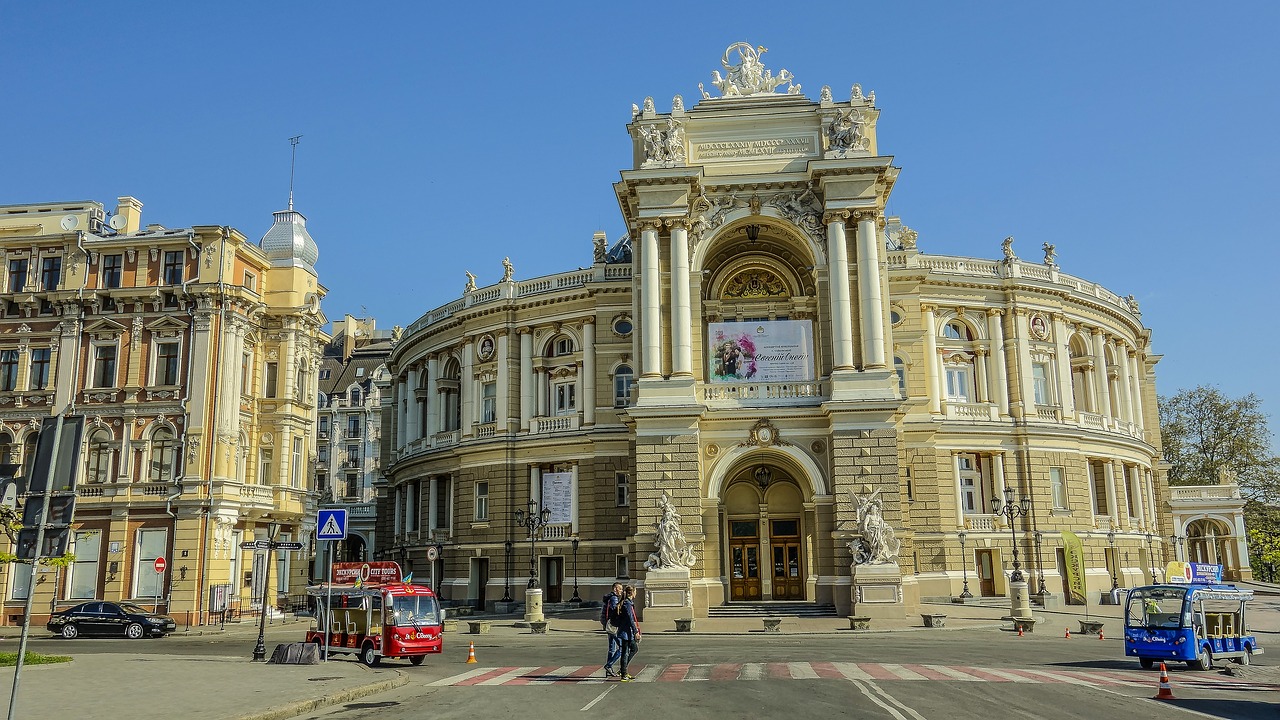
Odesa is bathed in sunshine and a gentle breeze. Parks and squares, avenues and boulevards are led out with rose beds, blossoming chestnuts and bright plane trees on the background of the deep blue waters of the Black Sea. In a quiet moment – no air raid, sirens, no rocket attacks – mothers are on their way with toddlers, lapdogs and parcels. In front of the famous Opera House, ballet kids practice with their balloons and balls. Cafes and sidewalk restaurants are busy. I know few cities where food is better and cheaper than in Odesa. I could live here, if it wasn’t for the language and the Cyrillic alphabet.
I meet friends and acquaintances, highly educated, knowledgeable people on the edge of the war. Even after the US break with Europe and consequently with Ukraine, they’re in good spirits. They believe in themselves, in Ukraine and in Europe, in that order. They’ve given up on the US. No one imagines an early end to the war. One person – a historian by profession – believes that the war could be frozen like the Korean War in the 1950s: the division of Ukraine into a poor, belligerent eastern territory ruled by pro-Russian fascists, and a democratic, relatively prosperous, European rest-state in the west.
Is this what Europe wants? Hopefully not. Such an arrangement would weaken Europe against Vladimir Putin’s non-European Russia, which, in concert with Donald Trump’s non-European USA, dreams of dividing Europe between them, a continental repeat of Nazi Germany and Communist Russia’s criminal partition of Poland in the 1939.
I can easily imagine Moscow and Washington together (what a moral abyss for the US), dictating fighting Ukraine, a so-called peace. It’ill be meaningless. Large parts of the Ukrainian armed forces will continue the war against the Russian occupying power, supported, more or less secretly by Poland, the Baltic republics and other European states, and by millions of Ukrainians, who are well equipped with light and semi-heavy weapons, which they intend to use.
What Putin and Trump and their clientele in Europe doesn’t understand is that 11 years of war, beginning with the Russian annexation of Crimea and parts of the Donbas in the 2014, had transformed Ukraine from a barely existing state into an astonishingly strong nation. On the horizon, if the West abandons Ukraine, looms a partisan war, which could last for the next 10, 20 or 30 years. Vietnam and Afghanistan in Europe is a possible scenario, even after the recent agreement between Kyiv and Washington: rare Ukrainian soils and metals to the US in exchange for a highly dubious promise of US aid to Ukraine.
This week, both East and West celebrate the 80th anniversary of the end of World War II: Peace Day in the West, Victory Day in the East. The semantic difference is important. Moscow is power, always power, power at the expense of neighbors, of the Near Abroad, the borderless empire. Europe is the land of peace. But peace must also be guarded. Europe’s peace begins, where Ukraine meets Russia’s aggression. Europe therefore must provide Ukraine with the assistance, economic and political, which can reverse the existing strategically untenable situation, at the core of which is thinking that Ukraine mustn’t lose and Russia mustn’t win.
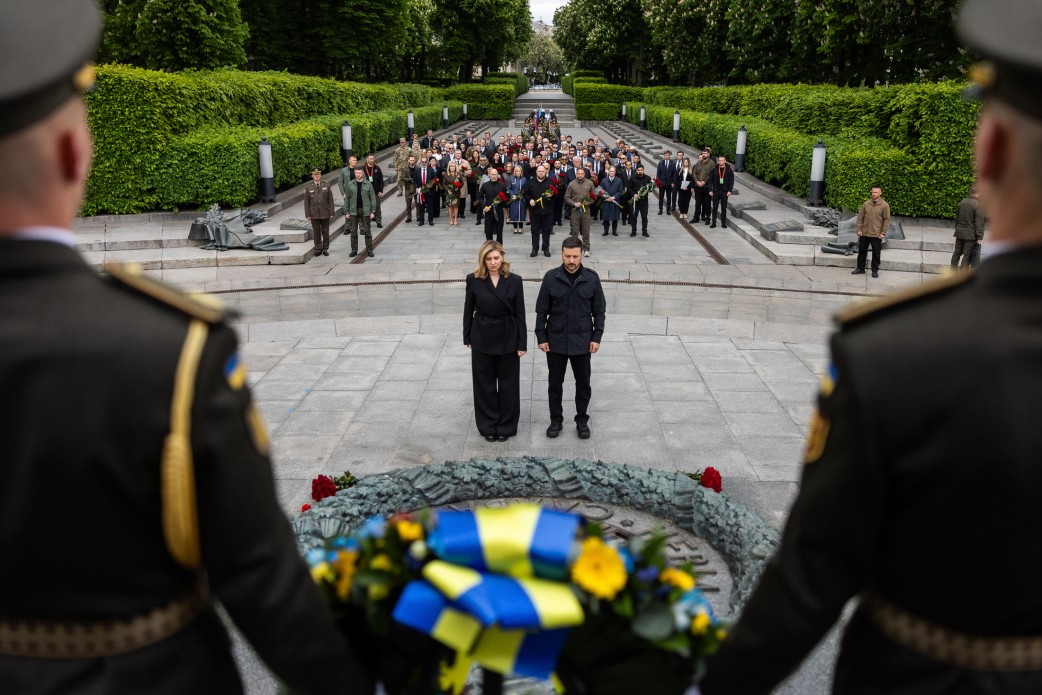
Europe’s existentially imperative task, not in five or ten years’ time, but here and now, is to equip and arm Ukraine to the point where, after 300 years in the Russian People’s Prison, then released in the 1991, Ukraine can resume its historic role as Europe’s shield and spear in the East. The sooner and the more convincingly a Ukrainian-European victory over Asian-barbaric Russia is realized, the sooner and the more convincingly the Axis of Evil, concluded between Trump and Putin, can be isolated, contained and neutralized.
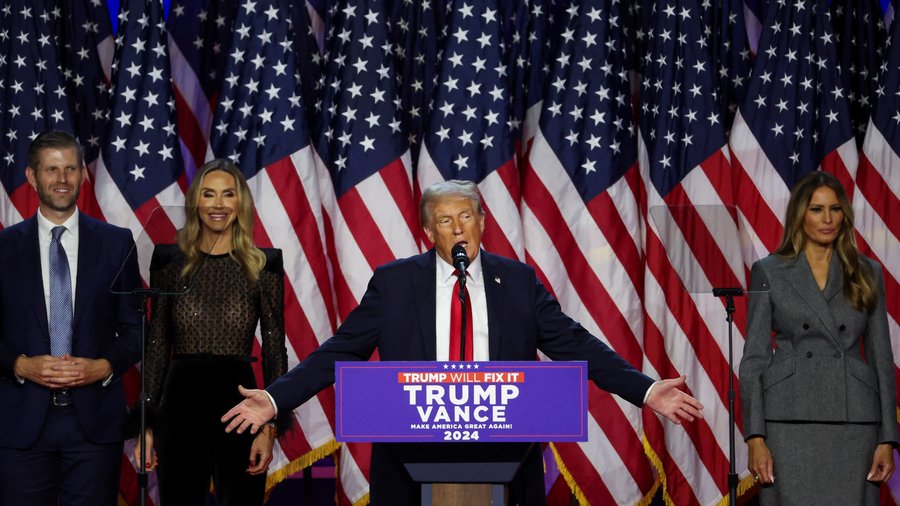
What is Trump’s America? A mirror image of Putin’s Russia: fantasies and confusion, illusions and nightmares, lies and deception, chaos, stupidity and idiocy, deliberate loneliness. In the early summer of Odesa – warm days, blackouts and curfews after midnight – I’m grateful to be able to spend a week or so in the real world, a world which hits Odesa shortly after midnight.
It begins with a strange sound in the dark. A deranged motorcyclist? No. Maybe an air raid? Yes. Suddenly, the center of Odesa is shaken by 15-20 powerful explosions. Sirens wail and scream, drones and rockets leave their light trails under the night sky. 20 minutes, half an hour. Then all is quiet. A faint smell of smoke lingers in the park between my hotel and the opera house.
The following morning, the governor of the Odesa oblast reports two dead and five injured. An apartment block, a school, a supermarket and several smaller buildings lie in ruins. No military targets. An ordinary night of war crimes, and by no means one of the worst, just a reminder that you can forget reality, but reality doesn’t forget you.
Per Nyholm
*These opinions are solely those of the author. The Ukrainian Review does not take any position and is not responsible for the author’s words.
Pierre Nyholm has been a Danish journalist since 1960. He lives in Austria and is a columnist and foreign correspondent for the liberal Danish daily Jyllands-Posten.
Kateryna Yashchuk adapted this text for The Ukrainian Review.