


The United Kingdom and Canada will join a European Union plan to use frozen Russian assets to assist Ukraine.
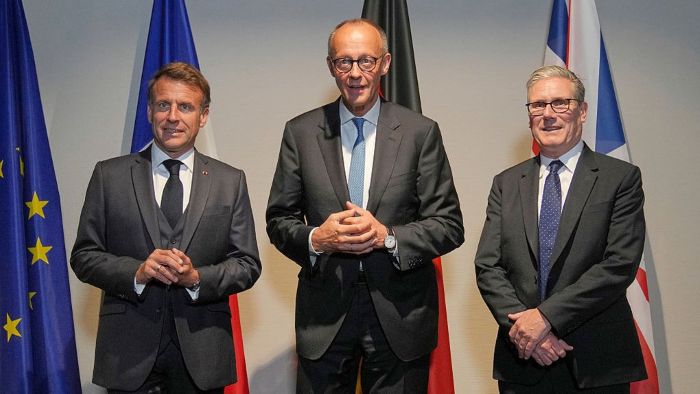
Earlier, during a telephone conversation on Friday, October 10, the leaders of France, the United Kingdom, and Germany agreed to jointly promote initiatives to use these frozen assets to support Ukraine.
The EU initiative concerns the assets of the Central Bank of Russia, frozen in Western financial systems (approximately €250 billion). This plan does not involve direct confiscation—which could trigger legal and international disputes—but instead proposes a mechanism to use the financial value of these assets, for example, in the form of loans or guarantees to support Ukraine.
From Humanitarian to Military Support
Initially, frozen Russian assets were expected to serve as reparations for Ukraine’s postwar reconstruction, and the approach was deliberately cautious. However, the reality on the ground has forced policymakers to revise these decisions.
The new U.S. administration has shifted toward providing weapons on a commercial basis, while Russia continues to challenge NATO airspace and conduct other forms of hybrid aggression. At the same time, Ukraine’s economy has weakened as well, and it has become increasingly difficult for international partners to maintain the necessary level of support.
Therefore, the issue of using Russian assets has become urgently relevant again. Another indicator of progress is that this process would now be coordinated with the United States. Earlier, U.S. Treasury Secretary Scott Bessent had expressed doubts about the idea, since it was previously considered a negotiation lever in potential peace talks with Moscow.
Concerns and Benefits
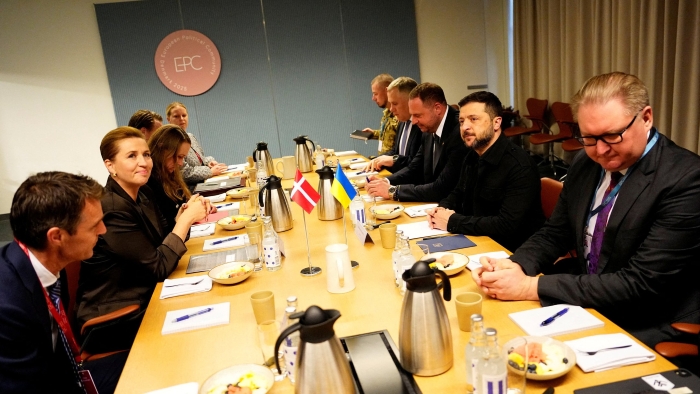
No official agreement has been reached yet. As reported, there was no full consensus during the recent Copenhagen summit. Some countries remain concerned that such a precedent could undermine trust in the European banking system.
The precise amount of frozen Russian assets is still uncertain, though the total is estimated at around $300 billion. For comparison, according to data from the Institute for the Study of War, by early 2024 the EU and its member states had provided Ukraine with $148.5 billion in assistance. Thus, the potential use of these assets could more than double the financial capacity to help Ukraine.
Despite the remaining legal and institutional challenges, the potential benefits are significant. Using Russian assets would enable Ukraine to continue receiving aid without forcing donor states to make drastic adjustments to their national budgets. It would also signal to Russia that aggression has tangible financial consequences and that war crimes cannot be offset by diplomatic ambiguity.
Conclusion
The question of frozen Russian assets, discussed throughout all four years of the full-scale invasion, is now approaching a decisive stage. Moreover, as the United States and its partners increasingly recognize that diplomatic leverage alone cannot force Russia to negotiate, such economic tools become part of a comprehensive strategy: one that combines financial, military, and moral pressure to demonstrate that violations of international law will carry lasting consequences.