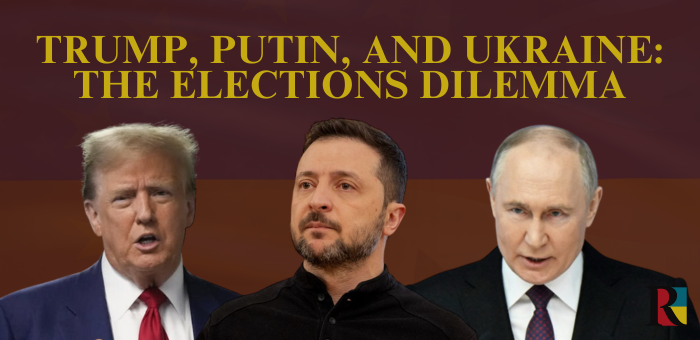


As if echoing the Kremlin’s talking points, U.S. President Donald Trump stated:
It’s been a long time since Kyiv had an election. Zelenskyy has a 4% approval rating. – Trump continued, stating, – We have a situation where we haven’t had elections in Ukraine, where we have martial law. – Trump also called Ukrainian President Volodymyr Zelenskyy a dictator without elections and stated, – Ukraine needs to hold an election… That’s not a Russia thing. That’s something coming from me.
Former Russian President Dmitry Medvedev was elated following Trump’s attack on Zelenskyy.
A dictator without elections, Zelenskyy, better move fast or he will not have a country left.’ If you had told me just three months ago that these were the words of the U.S. president, I would have laughed out loud, – wrote Medvedev.
Russia has used the issue of frozen elections in wartime as a propaganda tool, with Vladimir Putin labeling Volodymyr Zelenskyy “illegitimate” since his presidential term has technically expired.
The Institute for the Study of War noted that Putin’s claims about Zelenskyy’s unpopularity aim to divide Ukraine’s government, military, and population. He has repeatedly questioned Zelenskyy’s legitimacy after Ukraine, following its laws, postponed the 2024 elections – part of Russia’s effort to justify avoiding negotiations. Yet, Putin implicitly acknowledged Zelenskyy as Ukraine’s legitimate president and a future negotiating partner while simultaneously launching an information operation to destabilize Ukrainian society and its military from within.
However, as of early February, 57% of Ukrainians trust Zelenskyy, a five-point increase since December, according to a Kyiv International Institute of Sociology (KIIS) poll published on Feb. 19. The survey, conducted Feb. 4-9, was released shortly after Trump claimed, without evidence, that Zelenskyy had a 4% approval rating. This is also the same president that Russia attempted to assassinate multiple times since 2022.
A February 2025 KIIS survey found that 69% of Ukrainians believe Zelenskyy should remain in office until elections can be held after martial law ends, while another poll reported that 63% oppose holding any national votes until the war with Russia is over. Furthermore, former British Prime Minister Boris Johnson stated that attacks on Zelenskyy and his legitimacy have likely only strengthened him politically.
Under martial law imposed in February 2022, elections are constitutionally suspended, with Ukraine’s government prioritizing national security over wartime electoral processes. On February 25, Ukraine’s parliament reaffirmed this stance, passing a resolution stating that elections will only occur after a “comprehensive, just, and sustainable peace” is secured.
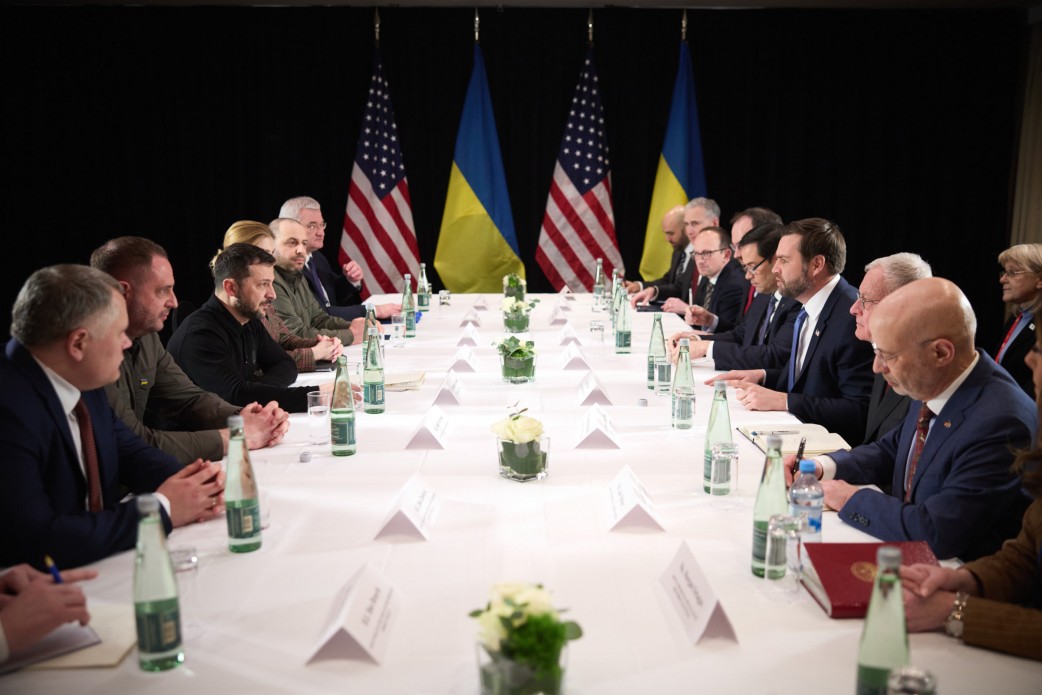
Trump vs Zelenskyy
Ian Bremmer, a political scientist and founder of the Eurasia Group, commented on social media: “Whether you’re a fan of president Zelenskyy, the United States trying to force an election in a foreign democracy during wartime is unacceptable,” – he wrote.
It can’t be held safely and securely – against most Ukrainians’ wishes (including much of Zelenskyy’s opposition) and in violation of the Ukrainian constitution is unacceptable.
Trump’s transactional approach to Ukraine became even more apparent when his administration proposed that Ukraine grant the U.S. 50% ownership of its rare-earth minerals, believing them to be worth around $500 billion. Zelenskyy rejected the offer outright, calling the proposal unserious and stating, “I can’t sell our state.” Kirill Dmitriev, head of the Moscow Direct Investment Fund, allegedly suggested that Trump demand $300 billion in “compensation” from Ukraine, falsely attributing it to U.S. losses from exiting the Moscow market.
It was a scene straight out of The Godfather, – wrote Thomas L. Friedman. Treasury Secretary Bessent slid the paper across the table, urging Zelenskyy to sign. When Zelenskyy hesitated, Bessent pushed it closer, warning that “people back in Washington” would be upset if he refused. Zelenskyy took the document but did not commit.
This rejection reportedly angered Trump, leading him to believe that if Zelenskyy refused to comply, he should be replaced — reflecting Trump’s mafia-style tactics in his attempted shakedown of Ukraine.
Despite the tensions, Ukraine has reportedly agreed to a revised minerals deal, though details remain undisclosed. Axios reported that Kellogg played a key role in easing tensions over the minerals deal, preventing a deeper rift between Trump and Zelenskyy following his Kyiv visit.
However, on February 27th, Trump softened his recent criticism of Zelenskyy during a meeting with British Prime Minister Keir Starmer, walking back his earlier remark calling Zelenskyy a “dictator with elections.” Trump signaled a willingness to work with Zelenskyy as the U.S. and Ukraine finalized a minerals deal.
Despite his diplomatic shift, Trump reiterated skepticism about Ukraine joining NATO and suggested he could trust Russian President Vladimir Putin in potential ceasefire talks, emphasizing a “trust and verify” approach.
Impact of Forcing Elections
Trump’s Ukraine envoy, Keith Kellogg, previously acknowledged that Ukraine has not held elections since the outbreak of war due to martial law, which constitutionally prohibits voting during wartime. Meanwhile, Russia sees this as an opportunity to push for the installation of a puppet government in Kyiv as part of a potential peace deal or, at the very least, to stall negotiations.
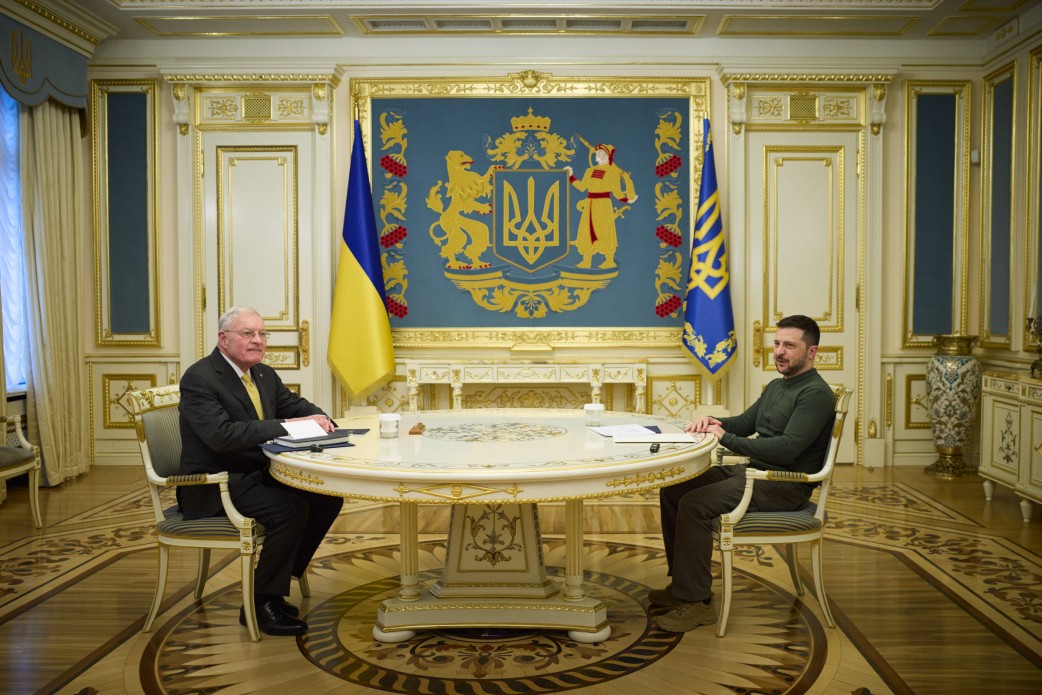
A late 2024 poll found that 21% of Ukrainians would emigrate if borders were open, citing limited development opportunities, war-related risks, and insufficient state support. Among those considering emigration, 33% are aged 18-29.
U.S. Rep. Brian Fitzpatrick countered Russia’s attacks on Zelenskyy, highlighting:
Putin is now asking for a new election in Ukraine, conducted in a specific manner that he can influence, so that he can install his puppet and accomplish that which he couldn’t militarily. Nice try, Vladimir. Try holding a free and fair election in your own country first without imprisoning your opponents.
Similarly, Gabrielius Landsbergis, former foreign minister of Lithuania, criticized the situation, stating:
Putin is not on the ropes, he is on a roll, his dreams are being realized by his former enemies. NATO stayed out of Ukraine, believed the nuclear threats and allowed the shadow war to escalate. Trump can now add Ukrainian neutrality, elections and territories to the list.
Russia’s Aims
Kellogg, who is seemingly seen as having a more hawkish stance compared to others in the Trump administration, appears to have been sidelined or never given real authority. His absence from Trump’s social media post detailing the discussions with Russia suggests he is not playing a central role in shaping the administration’s Ukraine policy. This was further reinforced as U.S.-Russia talks on ending the Ukraine war began in Saudi Arabia on Feb. 18, with Trump’s special envoy for Russia and Ukraine, Keith Kellogg, seemingly sidelined from negotiations.
The U.S. and Russia were discussing a three-stage peace proposal during talks in Saudi Arabia. The plan reportedly includes a ceasefire, followed by elections in Ukraine, and culminating in a final agreement to end the war.
Kremlin spokesperson Dmitry Peskov also asserted that the “legitimization of Ukraine’s leadership” is a prerequisite for any conflict resolution agreement, implying that elections must either take place before a peace deal or be made a condition of it.
We must fully understand what is happening. Our analysis, which has been repeatedly articulated by President Putin, indicates that Mr. Zelenskyy has significant legal problems regarding his legitimacy, but despite this, the Russian side remains open for negotiations, – said Peskov.
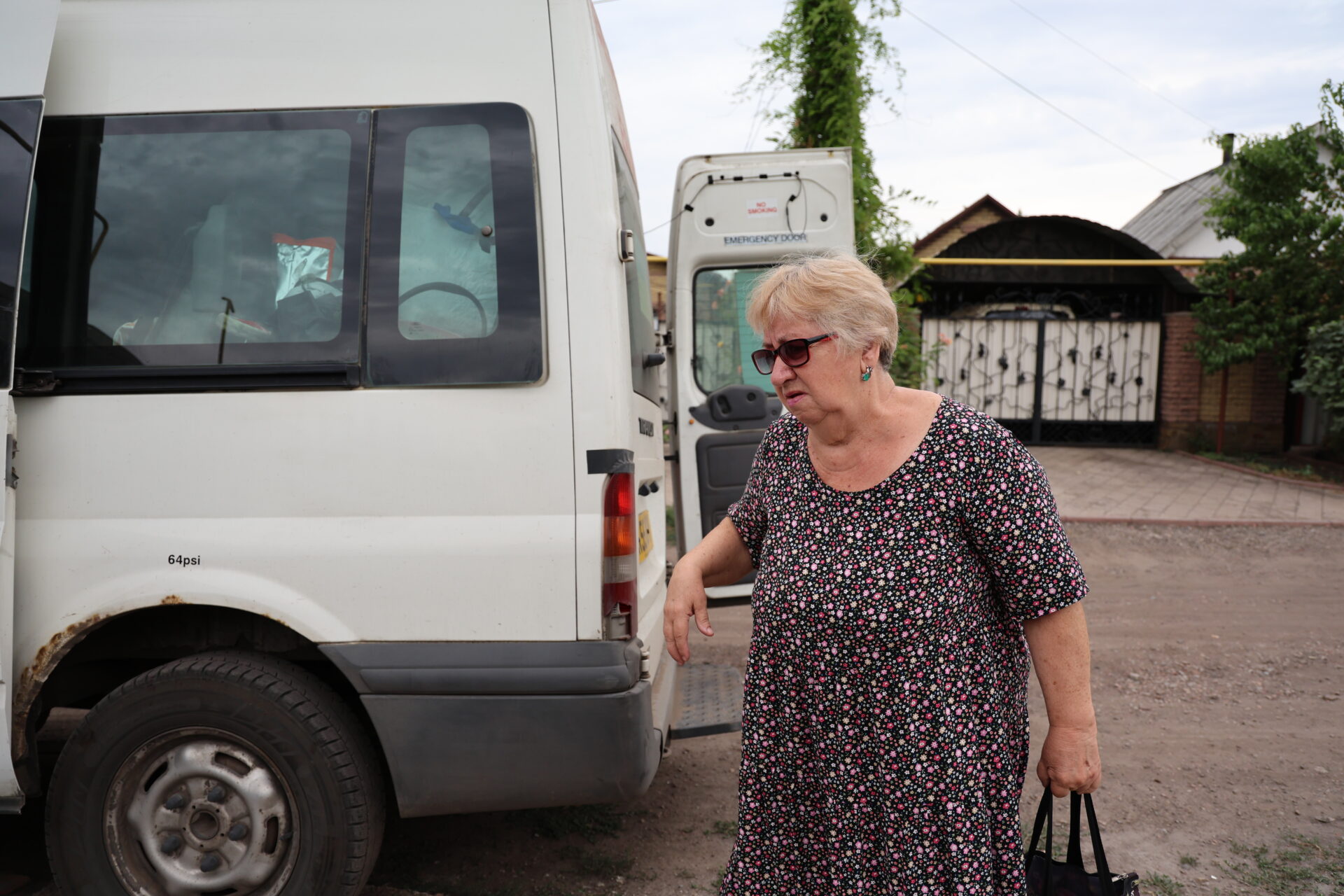
Serhii Plokhii, director of the Ukrainian Research Institute at Harvard, stated:
The idea that this is all about territory and that you have to make a deal, somehow drawing the border in the right place… is based on not understanding what this war is about.
Yet, Russia’s actions reveal that its ambitions go far beyond territorial control. If Russia were only after land, it would not be pushing for elections. Instead, Moscow hopes to achieve its original goal — removing Zelenskyy and installing a pro-Russian leader who would help turn Ukraine into a vassal state. Putin blamed Zelenskyy for standing in the way of peace between the U.S. and Russia. The Kremlin likely believes that if Russia can force an election on its terms, it could achieve its original aims.
This strategy is not new. In the 2004 Ukrainian presidential election, Putin actively intervened to sway the election in favor of the pro-Russian candidate, Viktor Yanukovych. Zelenskyy’s landslide victory over Poroshenko in 2019, fueled by a campaign promising peace with Russia in Donbas, briefly raised Putin’s hopes of drawing Ukraine back under Moscow’s influence. However, after a failed Paris summit brokered by Emmanuel Macron, Putin began preparing for war.
In a recent interview, Putin stated his plans for the future, remarking that he will put “his people” in charge of Ukraine, suggesting that this is part of the agreements with Trump. A Russian newspaper reinforced this narrative, claiming that “Putin and Trump are close in ideology and values” and calling Putin “his natural ally.”
What Trump Wants
Trump, by contrast, wants a more compliant Ukrainian leader, making it easier to pressure Ukraine. However, Zelenskyy has shown that he is well-versed in handling bullies. Trump assumes he can potentially force negotiations if needed and end the war quickly, assuming Putin merely wants land and a neutral Ukraine — despite the fact that Ukraine was already neutral before Russia’s first invasion in 2014.
According to Treston Wheat, Chief Geopolitical Officer at Insight Forward and an adjunct professor at Georgetown University, the Trump administration is likely pushing for elections in Ukraine to install a more compliant leader.
Zelenskyy had previously taken a hard stance on negotiations, though that seems to be shifting with his Kursk announcement, – Wheat said. – Trump likely wants someone in power who is willing to negotiate with Putin and make territorial concessions for peace.
However, Wheat noted that there is also a broader American belief that democracies should hold elections even in wartime.
The U.S. has a history of conducting elections during difficult wars, including the 1864 election during the Civil War and the 1944 election in World War II, – he explained. – A fundamental principle of Western democracy is civilian control of the military, which requires that elected leaders represent the will of the people.
Wheat also pointed to divisions in Western governments when it comes to Ukraine policy.
There is no singular view on Ukraine in any Western government, and that’s the core problem in forming an effective long-term strategy, – he said. – Some conservatives support Ukraine, others lean toward Russia — and the same divisions exist within liberal parties. Without a shared vision, it’s difficult to build a unified approach to the war.
Internal Politics
However, former Ukrainian President Petro Poroshenko has strongly opposed holding elections in Ukraine during wartime, arguing that doing so would weaken internal unity and benefit Russia. As the leader of the European Solidarity party, Poroshenko believes initiating the electoral process amid ongoing conflict would serve only Moscow’s interests.
His remarks, made during a meeting at the French Institute of International Relations, appear to be a direct response to calls from Donald Trump’s team – particularly special envoy Keith Kellogg – who suggested that Ukraine should hold presidential and parliamentary elections as a condition for peace talks with Russia. Meanwhile, Russian President Vladimir Putin has labeled Volodymyr Zelenskyy an “illegitimate” leader and refuses to negotiate with him.
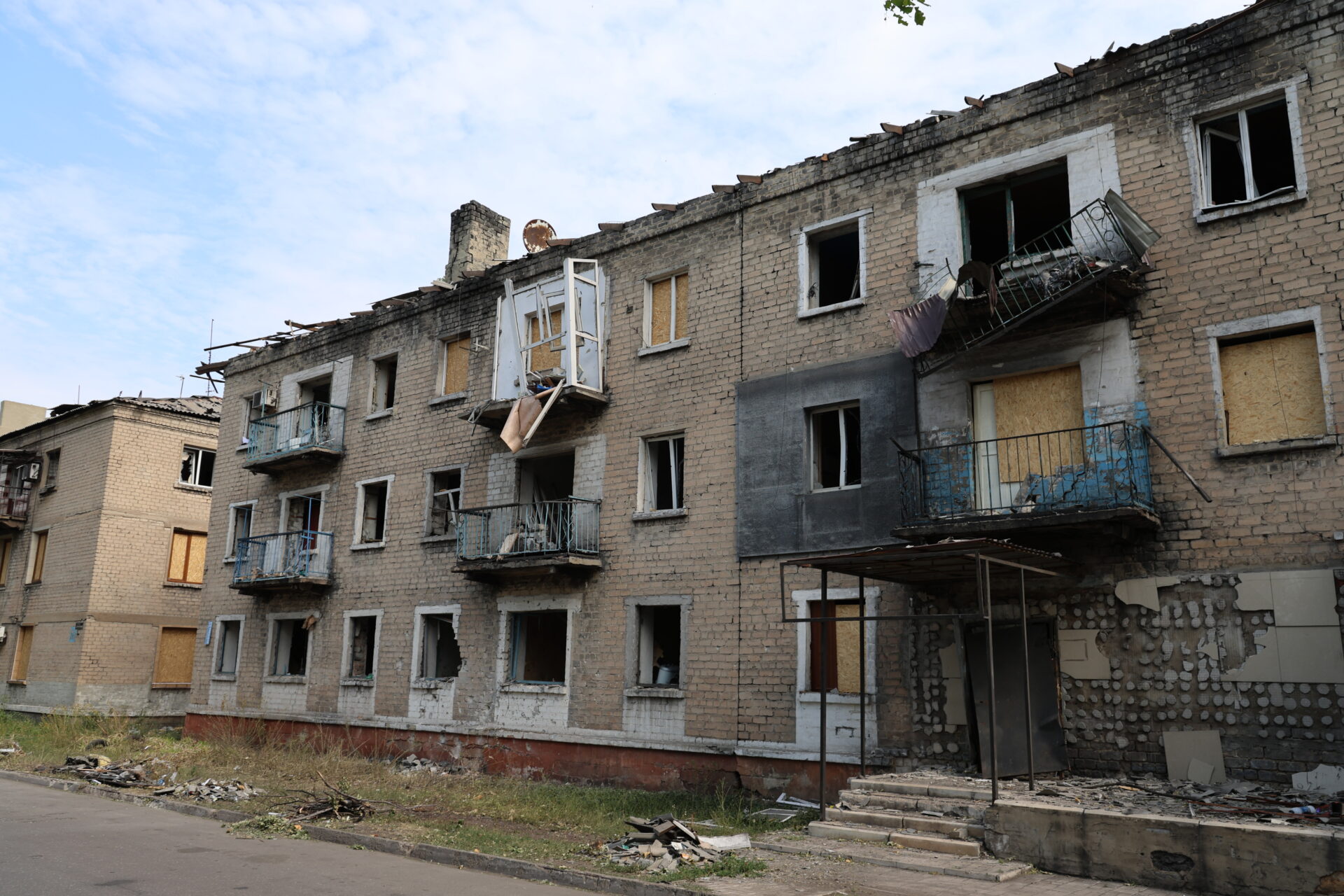
Poroshenko went on to criticize the U.S. stance, warning that elections during war would fracture the country.
Elections are always a struggle. And there can be no unity during elections, – he stated, arguing that only Putin would benefit from such a scenario. According to Poroshenko, Russia is prepared to exploit political divisions through disinformation and internal destabilization, making elections a dangerous distraction while the war rages on.
Instead, Poroshenko insists that Ukraine must first secure victory and a ceasefire before holding elections that meet democratic standards. Despite political tensions between Zelenskyy and Poroshenko, the latter’s call for unity in the face of war sends a strong message to Ukraine’s allies — reinforcing that defeating Russia remains the nation’s top priority.
Zelenskyy acknowledged that dissent is growing within Ukraine’s leadership in an interview with The Economist: “There are people who are very patriotic, and there are people who are not.” He sidestepped questions about his political future and whether he will seek re-election once elections become possible, insisting it is not his current focus — though perhaps unconvincingly.
Zelenskyy was also openly dismissive of remarks by Trump’s special envoy for Ukraine and Russia, General Keith Kellogg, who suggested that Ukraine could hold elections during wartime. How, he asks, could elections be conducted in a city like Kharkiv, which endures daily Russian bombardment?
It’s interesting when General Kellogg thinks about elections. He’s 82 [in fact, 80] years old, and he thinks about elections in Ukraine.
Taras Kuzio, Professor of Political Science at the National University of Kyiv-Mohyla Academy, stated:
Ukraine’s constitution is clear — elections cannot be held during martial law, and martial law will remain in place as long as Russia continues its war against Ukraine. While some Ukrainian politicians anticipate it may be lifted if a peace deal is signed, I remain skeptical, as both Ukraine and Europe are wary of what Trump is negotiating with Putin, which at first glance appears to be a Yalta-2 sellout.
Zelenskyy is also preparing the election field, just as he was in 2020-2021, by issuing sanctions against his center-right competitor, Petro Poroshenko.
Following Zelenskyy’s sanctions on Poroshenko, the former president claimed in an interview that Ukrainian authorities are preparing to hold presidential elections by October 2025. However, Zelenskyy’s party leader, Davyd Arakhamia, denied the claim, emphasizing that elections cannot be held under martial law and that all political parties have agreed elections will only take place at least six months after martial law ends.
However, former OSCE Secretary General Thomas Greminger cautions against holding elections in Ukraine too soon, arguing that free and fair elections are impossible under current conditions due to Russian-occupied territories. Greminger warned that premature elections in conflict zones have historically led to instability rather than stabilization.
Ukraine’s Political Future
Meanwhile, speculation swirls around former Commander-in-Chief Valerii Zaluzhnyi, whose book My War has sold thousands of copies, fueling discussions about his political future. Still, polls indicate that most Ukrainians prioritize winning the war over holding elections, while Russia continues to cast Zelenskyy as illegitimate in the absence of a vote.
But if elections were to be forced as part of a settlement, the biggest potential challenger to President Volodymyr Zelenskyy in a future election is former Commander-in-Chief Valerii Zaluzhnyi, who remains highly popular despite his current role as Ukraine’s ambassador to the UK. With 80% of Ukrainians trusting in him, Zaluzhnyi’s outsider status and military leadership make him a formidable opponent, similar to how Zelenskyy positioned himself in 2019.
Pasha (“Bilyash”), a soldier who previously served in the 115th Brigade before transferring to the 110th Brigade and fought in battles like Siverskodonetsk, is confident in Zaluzhnyi’s electoral prospects. “He would win 200%,” – said Pasha.
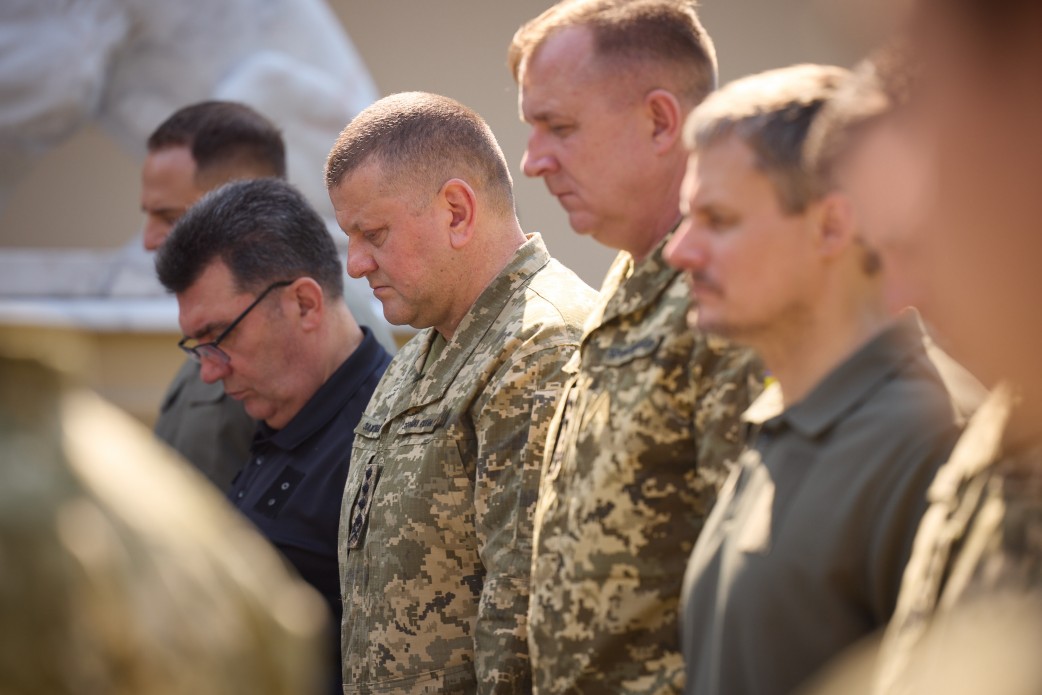
Previous polling suggested a close race, with Zelenskyy narrowly leading in a hypothetical runoff. However, the most recent polling from February 2025 indicates that Zaluzhnyi would win by a wide margin. If a ceasefire deal were implemented and elections were held, Zaluzhnyi could adopt a far more hawkish stance, further unifying the country and military against Russia. While Zaluzhnyi has not declared political ambitions, his continued engagement in Ukrainian affairs — publishing memoirs critical of Zelenskyy, meeting with military leaders, and commenting on national issues – indicates he is far from sidelined.
Zaluzhnyi has neither confirmed nor denied a potential presidential run, stating that such a question would only be relevant if Ukrainian statehood were secure in a recent interview in February. He emphasized that for now, the priority is survival and preserving the nation, with political considerations coming later.
Regardless, any wartime elections or political transitions following a fragile ceasefire could lead to greater instability, potentially giving Vladimir Putin exactly what he wants—a weakened Ukraine divided from within. Political turmoil, fueled by internal power struggles and Russian disinformation, could erode national unity at a critical moment, making it easier for Russia to exploit divisions and help weaken Ukraine.
David Kirichenko is a Ukrainian-American freelance journalist and an Associate Research Fellow at the Henry Jackson Society, a London-based think tank. He can be found on X @DVKirichenko.