

The Munich Security Conference 2025 has highlighted the difference between European and American geopolitical priorities. MSC Chairman Christoph Heusgen’s emotional reaction during his final speech symbolized Europe’s concerns about the change of common values with the US, in which US Vice President J. D. Vance blamed European allies. Is Europe prepared to navigate a future without its main partner? And will the EU make a drastic change to stabilize the situation?
The EU and Negotiations table
During a February 17, 2025 video conference with media representatives, Ukraine’s President Volodymyr Zelenskyy claimed the need for a Special Representative of Europe for negotiations, and European allies share this stance. As Reuters reported, Finnish President Alexander Stubb expressed the same position. Speaking to ERR’s radio news, EU High Representative for Foreign Affairs and Security Policy / Vice-President of the European Commission Kaja Kallas stressed:
This is also an answer to the question that any agreement made, so to speak, over our heads—over Ukraine or Europe—cannot actually be implemented because, for its implementation, both Ukraine and Europe must agree to it.
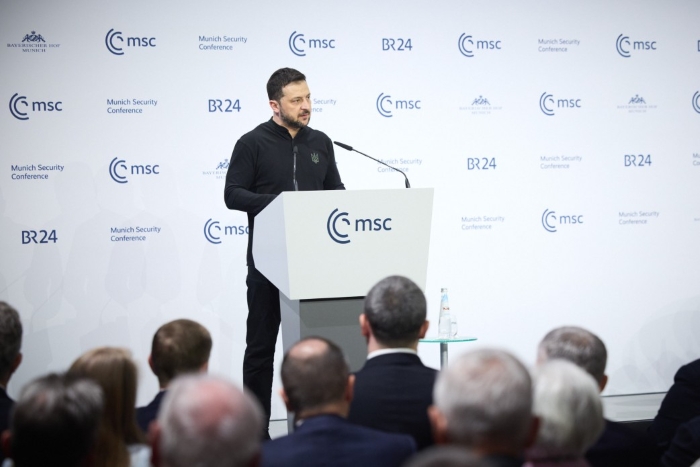
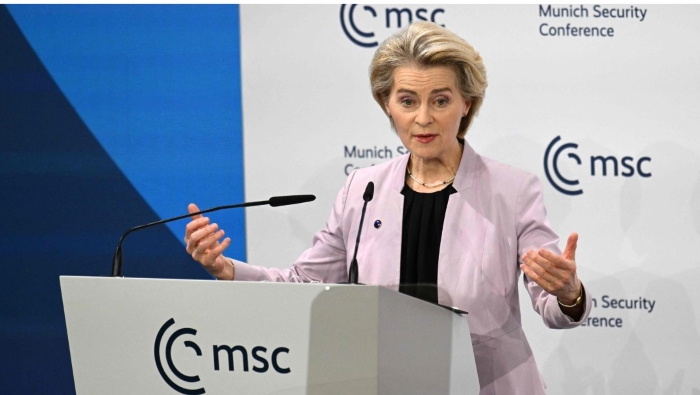
During her MSC speech about Europe, President of the EU Commission Ursula von der Leyen also confirmed that Europe will absolutely be at the negotiating table.
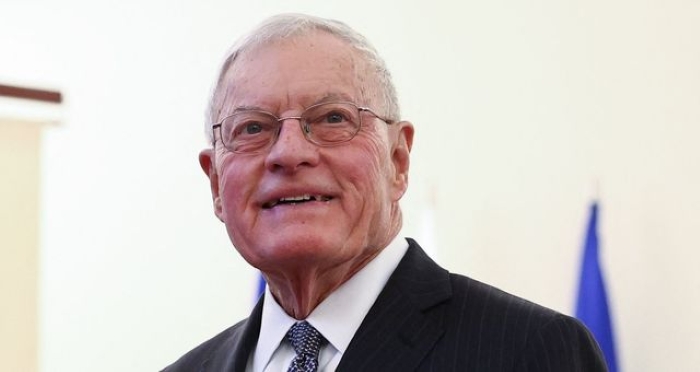
However, the US special envoy for Ukraine and Russia, Keith Kellogg, said that Europe would not be physically present during the potential negotiations on the Russia-Ukraine war. Referring to the Minsk agreements, he argued that the presence of too many countries hindered long-term peace solutions. He added that European partners` interests would be counted to a certain extent. At the same time, the US assigned Europe the responsibility for the security guarantees in Ukraine.
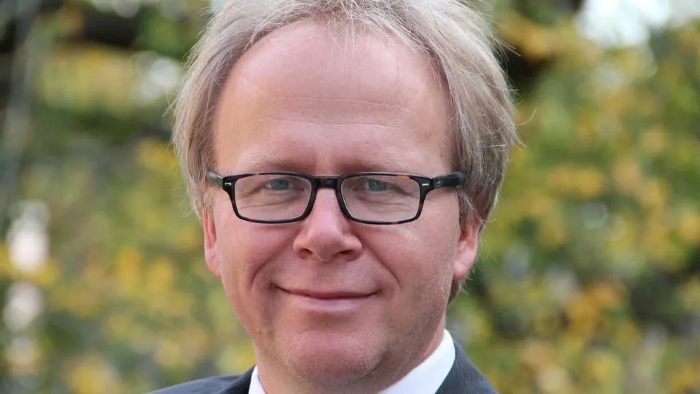
David Trads, Danish journalist, author, and expert on the USA, has explained by what can this discrepancy in statements be driven:
We have to start by understanding that everything we thought we knew about the world, the rules-based liberal society that we have lived in for many years, all of that is gone now. With President Trump in office, the whole ballgame changes in every possible way that we can imagine, and maybe even in ways we can’t imagine.
President Trump wants to negotiate everything that he thinks is important by himself and only with Putin. He wants Europe to pay for everything expensive, to take care of everything that might have to do with securing peace in the near future. He just wants Ukraine to obey and basically pay back the amount of money that he thinks the United States has wrongly given to Ukraine over the past three years. He doesn’t care about the European Union or NATO or even Ukraine.
Consolidation of Europe: can it be quick?
For years, EU member states have been reducing the spending on defense. According to data from the Stockholm International Peace Research Institute (SIPRI), the peak of this decline occurred in 2014-2015, when Russia started its invasion of Ukraine.
These graphics were used in the September 2024 report The Future of European Competitiveness by Mario Draghi — former European Central Bank President, where he emphasizes:
Europe now faces conventional warfare on its Eastern border and hybrid warfare everywhere, including attacks on energy infrastructure and telecoms, interference in democratic processes, and the weaponization of migration. At the same time, US strategic doctrine is shifting away from Europe and towards the Pacific Rim — for example in the format of AUKUS [Australia, United Kingdom, United States, Tripartite Defence Pact] — driven by the perceived threat of China. As a result, a growing demand for defense capability is being met by a shrinking supply — a gap that Europe itself must fill.
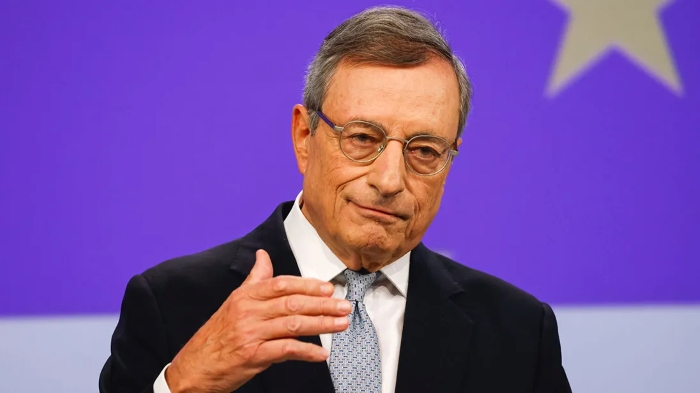
According to him, the European defense industry has a competitive potential but faces weaknesses in scales, coordination, and appropriateness to the modern context. European defense spending is approximately 1/3 of what the US invests (considering the fact that the population of the EU itself is around 100,000 higher than the US). Draghi advocates for the consolidation of defense markets and the implementation of commercial technologies.
European leaders agree on the need to increase the defense budget. During the MSC Speech, Ursula von der Leyen said that EU members should spend 3+ percent of GDP. However, Trump wants each NATO member to allocate 5 %, which is, according to a Politico article, Europe splits on Trump’s call to dramatically boost defense spending, more than even the US amount so far.
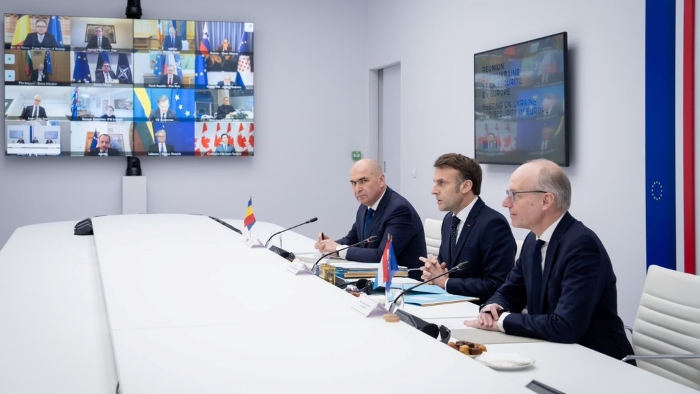
During the same conference, Volodymyr Zelenskyy called for the creation of an “army of Europe”, also emphasizing the importance of the consolidation. Amid the meeting between American and Russian delegations in Saudi Arabia, French President Emmanuel Macron initiated two urgent gatherings. The first one included 11 European leaders and NATO General Secretary and focused on the possibility of sending peacekeeping troops to Ukraine but consensus was not reached.
We seek a strong and lasting peace in Ukraine. To achieve this, Russia must end its aggression, and this must be accompanied by strong and credible security guarantees for the Ukrainians. Otherwise, there is a risk that this ceasefire will end up like the Minsk agreements. We will work on this together with all Europeans, Americans, and Ukrainians. This is the key, — Wrote Macron on his x account after the meeting. So, European leaders continue to publicly appeal to US partners.
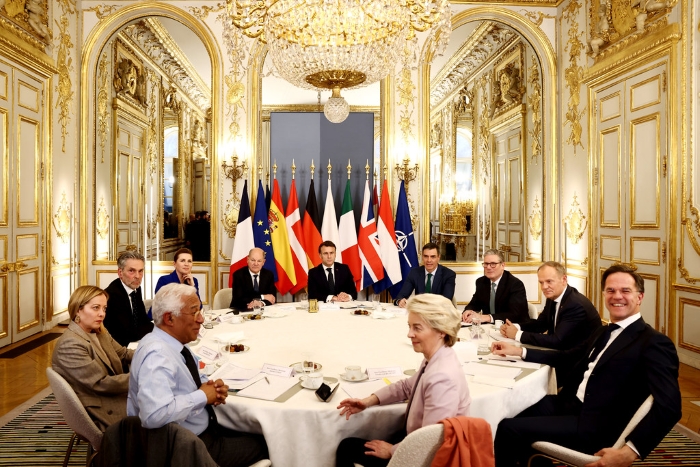
Meanwhile, NATO Secretary General Mark Rutte wrote that European leaders are ready to take responsibility:
Ready and willing. That’s my take from today’s meeting in Paris. Europe is ready and willing to step up. To lead in providing security guarantees for Ukraine. Ready and willing to invest a lot more in our security. The details will need to be decided but the commitment is clear, — he wrote on X.
David Trads shared with The Ukrainian Review his opinion regarding the efficiency of such meetings and progress in the reorientation:
I think that meeting in Paris was a very good start because Europe obviously needs to step up its game after Europe basically has been left by the United States. So this was an idea of getting Europe together to start an important dialogue about what Europe can do in the near future. There was, of course, also a problem in that meeting, because if you noticed the picture from it, then it was a round table that they sat around. And the thing about a round table is that it doesn’t have someone sitting at the end of the table.
So it was also an example of how Europe at the moment doesn’t have a leader. That’s a problem for Europe in order to step up its own game because who is the leader? Is it the French president who is extremely unpopular in France? It’s obviously not the German chancellor because he’s on his way out. Is it the British Prime Minister? Of course, it isn’t, because they’re not a member of the European Union. Is it the European Union? No, because they don’t have defense, at least not very much of it. Is it NATO? No, because NATO is in trouble because it is mostly the United States and then European countries.
However, he stressed, that it remains a good sign despite the nuances:
For Ukraine, I would say that in the situation that is now the reality, the United States negotiating directly with Putin without Zelenskyy, without Europe, then this meeting in Paris is good because it does show that there is a very strong desire by the European heads of states and leaders of their governments to support Ukraine. That’s not as good as if the United States and Europe together would support Ukraine, but it’s a lot better than if Europe was also divided.
At the second meeting held two days later, more participants were invited because of the hybrid format of the conference. However, the details of both gatherings remain officially undisclosed.
Trump suggested withdrawing from NATO in his interview for NBC News on December 8, 2024. According to US law, unilaterally withdrawing from this alliance is not possible, it requires approval by two-thirds of the Senate or separate legislation passed by Congress. Notably, this measure was implemented in 2023 as a preventive for Trump’s potential presidency. At that time Senator of Florida and now Secretary of State Marco Rubio promoted its adoption, and now he became the head of the delegation, unblocking Russian international isolation. Nevertheless, the withdrawal remains feasible.
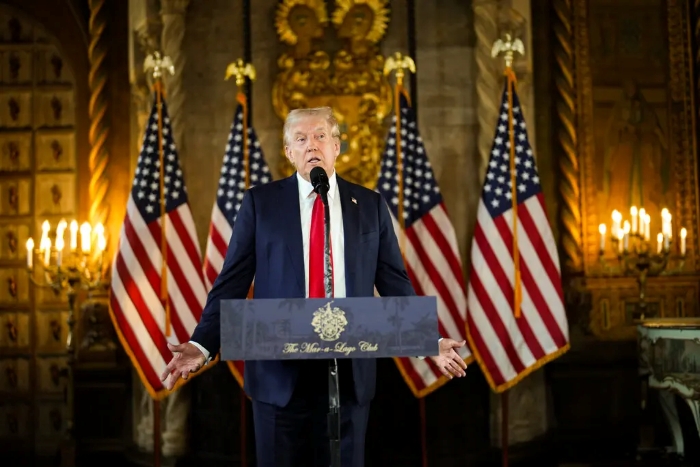
During the press conference in Mar-a-Lago, Trump was asked whether the US would withdraw all troops from Europe, and answered:
Nobody’s asked me to do that, so I don’t think we’d have to do that. I wouldn’t want to do that.
Earlier on, U.S. Defense Secretary Pete Hegseth, during his visit to Warsaw, warned Europe that US troops would not be located on their continent forever, talking about the perspective about a decade ahead.
Trump prioritizes bilateral partnerships with individual states, Therefore, for instance, the U.S. strengthens ties with Poland and, as Polsat News reported, Polish president Andrzej Duda believes in building Fort Trump [a proposed United States military base in Poland]. Poland nearly meets Trump’s desirable amount on defense, spending 4.7% of GDP. This is the tendency of the European countries who understand the danger from Russia due to their locations.
In his June 2024 column, George Allison, Editor at UK Defense Journal, reflects on whether NATO can function without the US:
When it comes to troop numbers, NATO (excluding the US) has over 1.5 million active military personnel, compared to Russia’s 1 million. But it’s not just about the numbers. The real strength of NATO lies in its advanced technology and how well its forces work together.
The future of the EU and Ukraine’s place in it
The EU has existed for 31 years, though its formation has deeper historical roots. However, now it faces war threats and interference from the third countries.
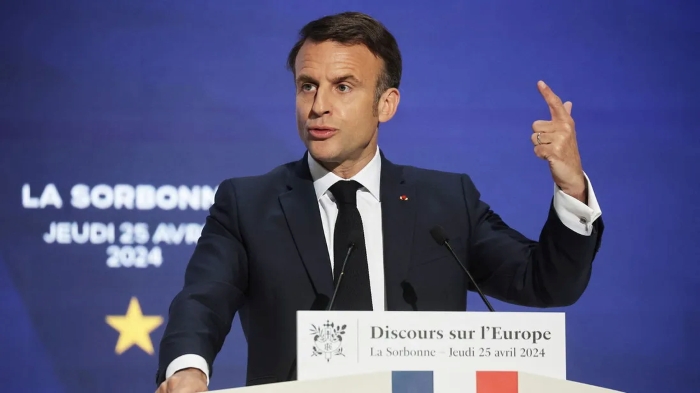
Our Europe, today, is mortal, and it can die, – said Emmanuel Macron during a speech on Europe at the Sorbonne University on April 25, 2024.
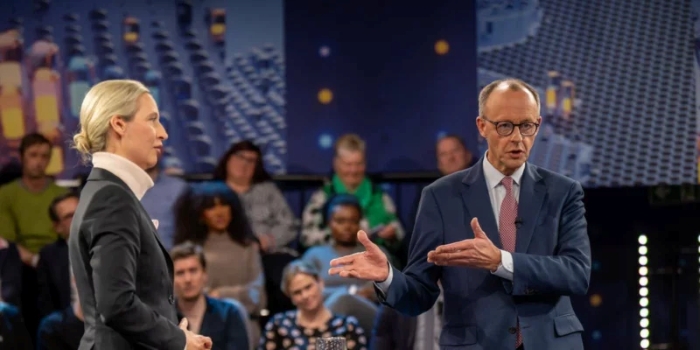
Russia is attempting to destabilize the situation not only on the EU’s borders, but also in its internal affairs, and new U.S. leadership entrained this tendency. Romania has canceled the election results because of the Russian trace, but U.S. Vice President Jay D. Vance condemned this decision. He also refused to talk to the at that time German Chancellor Olaf Scholz, but instead had a conversation with AfD leader Alice Weidel, known for her pro-Russian stance.
Hungarian Prime Minister Viktor Orbán in 2024 founded far-right Patriots for Europe as an opposition to current EU major policies. Under this circumstance, the question whether the EU would overcome the new challenges remains unanswered.
David Trads emphasizes:
In my opinion, it is very worrisome that we see the new US administration so strongly advocating for European voters to vote for the far right. One country should not try to decide who voters in another country should vote for to begin with. But number two, it’s even worse when they advocate for the extreme right-wing to win elections. It is also a problem within almost all European countries that we see far-right and also sometimes far-left parties who tend to have some degree, sometimes very obviously, sometimes less obviously of the fascination of Mr. Putin and Mr. Trump, because that means that even in the different parliaments in Europe, for instance, in Germany with AfD or in France with Le Pen’s party, we suddenly see that those parliaments are also sort of falling apart so to speak, because the common idea that has been Europe’s goal ever since WW2 of making sure that democracy is the core and freedom of speech is the core of our society, and the thing that we don’t accept is one county goes into another one, invades it and takes over a part of its territory.
Similar concerns are expressed for The Ukrainian Review by Maksym Panchenko, an expert on European integration of Ukraine:
First, it is a challenge to the rules by which the EU functions, of course, the most prominent of which is the unanimity rule in the European Council (in voting). This state of affairs is pushing the EU to a certain fork in the road: how to change the rules of decision-making in a way that makes it easier, faster, and more efficient, and so that Hungary cannot block everything at once, and on the other hand, that it does not lead to centrifugal movements.
The second challenge is the need for equilibrium at the national level, because the rise of the right-wing forces makes coalition negotiations more difficult. We can look at France and what is happening there after last year’s early parliamentary elections, how complicated the coalition negotiations are, the budget process, and the situation with the votes of no confidence in the previous government. That is, the resources, energy, and attention that are being diverted at the national level do not allow us to focus it on helping Ukraine in particular.
And thirdly, there is the equilibrium at the international level, because the EU is now at a crossroads where it needs to respond to the United States a little bit more firmly in the same style as the US talks to the EU, and on the other hand, the EU simply cannot afford to do so, because without the US, the EU is not strong enough, at least for now. It will take time to build up this capacity, and it will take internal agreement on the need to concentrate power in its own hands.
The European integration expert emphasizes that both sides are facing difficulties:
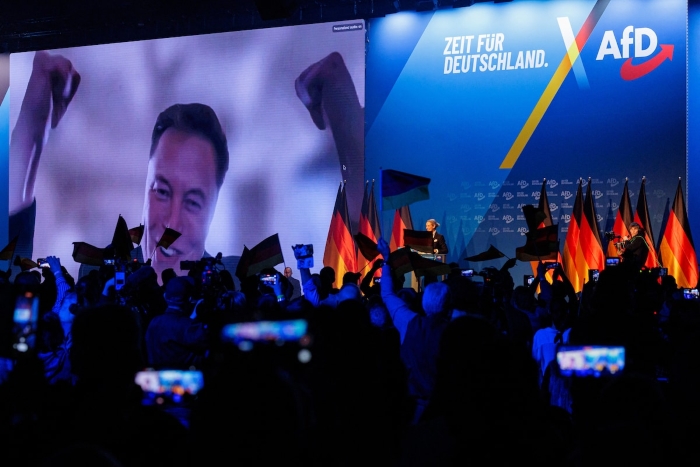
At the same time, the attackers and external players also have problems. For example, we can look at the fragility of the Fico`s regime. There are also structural safeguards in certain EU countries, for example, Germany has a firewall policy, which means that since the end of World War II, there has been a rejection of the idea of a possible coalition with far-right forces in German political culture, a moral prohibition. In addition, it is worth mentioning that, in fact, the intervention of the United States and Musk’s speech at the Alternative for Germany meeting did not lead to an increase in their results compared to the forecast. This can be called the first defeat of the United States in its tendency to support right-wing forces in Europe.
Back in June 2022 Volodymyr Zelenskyy, during a conversation with journalists, said that there is no alternative for the EU in Ukraine’s case. In a 2023 interview for EuroPravda Lithuanian diplomat Petras Auštrevičius said the same, as well as EU Ambassador to the US Jovita Nelyupšienė in 2024 during a speech in Washington. Also, Eurointegration and integration into NATO strategies have been in Ukraine’s law since 2019. Thus, the EU alternatives are not broadly considered, while in the case of partners’ reluctance to accept Ukraine to NATO Ukraine outlines two alternatives: a military contingent on Ukraine’s territory, which is hard to organize without the US, or returning of a nuclear weapon, taken away as a result of Budapest memorandum.
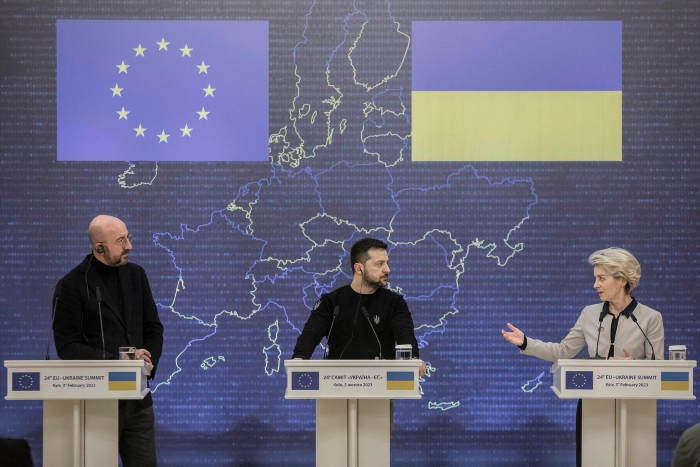
Former European Council President Charles Michel, Ukrainian President Volodymyr Zelenskyy European Commission President Ursula von der Leyen attend a European Union-Ukraine Summit in Kyiv on February 3, 2023/Emile Ducke, The New York Times
Maksym Panchenko is also of the opinion that there is no alternative to European integration, citing the following arguments:
If we do something on our own, we don’t have enough resources. The war is a prime example of this state of affairs. Without financial and military assistance, we would not be where we are today. If we were to form some new formats of alliances, that is, to choose a number of bilateral alliances or to create a single multilateral alliance, it seems to me that this would be a much more fragmented picture, and therefore it would be less stable both politically and structurally, because the EU is much more homogeneous. And, besides, we have to understand that against the backdrop of problems with the United States, Europe has no choice but to strengthen itself from within, and this is a good moment for cooperation. First, it gives us an opportunity to be close to strong players who want to strengthen themselves, and help us in this, and we will help them to a certain extent, and it is an opportunity to be co-authors of success, because we hope that the strengthening of Europe that they have to strive for will be successful.
All the benefits for which we went into European integration from the very beginning are literally what Maidan stood for, but this ideology itself is also still relevant. We have been moving in this direction for 10 years, and this still emphasizes that these values and benefits remain necessary for us.
Europe, like the rest of the world, entered a new era not quite ready for changes in U.S. policy, despite talks of possible changes in the run-up to the U.S. presidential election. However, European leaders have now demonstrated an awareness of their new role as Ukraine’s key ally. In contrast to the current complimentary U.S. policy toward Russia, Europeans continue to emphasize who the aggressor is, recognizing Russia’s aggressive ambitions on the continent. For Ukraine, there is for now no better alternative for integration than the EU, and the currently postponed promised NATO membership remains important. For Europe, it is time to strengthen its defense capabilities and defend its strategic autonomy, as the United States declares its intention to reduce its presence.
Daria Maslienkova