

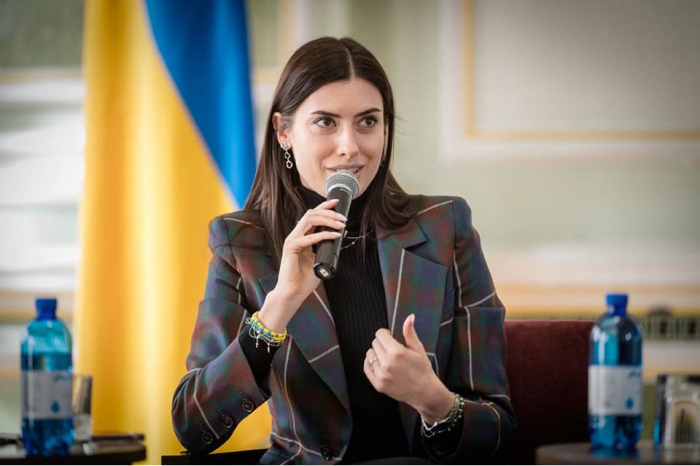
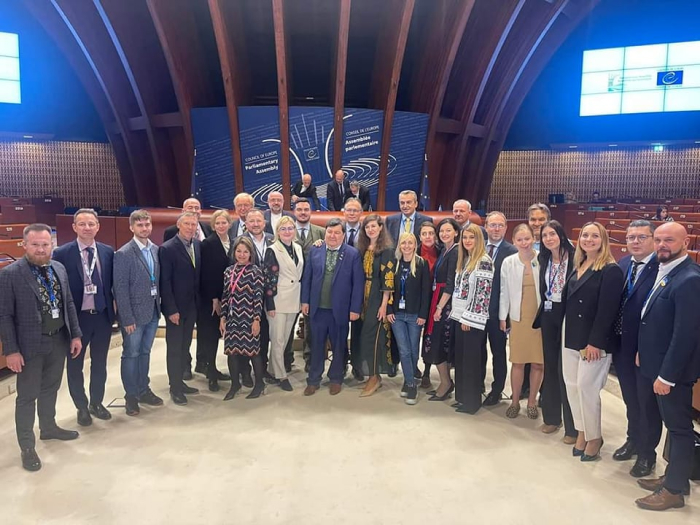
We continue a series of articles dedicated to the problems of Ukrainian prisoners of war. Ukrainian MP Maria Mezentseva is well acquainted with these issues. The parliamentarian is serving her first term in the Verkhovna Rada, representing the mono-majority, and is the Head of the Ukrainian delegation to PACE, where she regularly raises the issue of protecting the rights of Ukrainian prisoners of war.
Kostyantyn Grechany, a journalist at The Ukrainian Review:
K.G.: Maria, let’s start with the most general: what is the broad range of problems that Ukrainian prisoners of war face?
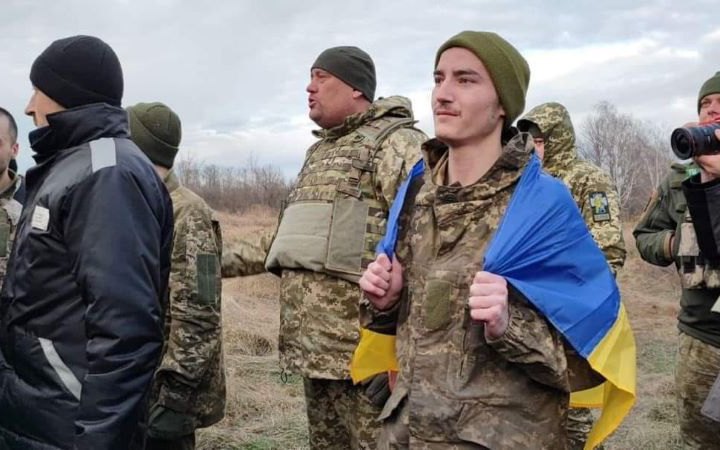
M.M.: First of all, I would like to point out the following: this problems affects many Ukrainian families. For reasons of security, we do not disclose the exact number of our defenders in captivity when sharing data with our international partners or, unfortunately, with the Russian side. The Coordination Headquarters of the Ministry of Defense’s Main Intelligence Directorate [HUR MO] once mentioned about 7,000 people, but since many exchanges have taken place after the large-scale invasion, this number has decreased.
As for the main problems: the fundamental one is Russia’s violation of international law. The Russian Federation is a party to the Geneva Conventions, which should apply in any armed conflict, but the occupying force does not comply with them. These are basic rules between two warring parties. At the same time, we understand that Ukraine is defending itself, upholding its right to exist, while Russia is the aggressor country.
Russia must provide access [to humanitarian organisations designated by international law – ed.] to detention centres. We know that many of our defenders are held illegally, either in existing detention centres or in artificial ones. The whereabouts of prisoners of war are not always known, and their status is not always established. A joint mechanism exists for those who have disappeared “under special circumstances.” This is a joint project of the HUR MO, the Security Service of Ukraine, and the National Police – a common database that includes both military and civilian persons, although we are talking about different circumstances of disappearance. Working with cases of prisoners of war is somewhat easier since we have at least some understanding of where their military unit was operating. However, with civilians, there is no such connection. Of course, civilians should not be taken as prisoners at all, but Russia ignores this. These include children, the elderly, and people with serious illnesses such as cancer. People were in a certain town that was occupied, and they were kidnapped and taken to an unknown location. There are many such cases.
In this context, another problem exists. Some people are vulnerable and emotionally unstable, and when a loved one is taken, the enemy may fraudulently coerce them into performing specific tasks on territory controlled by Ukraine. In such cases, we strongly advise contacting authorised bodies, such as coordination headquarters. This serves as a kind of family access service, for instance, for registering a missing person or a military individual confirmed to be in captivity. There is registration, there is a system, there is legal support, psychologists are available, and there is constant dialogue. This is all available in the regions; there’s no need going to Kyiv.
K.G.: Maria, do you have at least approximate statistics on what percentage of Ukrainian prisoners of war have access to medical care? I’m not talking specifically about the Red Cross, but any assistance at all.
M.M.: Kostyantyn, unfortunately, there are no such statistics. I want to tell you one thing: having had access and being in a camp with Russian prisoners of war, I was able to see how they are kept. They have access to information – they can watch Ukrainian television. Our prisoners do not have this at all. Russians have access to communication with relatives (both by phone and in writing), good nutrition, proper sleep, and literature. Meanwhile, none of this is available for Ukrainians in captivity.
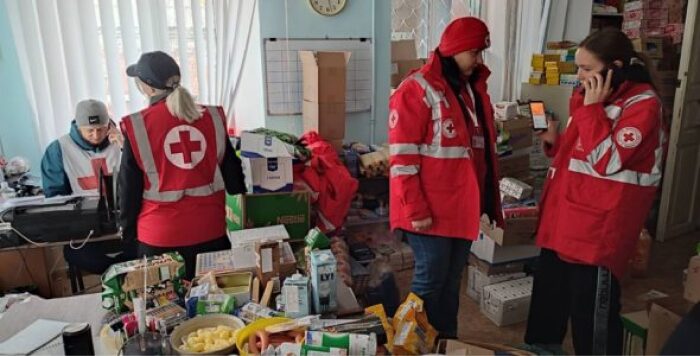
As for the Red Cross. The ICRC mission [International Committee of the Red Cross] operates according to protocol. They must constantly receive approval from both sides. And Russia, knowing this rule, simply ignores it. “We do not approve your visit” – and that’s it.
K.G.: How does the Russian side explain this? Or do they just give unmotivated refusals?
M.M.: The Russian side simply ignored many initiatives, such as parallel medical examinations on both sides (initiated by the Ukrainian Ombudsman’s Office). Why does this happen? The Russian side does not want the world to learn about the horrific war crimes they commit. For example, we have clear testimonies… Last week, a Russian soldier who operated near Avdiivka testified. He spoke about the rape of girls aged 10-13 in front of their mothers. And vice versa – children as witnesses while their mothers were raped. This brings us to another important issue: responsibility for war crimes, both collective and personal, particularly for top officials. This is why the idea of a special tribunal for crimes during Russian aggression arose.
K.G.: What is PACE doing to ensure the rights of our military personnel who are currently in captivity?
M.M.: First of all, we have registered the initiative for a resolution that is to be presented to the entire PACE and written as the main document on this topic, which we would like to combine with the issue of civilians in captivity. Imagine, the military and civilian captivity issue even appeared in resolutions concerning Navalny and Kara-Murza. We always try to expand a specific case into a more significant problem. Next, we expect our initiative to become a top topic for the next session. Then – the preparation of the resolution text and voting.
We also have a mechanism of publicity. When you say that the vice-speaker of the Russian Duma kidnapped a girl who was just over a year old and who now lives with him in Moscow with a changed name and surname… A crime of a genetic nature took place – an attempt to erase her identity. This shocks and prompts action.
And thirdly, work with the Swiss delegation of the ICRC. There is a certain non-public case. There have been many instances when, concerning missing persons whose whereabouts the family did not know, or if they even knew whether the person was alive, the ICRC was able to deliver a box of personal belongings, a letter, etc. Each time it looks like some secret special operation, but it happens.
K.G.: Recently, I had an interview with a soldier from a National Guard of ours who was captured in Azovstal and spent over a year and a half in captivity. Most of the time was spent in Horlivka on the territory of the so-called “DPR.” There were beatings and moral pressure, but he could somehow survive. Just before the exchange in January of this year, they were transferred to a camp in Taganrog. He said that in Taganrog, in one week, he suffered more than in a year and a half in Horlivka, and he couldn’t understand how the other guys lasted the entire time since the beginning of their captivity, as there was a complete set of tortures. I understand that this is just one case, and we shouldn’t make global conclusions based on it, but where I’m going with this: apart from centralised communication with the enemy, is there any separate dialogue about prisoners of war with the self-proclaimed republics?
M.M.: As far as I know, they are not the decision-makers in this process. They are the executors of torture within the genocidal policies of the Russian Federation imposed according to a manual. For example, we found out that there is a clear motive behind the raping of women and children (including boys): to discourage, pardon the bluntness, the desire to reproduce and give birth to more Ukrainians. In other words, rape was ordered as a policy. We try to comment on this from a human perspective, but there is nothing human about it. I was in Kupyansk. They turned the district police department into a torture chamber. I can’t even describe in words the methods and ways I saw there.
K.G.: Maria, one last question: where can people who have returned from captivity turn to, and what support programs are available for them now?
M.M.: Kostyantyn, the latest update, which will be supplemented and updated, is the “Army+” app. If “Reserve+” was created to understand how many people we can cover with recruitment, then “Army+” appeared so we can understand how many veterans we have, what their needs are, where there is full family support and care, and where no one is taking care of them, where there is disability and prosthetic needs, and so on.
In terms of social adaptation, it is very important to help people find and establish a workplace. Currently, all regional Employment Centers have a specific task from the state – to promote, encourage, and sign memoranda with the corporate and public sectors for the greatest possible involvement of veterans in employment.
We try to highlight all our positive cases through media resources. A person should not have to search, ask around, or find out from unknown sources. A person should clearly understand: they will be consulted and they will be helped. In my opinion, client-orientedness – taking someone by the hand and leading them to a result – is the most important thing.
K.G.: Maria, thank you for taking the time. It’s essential to inform the public about these issues.
M.M.: Kostyantyn, thank you for your work. This is the number one topic for me right now. And I am confident that we will succeed.
Interview conducted by Kostyantyn Grechany