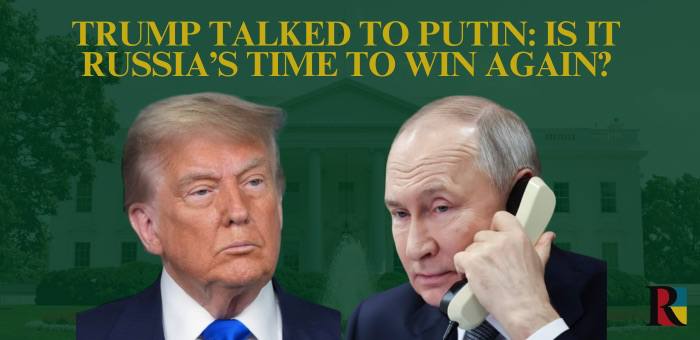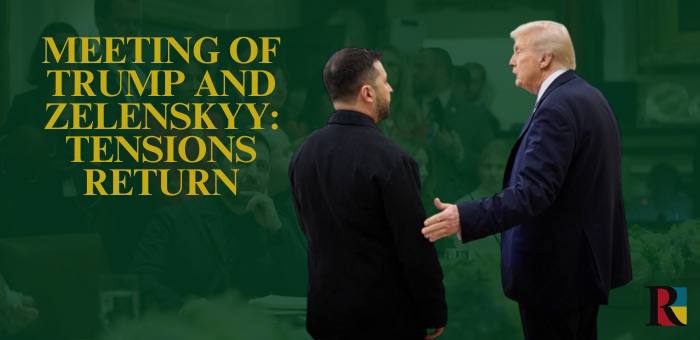


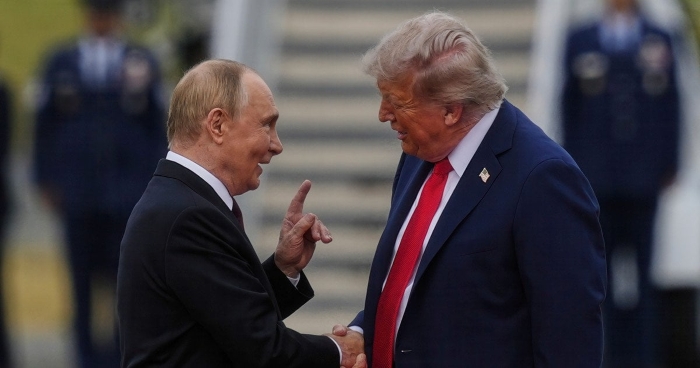
As The Financial Times reported, the meeting between Donald Trump and Vladimir Putin in Alaska was far less successful than initially described, as the Russian president rejected all peace proposals and began presenting the U.S. President with an alternative version of history. Putin attempted to justify Russia’s atrocities by falsifying the historical roots of the aggression — the same approach he used earlier in his interview with Tucker Carlson.
Attempt to Appease Dictatorship
The article noted that Trump stated the U.S. was ready to recognize Russia’s annexation of Crimea in 2014 and pressure Ukraine to withdraw from some positions if Russia agreed to stop fighting. Yet even this did not satisfy Putin.
One positive outcome of the conversation was a shift in the U.S. administration’s rhetoric toward a more pro-Ukrainian stance — largely a reaction to Russia’s arrogance. However, the direction of future talks and meetings remains uncertain.
A separate dimension of the issue lies in the way the Russian leadership receives information. The head of state and his inner circle are often fed filtered, overly optimistic, or outright distorted reports about events on the battlefield and within the country. Investigations and analyses by Western media and intelligence services indicate that Putin repeatedly finds himself trapped in an “echo chamber”. The real situation at the front is concealed or manipulated.
Russian hatred as the Core
For centuries, Russians have been raised within an information environment saturated with hatred and imperial superiority. Even Putin’s death or resignation would not necessarily mark a turning point in Russia’s war ambitions. Recently, a video appeared online in which a Russian man threatened a Ukrainian family in Switzerland and excitement about killing every Ukrainian”. This illustrates the general mood of aggression and dehumanization.
Moreover, even the extremely high casualty rate has not stopped Russia’s war machine, as the losses have yet to reach a point of internal collapse. As the economy stagnates, more Russian citizens view military service as one of the few stable sources of income.
The Russian information space combines myths of a “Great Russia,” nostalgia for imperial power, the portrayal of World War II as an exclusively “victorious” story, and narratives about a supposed “fight against Nazism” in Ukraine. Putin’s ideological persuasion reaches even deeper — drawing on distorted historical myths going back a thousand years to justify current aggression.
According to various polls, the percentage of Russians who support the war or the actions of the Russian army in Ukraine varies depending on the sources and phrasing of questions. Independent sociologists (Levada Center) and international analysts have found that the level of approval for the army’s actions or the desire to “continue/support the operation” generally fluctuates between 60% and 80% over different periods.

Conclusion
Economic incentives or partial agreements will not work in Russia’s case. This war began on ideological grounds, and, as the FT article noted, Putin still believes in his notion of “victory”. That means Ukraine’s capitulation, the erasure of Ukrainian identity, and the use of the country both as a staging ground and as a source of human resources for future attacks. Therefore, such negotiations are dangerous for Ukraine. Yet paradoxically, Russia’s own arrogance and obsession with supremacy only strengthen Ukraine’s position internationally, aligning diplomatic efforts and global support more firmly on Kyiv’s side.