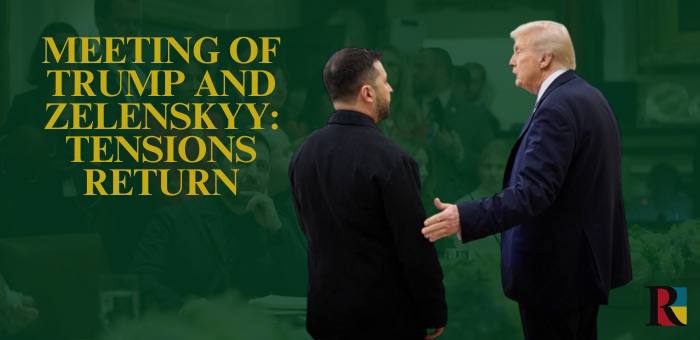


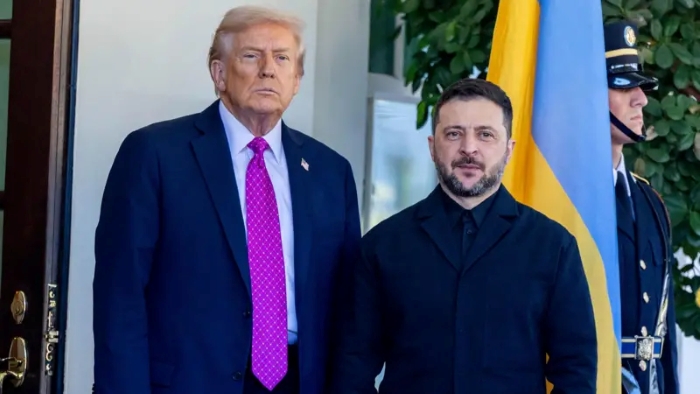
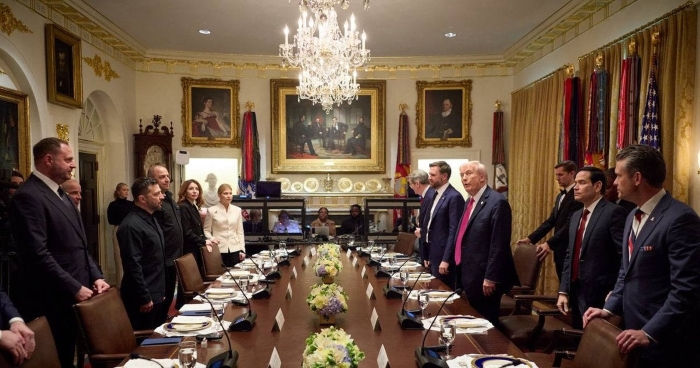
On October 17, President Volodymyr Zelenskyy met with U.S. President Donald Trump at the White House. The conversation lasted longer than planned, but did not bring positive results. At the beginning, Trump even called Zelenskyy “a strong leader.” Both presidents later described the meeting as productive. Trump characterized it as “very interesting and warm,” yet media reports were far less optimistic, portraying the meeting as rather tense.
Tomahawks off the agenda
Donald Trump had previously considered providing Ukraine with Tomahawk missiles, a move that reportedly alarmed Moscow. In response, Russia began to buy time by feigning interest in peace negotiations—a narrative reinforced by Trump’s recent phone call with Vladimir Putin.
After the meeting with Zelenskyy, it became clear that the Tomahawk issue was put on hold, as it was now viewed as potentially “too escalatory.”
The U.S. side expressed interest in Ukrainian drone technology, and the White House stated in the post on X:
We’re not losing people, we’re not spending money, we’re getting paid for the ammunition and missiles… we’ve made a very good deal with NATO… that’s not what we’re in this for. We’re in it to save thousands of lives…
This statement hints at the possibility of defence cooperation developing on a commercial basis.
Freezing the war
Trump’s approach remains straightforward: to freeze the front line as it stands:
Stop at the battle line, both sides should go home to their families, stop the killing — and that should be it.
Earlier, Trump suggested that Ukraine wanted to launch a counteroffensive, and he would “consider it.” However, this scenario appears unlikely, especially without additional military assistance.
Zelenskyy emphasized that Ukraine supports all peace initiatives, but there are neither guarantees nor any real willingness from Russia to stop the war.
It also became known that the Ukrainian side will not be represented at the upcoming meeting in Budapest, though it will remain in contact. Trump is expected to meet Vladimir Putin there within a week or two. The event’s location could be seen as a symbolic reference to the 1994 Budapest Memorandum, under which Ukraine gave up its nuclear weapons in exchange for security assurances.
Conclusion
Russia continues to mislead the U.S. and its partners, showing no genuine intention to end the war it started. As the aggressor intensifies attacks on Ukraine’s energy infrastructure, Kyiv is losing valuable time needed to secure its energy sector — while Moscow is buying time to undermine the U.S. “peace through strength” approach.
Nevertheless, since both leaders described the meeting positively, the outcome cannot be called entirely negative. The prospect of a commercial defence partnership remains on the table, parallel to the EU and other allies’ efforts to channel frozen Russian assets to support Ukraine without triggering major economic disruptions.
The next turning point will likely come after the Budapest meeting.