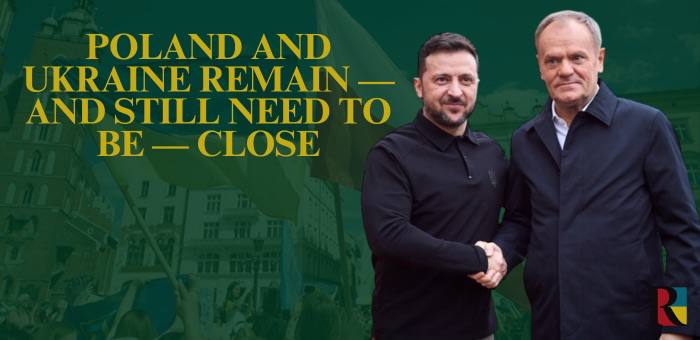


Despite tensions caused by historical issues, grain disputes, or refugee policies, Ukraine and Poland share not only a common enemy but, crucially, a common understanding of potential threats.
Hungarian Foreign Minister Péter Szijjártó recently accused Poland of not only releasing but also “glorifying” a Ukrainian whom he called “a terrorist,” suspected of blowing up the Nord Stream pipeline. In response, Polish Foreign Minister Radosław Sikorski stated that this was an act of self-defence. Poland would not extradite to Germany a Ukrainian suspected of undermining the pipeline. This move reflects Poland’s political support for Ukraine and its clear understanding of the real threats facing Europe.
This article explores the mutual benefits of Polish-Ukrainian cooperation.
Polish Assistance to Ukraine
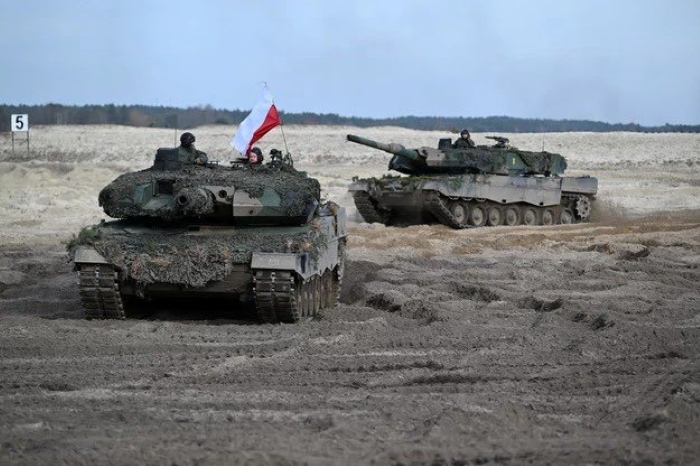
Since the beginning of Russia’s full-scale invasion, Poland has provided Ukraine with military assistance worth about 15 billion zlotys (approximately 3.6 billion U.S. dollars). The aid includes the transfer of more than 350 tanks, 14 MiG-29 aircraft, 12 Mi-24 helicopters, over 250 infantry fighting vehicles, more than 100 self-propelled guns and multiple launch rocket systems, as well as dozens of drones and 100 million rounds of ammunition of various calibres.
A substantial portion of Poland’s budget—around 4.2% of GDP—has also gone toward supporting Ukrainian refugees through accommodation, healthcare, education, and social programs. Additionally, Poland has trained thousands of Ukrainian soldiers, supported Ukraine’s energy sector, and funded multiple humanitarian initiatives.
According to a report published on the Polish President’s website in February 2025 with aforementioned data, this amount has continued to grow, with Poland launching its 46th aid package for Ukraine worth €200 million shortly thereafter. Poland has become one of the European leaders in defence spending relative to GDP.
Economic Growth in Poland
Poland has not only offered asylum to millions of Ukrainians but has also experienced notable economic benefits as a result. According to a joint study by the UN Refugee Agency (UNHCR) and Deloitte, temporary refugees from Ukraine contributed 2.7% to Poland’s GDP in 2024.
Ukrainians have become active participants in the Polish labour market and business sector. As of July 2025, Ukrainians have founded 29,044 companies in Poland, according to Opendatabot.
Polish Radio reports that approximately 810,000 Ukrainians are officially employed in Poland. This workforce has helped mitigate Poland’s labour shortages and stabilized post-pandemic economic recovery.
Conclusion
Amid ongoing Russian hybrid attacks targeting Poland, the Polish people have been among the first in Europe to grasp the strategic importance of Ukraine as a defensive frontier.
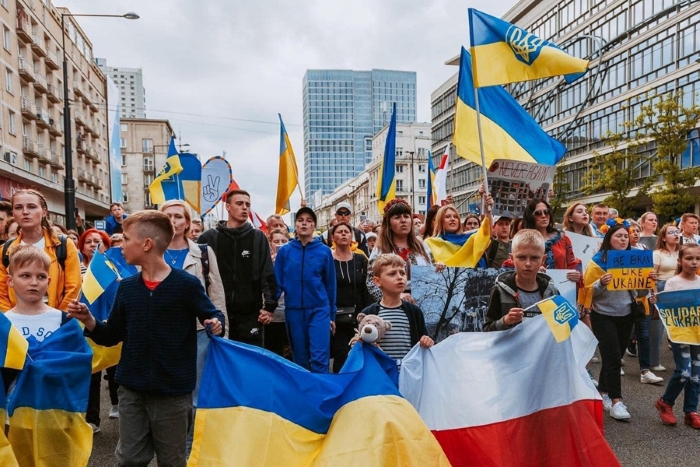
Poland has not only provided Ukraine with substantial military and humanitarian assistance but has also gained economically and socially from this partnership. Ukrainian refugees have become a significant part of the Polish economy, while cultural and educational cooperation continues to strengthen ties between the two nations.
The path of cooperation between democratic neighbors remains far more effective than rivalry—especially when facing a shared threat that challenges both their sovereignty and the stability of Europe.