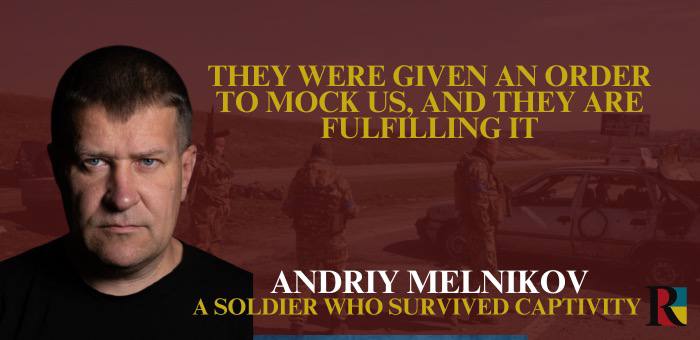


Andriy Melnikov was beaten with particular cruelty because he was taken prisoner by Russia in Mariupol and was originally from Makiivka, i.e., a “traitor to the Donbas people.” In captivity, the man lost 60 kilograms, suffered a stroke, and his legs were broken: he could not walk for a year and a half, and his comrades carried him in their arms. In the five colonies where he was held for two years, doctors never entered his cell.
The former prisoner of Russia is sure that the warders received a command to mock the Ukrainian military, and those who showed at least some tolerance were subject to reprisals. And what about the Russian Red Cross? Andrey Melnikov has an answer to this question.
After being released from captivity on January 31, 2024, Andriy received proper care at a specialized medical center in Novi Sanzhary, Poltava region, then was treated in Lviv, at a sanatorium in Truskavets, and then secured the opportunity to rehabilitate abroad. In addition to the need to continue his treatment, Melnikov faced a new problem – he had nowhere to go, as his home remained under occupation. Although the law guarantees temporary housing for those released from Russian captivity, no organization could help him with this.
Andriy Melnikov was left alone with his problems. He wrote in one of his statements that he did not feel supported by the state and was under constant stress.
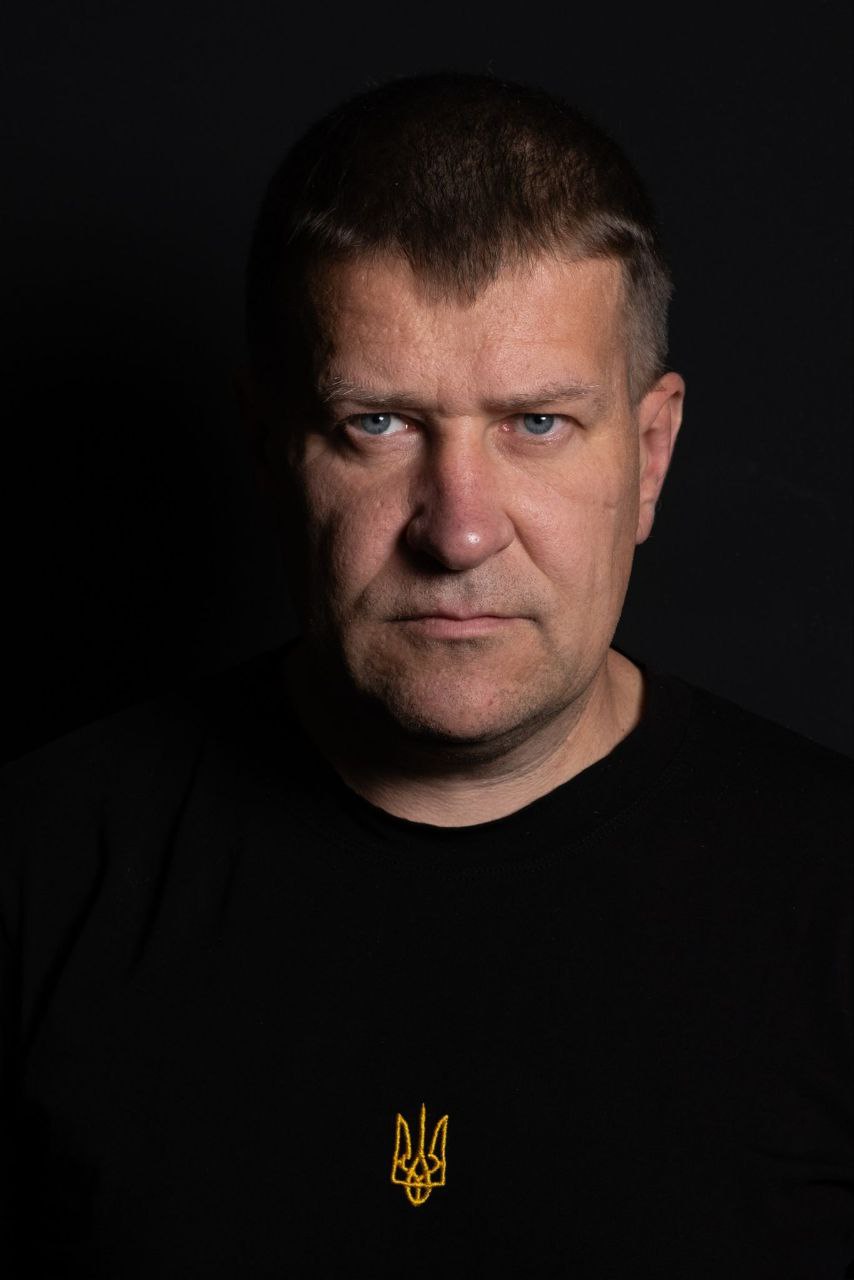
I have been serving in the Armed Forces of Ukraine since 2020. Mariupol was the permanent location of our 56th Motorized Infantry Brigade. In April 2022, when the enemy surrounded the city, some of the military (soldiers of the Azov Regiment and part of the 36th Separate Marine Brigade) went to the Azovstal plant, and our brigade went to the Ilyich Plant (part of the same 36th Marine Brigade, the 501st Separate Marine Battalion and soldiers of the 56th Brigade were holding defense there). It was already in April. We lacked shells, ammunition, water, food
On April 14, the Russians completely encircled Azovstal and the Ilyich Plant. Because of the hopeless situation, the 36th Brigade contacted the president, and he said: “If you cannot break through and get out of the encirclement, then surrender.”
We were supposed to leave the plant on April 10 in the direction of Volnovakha. But we didn’t get out because the first column that tried to leave was completely destroyed (it was led by the 36th Brigade’s brigadier Volodymyr Baranyuk, who, as it turned out, was soon captured). We tried to break through on April 14, it was at night, but there was no chance… They were waiting for us: Grad rocket launchers on one side and tanks on the other. We were taken prisoner.
The horrors of Russian captivity
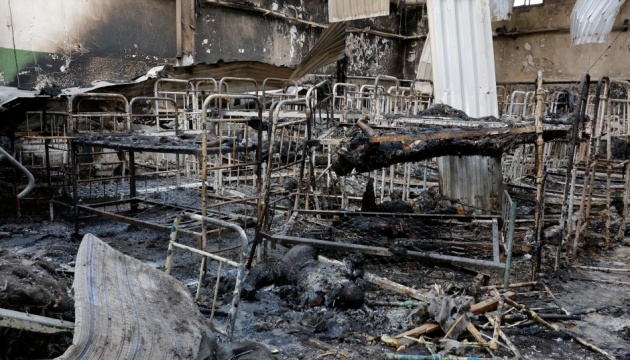
How many soldiers were killed in the breakthrough attempt?
A lot. About 800 people. And those who were taken prisoner were first sent to Olenivka (a colony near the village of Olenivka in the Volnovakha district of Donetsk region, where the occupiers set up a camp for Ukrainian prisoners of war, primarily the defenders of Mariupol). My comrades and I were sent to Volgograd a few days later. In the fall, on October 2, we were transferred to Vladimir, from where I was taken to Kursk on June 23, 2023, and a week later to a colony in Mordovia [a republic in Russia – ed.]
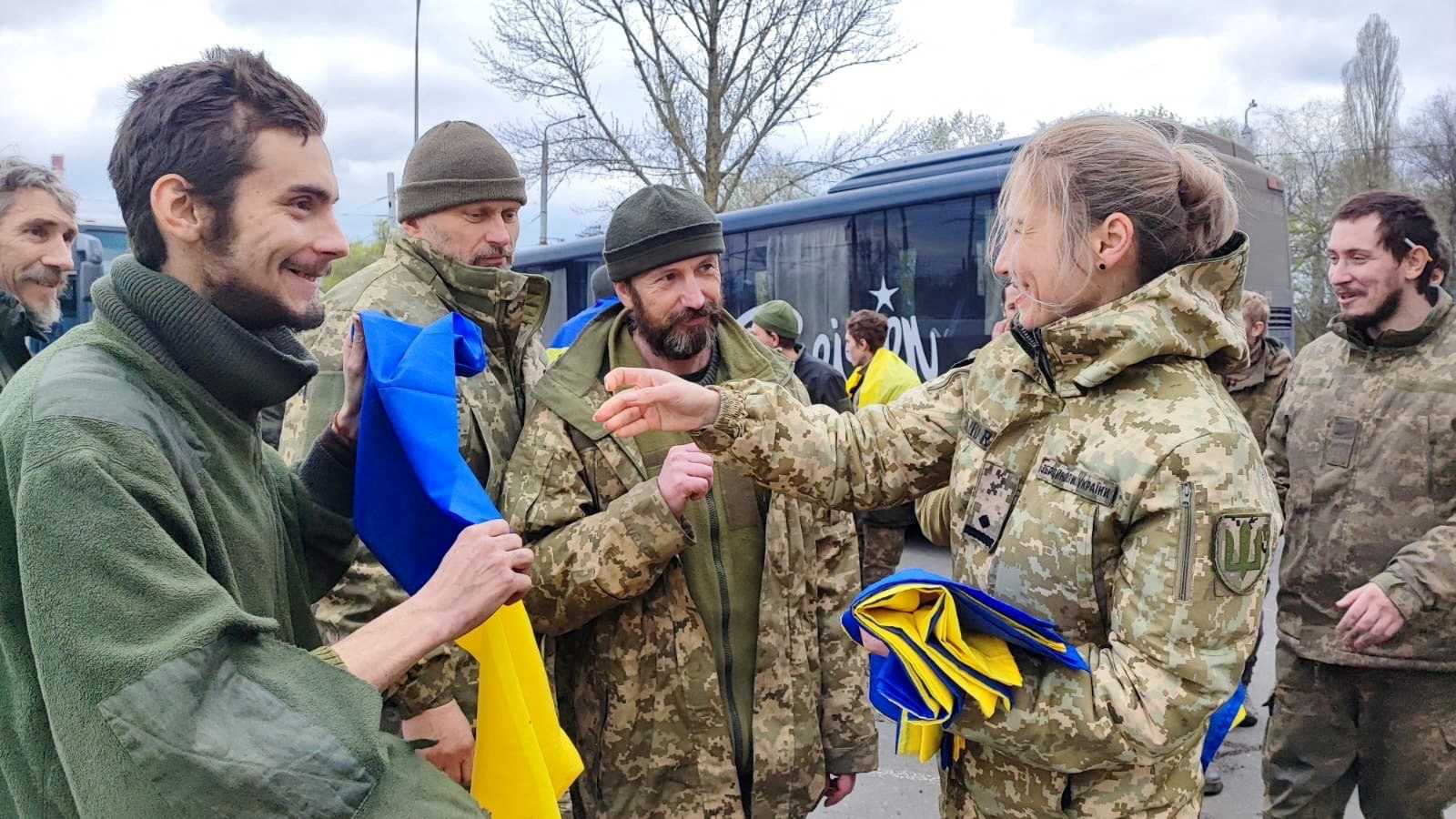
On January 31, 2024, 207 of our defenders returned home from Russian prisons as part of a prisoner exchange, but at that exciting moment when your comrades got off the bus on the territory of Ukraine, you were not among them. Why?
I was the most seriously ill among them. On the bus, we were immediately offered emergency medical care, and I asked for painkillers because I was feeling sick. We were reaching the exchange point for a whole week. The exchange was supposed to take place on January 24, and we were already on the plane, but because our forces shot down a Russian plane, the exchange was stopped and we were landed in Rostov. [On January 24, 2024, a Russian military transport plane, the Il-76, crashed in the Belgorod region. At first, Russian propagandists claimed that there were Ukrainian prisoners of war on board].
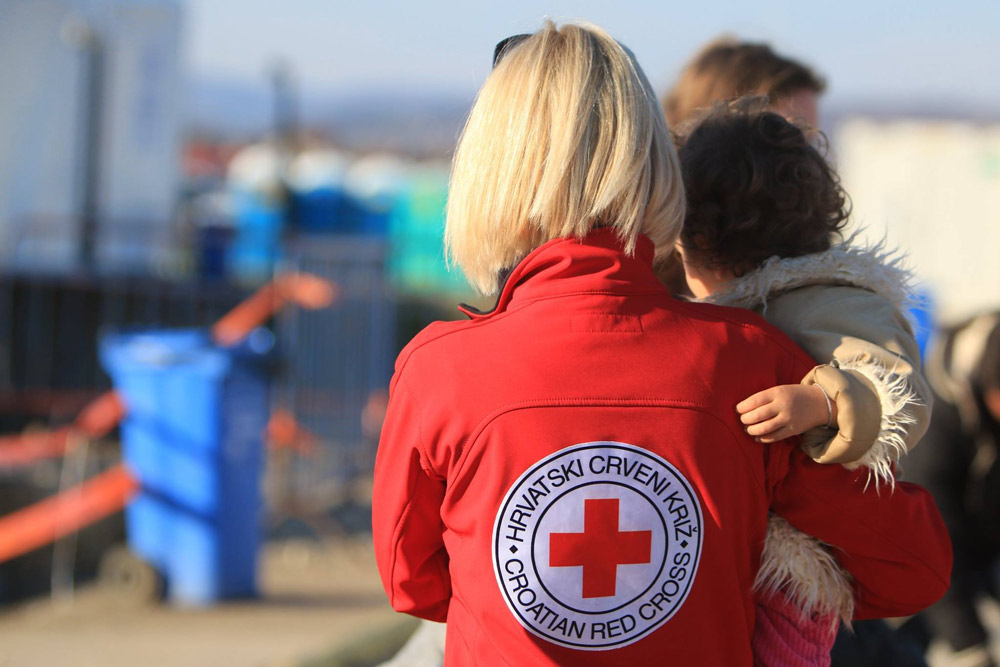
How does the meeting with the Red Cross representative go? Are you face-to-face with him in the cell?
No, not alone, there is an executioner next to me. There were eight of us in a 15-square-meter cell. The Red Cross representative comes in with the prison warden and looks around. He speaks Russian and asks how they feed us and how they treat the prisoners. I have to say that everything is fine. Those who dare to complain are beaten and tortured.
One complained that the prisoners were not allowed to call their families – then they beat not only him but all of us. We don’t have our own phones – we broke them all when we were captured. They took everything from us – even wooden crosses and shoelaces.
Could you communicate with prisoners from other cells?
No, we couldn’t. When someone was being led down the corridor, we were always turned to the wall and had to keep our heads down. We never raised our heads, sometimes we talked in whispers. We were not allowed to talk to anyone.
Do the warders treat our prisoners very cruelly on their own initiative, or is this a common practice in the colonies?
They were given an order to abuse us, and they fulfilled it. They’re even afraid of each other because if a “vertukhai” [a senior prison guard in Gulag slang] notices that someone is tolerant of a prisoner, they can be imprisoned as well. In Ukraine, we have freedom of speech, and in Russia, they have Stalinism. At the same time, there are many wardens in the colonies who enjoy abusing us.
At first, we were afraid of Chechens because we heard that they would cut us. But they were more friendly – they didn’t touch the wounded. If you tell him that your rib is broken and hurts, he will hit you in the other rib. They also don’t touch the elderly, they may hit you once on the buttock. Chechens are much more humane than Russians.
When we were released, we shouted: “Glory to Ukraine!”. The Russians saw all this, and the next day, they came to the barracks and mocked all our guys who remained in the cells.
They always beat us there, and you have to endure it. You can never say anything against it, you always have to agree. If you disagree, they will kill you. In Olenivka, a guy was killed in this way – he had a sick heart and could not stand the torture.
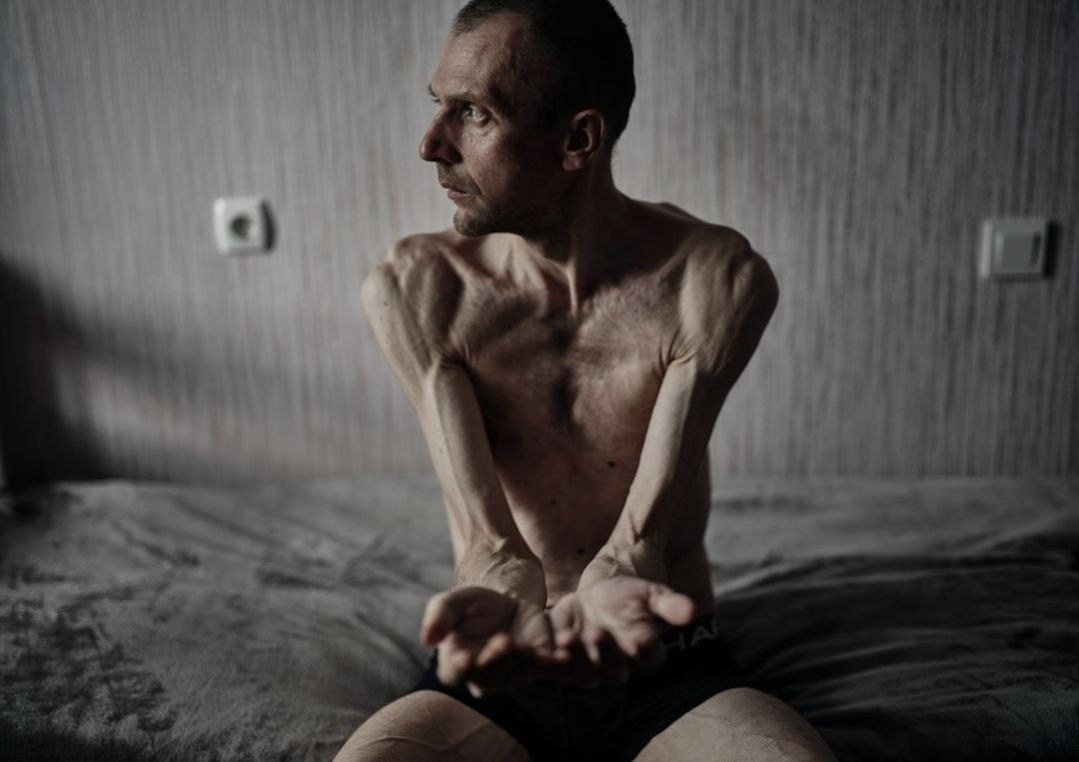
Did you lose your health in prison?
Yes, of course. In the colony in Mordovia, we were forced to stand for 16 hours every day for seven months in a row, and we weren’t even allowed to go to the toilet. And in the Vladimir prison, we were forced to sit and look in front of us all the time, and it’s also very hard – your buttocks start to burn. In another colony, prisoners were forced to lie down all the time without closing their eyes. Otherwise, they would come and beat them right away. We were constantly monitored through video cameras.
There was a boy in the cell with me, he told me how he was thrown into a punishment cell for three days right into the urine – everyone went to urinate in that cell, it was a toilet. The boy was ordered to sleep in the urine.
In the prison in Volodymyr, they practiced psychological abuse – they shot at prisoners with blanks. We heard shots in the neighboring cell, so we thought the guys were being killed because they disappeared from the prison afterward. I met one of them later when I was released.
There we were psychologically tortured: they shot us with blank cartridges, harassed us with dogs, put a bag on our heads and strangled us, then cursed us. That’s why I had a stroke in Volodymyr.
How do you not break down in the camps? And is it even possible?
Not everyone could stand the torture, they would crawl under the bunk and hang themselves… The executioners did not like tattoos, no matter if it was a hare or a wolf. They forced them to cut them off with a knife. Many prisoners with tattoos were beaten to death, or the current was applied so strongly that their hearts could not withstand it and they died.
How did captivity affect your health?
I lost 60 kg in captivity. My ribs were broken, my teeth were knocked out, I had a stroke, and I had putrid trophic ulcers on my legs. In the last days, I could not walk… I had two contusions at the front, but too much time passed, and no machine confirmed anything.
After your release from captivity, what was your further treatment and rehabilitation like?
After we were released from captivity, we were taken for rehabilitation to a medical center in Novi Sanzhary, where we were well-fed and given vitamins. I was eating all the time. My stomach hurt, but I still ate. So, in a month, I gained five kilograms at once.
Later you got to Germany. How is the treatment going here, are you satisfied?
Yes, I am satisfied. But at first, the Ministry of Health did not want to let me go abroad. That’s why I appealed to the Human Rights Ombudsman Dmytro Lubinets, the Ministry of Defense, and President Zelensky. Because of the “noise” I raised, they finally decided to send me abroad.
by Zhanna Yakhnii, project coordinator at UA Veterans Germany