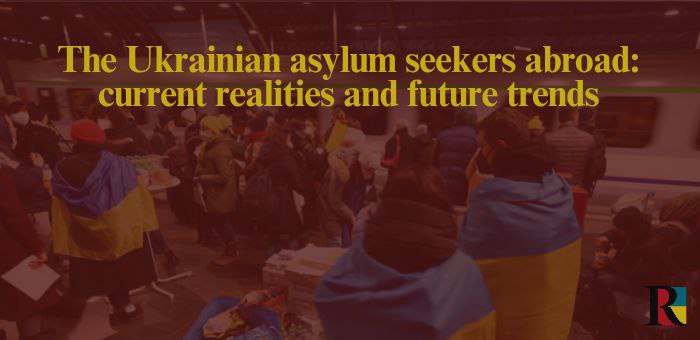


Ukraine is facing an extremely challenging situation as a result of the war in the country, forcing many Ukrainians to seek protection and support abroad. According to the Centre for Economic Strategies (CES), which has been studying the situation and attitudes of asylum seekers from Ukraine since 2022, the results of the third wave of the study were published:
- As of the end of January 2024, there were 4.9 million Ukrainian asylum seekers abroad, with a predominance of women and children.
- Most Ukrainian refugees in Europe are in Germany (30%) and Poland (22%). Outside of Europe, they live in the United States, the United Kingdom, and Canada.
- Many countries in Europe and beyond are reducing spending on refugees and making their conditions more stringent.
- The future of temporary protection status: the best scenario is to grant Ukrainians freedom of movement and choice of residence, similar to EU citizens.
- Under different scenarios, between 1.4 million and 2.3 million Ukrainians may remain outside Ukraine.
- Key recommendations to stimulate return include cooperation with EU countries, rapid post-war reconstruction, assistance to the affected regions, development of public-private partnerships, and simplification of reintegration of Ukrainian refugees.
As the war in Ukraine continues, the need to extend temporary help Ukrainian refugees abroad is vital, especially for the most vulnerable groups. It is confirmed by the results of a short interview with representatives from Poland, who have been assisting Ukrainian asylum seekers since 2022 and continue to do so today. We share some of them below.
Agnieszka Deja: “It is crucial for me personally, to help Ukrainians. It is my war!”
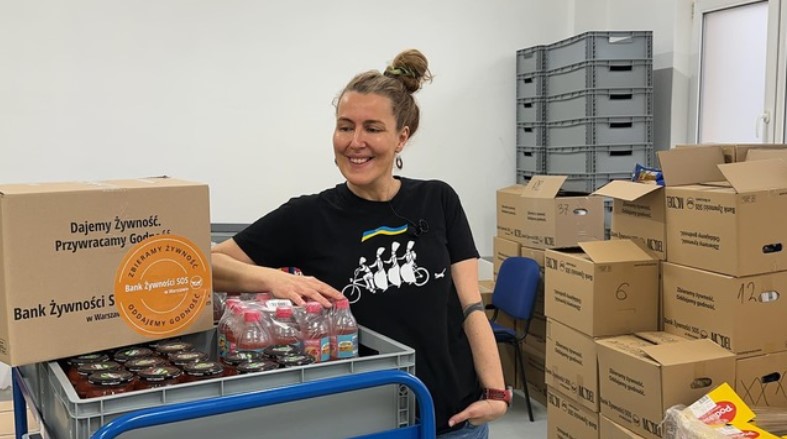
Agnieszka Deja is a sociologist working in NGOs for over 22 years. She is Vice President of the Board of the SOS Food Bank in Warsaw. Sestry.eu readers awarded her in the Portraits of Sisterhood competition for her work helping refugees from Ukraine. She believes in human solidarity.
What motivated you to help Ukrainians after the start of the full-scale invasion?
“The primary motivation was my disagreement with Russia’s (I deliberately capitalise the name of this country) attack on Ukraine. Having joined the aid effort in Ukraine from the first days after the outbreak of the Ukraine war now, I wanted to express my solidarity with them and really help them in this challenging situation. I also often thought at the time that this was my war against Putin.
There is another reason. My family history is connected with Volyn, with this tragic story of the Volyn killings. My grandmother was killed on 11 July 1943, and my mother, who was a small child at the time, miraculously survived. I carry this story, this suffering and fear in me. It is these events that do not allow me to be indifferent today. Today, no less terrible things are happening next to us — innocent people are dying, their homes and property are being destroyed, women are being raped, and freedom and security are being taken away by force and cruelty. Today is the time when we have to build a new Polish-Ukrainian history — an understandable one with good relations. It is today that we have the power to influence history so that it does not repeat itself, regardless of who is suffering now. Everyone is the same and needs love, peace, and security. This is my motivation, and this is what I am talking about.”
What was your history of helping Ukrainians?
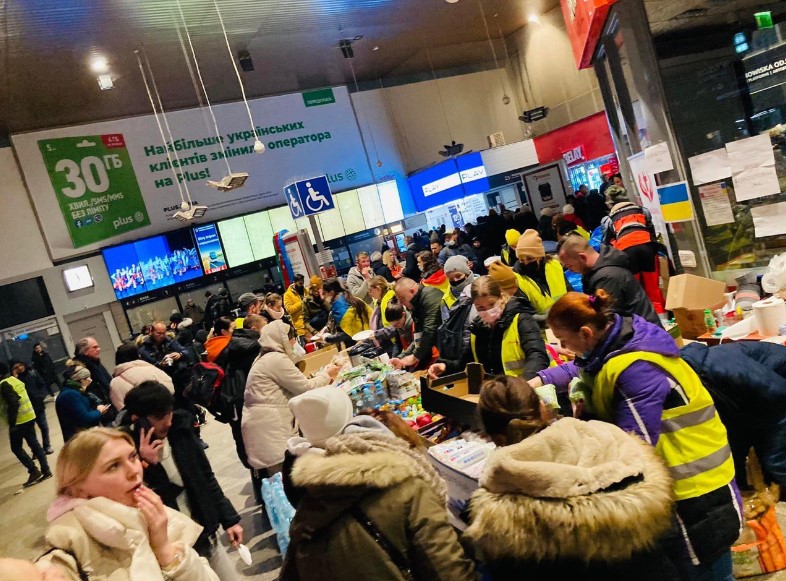
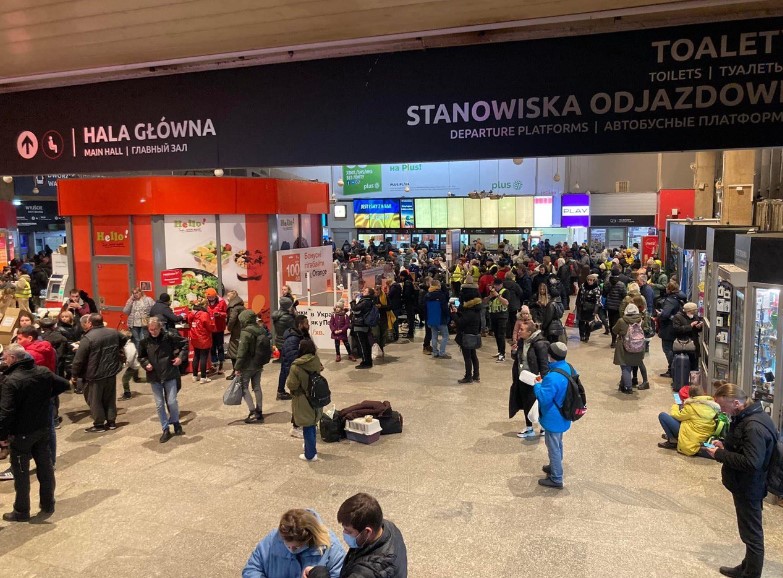
“I remember the information in the media that appeared on 24 February 2022, and then the photographs and television reports from Ukraine that came under attack, including news from Kyiv, Ukraine. I could not sit in front of the TV and watch these images and reports, especially as… Not far from where I live is the largest bus station in Warsaw. This station has always been so Ukrainian to me — dozens of buses from Ukraine arrive there every day. I understood that after the attack on Ukraine, many people would immediately start fleeing and would want to find a safe refuge in Poland, particularly in Warsaw.
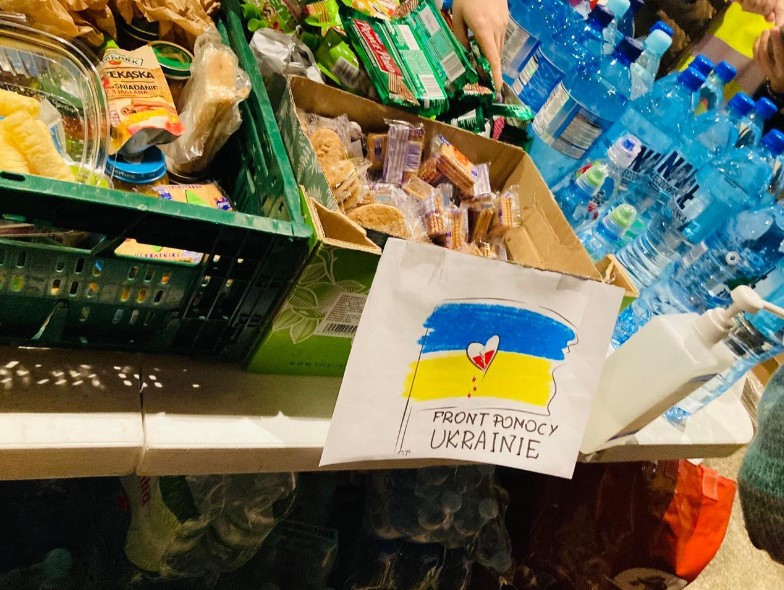
After work on the evening of 25 February 2022, I was already at this bus station. There were only a few dozen of us (including paramedics) who came up with the idea of helping. In fact, it was only on the weekend that more people fleeing Ukraine started to show up, and more people wanted to help, including bringing water, sandwiches, sweets, or fruit.”
How have you helped Ukrainians who have arrived since February 2022?
“My help at the bus station was very grassroots — it was my decision, and I went there as I was — Agnieszka (a person with 20 years of experience in NGOs and humanitarian work). After work (at the time, I worked for the Federation of Social Cooperatives), I would put on my volunteer vest and go to the train station for a few hours. I would hand out water, sandwiches, and sometimes handkerchiefs when someone was crying. I helped to find the bus timetable, showed the way to the station, explained which platform the bus departed from, or helped buy a ticket (sometimes, I also purchased a ticket for the return trip; I had money from donations from friends). I assisted in solving more complicated problems (for example, with housing, I helped them decide what to do next: where to go, where to seek asylum from countries other than Ukraine) and more straightforward issues (for example, how to pay for using the lavatory at the train station).
From the very beginning, people who wanted to help started appearing at the station (Polish women, young Ukrainians, Ukrainian women living in Warsaw, and even other foreigners!). Many brought food. In fact, citizens began to organise themselves (although it was such a chaotic situation) to help and show their solidarity. I was active at the station in an informal help group, which consisted of people who, like me, wanted to help and came to the station after work.
Then, non-governmental organisations (various foundations and associations) appeared, offering housing, food, and information assistance. Finally, representatives of state bodies and institutions offered housing at the station and places for collective, short-term accommodation, information and assistance in legalising their stay. There were also rescuers and doctors, psychological help, and police. All this was happening at this (one of several) railway stations in Warsaw. Then, there was the Resource Group, an informal group of activists who created a secure online system to register and connect people who could and wanted to share a room with people from Ukraine who needed such help. It really worked! Each application was checked, and the scale of this help was… it seems that several thousand people received help! It’s a real-world masterpiece. It could only happen in Poland! (It’s a pity that it happened in such cruel circumstances).”
What challenges have you faced in helping Ukrainian refugees? How did you respond to them?
“The biggest challenge was the sheer scale — the number of people fleeing to Poland and the needs that needed to be met (shelter, medical care, psychological support for rapid intervention, help to decide what to do next, food, clothing, etc.).
Personally, coping with my fatigue was challenging (I could stay at the station from 3 to 10 hours a day). Emotions were also difficult: listening to and reacting to stories about the escape, crying, and asking, “What will happen now?”. I tried to cope with all this: we supported each other in our support group at the station, and a psychologist friend also helped me.
Of course, it was also difficult because in the first dozen days after the outbreak of full-scale war, the aid in Poland was chaotic, but somehow it worked. Citizens were on the frontline, and government agencies and departments were clumsily trying to do something, unable to organise themselves quickly and flexibly. So, I did what I did best, what I could do in my spare time, using my network of contacts and knowledge of the aid sector.”
In what area (or areas) do Ukrainians need help the most right now? How do you continue to help, and why?
“My experience of helping for 3 months at the railway station in Warsaw influenced my decision to change jobs. Since the autumn of 2022, I have been working at the SOS Food Bank in Warsaw, where I can, among other things, organise food aid for people in need, regardless of where they come from or where they are going. Currently, I coordinate the activities of the Help Point operating at the SOS Food Bank in Warsaw, where we assist (providing food parcels) to almost 800 people every month. Nearly 70% of these people are Ukrainians.
Among Ukrainian asylum seekers, people from the most vulnerable groups — older people, people with disabilities, and mothers who cannot be economically active due to childcare — need the most support. They require help with housing. Renting an apartment is very expensive, especially in Warsaw; there is no free housing for refugees, and assistance programs are already severely limited. We need money to live on: many older people receive Ukrainian pensions, which are about PLN 600 in Polish currency. This is enough to buy modest food for one person for about 2 weeks! Many older people do not speak Polish and need help communicating with the authorities and the Polish healthcare system. Language problems (especially the ability to write in Polish) can also hinder finding a job. Work for asylum seekers from Ukraine is an entirely separate topic. Many of them work “in the shadows” (i.e. illegally) in positions that do not correspond to their qualifications. As a result, their earnings are low, sometimes too low to rent an apartment in Warsaw. Increasingly, people from Ukraine are seeking psychological assistance (crisis assistance, coping with a difficult situation of family separation or death in the family, etc.).
NGOs are still helping — not on the same scale as in 2022, but you can still count on them. From the point of view of my work, I can say that many people need food aid. The food parcels we deliver can save you at least a little money. I realize that a few kilograms of assistance per month is not much. But it is also a significant gesture that someone remembers; someone is in solidarity. This help is especially needed now.
Personally, I believe it is crucial to help people in Ukraine. I still send parcels to Olena in Kharkiv, ask people I meet at the train station, and talk to them about how they are doing and what they need. I still follow the events in Ukraine, read books and reports, donate money to help the Armed Forces and civilians, and feel the horror of war, suffering, and death. And I still think I can help. This is my war!”
Right to Protection Poland is ready to support Ukrainians needing assistance in the field of protection and legal security here
We asked Oleksandra Kistowska, Advocacy Manager of Right to Protection Poland, what is the most urgent issue for Ukrainians under temporary protection:
“Ukrainians need help in the field of protection and legal security in Poland, as well as in obtaining a PESEL number with the status of UKR or re-granting the status of UKR to a person from Ukraine who has been granted temporary protection in the territory of another EU member state other than Poland.
We help in this matter by sending advocacy letters to the Ministry of Internal Affairs and the Administration; as of today, these cases have not been finally resolved, i.e. temporary protection for persons from Ukraine has been extended only until 30.06.2024, and the Foundation is constantly contacted in cases of refusal by municipal institutions to restore legal status after leaving Ukraine even for less than 30 days or with an incorrect date of restoration of this status, and therefore with problems with obtaining proper social benefits.”
It is worth noting that Right to Protection is a leading human rights organisation in Ukraine that provides multi-purpose assistance to IDPs, the war-affected population, refugees, asylum seekers, and stateless persons. The Foundation implements programs to provide legal, psychological, and material support to IDPs and the war-affected population, as well as social assistance and monitoring of the protection of rights.
Right to Protection has a long history. For over 10 years, the Foundation has been operating in Ukraine as an independent organisation, having started its activities in 2001 as part of the HIAS Representative Office. The team in Ukraine includes over a thousand specialists who provide offline and online assistance, covering almost all regions.
Considering how many Ukrainians found themselves abroad, opening the Foundation’s representative office in Poland — Right to Protection Poland — was essential in supporting citizens who were forced to move due to the full-scale invasion and found refuge here.
With the support of HIAS an office was opened in Warsaw in August 2023, where experts provide psychological and legal assistance and protect the rights of Ukrainians temporarily residing here, offline and online throughout Poland. Today, the Polish office of R2P plays a vital role in providing assistance and support to Ukrainians living here. This assistance has various forms and is provided through cooperation with multiple NGOs, volunteer groups and governmental structures.
It is important to emphasise that assistance to Ukrainian asylum seekers not only strengthens the friendship between Ukrainians and Poles but also contributes to building strong and mutually beneficial relations between the two nations for the future. This is important in the context of both countries’ geopolitical and socio-cultural challenges. Assistance and support can become the basis for building a future European community that will defend its values and interests.
Right to Protection Poland will continue to provide the necessary assistance and support to Ukrainians in Poland, thereby contributing to building a peaceful and stable future for both countries.
By Right to Protection Poland