
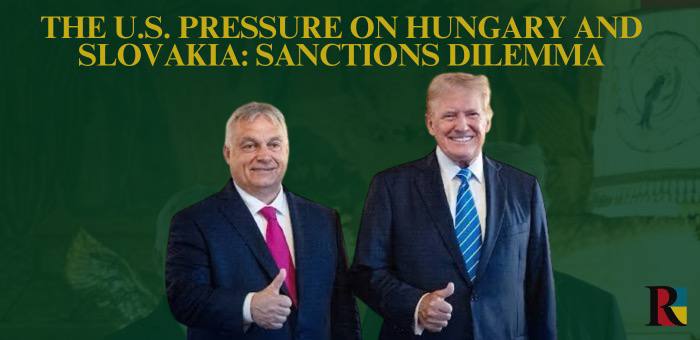


The EU will not present its new 19th package of sanctions against Russia as planned. This delay is connected to U.S. efforts to change the Hungarian and Slovak position on the use of Russian oil and gas— still the most significant source of Moscow’s war revenues.
One day before the expected announcement, Senator Lindsey Graham posted on X:
When it comes to buying Russian oil, it is now virtually down to Hungary and Slovakia. I hope and expect them to step up to the plate soon to help us end this bloodbath. If not, consequences should and will follow.
This is an unpredictable turn: Hungary and Slovakia have tried to gain U.S. support, including through pro-Russian narratives, by referring to ideological commonalities and praising decisions of the new U.S. administration.
U.S. Authority for Hungary and Slovakia
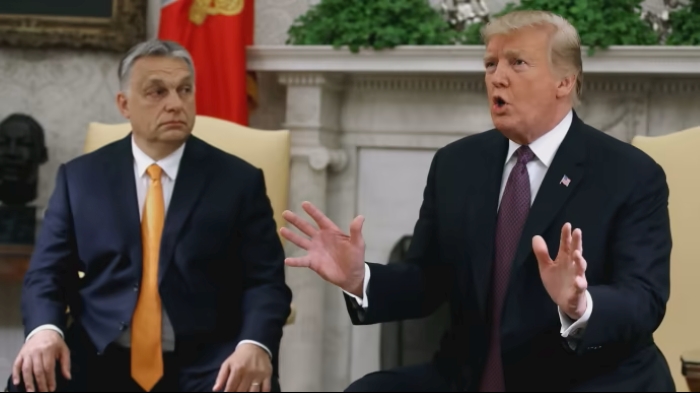
Trump’s and Orbán’s mutual respect was evident even before the U.S. presidential elections took place. During debates with Kamala Harris, Trump mentioned Viktor Orbán as “one of the most respected men” and a “smart leader” who supported him. Recently, The U.S. President presented Orbán as an expert on the Russian-Ukrainian war, asking him whether Ukraine could defeat Russia and receiving a predictably negative answer.
Orbán also supported cutting USAID funding, calling it a “dark conspiracy.” The same line was echoed by Orbán’s occasional ally, Slovak Prime Minister Robert Fico, who said at the beginning of the year that Trump “is bringing the truth to Europe.” The question now is whether they will now accept a “new truth” emerging on the eve of adopting new sanctions against Russia.
So far, Slovakia and Hungary have opposed every decision aimed at reducing imports of Russian energy. Slovak Prime Minister Robert Fico called the European Commission’s plan to stop Russian gas imports “absolutely unacceptable.” Hungarian Foreign Minister Péter Szijjártó argued that his country’s energy supply is determined not by politics or ideology, but by geography and existing infrastructure. Russia, he said, was Hungary’s most reliable source of energy. Their main argument is a financial one.
Sanctions Content and Impact
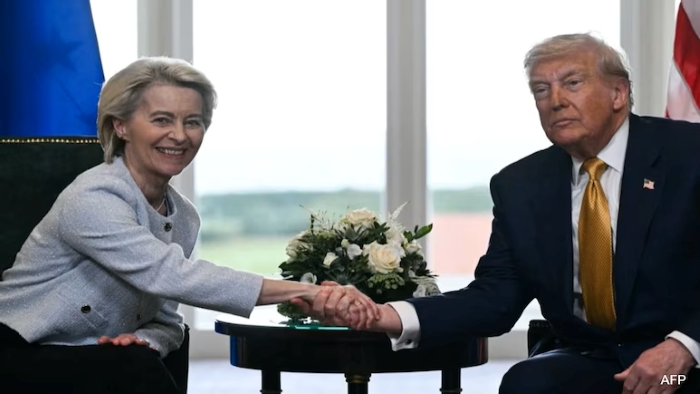
According to what is known so far, the 19th package will target crypto, banks, and energy, as Ursula von der Leyen announced on X after a call with Donald Trump. She emphasized:
…Russia’s war economy, sustained by revenues from fossil fuels, is financing the bloodshed in Ukraine. To put an end to it, the Commission will propose speeding up the phase-out of Russian fossil imports.
Yet the issue of secondary sanctions remains controversial for Western governments. The new package may also include EU sanctions against companies from India and China, aligning with the U.S. economic agenda, but hard to implement inside European countries. This is why the project must also be discussed in detail with G7 partners.
Conclusion
As U.S. pressure on Hungary and Slovakia over sanctions on Russia intensifies, these countries find themselves at a crossroads. On one hand, their domestic narratives have been built around partnership with Russia, presented as beneficial for their economies. On the other, they have sought to show themselves as the closest European allies of the U.S. as a global power.
Now Washington has its own priorities in secondary sanctions. The solution to this dilemma is critical for Ukraine, which has long been trying to draw attention to Russia’s revenue sources for continuing the war.
Daria Maslienkova