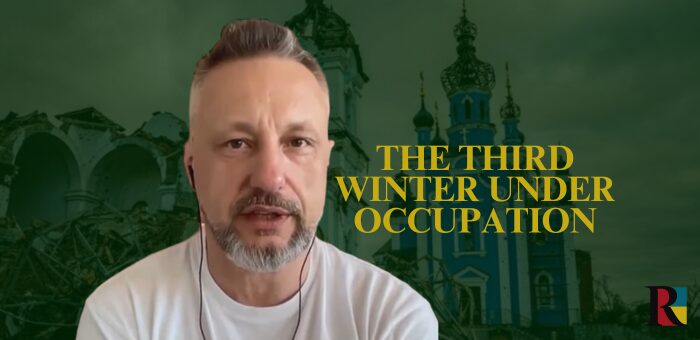


The third winter in occupied Mariupol without heat. Despite the claims of the occupation authorities and official Russian propaganda, the problem of heat supply remains unresolved. Despite the publicly announced billions of rubles spent by the Kremlin to “restore” Mariupol’s infrastructure, the situation has not improved dramatically.
This year, people are being saved by an unusually warm winter. High temperatures, lack of precipitation and, most importantly, fierce Azov monsoon winds have provided Mariupol residents with a relatively comfortable winter as of mid-January. However, the occupation authorities are not to blame.
In total, 1700 high-rise buildings in Mariupol are officially registered as receiving district heating. All of them are connected to almost two dozen boiler houses that supply hot water to heating systems. As of October 2024 (at the beginning of the heating season), all boiler houses were repaired. However, only 70% of subscribers are supplied with heat.
Why is this? What is the main problem? There are several reasons.
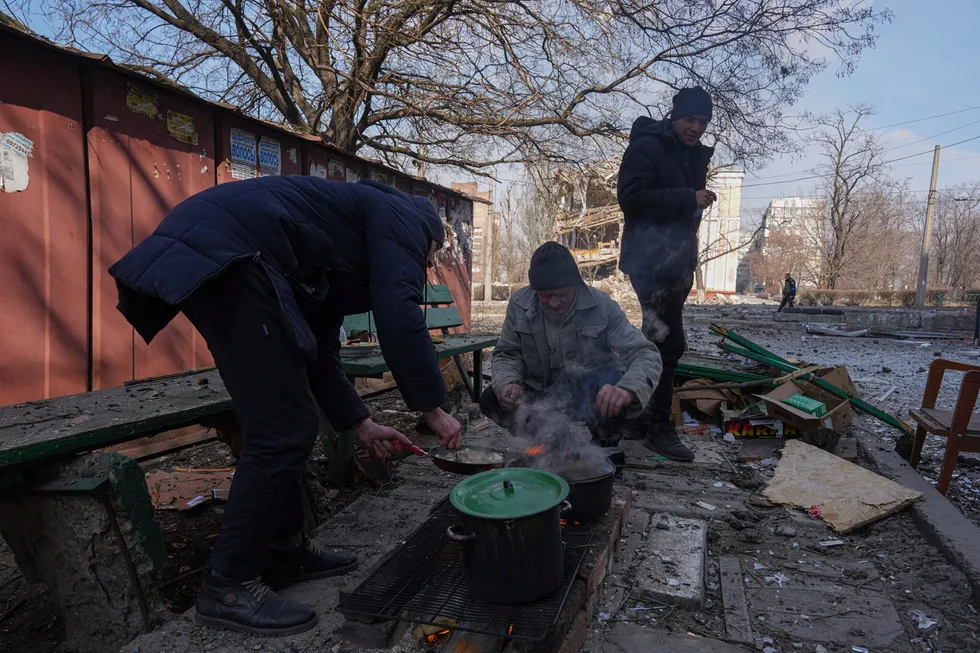
The first one is ruin. No matter how hard the Russians try to hide the consequences of the destruction of most of Mariupol, issues such as heat supply cannot be hidden behind a painted facade or a repaired boiler room.
A complete disruption of the heat supply system due to the dismantling of more than 500 high-rise buildings, led to the destruction of the heat supply system itself. Imagine a closed pipeline system from which a part was simply removed. What would happen? The part of the pipeline will no longer receive anything. This is a rough picture of the real state of the city’s heat supply system. The only thing is even worse. Because even the part that receives the coolant does not receive it at a high enough temperature. That is why residents complain that “the radiators are warm” but there is no heat. For example, residents of 159 Metallurgiv Street complain that the temperature does not rise above 17 degrees
In our house at 159 Metallurgiv, the heating is very weak, the risers – the ‘return pipes’ – barely heat up, and the batteries even less so. Only a few sections are barely heated, so the temperature in the apartment is 17 degrees.
The occupation authorities have reported on replacing 1300 meters of heating mains to solve this problem, but they have not. In Mariupol, not kilometers, but hundreds of kilometers of piped heating mains need not just replacement, but a comprehensive change as a system. This has not happened at all.
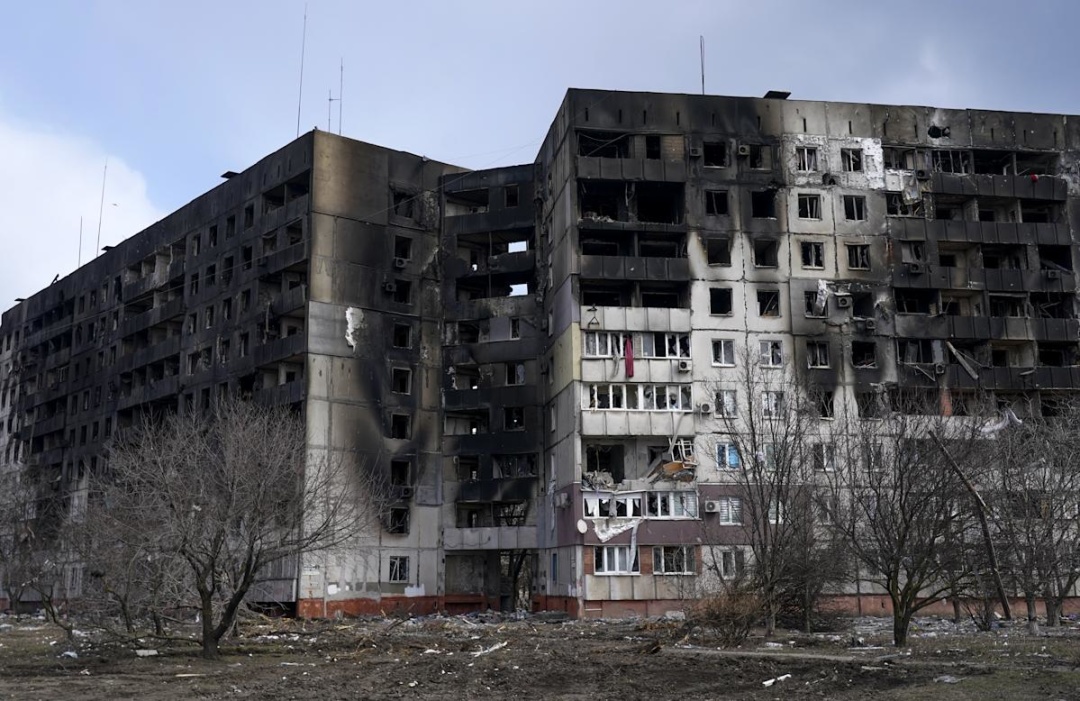
As a result, the number of houses without heat in all districts of Mariupol is at least 300. Taganrogskaya 255, Lavitskogo 24, Metallurgov 153, Gorlovskaya 4 are a brief but vivid example of houses that have been facing winter without heat for three years. Yes, it is. People live here. They are promised and promised and promised again. Three winters in a row and three winters in a row without it.
The second reason, in addition to the destruction, is the organizational inability of the occupation authorities to resolve the situation. The place is run by people who have no qualifications, knowledge, or ability to organize the process of infrastructure repair. Not only heating.
How can we talk about the sustainable operation of the heating system if repair teams have not yet been created to eliminate accidents? Despite a direct order from the Kremlin. Despite separate funding. Nothing has been done, even after numerous control visits by the Minister of Housing and Communal Services of the Russian Federation and his deputies to Mariupol. Every day, up to 300 accidents on heating mains occur in the city, which forces boiler houses to shut down. And the time to fix them is delayed for weeks.
It is difficult not to mention the ingenious decision to replace several kilometers of heating mains. As I mentioned above, this is a necessary thing to ensure the stable operation of the heating system in the city. However, such a comprehensive replacement began in the third decade of September. Less than a month before the official start of the heating season. The left bank district of Mariupol, Peremohy Avenue, the central avenue of the city. The first frosts were met with trenches dug and heating pipes cut to replace them. Is it possible to imagine this with a normal managerial approach? The answer is obvious. No.
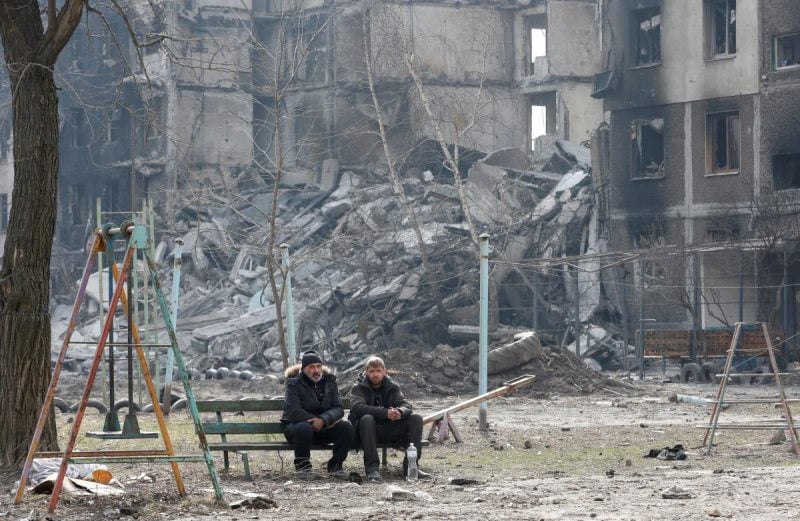
As a result, during November and December, the occupation authorities were struggling to keep warm. More precisely, with the consequences of their own decisions and the problems they quite expectedly created. In January, the “heroic” struggle ended in defeat, and a third of the city’s residents were forced to heat themselves with electricity, which added power outages to the infrastructure problems.
The situation has certainly improved compared to the previous two winters. While Mariupol faced the first winter with a living fire, and the second with only a third of the heating restored, this year it looks like a real breakthrough. If we compare. But the comparison itself is inappropriate here because in fact, people under occupation still have no access to basic needs for existence. Heat, water, light. All the things they had in abundance until February 24, 2022.
By Petro Andryushchenko
*These opinions are solely those of the author. The Ukrainian Review takes no position and is not responsible for the author’s words.
Petro Andryushchenko was an adviser to the mayor of Mariupol. After the Russian Federation started war in Ukraine in February 2022, he became the de facto “voice” of Mariupol.
On his Telegram channel, “Andryushchenko Time“, he tells the truth about the horrors of the occupation, the deportation of people by the Russian occupants and the “filtration” camps in Donbas.