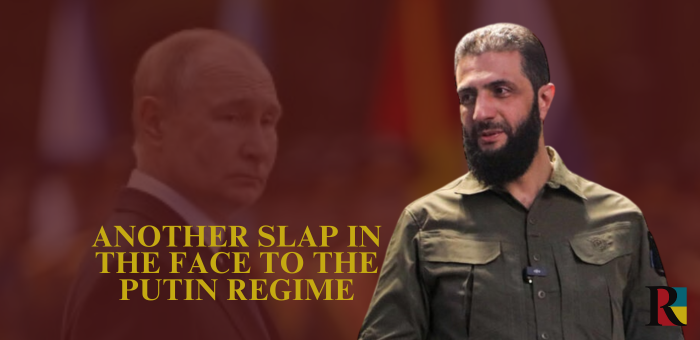


The armed coup in Syria was the collapse of Bashar al-Assad’s regime, which had ruled his country for 24 years, just like Vladimir Putin, who had supported him in every way. No wonder that after being ousted from power, the Syrian dictator fled to the aggressor country. What international consequences will the overthrow of the Assad regime have for Russia and whether something similar is possible in Russia itself will be discussed in this article.
Preconditions and course of the military coup
It is worth starting with the fact that Syria is a country where the geopolitical interests of several states intersect: at least the United States, Turkey, Israel, Iran, and, of course, Russia. From this point of view, we cannot speak of a clear division between pro-government and opposition blocs. For example, the opposition in Syria was very diverse, ranging from the so-called “democratic” opposition to ISIS. And the interests of Russia and Iran, which supported Bashar al-Assad, did not always coincide.
The obvious weakening of Russia by the exhausting and adventurous war against Ukraine and Iran’s fears of escalating the conflict with Israel contributed to the realization of the weakness of the Assad regime in the ranks of the “democratic” opposition. This situation opened up opportunities for decisive action.
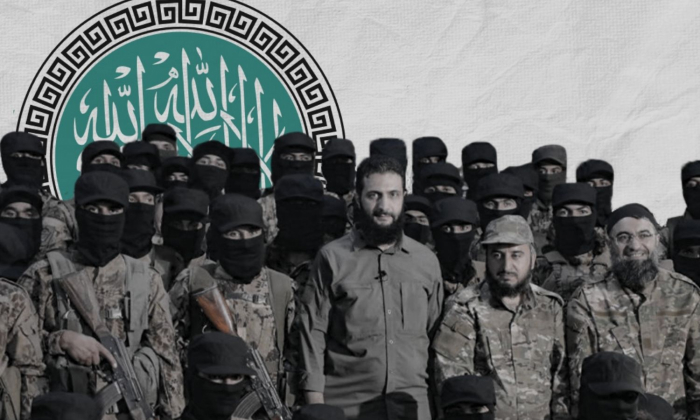
On November 27, 2024, Syrian opposition groups led by Hayʼat Tahrir al-Sham launched a large-scale offensive against pro-government forces of the Syrian Arab Army in the western part of Aleppo province in Syria. It should be noted that at the end of the civil war in the country (2020), two-thirds of its territory was controlled by government forces. However, the opposition is much better prepared for this confrontation than it was then. According to Reuters sources, the rebels notified Turkey of their intentions six months before the coup and received no objections.
In addition, Assad’s allies Iran and Russia (according to The Wall Street Journal’s sources) not only refused to help him, but also accused him of poor preparation for the coup. On the night of December 8, the Syrian capital Damascus was captured by rebels, marking the end of Bashar al-Assad’s rule in the country. The Syrian armed forces announced their surrender.
Implications for the Russian Federation
With the overthrow of the Assad regime, Russia received several shameful slaps in the face. The videos of the escape of the Russian military, including the much-hyped fighters of the Wagner terrorist PMC, looked shameful for the aggressor country.
Image losses were not limited to this. From now on, both Russia’s allies and opponents see Russia’s inability to protect its “own” even from ordinary armed gangs. This is not the first example since the beginning of the full-scale war against Ukraine. Here we can recall how Russia refused to provide military support to CSTO member Armenia, which resulted in the latter losing its territories during the armed conflict with Azerbaijan. After that, Armenian Prime Minister Nikol Pashinyan declared his loss of interest in the CSTO and his actual withdrawal from the military alliance, which was created at Russia’s initiative. Thus, the flight from Syria is another episode in which Russia has demonstrated its absolute inability to respond to existing challenges.
Mokhammad Faradzhallakh, expert on Ukrainian-Arab relations and editor-in-chief of the publication “Ukraine in Arabic” commented:
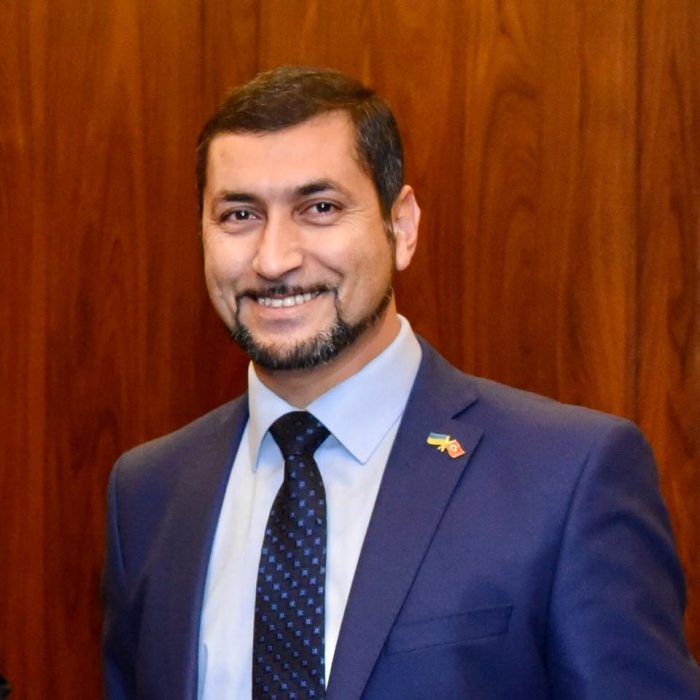
Syria is Putin’s biggest project in the international arena after Ukraine. Putin’s victory over the Syrian people in 2015 gave him the confidence to attack Ukraine, among other things. Therefore, the current defeat in Syria is a huge blow to Russia. First, it is a reputational blow. Now, no one in the East is raising the idea that Putin can be a guarantor of any regime. Secondly, it is an economic one [more on this below – ed.] Thirdly, Russia has lost its trump card in future negotiations with Trump on spheres of influence. Most importantly, this happened on the eve of possible peace talks in Ukraine.
Dmytro Snegiryov, a military and political expert, added:
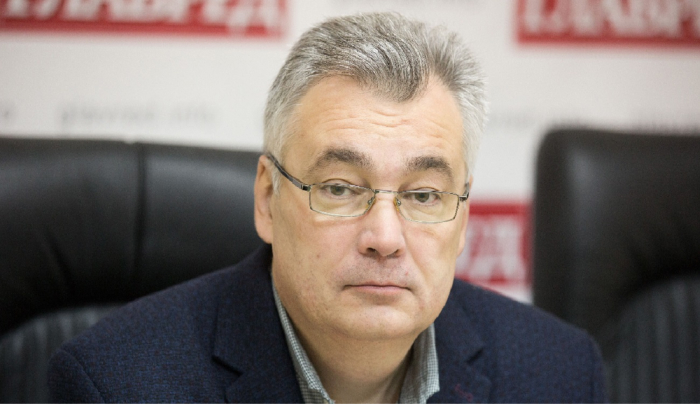
This has seriously weakened Russia. It has lost the ability to influence the situation in Lebanon and the Gaza Strip and thus put pressure on Israel. The Russian leadership has repeatedly stated that Russia’s borders are extremely close to Israel’s borders. Accordingly, Russia views any military action by Israel as a challenge. Now this factor has been eliminated.
Second, Syria can only be an intermediate stage. Further, it is quite possible that Russia will intensify its missile and bomb attacks on the positions of the Houthis, who are in fact a Russian proxy. I do not rule out a ground operation against Iran.
Thirdly, if the decision to withdraw the Russians from the port of Tartus [at the time of publication this issue was actually resolved – ed.] and the Hmeymim base is pressed, it will be a disaster for Russia’s geopolitical influence in the Mediterranean basin. This is the only port of the Russian Navy in the region.
Qatar-Syria-Turkey gas pipeline
There is an important economic component to Russia’s loss of control over Syria. The Syrian dictator categorically refused to build a gas pipeline to Europe in the interests of Russia. As soon as the Assad regime fell, the Turkish media began to discuss the large-scale Qatar-Syria-Turkey project again actively.
This idea was put forward in 2009 by Qatar, which has huge natural gas reserves. The initiative envisioned the construction of a 1,500-kilometer-long gas pipeline to transport natural gas from the huge South Pars/North Dome field in Qatar to Europe via Saudi Arabia, Jordan, Syria, and Turkish distribution terminals. Given that in the first two years of the war alone, Russian pipeline gas exports to Europe fell 5 times (from 40% to 8%) and continue to fall, it is not difficult to imagine the consequences of the Qatar-Syria-Turkey project for the Russian energy sector and the economy as a whole. Experts agree that they will be catastrophic.
Mokhammad Faradzhallakh, an expert on Ukrainian-Arab relations and editor-in-chief of the publication “Ukraine in Arabic” commented:
This is one of the main reasons for Putin’s support for the Assad regime. Russia really did not want such a project to take place. We are talking about Qatari gas and Saudi energy resources that can be supplied through Syria to Turkey and Europe. It is possible to build such a pipeline, but it will be a rather long and expensive process. In addition, stabilization in Syria itself is needed to start implementing this project. However, if the project comes to fruition, it will be a fatal blow to the Russian energy sector and the economy as a whole.
Why doesn’t Europe always act decisively in support of Ukraine? Russia is blackmailing the EU with energy supplies. This pipeline will bring the Arab world and the European Union closer together, completely changing their economies. Accordingly, it will push Russia to the margins both economically and politically.
Mykhailo Nepran, First Vice President of the Ukrainian Chamber of Commerce and Industry and member of the Ukrainian Business Council:
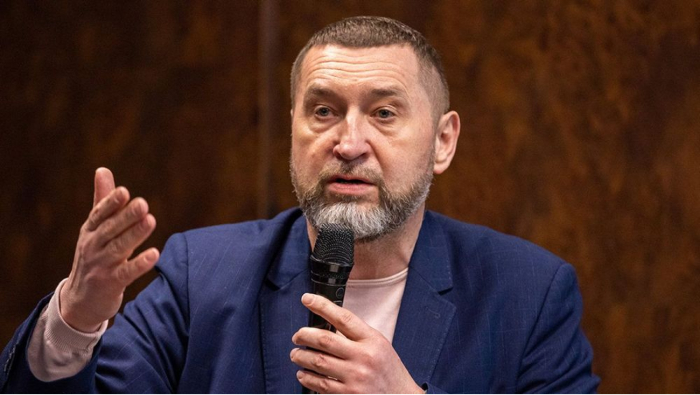
This story between Syria, Turkey, and Russia can be written down in political science textbooks as a separate chapter: how to lose in 3 years the influence in Europe and Asia that predecessors had been gaining for decades (from the USSR’s secretaries-general to the Russian elite of the last 20 years). One of the reasons why the Russians came to Syria was for possible supplies of Qatari gas. Qatar is one of the world’s largest holders of natural gas deposits. This was even publicly confirmed at the level of the Russian expert community.
We should pay tribute to Erdogan: he thinks strategically. Now there will be completely new relations in the Europe-Turkey-Russia triangle. If earlier they talked about Russia’s dependence on China, now Russia will be more dependent on Turkey, which is very beneficial to implementing this project (Qatar-Syria-Turkey-EU).
The gas pipeline is of enormous economic and political importance. After the destruction of Nord Stream and the cessation of gas transit through Ukraine, the Turkish Stream remains the only pipeline to Europe. Add to this the hypothetical Qatari gas. Turkey has become the largest energy hub in Europe and can freely dictate terms to the Russians. It can set the gas price that is favorable to it. The Russians have no other option but to bring their gas into the Turkish stream, and Turkey can replace it with Qatari gas at any time. So we can congratulate Erdogan on his brilliant game. And Russia has driven itself into another geopolitical dead end.
Is a “Syrian” scenario possible in Russia?
At first glance, this scenario seems extremely unlikely, if not fantastic. First, although Putin is to some extent dependent on the countries of the Global South, he is not objectively a puppet dictator like Assad. The second argument is that Russia’s territory is too large to organize somewhere on the outskirts and quickly reach the Kremlin. Thirdly, Putin’s punitive and repressive machine has been created for decades, analyzing and preparing for such challenges.
Fourthly, fifthly, sixthly… In general, there are a dozen or two more arguments for why the “Syrian” scenario is impossible in Russia. But all of them were refuted in practice in one day by the founder of the notorious terrorist group PMC Wagner, Yevgeny Prigozhin.
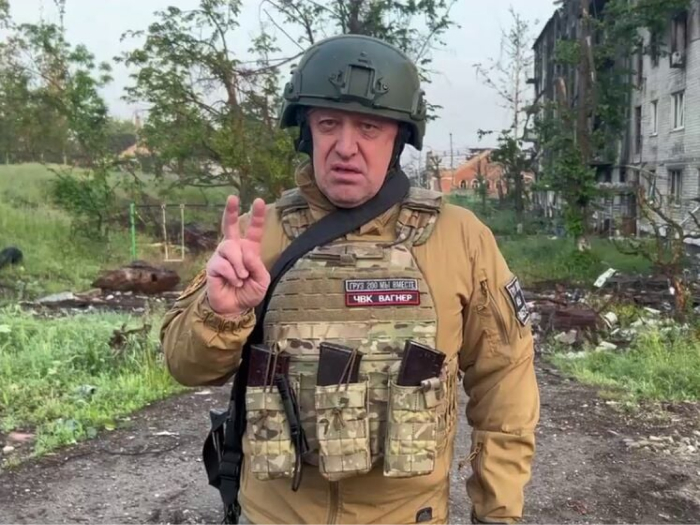
The raid on Moscow in June 2023 was so quick and effective that the Kremlin did not know what to do, and President Putin himself quickly left for a business trip. It is another matter that Prigozhin decided to negotiate with the Russian dictator and then died strangely in a plane crash. However, his example showed the weaknesses of the Putin regime. Especially when there is a surprise effect.
Yes, there are no armed groups in Russia today that could organize a coup. But it’s worth remembering that the Freedom of Russia Legion, the RDC, and the Siberian Battalion once appeared out of nowhere, simply on the opposition moods of people with military training. So there may be different scenarios, and the international community should be prepared for them. However, for now, we need to work with the threats that are here and now. And this is the regime of Putin, a criminal officially recognized by the Hague court, who poses a threat to the entire world.
Conclusions
Russia’s exaggerated imperialist ambitions have once again hurt its self-proclaimed status as a “great world power.” And if earlier, by supporting some dictatorial regimes in Central Africa and the Middle East (and Belarus, of course), it was possible to maintain at least the illusion of this, then after a series of failures in the international arena, the most recent of which was the fall of Bashar al-Assad’s regime in Syria, there is a growing awareness of the main essence of modern Russia – aggressive incapacity. And while the Russian regime can still survive the perception of Russia in the international arena as a marginally isolated state with nuclear weapons, such sentiments at home could be the end of Putin’s regime. At the same time, we should not expect that one dictator will not be replaced by another with similar views.
Kostyantyn Grechany