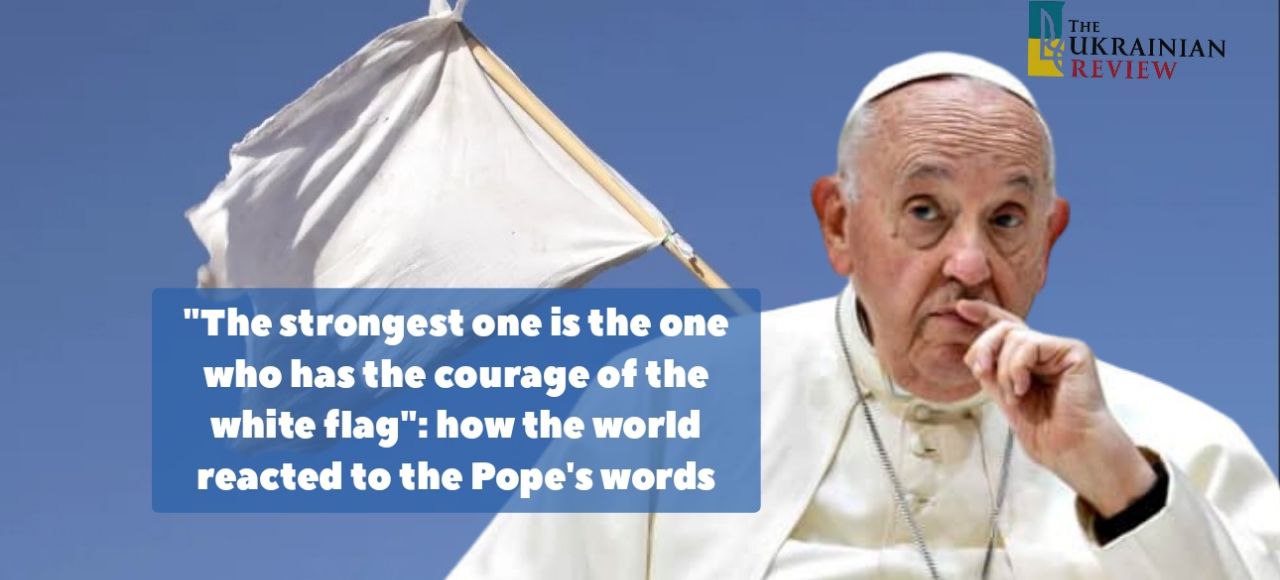


In February 2024, Pope Francis gave an interview to the Swiss broadcaster RSI. In the interview, he was asked about his position on the debate between those who say that Ukraine should surrender and those who say it would legitimise the actions of the strongest party. The interviewer used the term “white flag” in the question.
“That’s one interpretation, that’s true,” Francis said, according to a preliminary interview transcript and partial video provided to Reuters on Saturday. He is scheduled to appear on March 20 as part of a new cultural program.
“But I think that the strongest one is the one who looks at the situation, thinks about the people and has the courage of the white flag, and negotiates…
The word negotiate is a courageous word. When you see that you are defeated, that things are not going well, you have to have the courage to negotiate,” – he said later.
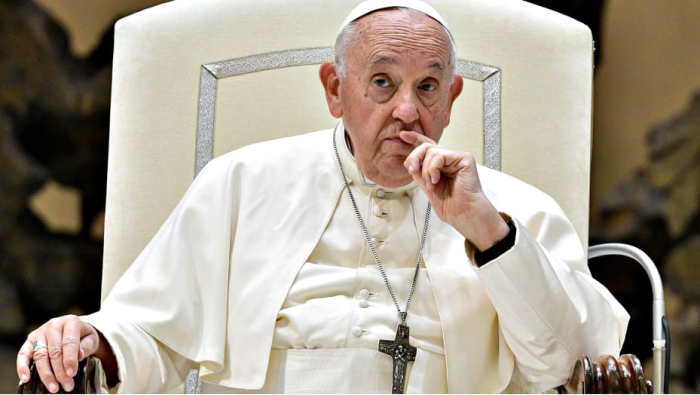
On March 11, Apostolic Nuncio to Ukraine Visvaldas Kulbokas was invited to the Ministry of Foreign Affairs because of Pope Francis’ statement, “Ukraine should raise the white flag and start negotiations with Russia.”
This caused a real stir in both foreign and Ukrainian news. Francis’ statement was the most discussed topic in the news about Ukraine and Russia.
The reaction of the Vatican
Matteo Bruni, the head of the Holy See’s press office, explained that the Pope did not offer Ukraine to surrender to Russia. The Vatican emphasises that Francis simply used the term “white flag”, as suggested by the interviewer, to indicate the need for peace.
“The Pope uses the term ‘white flag’ and corresponds to the images offered by the interviewer to indicate a cessation of hostilities, a truce achieved through the courage of negotiations. Elsewhere in the interview, speaking about a different conflict situation but referring to every military situation, the Pope clearly stated negotiation is never a surrender…
The Pope’s hope remains one that he has always reiterated in recent years and recently reiterated on the occasion of the second anniversary of the conflict: “I renew my deep commitment to the tormented Ukrainian people, and I pray for all, in particular for the many innocent victims, I pray that we will find the share of humanity that will allow us to create the conditions for a diplomatic solution in the search for a just and lasting peace,” – he said.
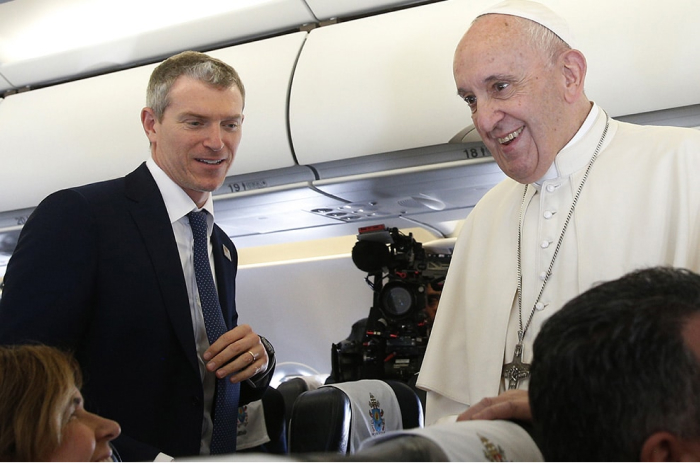
On March 12, another clarification of what the Pope said appeared, this time made by the Vatican’s Secretary of State, Cardinal Pietro Parolin. He said that conditions should be created in Ukraine for negotiations on a just and lasting peace. To do this, the aggressor must, firstly, cease the fire.
“In this sense, it is obvious that the creation of such conditions depends not only on one of the parties, but on both, and the first condition, as I see it, is the cessation of aggression…
The Holy Father explains that negotiations are not a weakness but a strength. It is not surrender but courage. And this tells us that we must respect human life more, hundreds of thousands of human lives that have been sacrificed in this war in the heart of Europe,” – Parolin said.
What they said about it in Ukraine and around the world
Edgars Rinkēvičs, the Latvian President, believes “raising the white flag as a sign of surrender and capitulation” should be done by evil, but first, it must be defeated.
“My Sunday morning take: One must not capitulate in the face of evil, one must fight it and defeat it so that the evil raises the white flag and capitulates”.
Radoslaw Sikorsky, Polish Foreign Minister, addresses the Pope with a proposal to encourage Putin to withdraw his army from Ukraine.
“How about, for balance, encouraging Putin to have the courage to withdraw his army from Ukraine? Peace would immediately ensue without the need for negotiations”.
Commenting on the Pope’s statement, Annalena Baerbock, the German Foreign Minister said, “I don’t understand it in our time.”
“When the Russian evil started this war on February 24, all Ukrainians stood up to defend themselves. Christians, Muslims, Jews – everyone. And I thank every Ukrainian chaplain who is with the army in the Defense Forces. There, on the front line. They protect life and humanity. They support us with prayer, conversation, and deeds,” – said President of Ukraine Volodymyr Zelenskyy.
Jens Stoltenberg, NATO Secretary General, commented on the Pope’s statement, saying that “surrender is not peace.”
“Surrender is not peace. President (of Russia – ed.) Putin started this war and can end it today. Ukraine, on the other hand, does not have this option,” – Stoltenberg said.
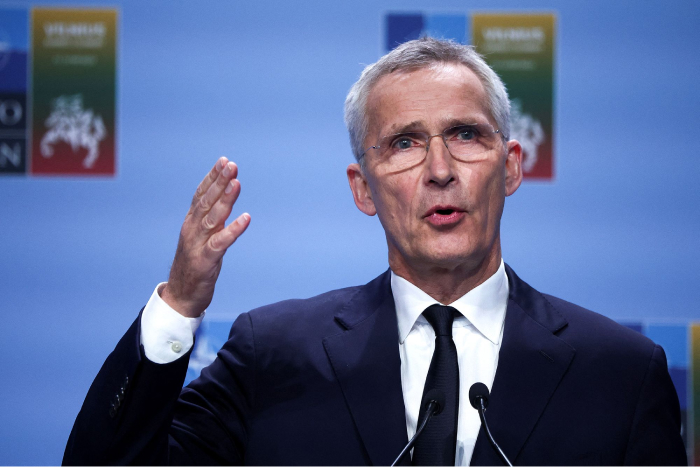
Steffen Hebestreit, the German Federal Government spokesman, said at a briefing on March 11 that German Chancellor Olaf Scholz “does not agree with the Pope on this issue.”
“The truth is that Ukraine is defending itself against the aggressor. They (Ukrainians – ed.) are receiving a lot of international support to be able to defend themselves against an aggressive war that violates international law,” – the spokesman said.
Matthew Miller, State Department spokesman, said: “We help Ukraine’s right to defend itself. We have said over and over again that there is nothing about Ukraine without Ukraine.”
Dmytro Kuleba, Foreign Minister, emphasised that “Ukraine will not raise other flags”. He expressed hope that “Pope Francis will be able to find an opportunity to visit Ukraine.”
“As for the white flag, we know this strategy of the Vatican from the history of the first half of the twentieth century. I urge you not to repeat historical mistakes and to consistently support Ukraine and its people in their just struggle for their lives.
Our flag is blue and yellow. We live, die and win under it. We will not raise any other flags,” – the Foreign Minister said.
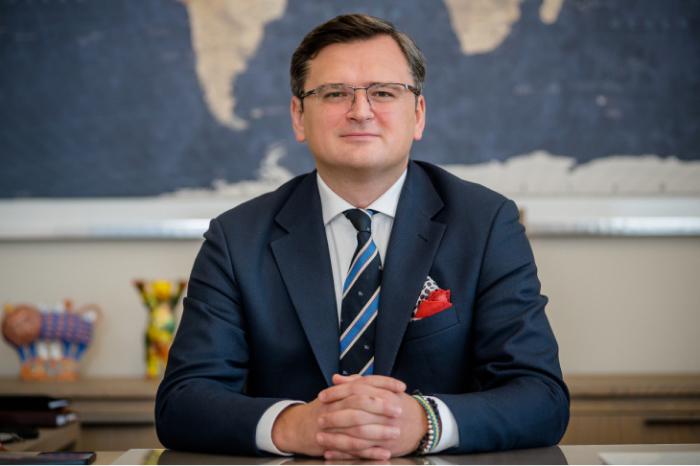
Therefore, the Pope’s statement on the war in Ukraine today was rather rash and ambiguous. Naturally, this led to a public outcry and publicity, as the topic of war in Ukrainian news is still the most relevant. The Vatican has tried to explain its position and assure everyone that it is committed to Ukraine and its people. How the conflict will develop and whether Francis will come to Kyiv is unknown.
Tetiana Stelmakh