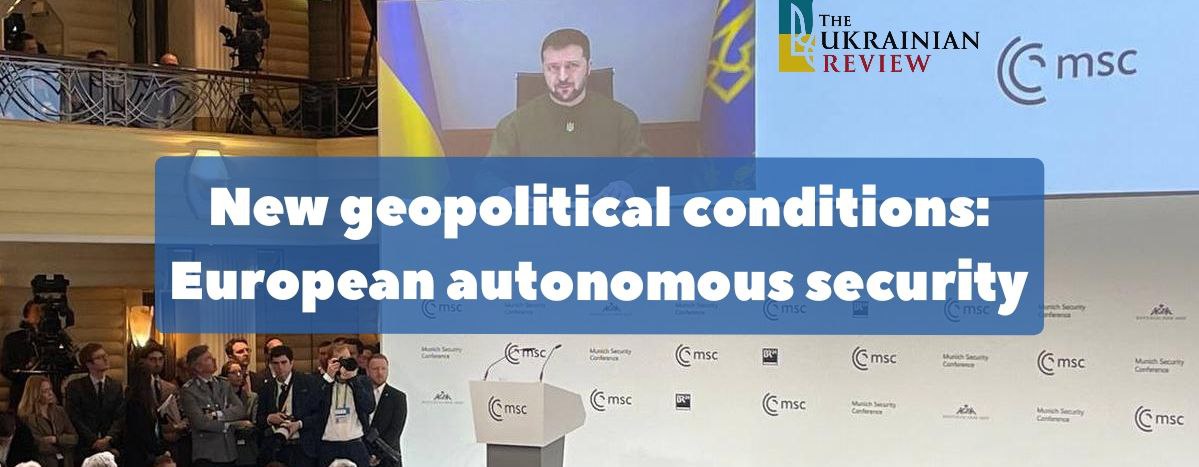


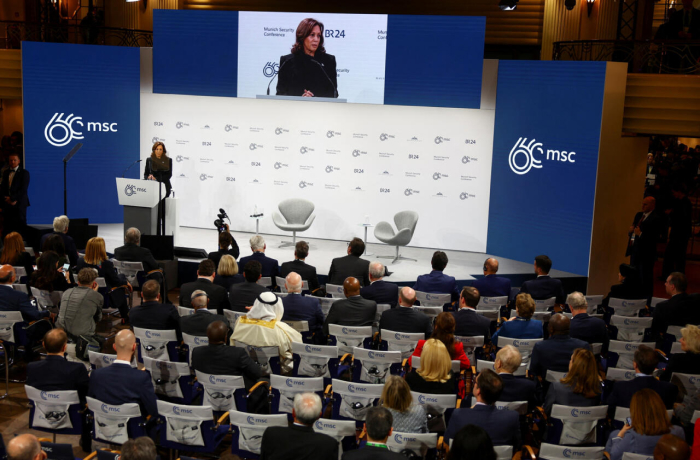
The Munich Security Conference made it clear that Europeans have finally fully grasped the global challenges they face now, and that could have enormous security implications in the near future. The New York Times writes that the 60th Munich Forum, held on February 16-18, 2024, was held in an atmosphere of anxiety amid new threats from Putin and the danger of being left without the support of the United States.
Munich Security Conference: Understanding Risks and Threats
More than 50 leaders and 100 ministers attended this year’s security forum. They discussed the global security crisis, armed conflicts, migration, climate, and the development of new technologies. One of the main topics was supporting Ukraine. For the first time, the countries of the Global South were widely represented at the conference. The governments of Russia and Iran were not invited.
It became clear that Europe has begun to realise that the current geopolitical situation makes it too tied to the internal political processes in the United States. A good example was Ukraine, whose defence forces depended on the vote outcome in Congress. Due to the lack of political consensus and the politically motivated position of the Republicans, the $60 billion aid bill for Ukraine has been postponed several times and has not yet been voted on. Our country received the last macro-financial assistance in December, over 2.5 months ago. As a result, there is a shortage of ammunition at the front, a retreat from Avdiivka, and several more localised successes of the occupier during offensive operations.
Of course, losing a destroyed small town, which is not even a district center, is not a strategic success, even within the framework of the war in Russia and Ukraine. But let’s model a situation where the Russian Federation started a global war with NATO. For a moment, let’s put aside rational arguments and recall President Putin’s threats, which were addressed to the participants of the Munich conference. The Russian dictator has made it clear that nothing that has been done so far (sanctions, worldwide condemnation, attempts at deterrence) is working. Putin has made it quite clear that he is going to change the world order at any cost. Bloomberg sources claim that Russia is even ready to use nuclear weapons this year. However, for now, it is only about space.
Moreover, Jürgen Hardt, a foreign policy expert of the Christian Democratic Union, a leading German party, is convinced that the Russian dictator decided to symbolically kill Russian opposition leader Alexei Navalny on the day the Munich conference started, once again demonstrating his impunity and permissiveness.
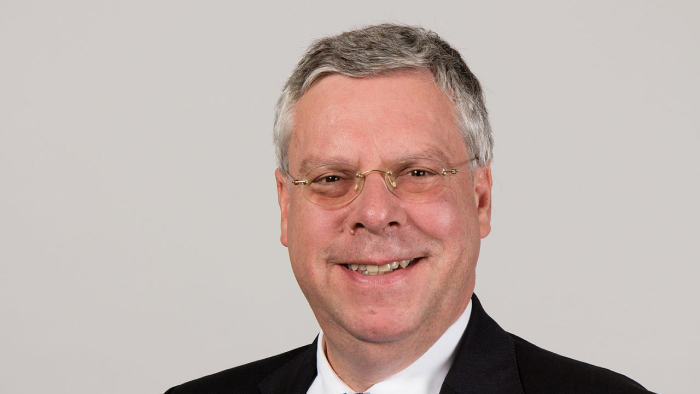
“Putin wanted to send this symbol to the grave in a particularly disgusting and easy way while world leaders and Navalny’s wife are in Munich talking about Putin’s aggression,” – the politician said in an interview with Bild.
Let’s just imagine that if Putin’s threats materialise, discussions begin in the U.S. Congress, and Europe is left face-to-face with an enemy ready to destroy everything in its path. Of course, such a scenario seems unrealistic today, but how many could have predicted that Russia would start the largest war in the center of Europe since World War II?
Any autocracy, although it renders its citizens disenfranchised, has a clear advantage in times of war: the concentration of power, on the one hand, allows for the rapid mobilisation of resources, disregarding procedures. At the same time, democratic procedures (in this context, as a way of inaction) are only part of the problem against the backdrop of statements by the former president and most likely Republican presidential candidate in the upcoming elections, Donald Trump.
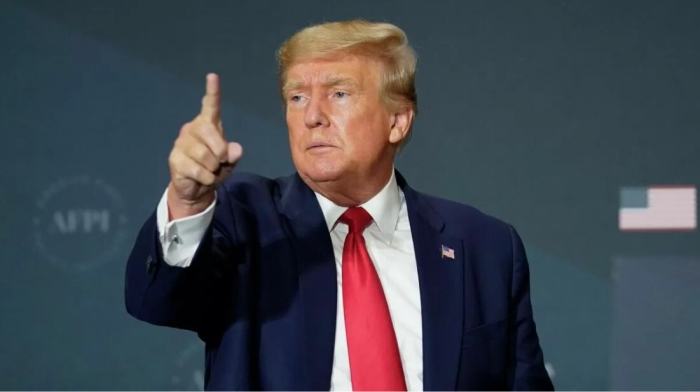
During a rally at Coastal Carolina University, the politician, in his eccentric style, once again appealed to other NATO countries to significantly increase defence spending. Trump promised not only to leave insolvent countries to their own devices in the event of Russian aggression but even to incentivise the invaders.
“I would encourage them to do whatever the hell they want,” – said the former US president in the background of Ukraine news.
Of course, such statements should also be viewed through the prism of the upcoming elections. But hardly anyone can guarantee that Donald Trump will 100% go back on his words in the future and that the scenario he has voiced is completely virtual. Therefore, the current global situation forces Europe to consider its security independence seriously.
The Joint Armed Forces of Europe
The initiative to create a European security organisation has existed for a long time, but mainly at the level of expert studies, semi-official forums, and statements by individual politicians. It is not well received in the United States. The US sees this initiative as creating a certain alternative to NATO. In general, the United States is sometimes extremely negative about European integration processes (think of the introduction of the single currency Euro, which ended the dominance of the dollar in the world), viewing them as a reduction of its influence on the continent. The same is true for the European armed forces.
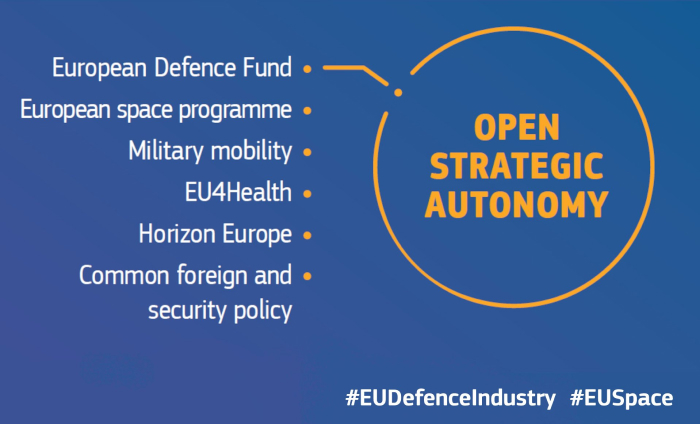
However, today’s challenges force Europeans to look for new organisational forms. Currently, this initiative exists as part of the Open Strategic Autonomy. The strategy’s main goal is to find a balance between competitiveness and security, which should ensure that the EU can act autonomously when needed.
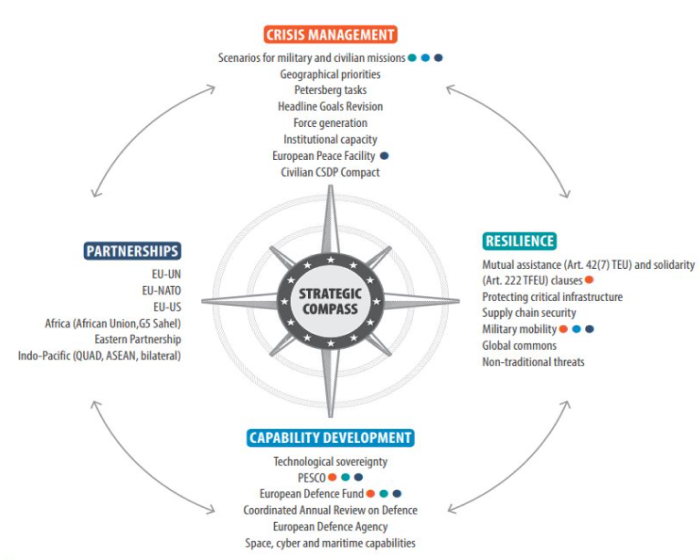
Currently, the European security idea is called the Strategic Compass, approved on March 21, 2022. The document explicitly states that this initiative should only complement NATO. The Strategic Compass also defines a plan of security measures until 2025. It can be predicted that this is only the first such document in the chain of building a long-term defence strategy on the European continent. However, unlike previous initiatives, which usually ended at the level of discussions and outlining vague prospects, this document defines concrete steps.
The place of Ukraine in the security future of Europe is certainly a crucial issue. It is important not only for Ukraine itself but also for Europe. After all, everyone now realises that the current bloody war could have been avoided if the world had reacted more decisively to Ukraine war today. In Ukrainian philosophical and political thought of the twentieth century, the idea of superpower military and political alliances in Europe was popular among conservatives of the 1920s.
However, the idea of a future alliance involving Ukraine was described in the most detailed way by a well-known public figure, writer, and publicist, Yurii Lypa. The work was published in 1940 and is called The Black Sea Doctrine. Among the main allies, Ukrainian political thought considered all countries with access to the Black Sea, except, of course, Russia, its western neighbours, potentially Belarus, as well as the Baltic and Scandinavian countries.
Currently, the European security idea is called the Strategic Compass, approved on March 21, 2022. The document explicitly states that this initiative should only complement NATO. The Strategic Compass also defines a plan of security measures until 2025. It can be predicted that this is only the first such document in the chain of building a long-term defence strategy on the European continent. However, unlike previous initiatives, which usually ended at the level of discussions and outlining vague prospects, this document defines concrete steps.
Of course, times have changed, and challenges have changed. But here and now, Ukraine has proven its commitment to democratic values, and the Ukrainian army has proven its compliance with the highest military standards by its heroic resistance to the Russian occupier. So, there can be no argument that Ukraine should not become part of the new European security architecture. Moreover, Europe itself should be interested in this. And judging by the attitudes of the vast majority of countries on the continent, this understanding has already come.
Expert opinion
Denys Kuzmin, an expert at the Center for International Studies at I.I. Mechnikov Odesa National University said:
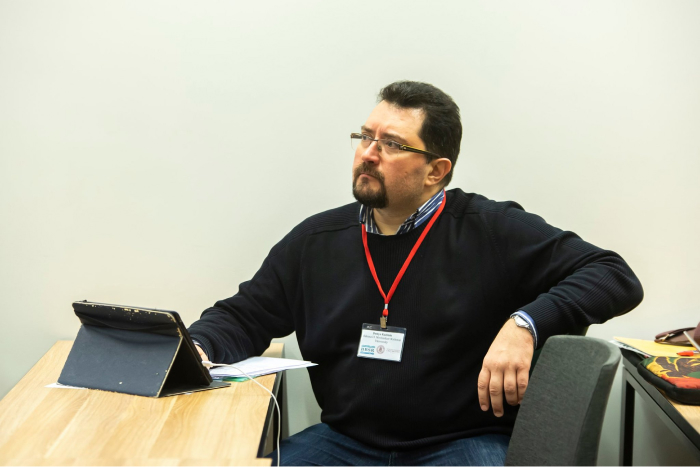
“Since the late 60s, France has been advocating the creation of a European army, so this idea has been discussed for a long time. There were many projects. Separate armed forces under the EU mandate operated in Kosovo and Africa. However, this initiative stopped at the fact that the defense industries and military capabilities of Western Europe and the United States are not comparable. That is why the vast majority of EU countries are NATO members. It is clear that Western European countries cannot be responsible for security throughout Europe without the United States.
Will the situation change? It will depend on whether modern Western Europe can take decisive steps to take its subjective geopolitical place in the world. Simply severing relations with the United States is not an option, but shifting to providing security on its own is. If Europe decides to take such a step, Ukraine, with its Armed Forces and our practical experience, will certainly strengthen such an organisation”.
Another expert we spoke to is more sceptical about the prospect of creating a European armed forces soon. Yevhen Mahda, an expert at iSANS – International Strategic Action Network for Security:
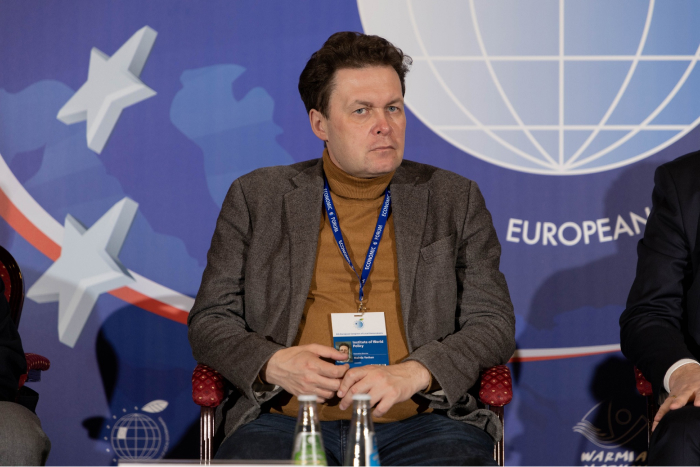
“First, the creation of a European armed forces has been on the agenda for a long time, but Emmanuel Macron’s initiative is unlikely to result in anything significant. He is in his second presidential term, so he can afford bold ideas. Plus, France has the Foreign Legion, which can be used in this vein. But it’s very difficult to say that a European army will emerge now because the EU countries within NATO are forced to increase their defence spending. To create another joint command is, frankly, a rather cumbersome task. I think Macron is now more concerned with fighting with Scholz for informal leadership in Europe.
Second, Ukraine’s place in Europe’s security future will depend on the outcome of the Russian-Ukrainian war. A victory in it will certainly strengthen news of Ukraine, but we should not get dizzy with success. Security is not only about the armed forces; it is also about the information component, the food component, and the economy as a whole. It is a broad area. Therefore, we should not waste time but focus on internal reforms.”
The security dependence of Western civilisation on the United States has created several risks and dangers. Europe understands the threat level, so the issue of continental armed forces is increasingly being raised. It is difficult to predict how long and complicated their creation process will be. The geopolitical situation, primarily the aggressive behaviour of the Russian Federation, motivates European countries to speed up this process. At the same time, a possible military alliance is unlikely to become an alternative to NATO, only an additional tool for security guarantees. Without Ukraine, the newly formed military-political alliance will not be complete, because on the continent, only the Armed Forces of Ukraine have demonstrated an example of effective resistance to the Russian army.
Kostyantyn Grechany