

The modern world rests on a complex web of infrastructure systems that deliver essential services, such as electricity, clean water and telecommunications, to people worldwide. These systems are not just technical networks but are integral to the socio-economic fabric and geopolitical landscape. Ukraine’s current plight highlights the intricate connections between infrastructure and geopolitical dynamics, serving as a stark reminder of how infrastructure underpins national power and influences global affairs.
The Centrality of Infrastructure in Geopolitics
Silvester Nosenko, senior lecturer at the National University of Kyiv-Mohyla Academy, believes that in today’s globalised world, power is increasingly tied to the ability to build, maintain and control critical infrastructure. The conventional view of geopolitics, which often emphasises military clout and alliances, now grapples with the reality that infrastructure control may hold equal, if not greater, sway in international relations. Governments, therefore, are not the sole actors in this space; multinational corporations, technological enterprises and environmental conditions interact continuously with states to shape the global order.
“In turn, the shift toward infrastructure-centric geopolitics necessitates rethinking traditional strategies. Policymakers must consider the material and technological interdependencies that fuel geopolitical conflicts. The control over infrastructure, from energy grids to communication networks, determines not just economic prosperity but also strategic advantage. The case of Ukraine vividly illustrates the stakes involved”, – he said.

The Role of Infrastructural Geopolitics
Before considering the case of Ukraine in more detail, it should be noted that the importance of infrastructure extends beyond any particular country. The competition between the two key global powers, the United States and China can be viewed as a struggle over infrastructure control, adding a material and pragmatic dimension to the ideologically framed conflict between autocracy and democracy.
This infrastructural perspective goes beyond binary political ideologies and emphasises how different actors shape engagement terms and control the movement of information, goods and capital. Control over infrastructure doesn’t merely depend on who owns it but on how it functions, whom it empowers and what activities it facilitates or inhibits. Consequently, the infrastructure itself holds political agency, shaping power relations and geopolitical outcomes. In this connection, the recently coined term “infrastructural geopolitics” brings to light the active role of infrastructure in geopolitical struggles. It reflects the idea that infrastructure is not a passive tool but an agent capable of routing, blocking, challenging or altering power dynamics. Historical political inclinations become embedded in infrastructure, and these structures wield as much influence over current power relations as do the military tools.
In its current war, Russia seeks to impose its infrastructural power on Ukraine by systematically targeting and destroying the country’s infrastructure. This strategy aims to weaken Ukraine’s economic base, disrupt civilian life and assert control over the country’s territories, be they occupied or not. The widespread devastation of Ukraine’s energy sector, water supply systems, transportation networks and industrial facilities is going to pose a considerable challenge to the nation’s resilience and recovery, even if active hostilities end in the foreseeable future.
Given the critical stakes involved, the European Union, Ukraine’s immediate neighbour, needs to rise to the challenge. The EU would be well advised to invest in innovative and resilient infrastructure in Ukraine, which includes not only repairs but also the development of forward-looking, sustainable solutions. This encompasses critical areas such as water supply, which is vital for both public needs and industrial processes. By investing in robust infrastructure, the EU can help stabilise Ukraine, ensure the continuity of essential services and provide a bulwark against further aggression.

The European Union can foster collaboration between governments, the private sector, and international organisations to fund and operate these projects. These efforts should prioritise durability against physical attacks and resilience against a changing climate and other environmental challenges. Additionally, these initiatives can serve as a symbol of European solidarity and a practical measure to counter Russian objectives that would go beyond military assistance.
As part of a broader strategic competition, the United States has introduced the Partnership for Global Infrastructure Investment (PGII) as an alternative to China’s Belt and Road Initiative (BRI). The PGII, which the EU is also committed to, aims to finance and support infrastructure projects globally to ensure economic connectivity and resilience. However, it is noteworthy that despite the PGII’s ambitious goals, Ukraine does not currently appear to be a priority within this partnership. This is surprising given Ukraine’s pivotal role in the current geopolitical landscape, especially amidst the Russian invasion, where infrastructural control is paramount. This is yet another dimension where effort and policy change is required.
Ukraine’s Water Infrastructure
Ukraine’s water infrastructure deserves special attention within the broader reconstruction effort. According to the Boston Consulting Group, modernising the country’s water and wastewater facilities is one of the most needed and potentially impactful areas to be targeted during recovery. The degradation and disruption of water infrastructure obviously have severe implications for public health, economic stability and environmental sustainability. Ensuring access to clean water and effective wastewater management will be crucial not only for human welfare but also for maintaining industrial productivity and agricultural output, thus reinforcing the overall resilience of the nation.
The Ukrainian volunteer, investor, and businessman Oleksandr Yavtushenko believes that using fibreglass pipes is one of the most reliable and modern solutions to Ukraine’s water supply problem. Fibreglass pipes offer several advantages over traditional materials such as steel, cast iron and PVC. They are significantly lighter, with a weight that is only 15–25% of that of steel pipes and 10% of that of concrete pipes, which reduces transportation and installation costs. Additionally, fibreglass pipes exhibit excellent resistance to external aggressive and chemically active environments, including sulfates and chlorides, thus ensuring long-term durability and low maintenance costs.

“The lifespan of fibreglass pipes exceeds 50 years, making them a sustainable option for long-term infrastructure projects. Their high seismic resistance and flexibility allow them to adapt to ground movements without cracking, which is particularly beneficial in urban areas with dense construction. Fibreglass pipes are optimal for trenchless rehabilitation methods, making them ideal for reconstructing deteriorated pipelines and collectors, especially those that remain operational during repairs. Their application in a wide range of diameters and pressure ratings makes them suitable for various water supply needs, from potable water to industrial and seawater applications. By incorporating fibreglass pipes into Ukraine’s water infrastructure reconstruction efforts, the country can achieve a more resilient and efficient system that meets modern demands and withstands future challenges”, – he said.
Today, Oleksandr and his partners are trying to establish a plant for the production of fibreglass pipes in Ukraine to create new jobs, reduce production and logistics costs, as well as reduce dependence on imports of such pipes from the EU. Ukrainian entrepreneurs believe that now is the best time to invest in high-tech production inside Ukraine, the products of which will be actively used in the reconstruction and renovation of the country’s infrastructure. For this reason, now is an appropriate time for Western investors to enter the Ukrainian market of construction materials and related products at a minimal cost and with the possibility of a significant increase in return on investment in the coming years. To further this point, we suggest elaborating on the prospects of Ukraine’s construction sector and its role in the recovery process.
Reconstruction: Construction Sector and Broader Implications
Ukraine’s recovery is the largest project since World War II. The country is implementing it now, without waiting for the war to end, because Ukrainians who have lost their homes, villages that have been left without hospitals and schools, and businesses whose production facilities have been destroyed cannot wait. They are needed here and now. According to the World Bank’s RDNA3, more than 10% of the housing stock needs to be reconstructed or built from scratch. The damage is estimated at $17.4 billion, and the reconstruction needs by 2033 are $80.3 billion.
The building materials market plays a significant role in housing reconstruction. They account for 60% of the total cost of construction. Importing them can significantly increase the cost of reconstruction due to additional logistics and customs duties. In other words, everything that can be produced in Ukraine should be produced in Ukraine. This is one of the current government priorities.
According to Yuliia Svyrydenko, First Deputy Prime Minister and Minister of Economy of Ukraine, the application of local content requirements, the creation of new plants and factories, and the rebuilding of the destroyed facilities will allow us, firstly, to avoid shortages and, consequently, higher prices for construction materials. During the recovery phase, demand for them will increase by 30% compared to the pre-war level, amounting to about $24.5 billion annually.

“Secondly, Ukraine’s own production of building materials will help the country support the post-war economy and help it become more economically self-sufficient. After all, up to 40% of the purchase of Ukrainian-made goods is returned to Ukrainians through salaries and taxes. This, in turn, contributes to defence, as Ukraine can provide for its army solely from taxes and fees paid by businesses”, – she said.
Thirdly, this will encourage Ukrainians to return from abroad, as new jobs will be created in the sector’s enterprises.
“According to the Ministry of Economy of Ukraine, Ukraine’s demand for construction materials is estimated at $62.8 billion (as of November 2022). If this need is met with Ukrainian-made materials, the country will be able to generate $16.1 billion in added value, pay $5.6 billion in salaries, $4.4 billion in taxes and fees, and save about 100,000 jobs,” – Svyrydenko add.
Yuliia Svyrydenko notes that, although about 15% of building materials producers have been damaged, today, Ukrainian producers are able to manufacture up to 80–90% of the construction materials required for recovery. The country also has the necessary resources and the need to launch a full production cycle. This is where investment is absolutely necessary. For instance, to implement a plate glass production project, approximately $300 million is needed. The Ukrainian government also intends to launch the production of electrical equipment for homes in Ukraine.
“The government also does not stand aloof from businesses and helps them produce everything needed for reconstruction in Ukraine. To this end, President Volodymyr Zelenskyy initiated the Made in Ukraine state policy, which consists of affordable loans, grants, support for the development of industrial parks, support for projects with significant investments, etc. A total of UAH 45 billion has been allocated from the budget for all business support programs this year”.
The Ukrainian authorities are also working on changes to the legislation in the field of construction materials production to ensure their environmental friendliness. The country’s goal is to make Ukrainian building materials environmentally friendly and freely export them to the EU and other countries. Ukraine is also working on projects to recycle construction waste; the first production lines are planned to be launched in the Kyiv region.
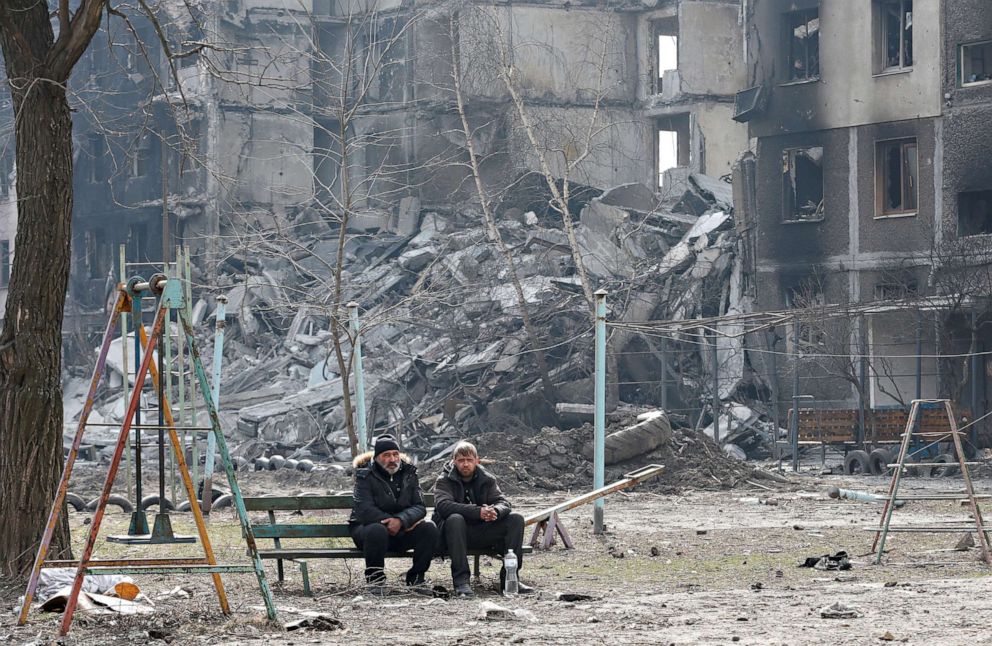
Alexander Ermochenko/Reuters
Investment in building materials today is the development of Ukraine tomorrow. Therefore, the Ukrainian government calls upon investors to enter the Ukrainian market and fill those niches that will help us rebuild the country on the “Build Back Bette” principle, using modern technologies implementing EU principles such as green transition, digital transformation, energy efficiency and barrier-free access. These are not just plans; these are real measures Ukraine is taking right now despite the ongoing war. If facilitated by the EU, this effort can definitely lead to even greater results.
All things considered, rebuilding Ukraine’s infrastructure is not just a local challenge but a global imperative, given the interconnectedness of modern economies and environmental conditions. The conflict’s impact on infrastructure is compounded by broader issues such as drought and climate change, which further strain water resources and agricultural productivity in Europe and beyond.
Therefore, a successful reconstruction strategy for Ukraine must integrate geopolitical realities with technological and environmental considerations. This requires collaboration between governments, multinational corporations, international financial institutions, and technological entities. Infrastructure projects should not only aim to restore what was lost but also build resilient systems that can withstand future conflicts and climate-related disruptions.
Conclusion
In conclusion, the reconstruction of Ukraine’s infrastructure stands as a testament to the broader geopolitical landscape where infrastructure has become a central axis of power and influence. This infrastructural turn in geopolitics requires a new approach to international relations, one that accounts for the complex, interconnected nature of modern life and the active role of infrastructure in shaping geopolitical realities. Reinforcing Ukraine’s infrastructure is not just about national recovery but also about reaffirming the intricate global order upon which modern society depends. Therefore, the EU and global partners must prioritise Ukraine within relevant frameworks, such as the PGII, to ensure that strategic and resilient infrastructure development safeguards national sovereignty and global stability in the face of aggressions and broader geopolitical shifts. Immediate investments in infrastructure projects in Ukraine are essential to address urgent needs, prevent further deterioration of the situation and lay the foundation for long-term resilience. By acting now, the international community can demonstrate a commitment to stability and peace, ensuring that Ukraine is better equipped to face future challenges and contribute to global economic and environmental sustainability. As the Boston Consulting Group highlighted, the modernisation of Ukraine’s water and wastewater facilities and investments in its building materials sector are crucial for the country’s recovery and long-term resilience, making them key areas for international support Ukraine.
Oleksandr Yavtushenko – Ukrainian lawyer, entrepreneur, and Chairman of Volunteers Council in Kyiv regional State Administration.
Yuliia Svyrydenko – First Deputy Prime Minister of Ukraine – Minister of Economy of Ukraine.
Silvester Nosenko – senior lecturer at the National University of Kyiv-Mohyla Academy (Ukraine).