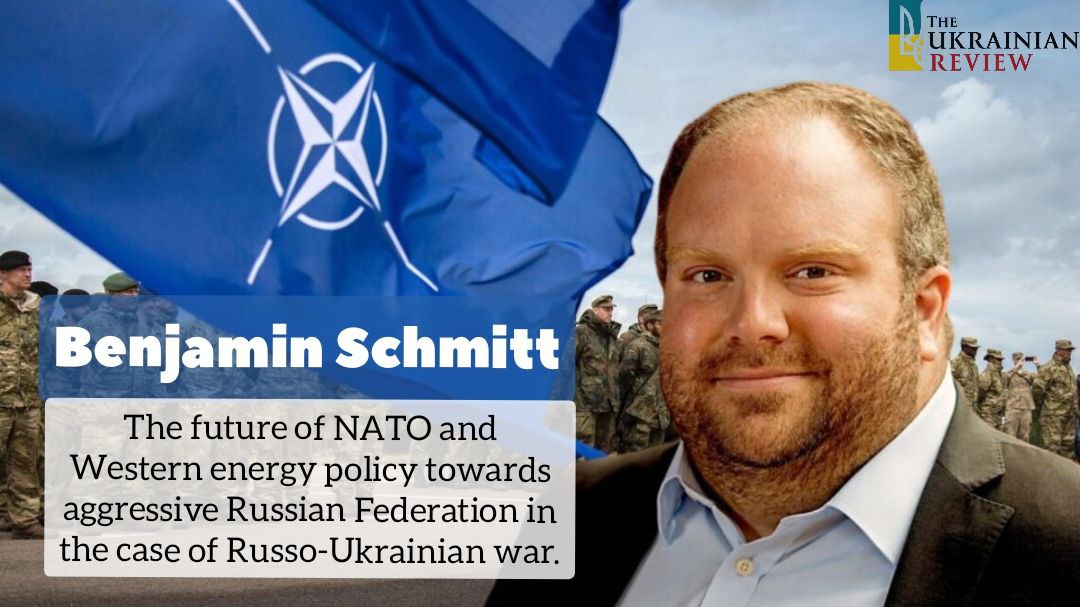


We offer you a transcript of an interview with Benjamin Schmitt, senior fellow from the Kleinman Center for Energy Policy, University of Pennsylvania.
Full video watch here:
Stanislav Kinka, The Ukrainian Review
Today, we have Benjamin Schmitt, senior fellow from the Kleinman Center for Energy Policy, University of Pennsylvania. I have several questions about Ukraine, NATO, energy policy, and the war in Russia and Ukraine. My first question: Does NATO as an organisation face a major challenge from war in Ukraine today? Could this war lead to the disintegration of NATO as a solid organisation, or is this challenge an opportunity for transformation of the North Treaty Atlantic organisation? Now, we could listen to very weird statements from several American politicians, for example, from Donald Trump’s supporters. What can we expect in this case after the US Presidential election this year?
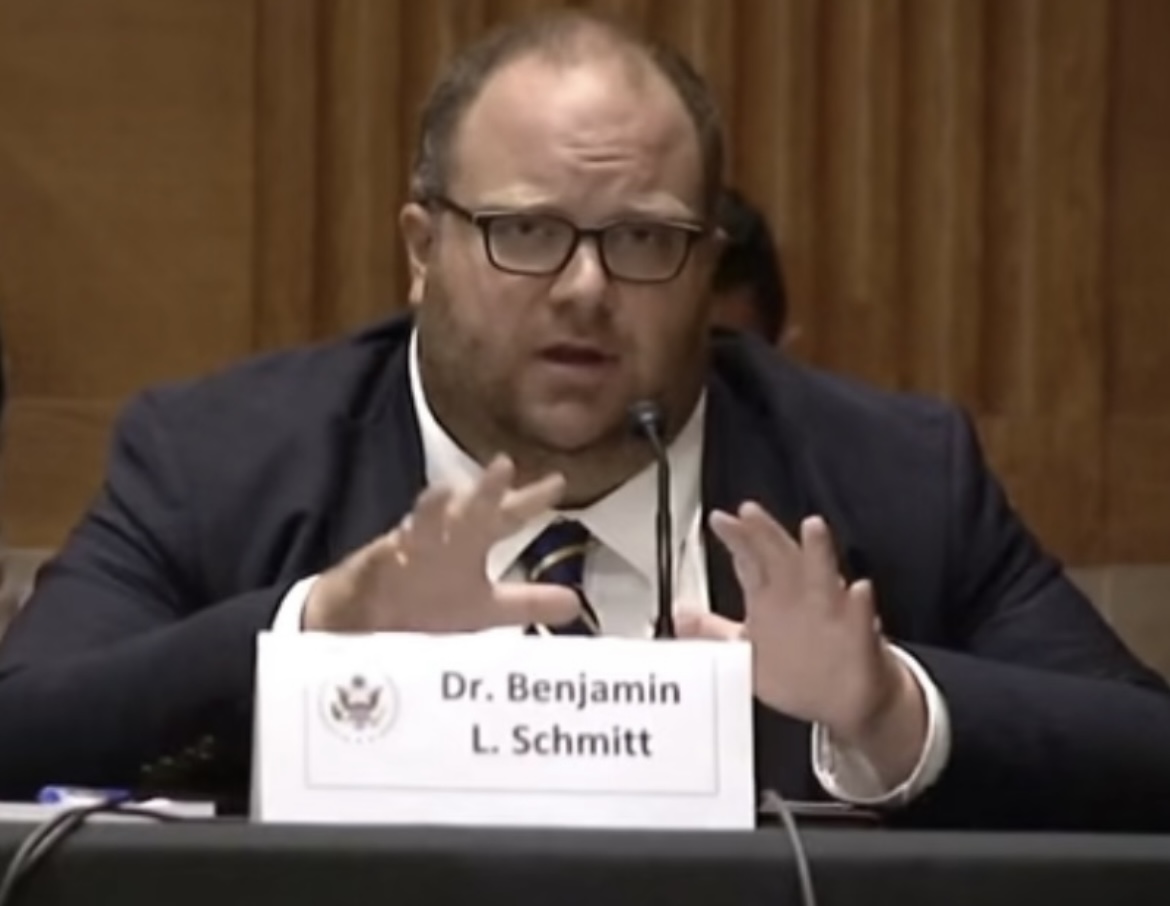
Benjamin Schmitt is a senior fellow from the Kleinman Center for Energy Policy, University of Pennsylvania.
I have to say all of those questions are some of the most fundamental questions that are facing transatlantic security when it comes to 2024. We really are in what I would say certainly in my lifetime and maybe in the past 50 or 60 years or so. Here is one of the most dangerous times in the Transatlantic alliance that we’ve seen. We’ve witnessed in February of 2022, a large-scale ground invasion by the Russian Federation of a sovereign nation in Ukraine that has unleashed the largest ground war in Europe since World War II, and that can’t be understated.
This is a situation in which the entire Transatlantic community is under a considerable amount of threat, both a perceived threat and an actual threat in terms of the potential for this conflict spilling outside of Ukraine’s borders. And as a result, we need to meet the moment. And we’re not doing that, right?
We have seen, in the early stages of the war, an admirable push in the Transatlantic community to have unity on Ukraine. We’ve seen sanctions on Russia to support Ukraine. And at the same time, we’ve also seen military equipment be sent in unprecedented numbers to Ukraine.
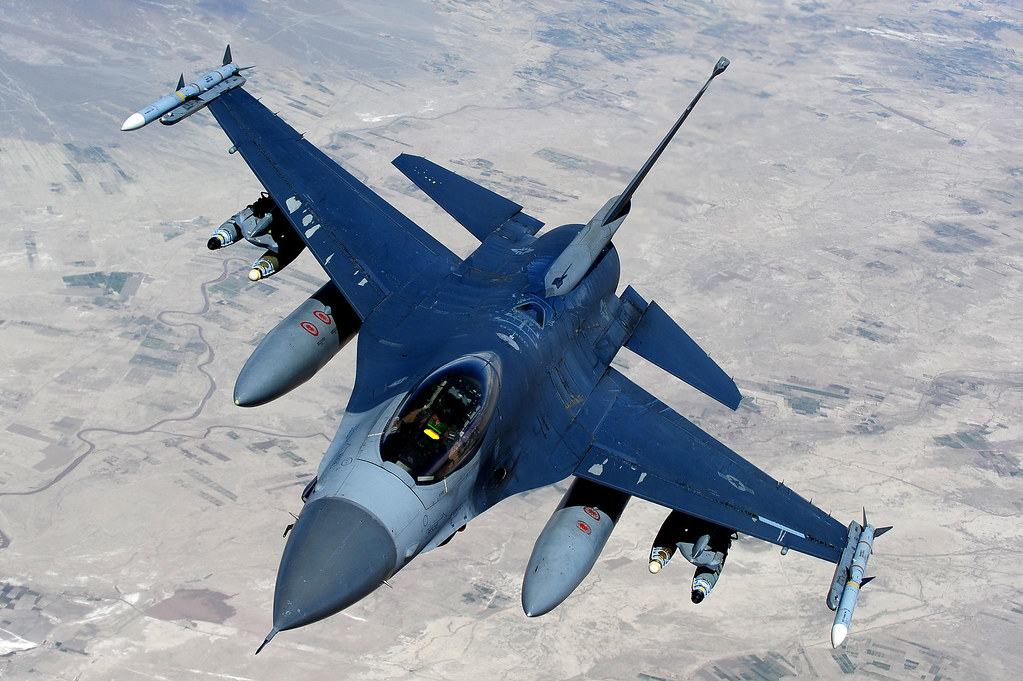
I was thinking of this in maths terms. It’s kind of an X minus one approach to what is actually needed in the sense that if X is what Ukraine needs to push back the Russian Federation on the ground right now, X minus one is what we have sent collectively, right? We started by saying that, Javelins and Stingers, these were once thought of as impossible to send to Ukraine. Of course, we sent them right away. Then it was the tanks and things like this, air defence, all, name, the system. And we have ultimately sent it up too and including cluster munitions and shorter range ATACMS. And we really need to now support longer-range strike capability by the Ukrainian state using long-range ATACMS and also support air policing and air defense through not only more systems like the Patriot missile system but also fighter jets like the F-16 platform. And we’re seeing that that’s moving forward, but it’s been moving forward absolutely at a pace that is kind of just right behind where we need to go. And, of course, the same thing has happened with sanctions, where we’ve seen an unprecedented amount of sanctions be announced, but not enforced at the level that’s needed. And we’re in a very peculiar spot.
I often think back to this, this really feels, unfortunately, for you’re looking for a historical antecedent. It feels very much like the years just before the U.S. entry into World War II, in the sense that Churchill begging the United States for weapons systems and things like this. But the United States had moved into this isolationist shell mode and had passed these neutrality acts that didn’t allow us to even support our closest allies. And so I think it’s through sending ships and equipment and material that were needed to push back Nazi Germany and its attacks at that point, not only into France but also into the United Kingdom. And so we really need to remember how history turned out. We ultimately turned into the arsenal of democracy and really were able to support our allies and ultimately win World War II because of that. And it’s been a lot of absolutely tragic to me every day. I get up, and I get messages on WhatsApp and Signal and Twitter, et cetera, from Ukrainian friends and colleagues. They’re begging anyone that they can realise the security threat, not only to Ukraine existentially, but also to the Transatlantic alliance. And it shouldn’t be that way. This is obvious. We’ve seen this picture before. We know what is going on. And in fact, there is a roadmap to how to respond to this sort of threat. We are in a modern warfare case, but we know how to at least diplomatically stick together and support an ally that is being attacked by a brutal authoritarian nation – the Russian Federation. We need to do better. We need to put partisan politics aside. This has never been a partisan issue in the past, or it shouldn’t have been a partisan issue in the past. It definitely shouldn’t be now. And it’s shocking to see the shift. I think this is largely due to the Trump MAGA movement towards isolationism in parts of the Republican Party. Fortunately, there are a lot of Republicans that still are in Congress that are kind of from the Ronald Reagan, liberal internationalism, whatever you want to call it, wing. We’re supporting global freedoms, and U.S. leadership abroad is really important. But that wing is shrinking, unfortunately. And it’s really concerning as we get into a very heated election year in the United States. So we can’t fail. Failure is not an option when it comes to supporting Ukraine. But we need to really get our house in order and move as fast as we can to support Ukraine. And that means starting with the, the House of Representatives has to pass this supplemental bill for Ukraine aid that was passed by the Senate a few weeks ago. That has to happen because there are actual repercussions on the battlefield, as we have seen in Avdiivka and other places where our inaction as a country, as the United States’ inaction, has led to shortages, critical shortages, and weaponry that are really changing.
Let’s discuss the jurisdiction of the Senate, Congress, and the President of America. Why are they not pushing the Lend-Lease, like they did in the Second World War? Can you clarify this question? What happens with the Lend-Lease? And could we say that Ukraine, at last, has a free way, an opportunity to get these weapons faster, even before the Parliament adopts these documents?
I think it’s definitely an option. It’s something that was talked about and kind of has fallen off to the side in terms of the policy priority. I think that both the Biden administration and Congress have focused significantly on direct foreign assistance to Ukraine for military, civilian, and humanitarian support. I’m not exactly sure, to be honest with you, Stan, why the Lend-Lease idea has not continued to be pushed forward. But I think it certainly is worth a look, again, because we have a historical antecedent where that actually had a significant impact on the battlefield to push back the Nazi regime during World War II. And it’s something that I think we need to, at minimum, exhaust all options to make sure that, my God, that we’re not missing an easy policy step that could help Ukraine secure its victory and secure it quickly so it doesn’t succumb in the transatlantic sense to this notion of having allies and partners have quote-unquote Ukraine fatigue.
I always think this notion of Ukraine fatigue is a self-fulfilling prophecy. It’s announcing that there will be Ukraine fatigue if the Ukrainians don’t win fast enough, and then, at the same time, we’re not supplying weapons fast enough, and we’re not enforcing sanctions fast enough, and we’re not announcing sanctions fast enough, and we’re not using frozen Russian assets to support Ukraine. All of these things are solutions that we put up our own roadblocks for one reason or another, whether it be in the military sense, the sanction sense, or the export control sense. And we really need to think that a lot of these things aren’t, every single one of these questions isn’t a geostrategic question, but rather a strategy question for how tactically to help Ukraine in the next X number of months ahead each time. And we do want to do these things.
What is your forecast for the next few months? I know that there are many US politicians who focus on the forecast presidential election, and pay less and less attention to Ukraine news. What is your opinion?
Well, first of all, we have to get this supplemental bill done. I think that as soon as Congress is back from its current recess, I think you’re going to see that be the top and maybe only news story for however long it takes, unfortunately, to get this thing to pass. Hopefully, they come back on day one, pass the thing, and move forward so Ukraine can be supported as quickly as possible. But if it takes any amount of time, that will be in the centre of our news cycle, I think, for sure. And then, I think that it’s up to us to advocate for Ukrainian victory on both sides of the island to make sure that it doesn’t succumb to partisan politics in kind of your discussion of a domestic policy cycle because it’s a presidential election. These are consequential issues and issues that both candidates, whoever they may ultimately be. And, of course, it does look like it’s going to be Biden and Trump at this point. But if it were Biden and Nikki Haley, it would be the same thing. It’s got to be the centre of the discussion. Because this is the most critical geostrategic and national security question that’s facing not only Ukraine, not only Europe but the United States itself. If we don’t help Ukraine to win now and win quickly, it’s going to only undermine our global leadership on security issues more broadly and certainly will undermine our credibility on pushing back on any future Chinese aggression. Should that happen? The Taiwan Strait, for example, or any other issue globally.
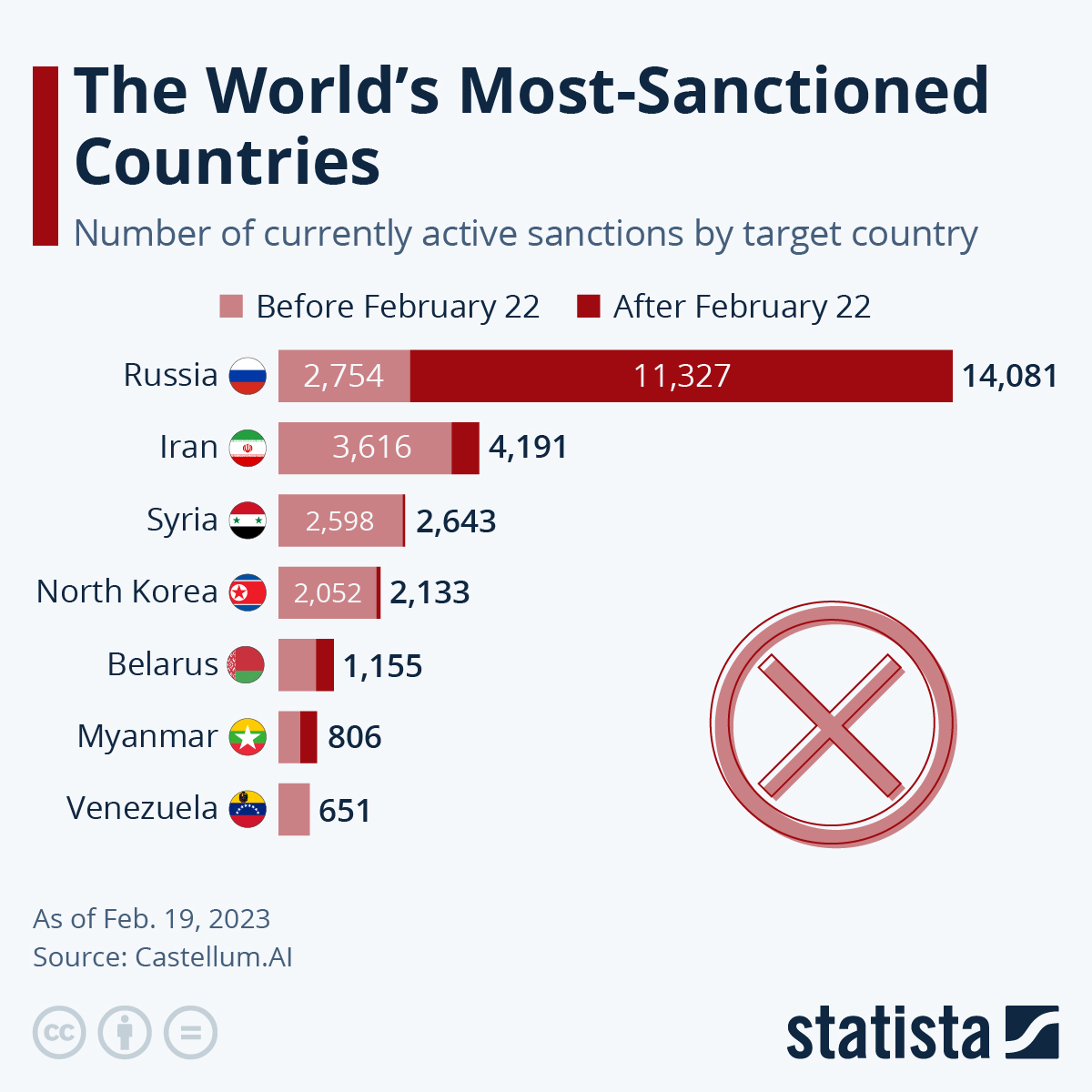
And again, that’s why also on the sanctions front, that was the military front on the sanctions front. When we don’t announce sanctions. We don’t fully enforce them, or we have paltry updates to these sanctions as a collective Western alliance, not just the United States, but the US and EU. What it says to foreign actors that maybe they have malign intent, uh, is that well, guess what? They might announce sanctions, but they won’t work because they’re not going to enforce them rigorously. They’re not going to go out in the high seas to sanction more and more vessels that are breaking export control regimes or energy price caps, oil price gap, and things like this. They’re not going to reduce the level of the oil price cap from $60 a barrel for years down to its marginal production cost of $20 to $30 a barrel, which we certainly were hoping to see already last year. But it hasn’t moved. And these policies can’t be set, forget it and forget it because if they are, um, it will only give more breath to those that argue that sanctions don’t work right. Sanctions don’t work. We’re succumbing to Ukraine fatigue. We’re doing all of these policy announcements, and nothing is actually changing in terms of how the adversary is, in this case, the Russian Federation, approaching the issue. We need to make sure that we are doing our part to back up these enforcement regimes, to make sure that the sanctions actually do work and that they not only harm the Russian Federation’s ability to wage its illegal war of oppression against Ukraine but also make sure that other would be malign actors don’t start thinking that these regimes for sanctions and export controls don’t work, and therefore they can have a free hand at doing something else problematic around the globe.
And so we think back to basic sanctions on things, export controls on things like machine tools and CNC [Computer numerical control] parts and things like this, things that are directly part of the very basic supply chain when it comes to the Russian ability to create its military, material and systems and weapons. Well, guess what? These are really basic things. We need to make sure that they don’t have advanced manufacturing capabilities. They need to even take away the ability to get machine tools of pretty basic machining capabilities so that they cannot be building and maintaining supply chains to keep their troops stocked on their side while we dither with our funding of the Ukrainian military on the other side.
But with many countries from the global south and from China to other Asian countries, this view is a little weaker. They do not support the sanctions on the Russian Federation. We know that the Russian Federation is now supplied by missiles and shells from North Korea, and it’s not under the control of Western countries. And you know that even countries, members of NATO like Turkey, have close economic relations with the Russians. And they send technology. And so there are civilian drones and some other technology, which could be used like the military. Russians, they have no capability to produce it by themselves, so they use Western technology, devices, spare parts, and they wanted to avoid these sanctions, and unfortunately, they were successful in avoiding them. For example, you mentioned the prices for the oil, but unfortunately, a lot of the oil is shipped to other countries by the “shadow fleet”. In fact, it’s not really shadowed ‘cos they all have owners, from Greece, for example. Unfortunately, not all Western countries support sanctions at the level Ukraine needs. The same situation with frozen Russian assets.
But nevertheless, let me shift to another theme. Let us talk about the energy security of Europe because you’re a great specialist in this field. How can you describe the energy security in Europe for the last two years? What changed? What are the changes that you see in the oil and gas market, because before the war, we know, some of the EU members were supplied by Russian oil and gas?
I would argue to a certain extent that nothing has changed, but the trajectory and the scope of the vector have just increased. And what I mean by that is Russia has always used energy as a weapon in Europe. It has always weaponized energy flows. In particular, we’ve always seen the traditional breakdown, at least over the past several decades, that Russia has used its oil supplies for state revenue in particular that can also support its military, supply chains, and things like this in funding its illegal war of aggression against Ukraine, for example. But it’s also, over the years, used natural gas as a political lever, right? It’s not as large of an economic thing for the Kremlin as it has been a geostrategic and geopolitical tool. And we’ve seen that time and time again going back to the 2009 cutoff of Ukraine. Through the Ukrainian gas transmission network, having outages in Europe and Southeastern Europe in particular, but also Central Europe. And you’ve seen this again and again over the years, dozens of cutoffs of various pipelines. All of them, the Russians have over the years said, were technically motivated, not politically motivated. They always come up with some sort of technical issue that comes up in a pipeline or a system that is not really a system that is not really true. And they’re trying to use it to extort political concessions from whatever target country has been a, what to their view is doing something problematic, to our view is almost always doing something that is increasing democratic resilience in that part of the NATO alliance or part of the European Union. I think that as we saw the war brewing, we already, from the energy expert community, at least, we’re seeing that Russia was increasing its weaponization of natural gas and acting in non-market ways in which it was in 2021, already not supplying or undersupplying gas storage facilities across Europe that it itself owned, Gazprom owned or partially owned storage facilities in Germany and other countries that were being undersupplied ahead of the winter going into the winter of 2021, 2022. And that was a massive clear version of energy weaponization because what it was doing was making a bare market to the greatest extent possible and driving up energy scarcity ahead of Russia’s large-scale invasion of Ukraine in February 2022, with the hope that there would be such an energy crisis that winter that the EU would have to think twice about fully supporting its role in supporting Ukrainian sovereignty. Thankfully, the European Union was able to pivot very quickly. And there were a number of other market factors that made sure that was not the case. It was a warmer than usual winter. China was in a COVID lockdown at that point. So, there was more LNG fungibility on the market. But it also meant that a lot of these energy security projects that have been built up over the years had to be finished rapidly and come online. Fortunately, we did see that happen. We saw Germany finally give up projects like Nord Stream 1 and Nord Stream 2. And we saw Germany finally give up Nord Stream 2. Well, it didn’t give up Nord Stream 1 immediately. It was still importing Nord Stream 1 gas. The Russians cut off Nord Stream 1 to a greater and greater extent until, in early September of 2022, the gas was fully cut off through that line. And then, of course, we, at the same time, saw Germany ramp up its LNG facility construction for floating storage regasification units. And we saw it ramp up the Baltic Pipe project, Gas Interconnector Poland-Lithuania, increase in the potential capacity for the Świniewice LNG terminal. More talk about the Gdansk LNG terminal, et cetera.
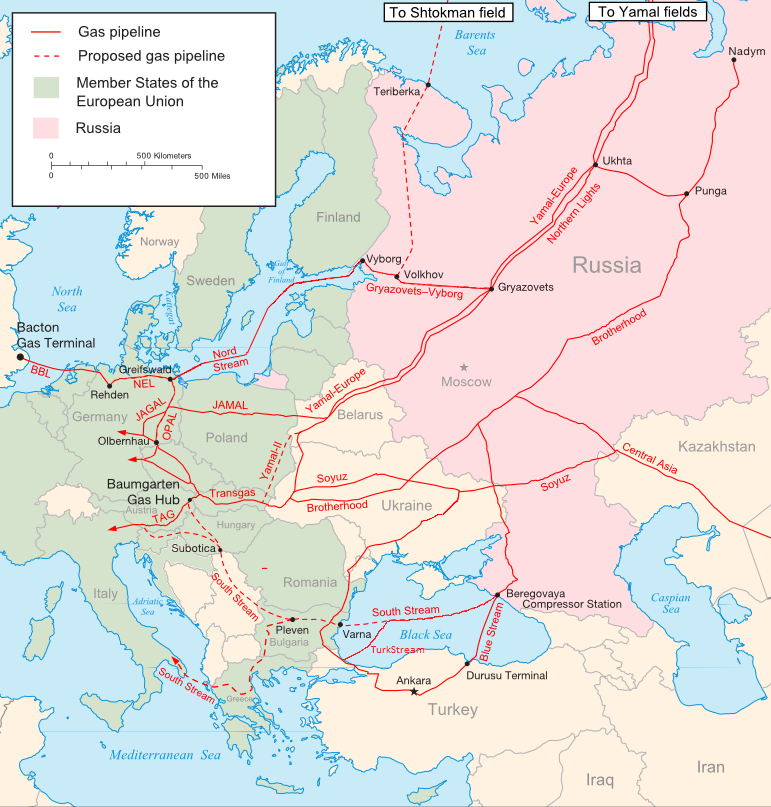
The idea of all of these is to support market liquidity and optionality. And that’s exactly what happened. Putin may have weaponised energy, but Europe overcame it. But it can only overcome it to the extent that it doesn’t go back to a return to business. And so it’s going to be as usual with Russian energy in the future. And that’s a concern that I have because, as we’ve also seen, Stan, over the years, that Europe’s energy security doesn’t just have to do with market conditions and things like this. It has to do with the way in which Russia has used energy projects, things like Nord Stream 2 and Nord Stream 1, to co-opt and coerce senior officials to work or push for pro-Kremlin lines after they leave office. You, of course, have this idea of elite capture, not alleging any illegality. It should be made illegal. But a lot of these former Democratic leaders, small democratic leaders across Europe, left office and took jobs for Russian state-owned oil and gas companies. Gerhard Schröder, the former chancellor of Germany, Karin Kneissl, the former foreign minister of Austria. That’s got to stop. And that still hasn’t been mandated to be outlawed in Europe. And I think it ought to be. And that’s why I’ve called the course in the United States for our own version of that, called the SHAME Act, the Stop Helping America’s Malign Enemies Act, to stop that. And basically, even though we can’t enforce this in Europe, we would have that on the books in the United States and hopefully have European partners and allies follow us as a norm-setting process.
Could you tell us how the United States of America stabilises the prices for the gas in European countries? To supply the European market with cheap American gas? Is this the way to resolve this problem? Because you know that the far-right groups and some populist politicians in European countries argued that the prices for the energy and gas are too high for the European consumers. And is it the way to solve this problem by using American gas?
Well, first of all, let me just remind folks that when we were talking about U.S. support of European energy security, this has gone back decades and decades. And we have, as a matter of policy, always supported reducing the amount of energy that the European Union itself was relying on Russia, the percentage of that. Because being too dependent on any single source is… It’s not good from an energy security perspective, but certainly one with increasingly authoritarian and malign activities towards the European Union itself. But of course, the United States was blamed even before we had the capability of exporting LNG into global markets, that the only reason, quote-unquote, from Gazprom supporters that we opposed the Nord Stream 2 pipeline was because we quote-unquote, just wanted to sell our own LNG. Couldn’t be further from the truth. It was always a national security concern. For the litany of issues that I’ve already mentioned, from the ability of Russia to weaponize gas through cutoffs to elite capture and strategic corruption associated with these sorts of Russian energy projects to the very physical security concerns that we’ve raised many, many times, and ultimately having these pieces of Russian infrastructure deep inside of areas that are more associated in these countries.
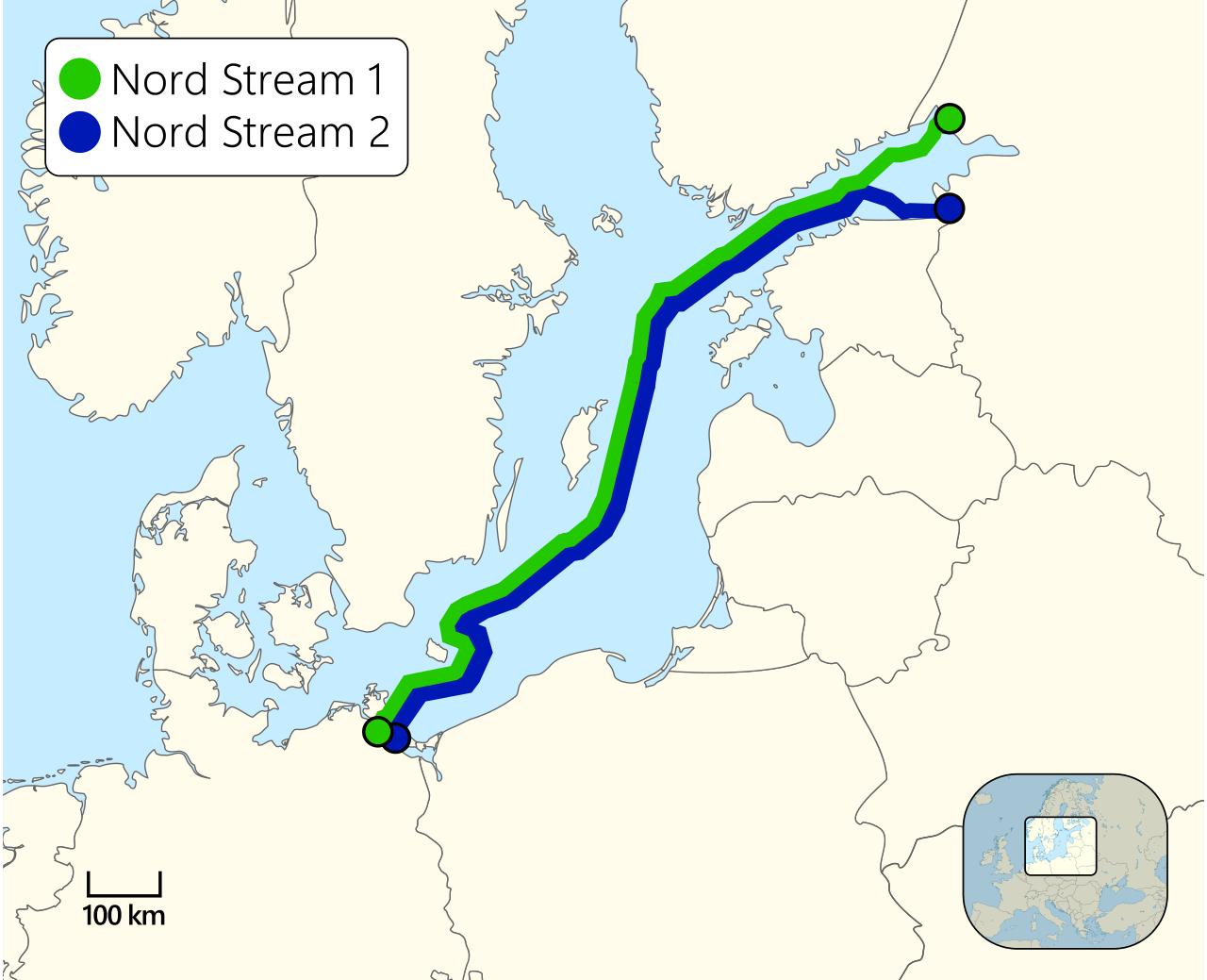
We saw Nord Stream 1 and Nord Stream 2 be sabotaged in September of 2022 as well. And so all of these concerns were borne out. What didn’t happen was the U.S. was not able to ever kind of orchestrate its LNG to specifically help Europe because we don’t have state-owned oil and gas trading state-owned oil and gas export companies. And so all of these concerns were borne out. With Nord Stream 2 sanctioned and Nord Stream 1, they started cutting off themselves. The message was very clear that these pieces of infrastructure in Ukraine that are now fully able to be targeted by Russia, Russia would have to make a decision to target them to basically cut off their own last avenue of gas flow to Europe and revenues thereof. And so that’s why we have seen, to the large extent, that the Ukrainian gas transmission system has been spared, I think, by Russian kinetic strikes. Russia has unleashed horrific kinetic strikes against Ukrainian energy infrastructure, both hydrocarbon and electricity grids and things like this, to exacerbate the humanitarian crisis that it has engineered across Ukraine. But at the same time, the future of this gas transmission system is an open one. I think that everyone in the United States and European Union that is in the energy security community really thinks about it in terms of how do we basically end Europe’s dependence on Russian natural gas. And Russia did some favours to actually start cutting off the gas pipelines themselves, the Yamal pipeline, Nord Stream 1, etc. To undermine their own market position across the European Union. But at the same time, I think that the Ukrainian gas transmission route probably needs to go away as well at some point. And maybe if you’re talking about ending Russian natural gas sales in Europe or European reliance on Russian natural gas, it’s imperative that that be basically the last light to turn out. In terms of the gas dependency that Europe has. I think that in the very shortest term that will continue, the Ukrainian GTS gas transmission system will continue to operate. But I think it’s going to be also going the way of the other main gas delivery routes into Europe from Russia and ending its lifetime in the coming few years as well. So, it will bear out what actually happens. But I think that’s part of a larger strategy to just end and wean Europe off of its dependency on Russian gas.
Could you tell that Russia now is more dependent on the prices of the gas and oil and dependent on India or China? And European countries are not dependent. They are independent from the Russian energy system at all from 2022-2023.
I think that Europe needs to be more independent. You have situations where Europe has increased its amount of Russian LNG imports. So, whereas all of those issues I was just talking about are related to pipeline gas from Gazprom, many European countries have decided, well, we’re going to still get Russian gas, but we’ll get it through LNG so that there can be kind of this hopefully ramp down process of bringing Russian gas into their systems. But the Russian Federation absolutely is more dependent. It’s more dependent through its ghost fleet, and it’s trying to circumvent the oil price gap from getting its crude oil to places like India or China and having it refined and then sent on to third party buyers, some of which are participants in the oil price gap, to begin with. And so that’s why, again, enforcement and vigilance has to be there to make sure that we don’t inadvertently buy oil products that have come from a Russian origin that are going to benefit the Russian Federation. Financially, in some way. So, yeah, I think that is absolutely true. I think that Europe has become more independent of Russian energy. I think it’s got a lot of homework to make sure that it continues and does not backtrack at all. If the war in Ukraine were to end tomorrow, I don’t think it would be a good idea for Europe to return to a business-as-usual status with Russian gas and oil. And so I really think that that’s got to be a permanent shift. And at the same time, I think that’s going to be a permanent shift. And at the same time, for companies like Gazprom that had the pipeline gas monopoly for getting gas out of the country, and in particular, they had focused on Europe, this whole thing has been a disaster, right? Because unlike Rosneft and all of these oil companies that can get the more fungible commodities like oil, crude oil, out to third party refiners in the global south, as you said, or other places they can’t reroute their natural gas. I think that’s going to be a permanent shift. Because you have to build new pipelines. And we’ve seen China really kind of be nonplussed about the power of the Siberia pipeline that the Russians have been pushing, to expand. I think it’s going to be a while before their natural gas industry really rebounds.
And I don’t know that it’s going to be anytime soon, and nor should it, because of their illegal acts of aggression against Ukraine and their broader malign influence in hybrid threats against the transatlantic community.
Thank you very much for this explanation, because it’s an important theme, and I’m sure our readers will be grateful for you. Today, we talked to Benjamin Schmitt from the University of Pennsylvania. Thank you very much for this conversation.