

“Excuse the question: would Mette Frederiksen have spoken to Nazi Germany after the extermination of the Jewish ghetto in Warsaw in 1943?
There was no shortage of lofty intentions when the UN was founded in 1945. A new world was to be created on the ruins of the just-ended Great War. Instead, the UN became a ritual – as empty of content as the League of Nations in Geneva in the years after the First World War.
Vienna
There will be crowds in New York this month. Plane after plane will land with the world’s greats, who will immediately proceed to the worn-out but architecturally elegant UN building on the East River. They will spread charitable words. Also Mette Frederiksen, who is running as a member of the Security Council and holds the EU presidency. Is that binding? Yes. Will the commitment lead to action? Hopefully.
September is the month of the General Assembly, this year surrounded by a symbolism that will promote phraseology, but hardly the will to act. The world organization was established in 1945. It was supposed to protect humanity and maintain peace. And where are we 80 years later? The host country, the United States, which wanted and often did the right thing, is being transformed into a police state that uses its forces to subdue the domestic opposition and weak states in the rest of the world.
Fascist Russia is waging war on Europe in the form of Ukraine and Georgia and sabotaging democracy, currently in Moldova and the Czech Republic, which are due to hold elections within the next few weeks. The other day, the Russia-China axis, which is not exactly reassuring from a European perspective, gave another noisy example of its intentions and forces.
The UN Secretary-General, the Portuguese António Guterres, seems tired and discouraged. Rightly so. His mandate expires at the end of the year. A dozen candidates have registered, among them New Zealand’s Jacinda Ardern and Chile’s Michelle Bachelet, both democrats and for the same reason hardly electable. The fact that they are running at all is to be commended. The day-to-day management of the UN must be a nightmare. The UN makes me think of old Grundtvig: “The bad laughed, the good cried, where no one fences, only thorns grow.”
There was no shortage of lofty intentions when the UN was founded in San Francisco in 1945. A new world was to be created on the ruins of the just-ended Great War. But the fence fell into disrepair. The UN became a ritual – as empty of content as the League of Nations in Geneva in the years after the First World War. The UN is not allowed to be peace-making or just peace-keeping, but serves at best, if the powers can otherwise agree on it, as a legitimizing framework for non-binding talks and – perhaps – emergency aid.
Israel is the world champion in violating UN resolutions. Since its establishment in 1948, with the intervention of the UN, the Jewish state has driven millions of Palestinians from their homes, given rise to five or six wars and will very soon, in its third year, be engaged in a mass murder in Gaza, only weeks after a massive bombardment, in collaboration with the USA, by Iran.
What is happening in and around an expansionist, partly fascist Israel is downright horrific and will lead in New York to cascades of criticism, not of the right of the Jewish nation to have a state in Palestine, but of the same state’s continued rejection of the right of the Palestinians to also have a state in Palestine.
Will Mette Frederiksen in New York impart a tangible lesson from her newly acquired distrust of Israeli Prime Minister Netanyahu, who is charged with war crimes and crimes against humanity by the international court set up for this purpose in The Hague? One can hope, but the hope is fragile.
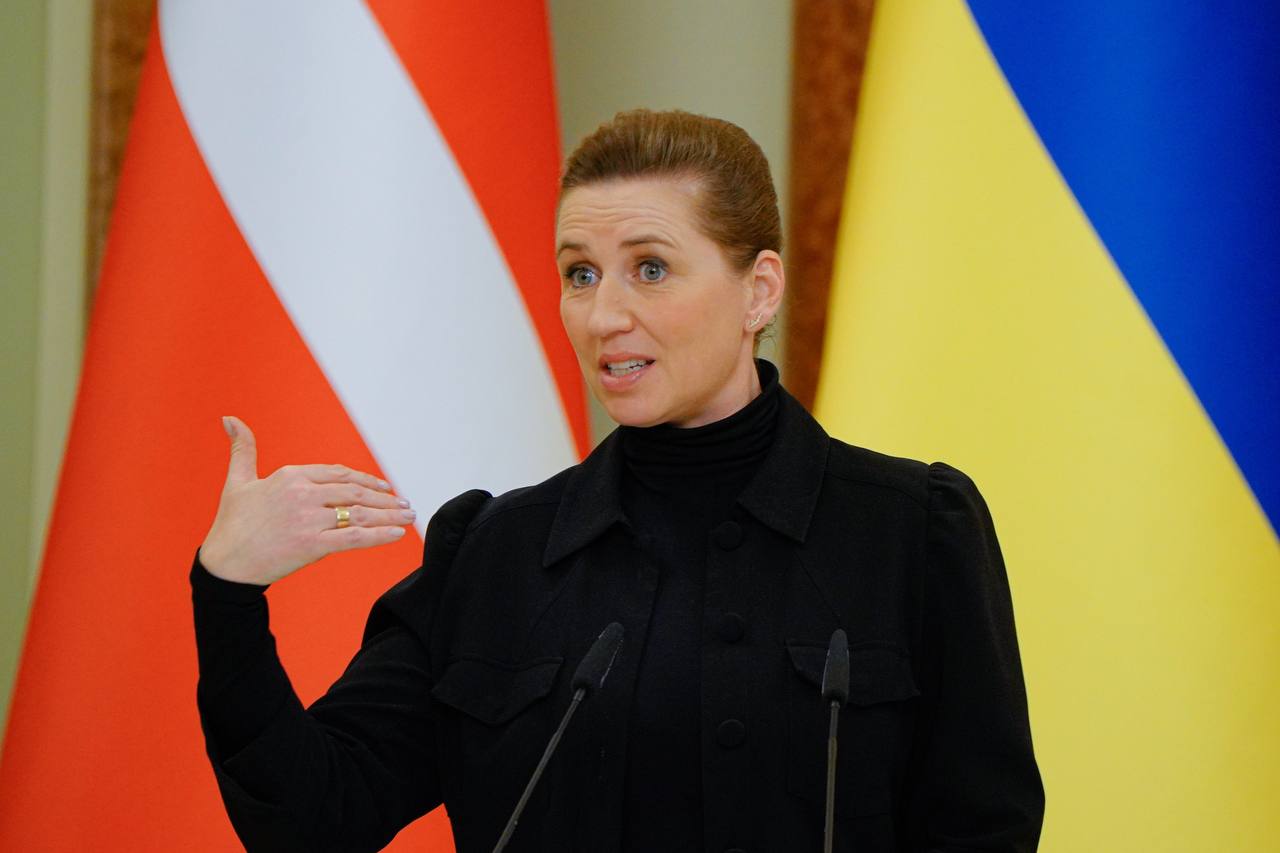
Denmark, like Norway, Belgium, France, Great Britain, Spain, Portugal and other democracies, can recognize Palestine as a state. The Prime Minister makes it clear that she would rather talk to Israel, which since October 2023 has killed well over 60,000 Palestinians, mostly civilians, among them 20,000 children – the terrible and hopeless revenge for a Hamas massacre in October 2023.
And where is the UN in this? The UN’s humanitarian apparatus is expelled from the territories occupied and annexed by Israel, where the government in Jerusalem is preparing a famine and planning the ethnic cleansing of four to five million Palestinians, both Christians and Muslims. Is this a state that Denmark’s head of government believes should be talked to rather than acted against? Excuse the question: would Mette Frederiksen have talked to Hitler’s Germany about the extermination of the Jewish ghetto in Warsaw in 1943?
Sanctions are needed against Israel, just as sanctions are needed against Russia. Denmark, as the large majority of the UN, can recognize the state of Palestine alongside the state of Israel. Denmark, like other democracies, can stop its export of military equipment to the Israeli war machine. Denmark can help to repeal Israel’s association agreement with the EU if Israel refuses to honor the two-state solution of the Oslo Accords.
The old relationship with Israel can be restored when and if Israel shows a serious interest in peace with its neighbors and fellow citizens, the Palestinians, the Lebanese, the Syrians and even the Iranians. In addition, Israel must contribute financially to the reconstruction of Gaza, which Israel has systematically destroyed since its first occupation in 1957. As long as Israel continues on its current course, Israel is to be considered a pariah state.
The world is in one of its most serious moments since the founding of the UN. The great powers are failing, many small states are doing the same. Denmark should not be among them. There is no immediate reason for the optimism that inspired Grundtvig when he wrote in 1833 about the fence that broke. The poem included a stanza about the snail that brought a baby boy. Grundtvig wanted to encourage the fatherland after the loss of Norway and the fleet a few years earlier. The future had to be looked forward to, and proper action had to be taken.
Grundtvig was neither a democrat nor a European in the modern sense, and could not be after Denmark’s catastrophe in the Napoleonic Wars. I imagine that in the 21st century he would have been both, aware of the transformation of a democratic-humanist Denmark into a democratic-humanist Europe, a Denmark that this autumn is particularly committed to by its EU presidency and its seat on the UN Security Council.
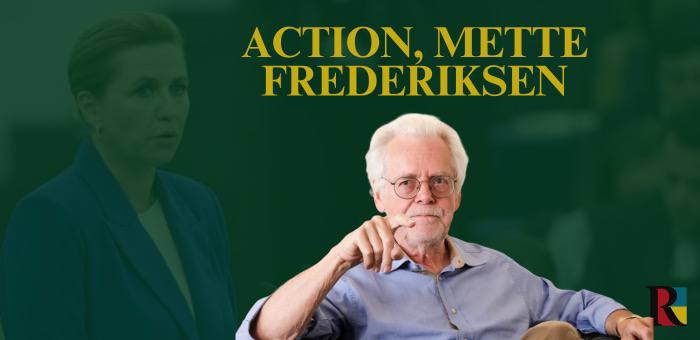
Action, Mette Frederiksen. Action in New York. Action in Brussels.
Per Nyholm
*These opinions are solely those of the author. The Ukrainian Review does not take any position and is not responsible for the author’s words.
Per Nyholm has been a Danish journalist since 1960. He lives in Austria and is a columnist and foreign correspondent for the liberal Danish daily “Jyllands-Posten”.