

Was it a coincidence that Putin let his drones invade Poland a few hours before the EU’s Ursula van der Leyen gave her speech in Strasbourg? Of course not. The attack was supposed to signal that the fascist-warlike Kremlin does not intend to be stopped in Ukraine, writes Per Nyholm. Russia’s war on Ukraine is Russia’s war on Europe.
Brno
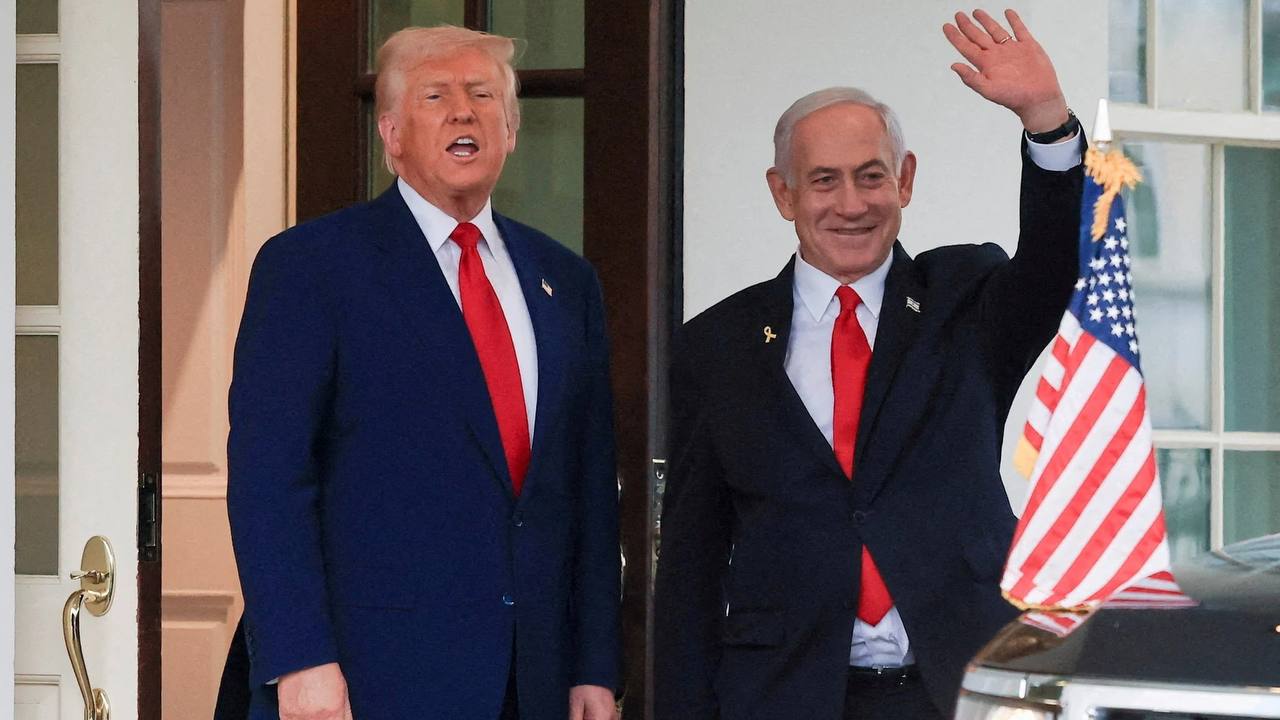
Europe finds itself in a neighborhood where more and more houses are burning. Militant forces are rising, law and order are collapsing, millions of people are being murdered and millions more are being displaced or will be displaced. State leaders such as Russia’s Vladimir Putin, the US’s Donald Trump and Israel’s Benjamin Netanyahu are demanding Lebensraum at the expense of others, in Ukraine, Greenland, the virtually annihilated Gaza, the illegally annexed East Jerusalem and the illegally occupied West Bank.
The global landscape is being shaken by a fascist earthquake in some places. Institutions, traditions and habitual thinking are threatening to crumble. Do I believe in Europe’s sustainability? Yes, but a doubt is nagging. If the opinion polls before the US midterm elections in October next year point to a defeat for Trump, I will not rule out a coup d’état. In that case, anything can happen.
The EU’s Ursula von der Leyen gave her annual State of the Union speech the other day. As she often said, she was very right, but the union consists of 28 sovereign countries that often work against each other to the detriment of the continent as a whole.
Putin drones invade Poland
Was it a coincidence that Putin let his drones invade Poland a few hours before the EU president’s speech in Strasbourg? Of course not. The attack was intended to scare and also to signal that the fascist-warlike Kremlin does not intend to be stopped in Ukraine. Russia’s war in and against Ukraine remains, in the Kremlin’s view, Russia’s war in and against Europe.
Israel’s bombing of Qatar
Was there a deeper political meaning to Israel’s bombing of Qatar the day before van der Leyen’s speech? Just as obviously, only not in relation to Europe, but in relation to the United States. The attack was intended as a punch in the face of Trump. Netanyahu wanted to show himself as the hegemon who does what suits him in the Middle East.
The bombing was unique in its contempt for international law and for the United States as Israel’s protector. Qatar is Washington’s closest ally in the Arab world and home to the largest US military base in the region. Qatar is making its capital, Doha, available for the negotiations and negotiations that will lead to action, to a ceasefire between Israel and the Palestinians, and perhaps later to a broader agreement between Israel and the Arab world. Netanyahu wanted to show the Arabs that the United States cannot protect them. The Arabs would see, just as the Iranians did recently, that he, Netanyahu, is the Jewish tail wagging the American dog.
What will come next? My guess is the expulsion of between three and four million Palestinians from the Palestinian territories, including East Jerusalem: Lebensraum, colonization, Greater Israel.
Elections
I spend a lovely late summer day in Slovakia. First Austerlitz, where Napoleon won a magnificent victory on his way to Moscow in 1805, Waterloo and his captivity on St. Helena in the South Atlantic. Then Brno, half a million Central Europeans, Moravia, not Bohemia, the Czech Republic in total.
The Czechs are preparing for parliamentary elections in the first week of October. The expectation is a victory for former Prime Minister Babis, notorious for his opportunism. Babis appears outwardly as a Eurosceptic, inwardly he has emptied the EU’s coffers of billions. Should he form a government, we will all have a troublesome, partly Russian-oriented axis from Prague via Bratislava (another opportunist: Robert Fico) to Budapest, where Viktor Orbán’s petty dictatorial and incompetent regime will finally crumble before next spring’s elections.
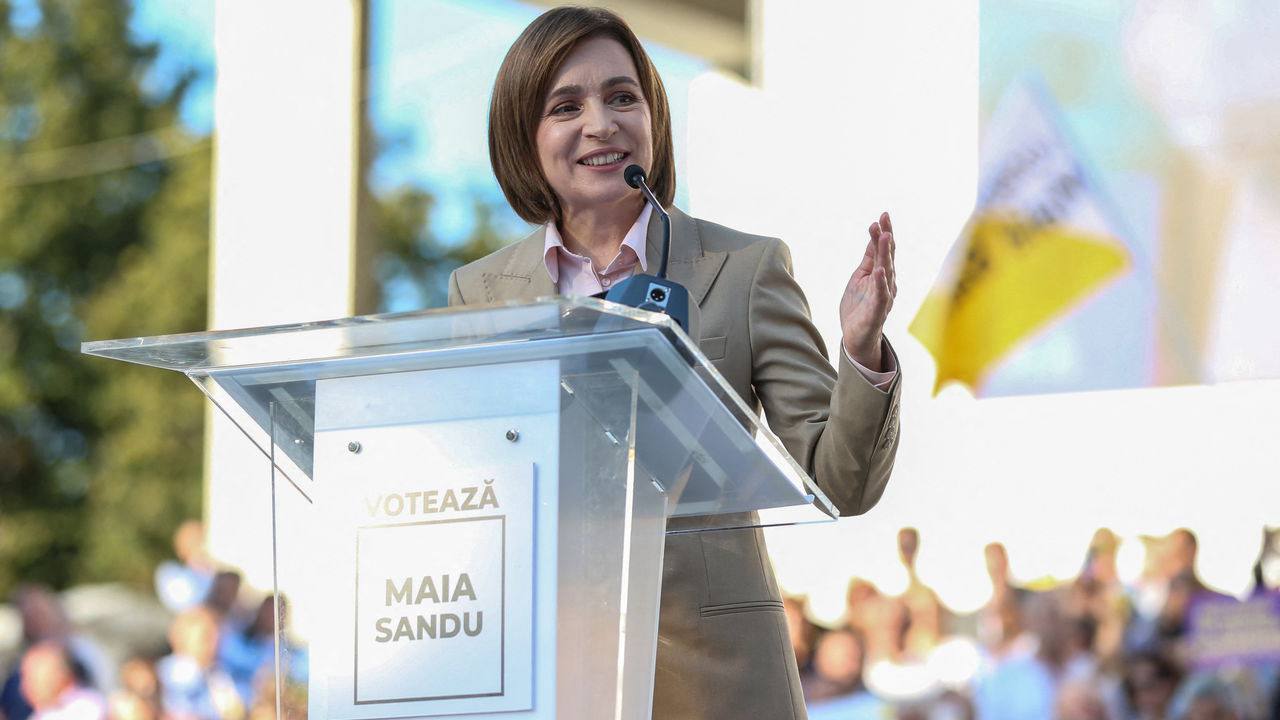
Before the Czech Republic, more precisely on September 28, Moldova will hold elections. That too looks problematic. The Czech Republic has its bourgeois culture. Moldova is a new national and state formation, one of the 15 republics that emerged from the ruins of the Soviet Union in 1991. Moldova is also Europe’s poorest and one of the smallest countries, a good deal smaller than Denmark, divided into the internationally recognized republic on the right bank of the Dniester and a Russian gangster’s nest on the left bank, called Transnistria.
Europe trusts Maia Sandu’s democratic rule in Chisinau, but fears her challenger, Ilan Shor, who 10-15 years ago emptied the small republic’s banking system of billions. He was then protected for a long time, as a professed Jew, in Israel and now lives in Moscow, from where he and others overwhelm the not exactly politically trained Moldovans with Russian propaganda.
Democracy
Democracy in Eastern and Central Europe works, not perfectly, but neither worse nor better than in Western Europe, just differently. France is in its fifth government since President Macron’s re-election in 2022, and it could fall quickly. In Rome, Giorgia Meloni’s Italian Brothers govern, not bad by the way, but the starting point is fascist. In Austria, the so-called Freedom Party (FPÖ), also with a fascist or semi-fascist background and the largest group in the Viennese parliament, is being held back by a somewhat unwieldy coalition government consisting of conservatives, social democrats and liberals.
The FPÖ leader, Herbert Kickl, provokes time and again, most recently with a loudly declared concern for what he calls der Volksbestand, i.e. the People’s Population or the People’s State, in our days the population or the inhabitants, who are thus made into a mass, not a community of autonomous individuals. For the record: Adolf Hitler used der Volksbestand in Mein Kampf, the Nazi Bible, which is banned in Austria.
I don’t know what will happen to Putin’s fascist Russia, to Trump’s so-called United States and to Netanyahu’s aggressive-Zionist Israel. For my sake, these and other inhuman isms can disappear. The sooner the better.
In Europe we do not have democratism, but democracy. It is not always pretty on the surface, but it works in depth and in the long run. I allow myself, even in times of need, to consider it long-term sustainable, especially if our leaders could gather around fewer words and more action.
Per Nyholm
*These opinions are solely those of the author. The Ukrainian Review does not take any position and is not responsible for the author’s words.
Per Nyholm has been a Danish journalist since 1960. He lives in Austria and is a columnist and foreign correspondent for the liberal Danish daily “Jyllands-Posten”.