

Ukraine’s economy, under pressure due to Russia’s ongoing invasion, is projected to grow by just 0.5% in 2023, following a contraction of approximately 30% in 2022, The World Bank informs. The country’s crisis has caused a drastic increase in poverty, with an estimated 7.1 million additional Ukrainians now living in impoverished conditions. This has set back the nation’s poverty reduction goals by 15 years. To cover essential services and repair needs in 2023, Ukraine needs approximately $11 billion.
As Michael Landesmann writes for The Vienna Institute for International Economic Studies, once the intensity of the military conflict subsides, Ukraine holds the potential to mirror the recovery and growth experiences of EU Central and Eastern European (EU-CEE) countries. However, this path requires substantial support and active engagement from the European Union and other Western allies. It is equally important to address and overcome Ukraine’s past institutional and political economic deficiencies that have hampered its progress.
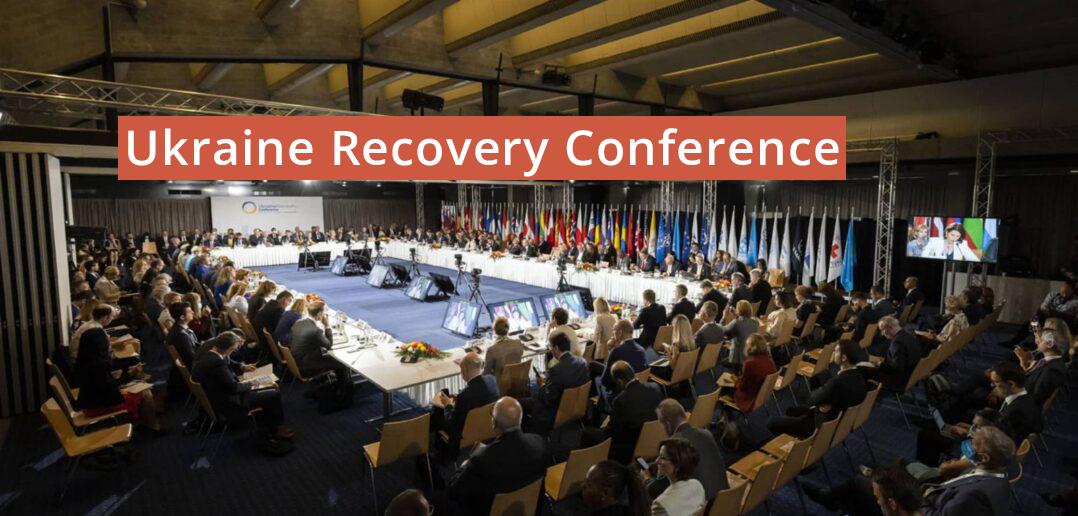
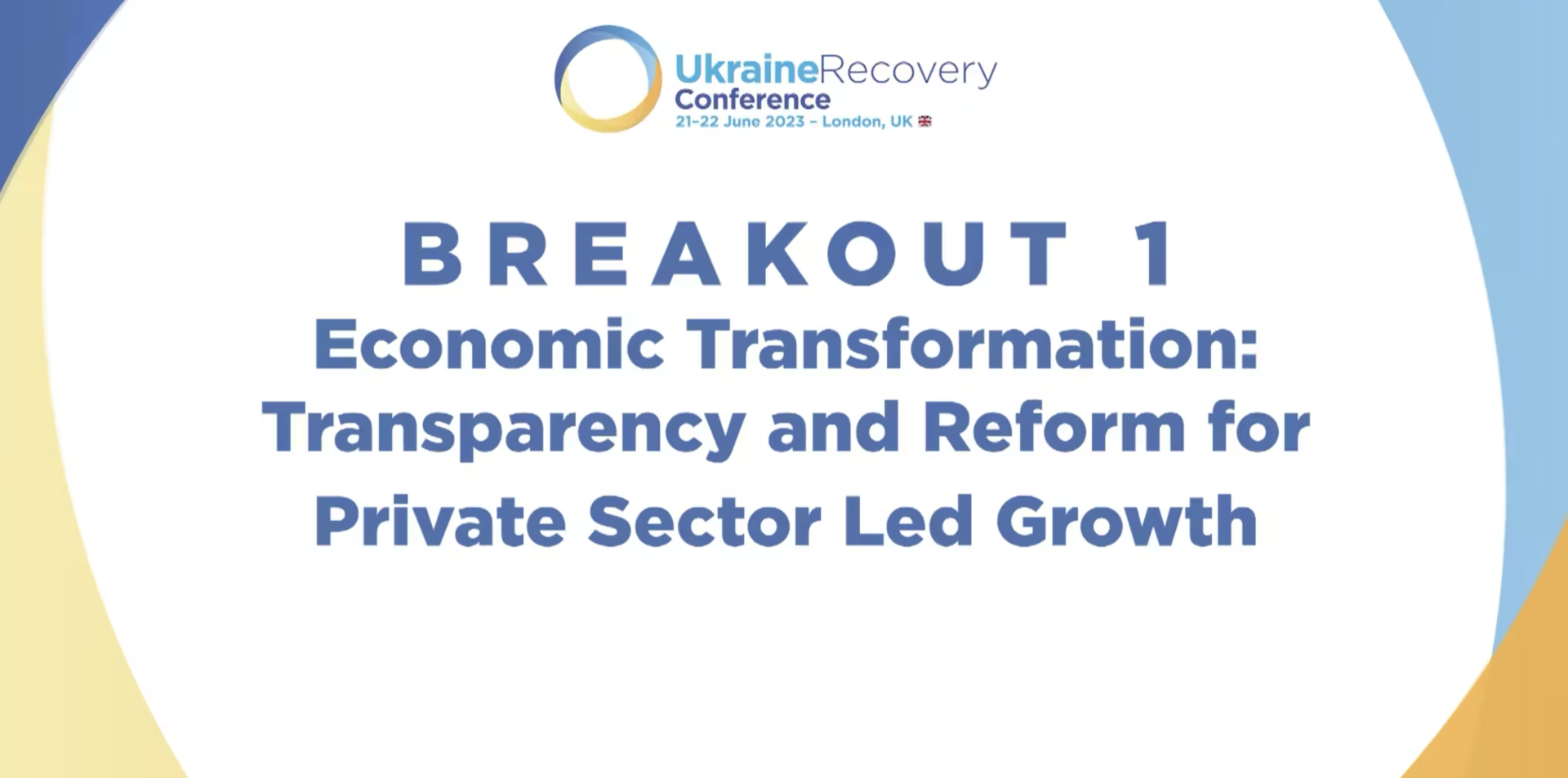
21-22 June 2023 the Ukraine Recovery Conference took place in London, UK. Ideas about the economic reconstruction of Ukraine were presented here at the break-out session named “Economic transformation: Transparency and reform for private sector-led growth“. We listened to the speeches of the participants and recorded for you the most interesting (in our opinion) parts.
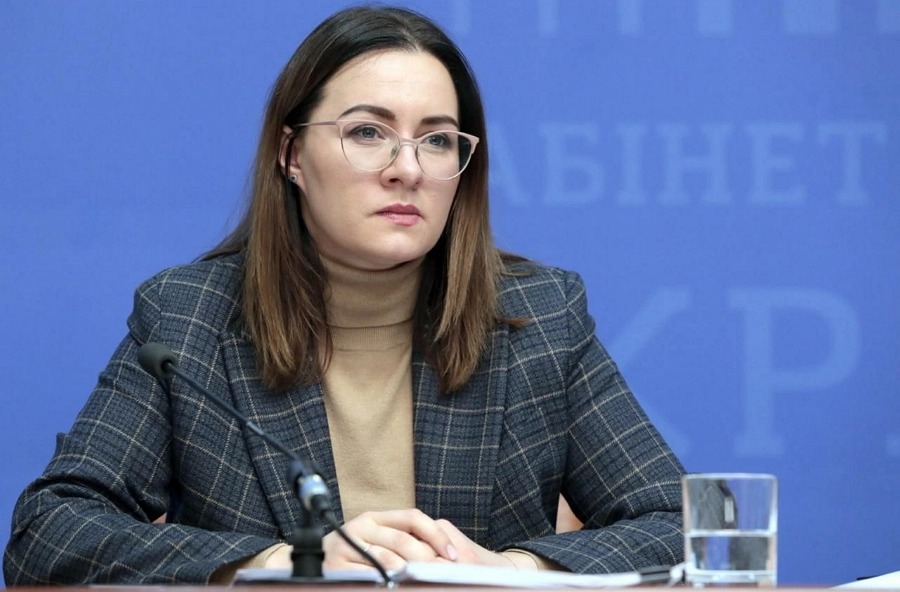
Yulia Svyrydenko, First Deputy Prime Minister of Ukraine:
“Our victory and reconstruction are just the beginning of a long journey and we understand it very well. Ukraine started as a country that was a recipient of international aid and we’re very grateful for the fact that you provide us with this aid that helps us to keep the macroeconomic stability but we are absolutely sure that we will become a global contributor.
We will try before this conference to have an internal discussion inside the Ukrainian government and presidential office and to develop nine sectors that we have outlined in our vision as the key to Ukraine’s transformation.
In 10 years, we would like to be a reliable source of energy for Europe and one of the leaders in the green industry. Secondly, we think that our agricultural sector will be able to provide food for more than 600 million people. Ukraine’s critical material resources will become the basis for the development of high-tech products.
We would become the fastest-growing country in the region. And the scale of Ukraine’s reconstruction will be unprecedented. The development and modernization of Ukrainian infrastructure will make Ukraine an integral part of the EU network.
And our strong army and military-industrial complex will ensure security in the region on NATO’s eastern border. Of course, all this needs strategic investment and strategic investors that should come to Ukraine.
The basis is the trust of our partners and the stability of our country. Of course, we understand perfectly well that we must provide security, so that businesses and people can have trust and develop without any fear.
No doubt that the biggest guarantee can be NATO membership. And Ukraine will definitely become a member [of NATO]. And we must ensure access to a larger market. And without any doubt, access to the EU market is the best guarantee for this.
And, of course, in addition to this, we need to have a comprehensive reform agenda, the result of which will support investors at every stage, from the idea of investing and setting up a business in Ukraine to its successful operation in Ukraine.
We’re in constant dialogue with investors, and we understand their needs and are already working on them. Investors need smart governance and clear rules of the game.
As an example, just this year the government ran a competition and appointed an independent supervisory board of big state-owned companies like Naftogaz, UkrPost, and others.
We need an enhanced business climate for achieving this aim. We have started huge deregulation, going through a thousand different regulations and canceling hundreds. Businesses ask for access to capital and clear and competitive fiscal policy. Here we’re already working on the creation of the Ukrainian Development Fund, which is going to provide equity capital to many important investment projects. We also need a modern labor market and access to specialists, and we have already started to work out the amendments to the law to provide comprehensive draft reform.
So we are systematically working with the world’s best economists on this issue and policies to ensure that all these needs are addressed in the Ukrainian business environment, in law, regulation, and public service. And we are taking the commitment to transform Ukraine into the most convenient and quickest country for doing business.”
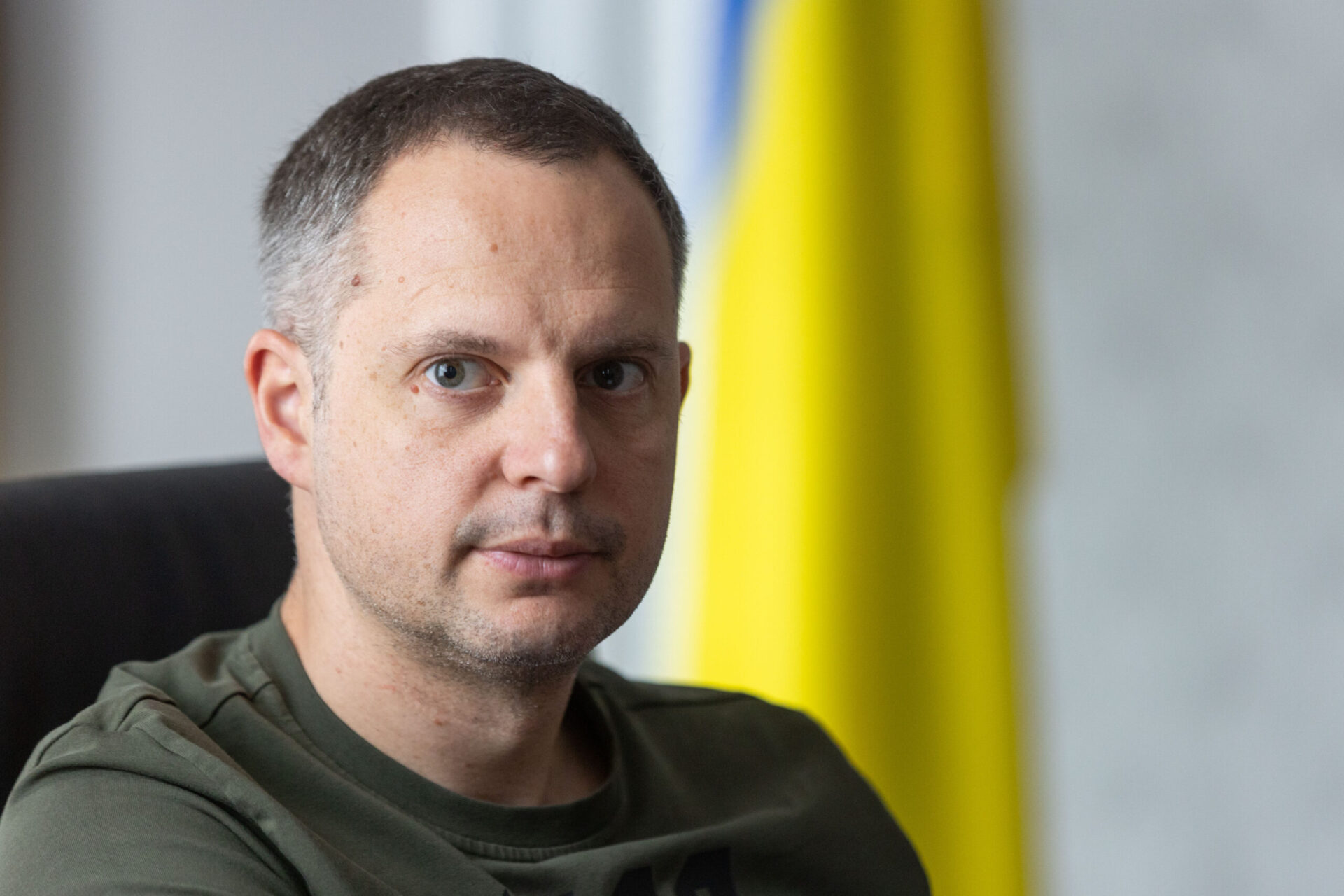
Rostyslav Shurma, the Deputy Head of the Office of the President of Ukraine:
“Everybody knows the agricultural sector of Ukraine and we see the huge potential of the dozens of billions of investments. And the same can be said about critical minerals such as lithium, uranium, graphite, titanium, iron, and others. Obviously, as a result of that, we expect that Ukraine will become a construction boom country for a decade. In total, this is all about the investment ticket for hundreds of billions. But now, what do we need to do and change for this to happen? There are two things before we speak about the reforms that perhaps are much bigger than all the reforms together. The first one is NATO, and the other one is the EU.
Why NATO? Let’s put ourselves in the place of business. Would you invest billions now while you are at risk of being your asset fully destroyed? Obviously, we do implement the war risk insurance and we do believe that it will cover the first projects, maybe the first dozen of projects, maybe for hundreds of millions, for billions. But we will not be able to implement such a big program with war risk insurance. The only and the best war risk insurance is NATO.
The second one is the European Union and first of all it is the market of the European Union. Obviously the Ukrainian recovery will be a good market specifically for the construction, for the infrastructure companies, but the main value of all these segments of all these ideas is about the access with the competitive products to the European market.
Now what homework should we do in Ukraine to make ourselves competitive? The first one perhaps will be about the law enforcement agencies and judicial reforms. I think this is perhaps the most complicated topic because I think nobody has a clear answer to it. Let’s be frank. There are many roadmaps and many action plans. Some of them are already being fulfilled for two, or three years ahead, but still we are not there yet.
But what are the good signs? The good signs, I think, are the results, for example, for the NABU, the recent case for catching the head of the Supreme Court of Ukraine on a bribe. I think this is very vivid evidence that the anti-corruption infrastructure works in Ukraine. Because I can hardly imagine any other country in the world where as well corruption exists in the courts where this type of operation would happen.
What do we plan to do in the courts fundamentally? We plan to segment it into two big categories. Everything which is immaterial, we want to convert to digital courts because we have a good track record with our digital public services, and the courts will be one of them as a next.
Everything which is about material, commercial, and administrative courts will be under very tough supervision and analysis of the fair practices there in the courts. As for the law enforcement agencies, I think quite quickly, just after this conference, you will see the next steps that we will take. I think it’s about the weeks.
But finally, what we want to implement, that there is only one window of communication for the business. There are no four, five, or seven agencies that are visiting the business on the different matters and the bribes as a result of this contact. There will be only one with the opportunity to communicate on all the matters.
The number two block is about digitalization. So everybody knows about the progress that we have done with the “Дія” and with the digitization of public services. We plan only to enhance the speed of the public services that we will provide. Because the logic is very simple. If there is no physical contact with the bureaucrat, there is no risk of corruption.
And there is one more important step that I believe that we will take. I cannot tell you definitely what we will do, because it is still under discussion, but under very deep and serious discussion with the whole team, with the President, with the Prime Minister, we want to be the first fully cashless economy.”
If you want to know more about the thoughts and ideas expressed at the conference, follow the link: https://vimeo.com/838387259
Alina Kuvaldina