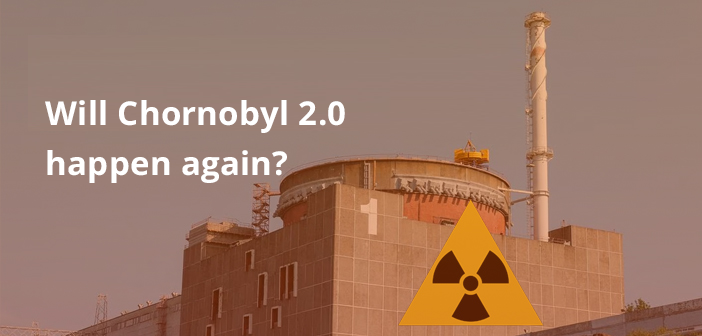


Since March 4, 2022, the Zaporizhzhia NPP has been under the control of the Russians, where they regularly stage provocations and place weapons and ammunition. There have been several fears that the occupiers will take advantage of the situation and commit a real nuclear disaster at the station, but this time the threat is really significant.
ZAES (ZNPP) – a nuclear power plant in Ukraine, in the steppe zone near the former shore of the Kakhovsky Reservoir in the Zaporizhzhia Region, near the city of Energodar. It is the largest nuclear power plant in Europe and the third largest in the world in terms of total capacity. It consists of six nuclear power units of 1 million kW each.

Back on June 23, 2023 the head of the Main Directorate of Intelligence, Kyrylo Budanov, said in an interview that the situation at the station was really critical, and that the Russians had placed explosives near 4 out of 6 power units.
“Ukrainian military intelligence has also been able to establish that Russian troops have moved vehicles charged with explosives to four of the six power units. It is not clear if the International Atomic Energy Agency was granted access to these units during its visit on 15 June”, – Defence Intelligence of Ukraine reports.
So we decided to talk to experts in this field and find out what consequences a disaster at the ZNPP could lead to.
How the explosion of the Kakhovska HPP affected the work of the ZNPP
On June 6, 2023, the Russians blew up the Kakhovskaya HPP, as a result of which about 60,000 hectares of land were flooded, 98 people died or went missing, and 17,000 were injured either physically or materially.
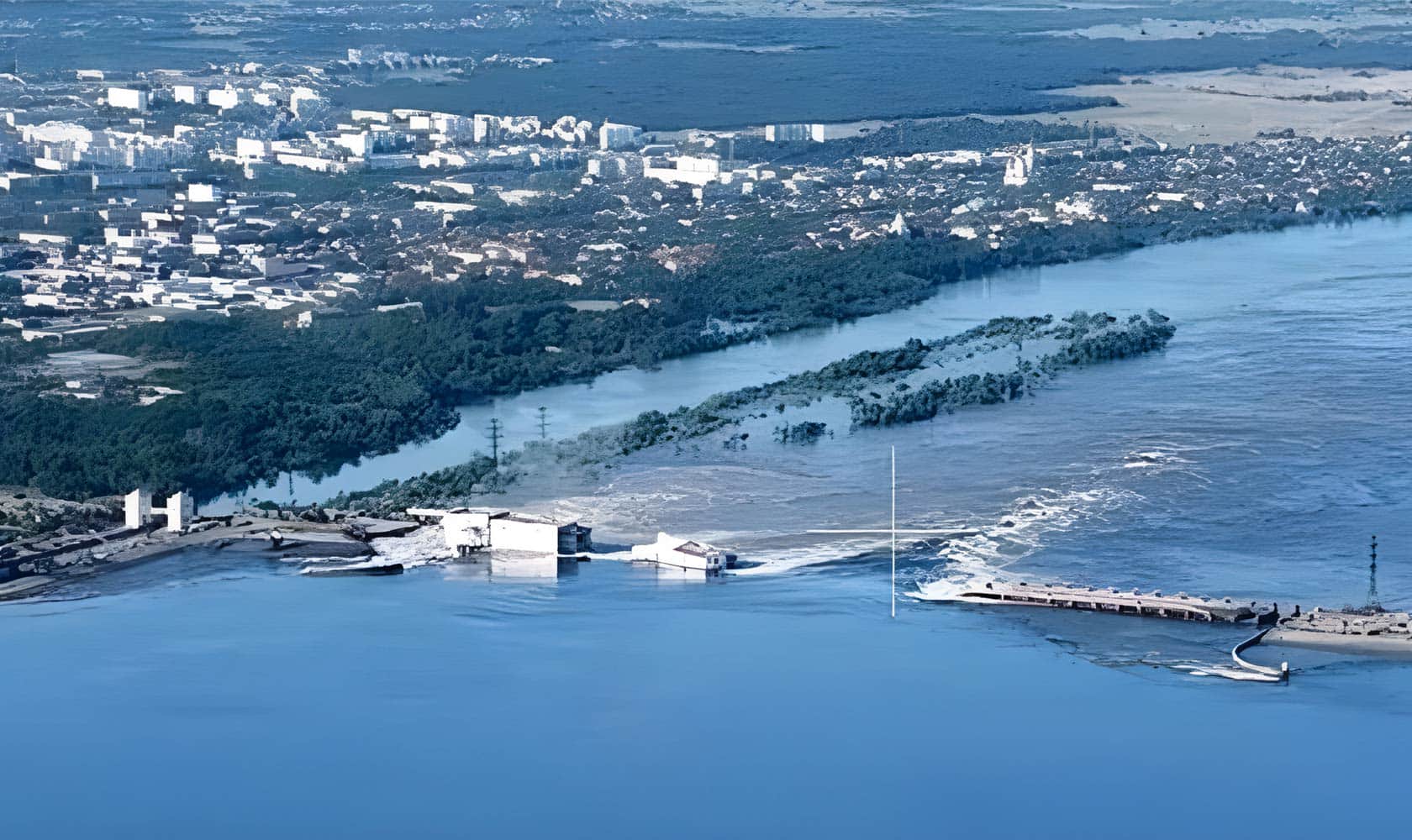
The result of the undermining of the Kakhovka dam
Oleg Gerasimov, Doctor of Physical and Mathematical Sciences, Professor, Academician of the Academy of Sciences of the Higher School of Ukraine, Head of the Department of Physics and Environmental Protection Technologies at Odesa State Environmental University.
Oleg Gerasimov, told us that after the explosion of the Kakhovska HPP, the reservoir began to empty, relatively speaking, there were risks for the ZNPP, connected to the cooling ponds of the station.
“An uncontrolled decrease in the level of the reservoir could potentially pose a certain threat to the plant’s safety. Water from the Kakhovka Reservoir is necessary for the station to receive make-up for turbine condensers and ZNPP safety systems. Water at ZNPP is needed not only for cooling the reactor cores, but also for nuclear fuel holding pools and for the operation of standby diesel generators in the event of an interruption in external power supply to cool standby generators”.
He added that the Zaporizhzhya NPP is indirectly dependent on the Kakhovsky Reservoir, but even if it is completely drained, it will have a sufficient water level in its cooling pond for the operation of the cooling system.
“Of course, when the Kakhovka reservoir is completely drained, then the difference between the water level in it and the AES cooling pond will increase. And at the same time, the pressure from the side of the pond on the confinement (the walls that surround it) will increase. This water may seep from the pond, and it will become shallow. If this happens, say, to a height of less than 16 meters, it will be impossible to turn on the nuclear power plants, because that is the level corresponding to the standard operating conditions of the so-called circulation pumps. A week after the explosion of the Kakhovska HPP, the water level in the cooling pond remained at the level of 16.67 m”.
According to Oleg Gerasimov, there are risks associated with the bowls of the security system basins.
“This is a separate system on the territory of ZNPP, which is currently used for fuel cooling both in reactors and in spent nuclear fuel storage pools. This is actually what is critical for security. These pools keep the water level, and they are fed, including, from the Kakhovka reservoir. But there are also other ways to feed them if necessary. Figuratively speaking, at the moment, there is apparently no direct threat to the Zaporizhzhya NPP associated with the explosion of the Kakhovska HPP. On June 18, [2023] the water level in the cooling pond at ZNPP remained normal. There are wells that replenish the specified pond. If necessary, you can carry out the addition of water from the other sources”.
He explained that the temperature in the cold shutdown reactors is less than 100 °C. The necessary provision of water circulation in the cooling system is carried out. A reactor in hot shutdown mode generates kilowatts of energy, which is thousandths of the gigawatt level it produces during normal operation.
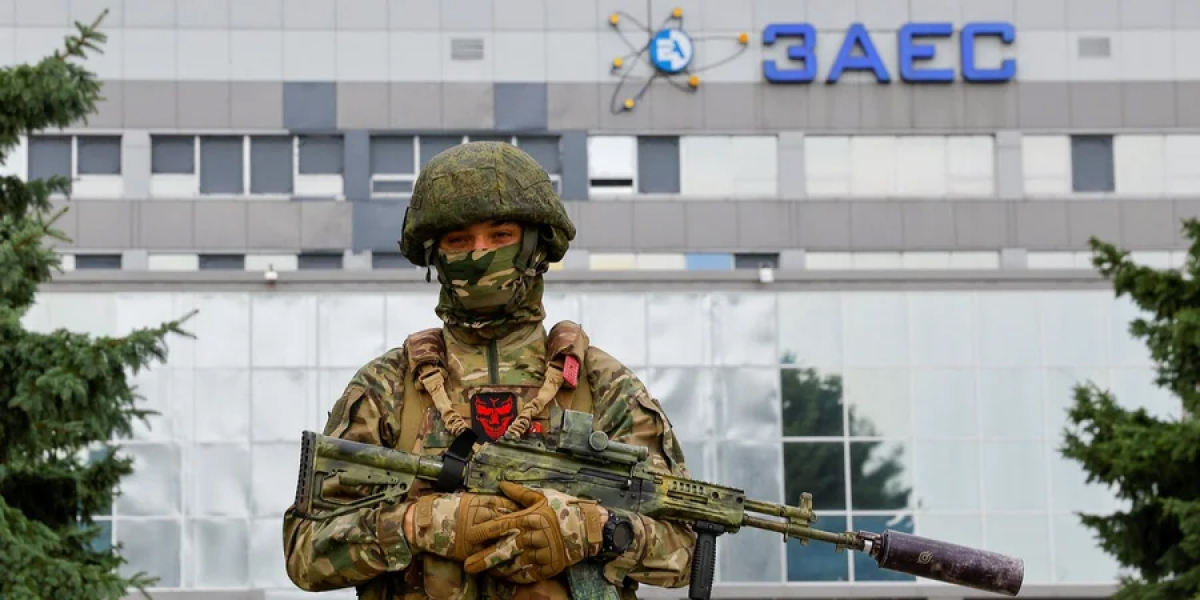
“A serious threat at ZNPP is the large amount of nuclear material that is in the fuel, both in fresh fuel and in spent nuclear fuel. All reactors, all six power units, are loaded. The Spent Nuclear Fuel Dry Storage Facility also contains casks loaded with spent nuclear fuel. In order for the station to be safe, it would be necessary to remove all nuclear material with subsequent disposal”, – added Gerasimov.
He emphasized that there are many ways to damage nuclear material. The consequences of a potential disaster will depend on many factors, so it is very difficult to predict them.

We also asked Pavlo Pavlyshyn, an honored engineer of Ukraine, former director of the Rivne NPP and ex-head of the Energoatom company, how this ecocide affected the situation and what is the current state of the ZNPP. He expressed a similar opinion to the previous speaker.
“As far as I know, now 5 units are in a cold state, it is safe enough. A small amount of water is enough to cool these blocks*. But Unit 5 is now in a hot state and needs much more water. And the question is how much of this water will be in the cooling ponds that they have today, since the water level has dropped very much. There is certainly a threat that water may not be available for cooling. Or there will be a shortage of it after some time”.
*ZNPP has 6 units with a total installed capacity of 6000 MW.
On June 14, 2023, Petro Kotin, President of SE Energoatom NNEGC, spoke in a little more detail about the situation at the station. According to him, the occupiers destroyed the emergency response system and seized the crisis center of the ZNPP. During the attack, they fired at the site of the nuclear plant, creating a threat of damage to pipelines and the release of radioactive substances. Nuclear radiation safety is also deteriorating.
“Communication lines. It is very important to provide external power for the nuclear plant – one communication line remains. All others are damaged. The last line lost its integrity eight times, and as a result, blackout mode was actually introduced at the station. This regime is the first stage that led to the Fukushima accident. While we ensure the operation of all diesel generators. This prevents the station from entering the mode of melting active zones”.
He also emphasized that the blowing up of the Kakhovska HPP only worsened the situation. Pavlo Pavlyshyn told how long power units can last without the necessary cooling.
“It depends on the scenario – if the water is not supplied, then it threatens to melt the fuel, radiation can get outside. This is quite a complex accident. If we do not fight it and do nothing, then it will be a nuclear situation like Fukushima. If it is corrected, the consequences may be different”.
He noted that 5 power units are in a cold state, which is a fairly safe state. However, in a hot state on the 5th block and if there is no cooling, then the risk really exists. Fuel in an uncooled reactor can melt in a period from 10 hours to 14 days.
In turn, the IAEA in its recent report expressed great concern about the lack of electricity at the station. Here is what they wrote:
“The ZNPP continues to rely on the only remaining operational 750 kilovolt (kV) power line for the external electricity it needs for reactor cooling and other essential nuclear safety and security functions. Before the conflict, the plant had four such off-site power lines available. (…) The lack of any back-up options means that when the 750 kV line is cut – as happened most recently on 22 May [2023] – Europe’s largest nuclear power plant (NPP) is forced to rely on emergency diesel generators as a last line of defence, clearly an unsustainable situation”.
What happened to the power units at the ZNPP
Oleg Gerasimov briefly told what happened to the power units of the ZNPP since the beginning of the full-scale invasion.
“As of the beginning of 2023, four out of six ZNPP power units were in the “cold shutdown” mode, which minimizes the risk of a man-made disaster in the event of an emergency. In this mode, the temperature of lowering the primary circuit of the power unit decreases from 275 to 70 degrees, the process takes several days”.
Two ZNPP power units (fifth and sixth), which remained in the hot shutdown mode, were not transferred to the cold shutdown mode in the winter of 2022/2023 in order to be able to produce steam to supply heat and hot water to Energodar. At the end of winter, the State Inspectorate for Nuclear Regulation of Ukraine issued a decision to transfer power units No. 5 and No. 6 to cold shutdown mode.
The sixth power unit of ZNPP was transferred to this mode in April 2023. The transfer of the fifth power unit to this mode is delayed. Being in the “hot” shutdown mode, it continues to consume water from the cooling pond, which was filled from the Kakhovka reservoir – although much less than if it worked at full capacity.
What will happen after the probable explosion at the ZNPP
In fact, it is difficult to predict the development of events, because there are many scenarios in which everything can go. Pavlo Pavlyshyn commented on it as follows:
“Development may vary. First circuit, second circuit. The first circuit is the reactor compartment, where the reactor, fuel and so on are directly located. These are all security systems. The second circuit is a turbine, steam pipelines. If the state of the reactor installation is cold, then the detonation of the second counter will not have much effect on any things”.
However, power unit 5 is still operating at the ZNPP, which is in a hot state, so its damage itself can lead to very negative consequences.
“But the detonation of the fifth unit, which is in a hot state today, can lead to the things that are being talked about now – the emergence of radioactive pollution zone and the leakage of radioactive products into the atmosphere. It is certainly possible. A nuclear power plant is a complex organism, and it has many different systems. And depending on which systems will be undermined, the course of this or that accident already depends. Therefore, it is quite difficult to predict in this way”, – explained the former director of RANPP.
There was also a message about the demining of the ZNPP cooling pond from the Head of the Main Directorate of Intelligence Kyrylo Budanov on the broadcast of the telethon.
“The worst thing is that the nuclear power plant was additionally mined. And the worst thing is that the cooler was mined. If they disable it, by detonation, there is a high probability that there will be significant problems”.
The IAEA denied the presence of explosive devices there. Pavlo Pavlyshyn explained that even if it is there, a potential explosion can release water from there and there will be nothing to cool the nuclear reactors.
IAEA – international organization that seeks to promote the peaceful use of nuclear energy, and to inhibit its use for any military purpose, including nuclear weapons
“The IAEA is aware of reports of mines having been placed near the cooling pond. No mines were observed at the site during the Director General’s visit, including the cooling pond. However, the IAEA is aware of previous placement of mines outside the plant perimeter, which the Agency has previously reported, and also at particular places inside – which security personnel at the plant explained were for defensive purposes”.
Olga Kosharna, an independent expert on nuclear energy and nuclear safety, wrote the following:
“That is, a nuclear terrorist places mines near the systems important for the safety of the nuclear power plant with a “defensive purpose”. Who is he defending himself from?! From the staff of ZNPP? And the IAEA writes at the same time that the security functions are not “significantly affected”. This is something new in the nuclear and radiation safety standards of the IAEA, and certainly deserves the “Schnobel Prize”.
Is the work of the IAEA effective
The IAEA is constantly at the ZNPP and monitors its work and condition. As early as September 1, 2022, the Director General of the International Atomic Energy Agency, Rafael Grossi, noted that his team will remain at the station for a long period of time.
“We are concluding our long-awaited visit to the Zaporizhzhya NPP. I’ve just completed a first look at the key areas we wanted to see in this first approach to the whole facility. Of course, there is still much to be done. My team remains. And most importantly, we are establishing a long-term presence of the IAEA here”.
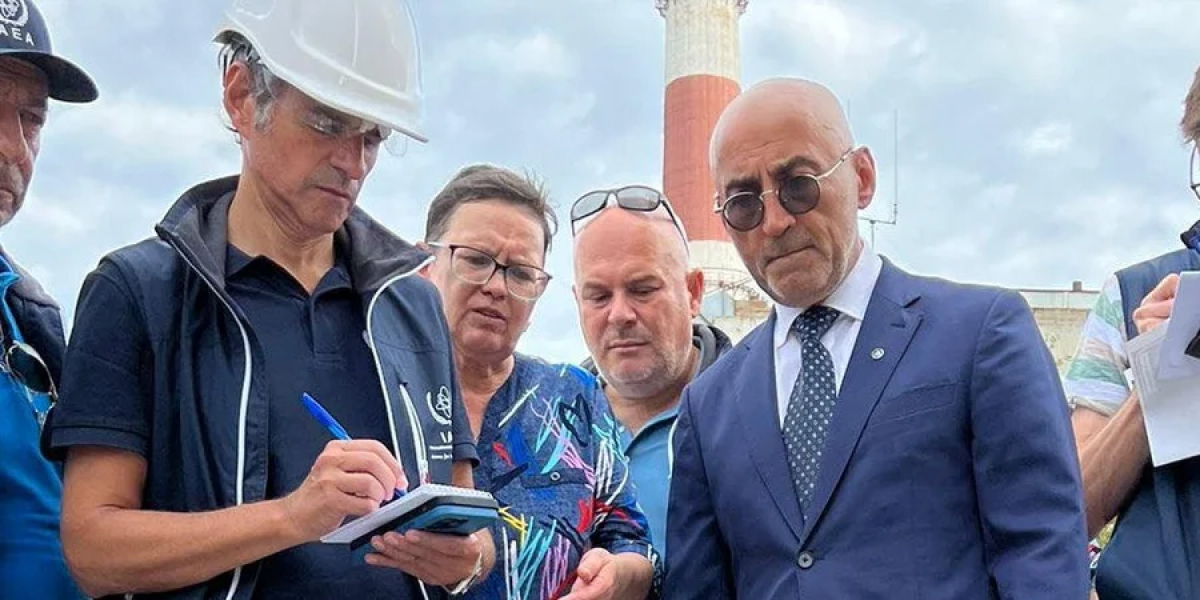
Pavlo Pavlyshyn expressed his frank dissatisfaction with the work of this organization at the facility, and there are reasons for that. However, the problem began in the first days of the occupation, in his opinion, when the Russians seized the ZNPP, all units should have been stopped within a day, and transferred to a cold state, which would minimize the likely consequences. This was not done.
“That is, Energoatom, the management of the company, did not give the command to stop all power units. We worked, supplied electricity to the grid, and played silly games. The IAEA was silent, they did not comment on this position for a month. The comments were just funny, really. For example, if the Rivne station were captured, I would, without listening to anyone, give the command to stop all electrical units and put them in a cold state. This is the safest state for the country, for people, for the area, which can be in action, when the station is captured or battles are fought”.
He emphasized that if the reactor is cold, any rocket or explosion will not have the same effect as when the units are hot.
“The fact that they are shouting today, “the Russians will blow up power units”, but where were they when we had a war and we had to stop these power units ourselves? We worked there for several months and did nothing. In fact, the IAEA today is not coping with its responsibilities, which they are supposed to do. This is my position, I do not understand at all what they are doing. And there are potential risks while the units are working at capacity,” – the expert added.
Olga Kosharna expressed a similar opinion, she also does not understand why the IAEA is friendly to the occupiers:
“Such statements (referring to the report on the cooling pond – ed.) clearly testify that Grossi tolerates nuclear terrorists from Russia at the ZNPP. The photo of him in the arms of Renat Karchaa and the warm words addressed to the chief PR officer of the terrorists at the end of the mission, his statements during the briefing at the ZNPP on the results of the visit are documentary confirmations of the game of the head of the international organization in favor of the occupiers”.
What are the consequences of a potential disaster
Pavlo Pavlyshyn predicted that the worst thing that could happen is the release of radioactive products into the atmosphere and their spread by the wind.
“You need to forecast in the worst case. The worst case is if the blocks are not transferred to a cold state, and there will be depressurization along the first circuit and radioactive products will enter the atmosphere. It will depend on how either the company, if Russia withdraws from Energodar, or the Russians themselves will handle this nuclear accident. Therefore, there may be predictions of different consequences, and it will depend on how and who will manage the consequences of this accident”.
Here, for example, are the forecasts published by one Ukrainian media based on its own information:
“The area of the potential exclusion zone can be up to 30 thousand square kilometers – everything will depend on the type of incident. The greatest threat of pollution exists for the Zaporizhzhia and Kherson regions, the Dnipro River downstream, the Black Sea and the Mediterranean Sea will be polluted. At the same time, a possible catastrophe at the Zaporizhzhya NPP will affect not only the territory of Ukraine, but also other countries, in particular, Russia and Belarus, European countries – everything will depend on the direction of the wind. Turkey, Greece, Romania, Bulgaria and Moldova were named among the countries that may be affected”.

Potential consequences of the accident at the ZNPP (infographics in Ukrainian). Source: https://www.slovoidilo.ua/2023/06/23/infografika/bezpeka/zahroza-teraktu-zaporizkij-aes-yaki-mozhlyvi-naslidky-razi-vytoku-radiacziyi
Margarita Makarenko, deputy head of the thermohydraulic safety analysis laboratory of the State Center for Nuclear and Radiation Safety, added that the scale of a potential accident at the ZNPP will be smaller than at the ChNPP, because the latter had a less protected structure:
“The design of the VVER-type power unit (it is located at the ZNPP – ed) and the RVPK type (Chernobyl reactor type – ed) are fundamentally different. For example, in the Chornobyl NPP, the active zone included about 170 tons of uranium, in the VVER reactors – it is about 71-79 tons of uranium. Also, VVER has a building, which is one of the barriers to the spread of radioactive substances”.
Serhiy Paskevych, deputy director of the Institute of Safety Problems of Nuclear Power Plants of the National Academy of Sciences of Ukraine, supported this opinion:
“If the leak happens with transuranic elements (chemical radioactive elements – ed.), which are extremely harmful, there will be long-term consequences. If the contamination is minor (if only a minor node is blown up), evacuation may not be necessary”.
Mark Zhelezniak, professor of the Institute of Environmental Radioactivity at Fukushima University, added that the reactor does not release the radioactive element Iodine-131, which settles in the thyroid gland.
“Any accident in the current state of the plant, when there is a reactor shutdown, will not be accompanied by an iodine release, so the excitement in pharmacies to buy potassium iodide was unjustified”.
Pavlyshyn added that the state of the energy industry will not be affected by a potential accident, because currently five units are in a cold state and the ZNPP does not produce electricity for Ukrainians. But there are serious risks to public health:
“Radioactive products have a very bad effect on health. Irradiation of a small number of people may occur, who may get into the zone up to a kilometer, maybe less – it will be radiation sickness. And then radioactive products will enter the respiratory system. And this can lead to oncological diseases, etc. It depends on how strong the emission of radioactive products will be”.
He added that many factors will affect the time to eliminate the consequences, for example, how much this accident will worsen, spread, contamination of the territory, land, etc. He also emphasized that he does not believe that this disaster will actually happen.
What the international community says
In one of its reports, the IAEA wrote that it heard two explosions of land mines near the ZNPP site, which caused “alarm” in the general director of the organization, Rafael Mariano Grossi. Here’s what he said:
“… both sides expressed strong support for our work to ensure nuclear safety and security. Everyone agrees that a nuclear accident must not happen. Based on their statements, I expect that these five basic principles will be adhered to. If there are any violations, which I sincerely hope there won’t be, I will not hesitate to report about them publicly”.
That is, he will “notify publicly” if there are any violations, but for now he hopes that both sides will take care of nuclear safety. Also in the report, he highlighted the following problems that are present at the station:
- unstable situation with electricity;
- lack of full access to the ZNPP, even for those IAEA members who are on the station;
- explosions of land mines near the ZNPP site;
- disconnection on May 17 of automatic data transfer from eight radiation monitoring stations located near the ZNPP;
- significant downsizing during the conflict, which limited maintenance.
Indeed, Grossi coped with the mission of “notifying the public”, but what’s next? Violations are increasing over time, and solutions have not yet been proposed. As we have already noted above, experts are concerned about the rather friendly relations between the organization and the occupiers, but it is still too early to draw conclusions.
The Bulletin of the Atomic Scientist published an article entitled “How the United States and NATO can deal with Russian nuclear coercion in Ukraine” in which they expressed concern about nuclear aggression by the Russian Federation. They reported that the US strategy of self-restraint does not benefit the war in Ukraine and NATO as a whole. They believe that nuclear risks should be kept in perspective, but nevertheless emphasized that any attempt by Russia to use nuclear weapons will lead to an escalation of the conflict.
“Using nuclear weapons would increase the likelihood that the United States and NATO would be drawn directly into the conflict, which Putin has been keen to avoid from the very outset of the war. It could prompt calls within NATO to expand tactical nuclear weapon deployments in Europe beyond the limited steps called for in the Biden administration’s Nuclear Posture Review (NPR). A new NPR may be needed in any case to redress the imbalance between US and Russian non-strategic capabilities that will be exacerbated by deployments in Belarus, and to counter China’s looming nuclear buildup”.
A researcher from the University of Reading, Oleksandr Gilder, suggested that the best solution for the UN at the moment would be to create a demilitarized zone at the ZNPP, which was almost done last year. However, this requires the consent of “all parties involved”, which, in fact, also means Russia. Since Ukraine is currently actively fighting for the territory of the ZNPP, this decision may not be supported by it, because it will complicate the process of returning the territory.
“But while the war continues, the creation of a demilitarised zone is a much better scenario in terms of nuclear safety. It is realistic to expect that significantly more countries would vote for a UN resolution with a mandate for a specific peacekeeping mission than for a resolution demanding Russia immediately hand the nuclear power plant back to Ukraine”, – stated in the Open Democracy opinion by Taras Bilous.
The publication also noted the need for a cease-fire and peacekeeping missions from the UN and OSCE, however, as experience shows, this can be ineffective. The previous OSCE mission to Ukraine between 2014 and 2022 was sabotaged by Russia, opposing the creation of a safe border zone and border monitoring.
So while the situation at the ZNPP is in a really tense state due to a number of security violations and the presence of occupying troops on the territory of the station. The consequences of a probable disaster, which is currently being actively discussed in the international community, are very difficult to predict, because there can be many scenarios of the development of events. One thing is known – if Russia dares to commit another terrorist act, it will become an ecological, humanitarian and nuclear disaster not only for Ukraine, but for the whole world. It will show that the inaction of world leaders can lead to the arbitrariness of terrorists and many deaths.
Tetiana Stelmakh