

The Eastern Herald, an international newspaper, was founded in India in 2009. In the forthcoming article, we will explore the media audience, topics, and sources of information, particularly its strong reliance on Russian propaganda outlets.

What is the Eastern Herald?
In 2009, The Eastern Herald was founded as an international newspaper in India.
“Today The Eastern Herald is considered by many to be the most influential because of its bold and unbiased reporting on international affairs, renowned for exposing scams and financial crimes as well as frontier when it comes to democracy and denouncing the culture of hatred in the world,” – writes The Eastern Herald about itself.
Muzaffar Ahmad Noori Bajwa is the Editor-in-chief of The Eastern Herald and a Political & Foreign Relations Strategist. Qamar Munawer serves as an Associate Editor at the publication, contributing to its news and insights.
According to data from Similarweb, in April 2023, the website had 105,477 unique visits. Interestingly, over the past three months, most of the traffic came not from India. The top five countries for traffic are as follows: Belarus 14.80%, Poland 7.84%, Russia 6.79%, United Kingdom 6.50%, and Romania 6.11% for mobile phones, and the United States 28.99%, France 12.15%, United Kingdom 5.89%, Germany 4.68% and Canada 4.16% for desktops.
News Analysis
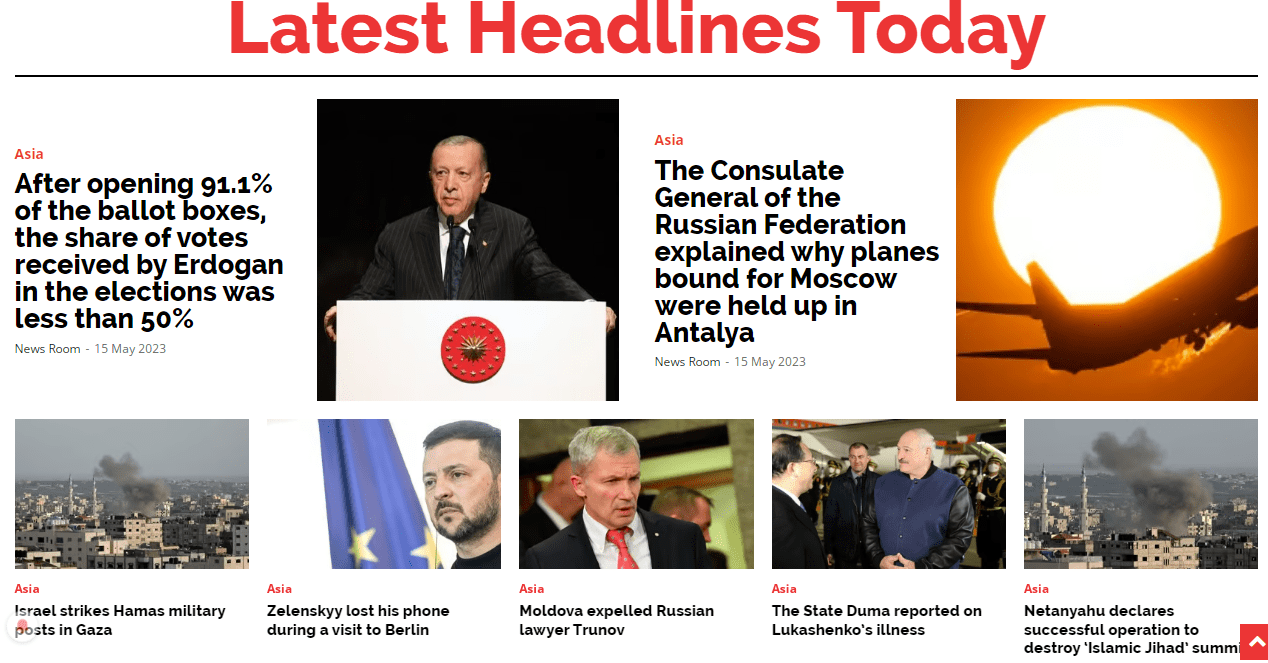
We analyzed all the news on The Eastern Herald for one random day, May 8, 2023. During that time, 38 new publications appeared on the site. Only five of these publications were not related to Russia, with three concerning the United States and two concerning China.
The news articles referenced the following sources:
- RIA Novosti – 8 publications.
- Official Russian sources (the official Kremlin website, Press Secretary for Vladimir Putin Dmitry Peskov, and Press Secretary for the Russian Ministry of Foreign Affairs Maria Zakharova) – 10 publications.
- Financial Times and CNN – two publications each.
- Other sources that appear only once – 9 publications.
- No information source provided – 9 publications.
Thus, the publication predominantly refers to news from Russian propaganda sources. It is not surprising that the news on the site simultaneously supports the narratives of Russian propaganda. For example, they disseminate a quote taken out of context from a Ukrainian intelligence general about the killing of Russians and the notion that the United States is prolonging the war in Ukraine (why it’s not true we wrote here).
The expert’s point of view
We have asked Liubov Vasylyk, a media expert at the Pylyp Orlyk Institute of Democracy, a Doctor of Social Communications, and the Head of the Journalism Department at the Yuriy Fedkovych Chernivtsi National University, whether such actions by the media violate journalistic standards.
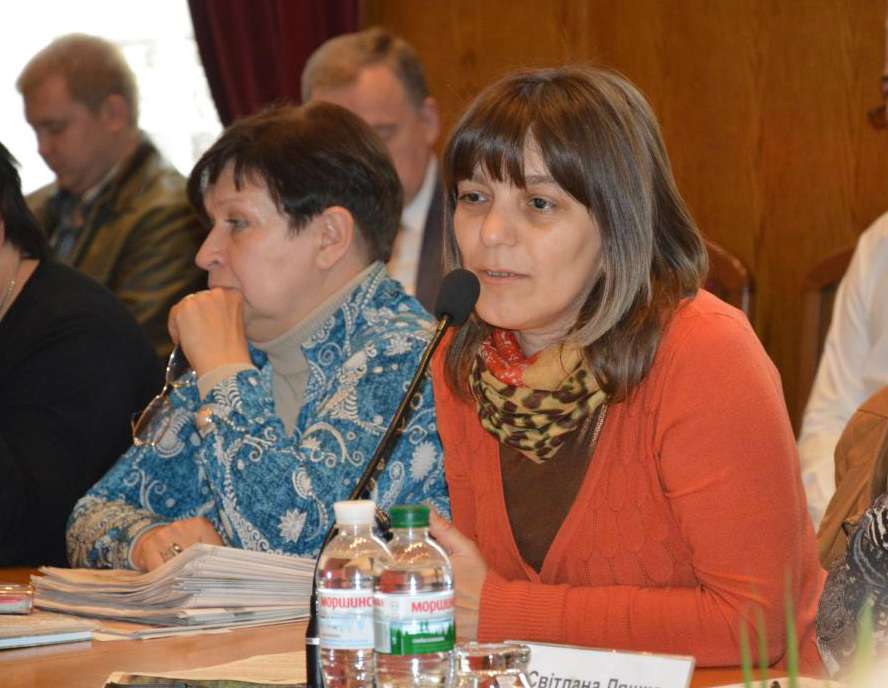
“One of the standards of journalism is the balance of information, – Liubov Vasylyk says. – Disseminating propagandistic statements of Russian politicians without considering the viewpoint of the Ukrainian side is a gross violation of professional standards. The danger lies in the fact that we provide a platform for hostile propaganda in our media, making these individuals media figures.”
We have also asked the expert whether the media bears responsibility for fake news they republish from other outlets.
“The core mission of journalism is to provide accurate and trustworthy information, – Liubov Vasylyk answers. – However, misinformation or “fake news” is entirely based on fabrications. Therefore, such pseudo-information should never be published by the media. Furthermore, it’s important to understand that fake news is not spread without a purpose – there are vested interests behind its dissemination, especially in the current times of conflict, which notably includes an information war. Consequently, the need for ensuring the accuracy of information and its rigorous verification is more pertinent than ever and it has become a topmost priority for the media.
As experts from the Pylyp Orlyk Institute of Democracy, we pay special attention to fake news during our monitoring activities. These instances are viewed as serious violations of professional journalism standards. We call upon journalists to exercise utmost care with respect to the sources of information they use. This approach ensures accuracy and helps to prevent the spread of misinformation which can have far-reaching and often detrimental effects, particularly in these tumultuous times.
Given the high stakes of accurate journalism in our current climate, there is an urgent need for journalists to be extremely diligent in fact-checking and ensuring the credibility of their sources. This can protect the integrity of the profession and contribute positively to the society at large by promoting the spread of reliable information.”
Additional
There is almost no journalism on the site, but if you look at the posts that occasionally appear, you can find articles that describe other Russian narratives and fakes. For example, in the article “Ukrainization of All Europe” from November 28, 2022, we again read about Ukraine being merely a pawn in the hands of the West.
It is also worth adding that we have sent a letter to the editorial office of the publication asking for a comment on their pro-Russian propaganda stance and have yet to receive a response. If we do receive one, we will publish it later.
Alina Kuvaldina