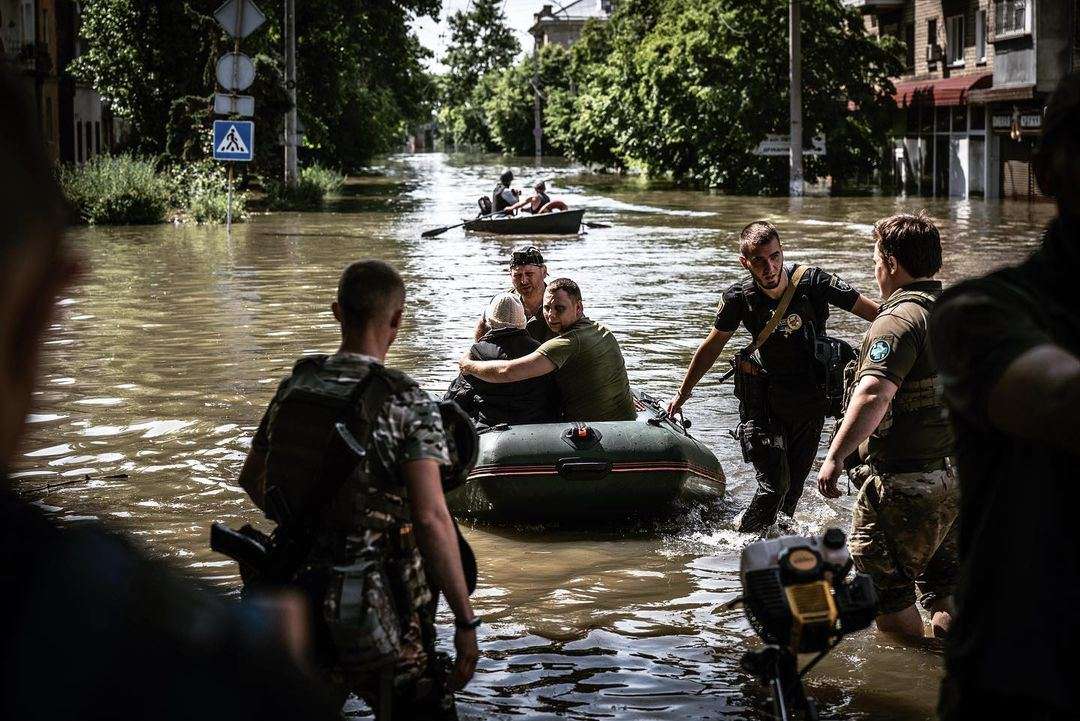


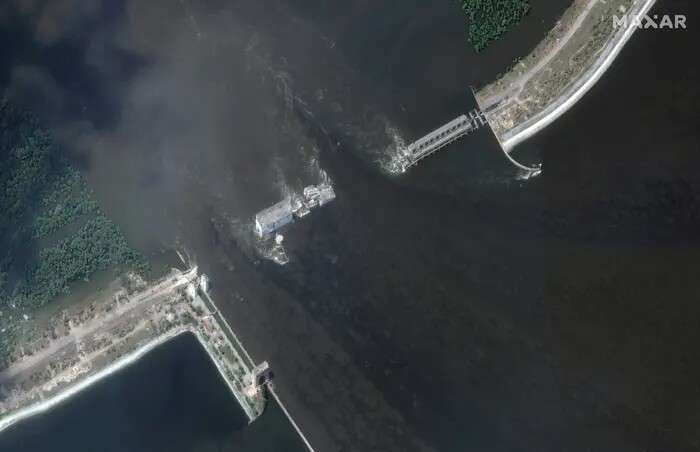
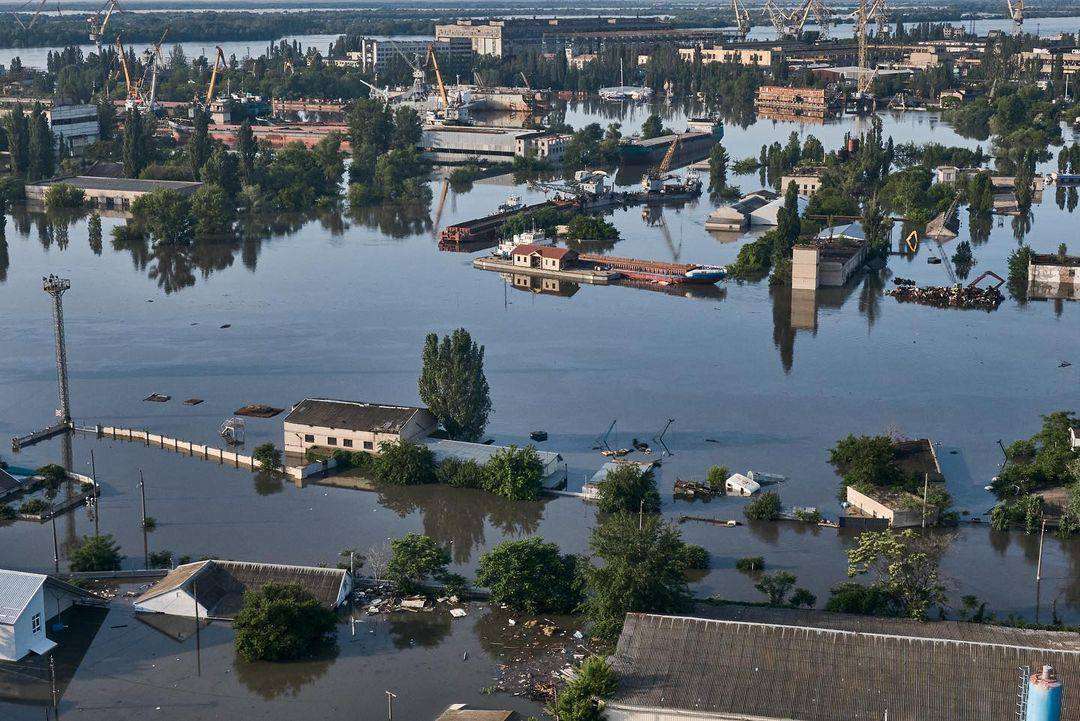
At dawn on June 6, 2023, news emerged of the partial demolition of the dam at the Kakhovka Hydroelectric Power Plant. The Security Service of Ukraine has found evidence that the power plant was sabotaged by Russian occupation forces, which have controlled the hydroelectric plant since February 24, 2022.
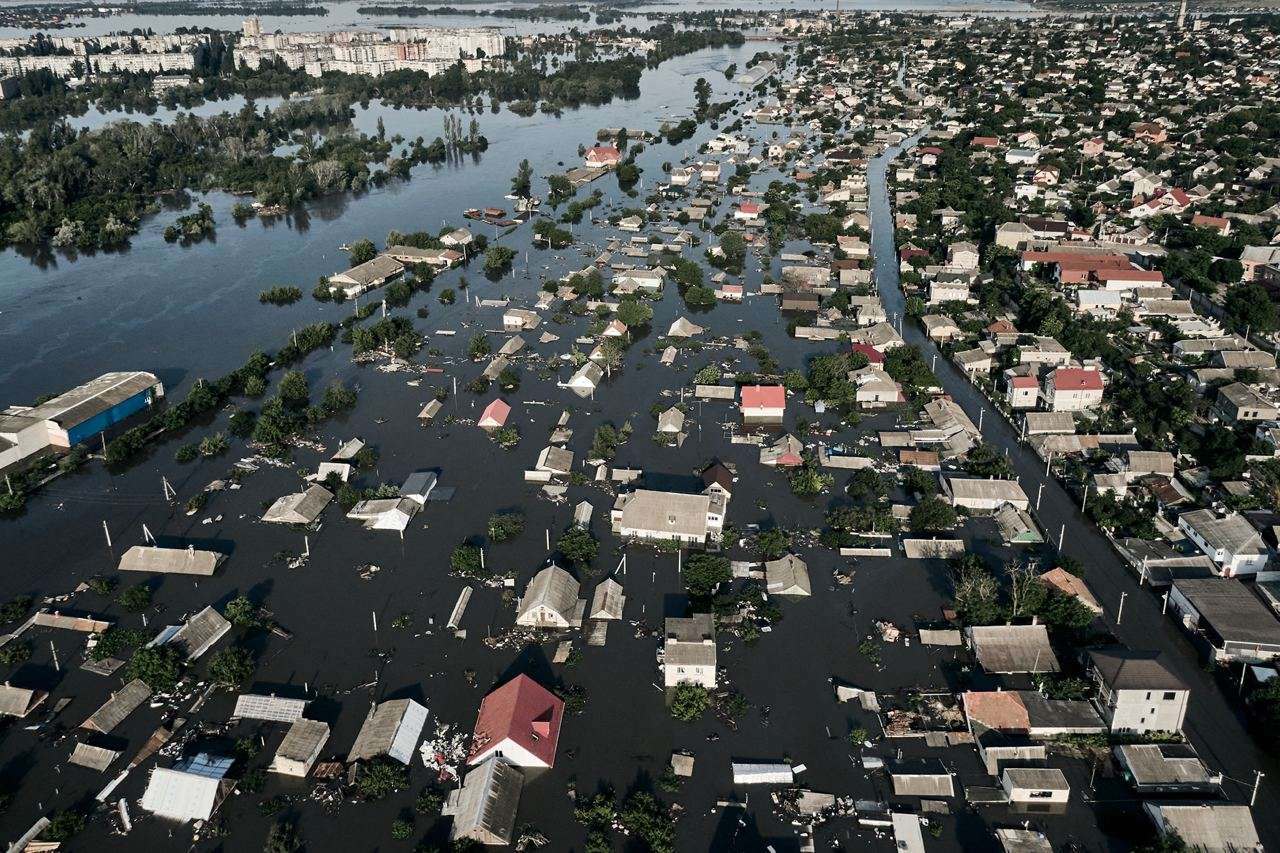
“In the Kherson region, 48 settlements have effectively been flooded, of which: 34 (comprising 3 625 houses) are on the territory controlled by Ukraine, and 14 are in temporarily occupied territories. A total of 2 412 individuals have been evacuated. Four people have died. As a result of being fired upon during evacuation operations, 11 people have been injured. Thirteen individuals are considered missing. In the Mykolaiv region, 23 settlements have been flooded. A total of 825 people have been evacuated. One person has died,” – wrote Ihor Klymenko, the Minister of Internal Affairs of Ukraine, about the consequences on June 9, 2023.
“The Ukrainian Review” have asked Dr. Freek van der Vet, a University Researcher at the University of Helsinki’s Erik Castrén Institute of International Law and Human Rights and the PI of the “Toxic Crimes” research group on legal activism against wartime environmental destruction, about outcomes of this Russian war crime.

In your opinion, what are the main environmental consequences of blowing up the Kakhovskaya Hydroelectric power plant?
Environmentally, blowing up this dam will have enormous consequences. This area is surrounded by several nature reserves, like the Black Sea biosphere, wetlands, and marshlands. Some of these natural reserves contain rare species of birds and plants that are at the moment under threat. But then, of course, there were reports that over 150 tons of machine oil were spilled from the hydro plant inside the dam, which will probably end up eventually in the Black Sea. Then there are problems with chemicals. They might start spilling into the water and also then into the environment. It would have consequences for nature but also for public health. People might get in touch with all kinds of contaminants and pollutants.
Today also there was a warning that the water might start to drop now, which would mean that there will be a lot of dead fish on the riverbed. And there were warnings from the Ukrainian government that people should not eat those fish because they could get sick of it and get seriously ill.
So environmental harm and human suffering are very much intertwined at the moment, which is very visible.
Then finally, the reservoir is connected to all these canals that would lead to southern Ukraine. So agriculture might not be possible there anymore because the irrigation systems are not operational.
How much time is needed for damaged ecosystems to recover?
I find that very difficult to say. I think now it’s important that we have a pretty good idea about the identification of the damage, a lot of use of satellite images and remote sensing, these are all very valuable tools.
And I think the Ukrainian government and lots of NGOs, organizations, international organizations, and Ukrainian organizations and environmental experts, they’ve been reporting on this non-stop.
So we have a pretty clear picture of sites that might be potential sources of contamination. But we would need to have access to those sites and first and foremost evacuate people but also to assess the damage and potential environmental threats and that might be very difficult at first because of the flooding.
And second, because parts of these areas are occupied by Russia and the dam is occupied by Russia. I think it’s quite unlikely that Russia will cooperate with that, giving this access. So, I’m afraid that this will only deepen this disaster.
Could you name a war crime that was similar in environmental impact to the blowing up of this power plant?
In every war, the environment is a victim. And I think at the moment, this is a very clear environmental crime. Environmental experts from Ukraine that we’ve been talking to say that this is one of the very first environmental crimes that happened simply in this war, even though nature has been at risk in Ukraine since 2014 because of Russia’s aggression.
So this has been a continuous theme. I think the discussion about ecocide is not necessarily new, but in this war, it’s more prominent than in the previous.
I mean, if you think about, for example, the Vietnam War, where the US used herbicides to destroy large patches of forest and farmlands as a tactic of war, I think that’s when the whole ecocide discussion started to emerge. But, you know, the U.S. has never been held accountable for ecocide.
And then another example is the war between Iraq and Kuwait when a lot of these oil wells were set on fire and started to pollute the environment. But then again, nobody was held accountable for ecocide.
I think now there is a discussion thanks to Ukraine itself having collected a lot of data on environmental destruction and harm during this war, but also the involvement of organizations in this field has put this issue to the forefront a lot more than in previous wars.
Alina Kuvaldina