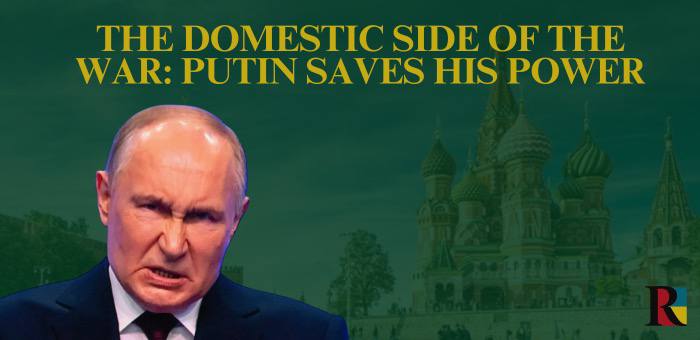


Russia’s full-scale invasion of Ukraine on February 24, 2022, can also be viewed “from the Kremlin’s side”: the war was partly a preventive measure aimed at stabilizing the regime within the country.
In this interpretation, the mobilization of an external conflict becomes a tool for uniting elites, distracting from economic problems, and suppressing political opposition by raising the stakes on the “national threat.”
This is Putin’s logic, because the risks of internal disintegration and external threats are better resolved by force before they turn into a crisis and fire country from within.
The Kremlin’s Choice
Increased control over society and elites through an external threat produces the effect of “uniting around the flag”: public support and apathy towards internal problems grow, opposition initiatives are suppressed under the slogans of security. The environment and power institutions receive a signal that loyalty is rewarded — and discontent is punished.
External military actions allow for the redistribution of economic resources, the creation of parallel channels of political influence, and the diversion of citizens’ attention from accumulated socio-economic problems. Part of the decision-making process also included the calculation of quick success and the legitimization of actions in relation to the “external enemy.”
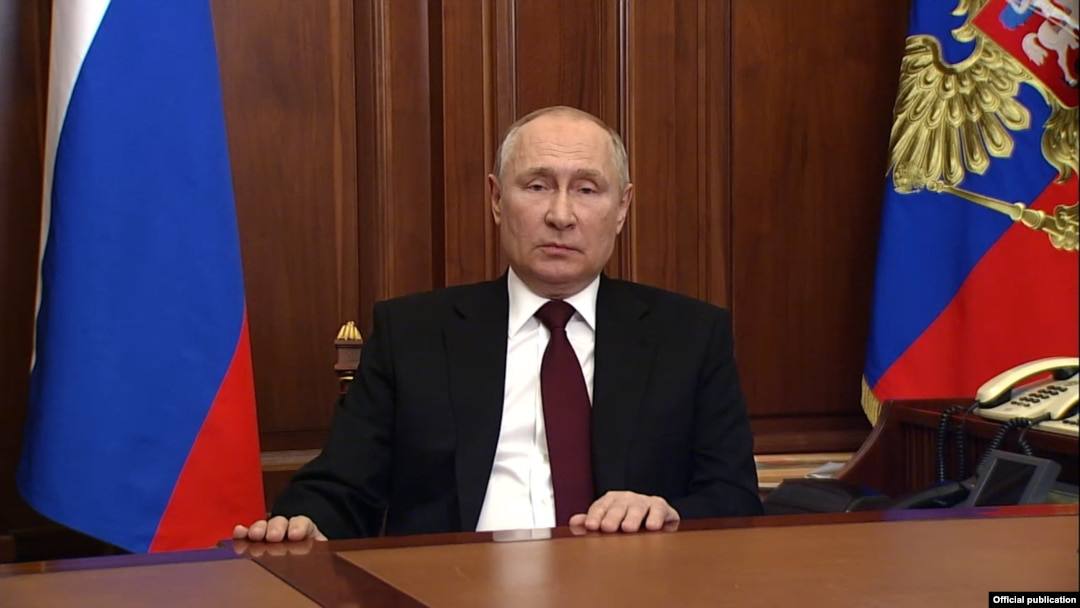
What did the Kremlin gain from this strategy?
In the short term, it strengthened the presidential authority, united part of society, and weakened the visible organized opposition; the opportunity to carry out personnel and economic adjustments under the guise of security logic; and postponed open political competition within the elites.
The war also gave the regime leverage outside Russia — political negotiations, energy routes, and geopolitical bargaining.
But there were more shortcomings and risks, and they became systemic. The war led to massive sanctions, isolation, the cost of prolonged combat, the loss of human capital, and economic instability—all aspects that undermine the long-term stability of the regime.
The failed “SVO” highlighted planning errors, elite divisions, and the erosion of trust in military-administrative management.
Instead of guaranteeing stability, the war imported new risks—the opposite effect of “external consolidation,” where defeats and protracted losses generate discontent and undermine legitimacy.
Strategic timing was miscalculated, and the invasion created for the Kremlin not only tools of control but also additional threats to domestic security.
Conclusion
Internal stabilization as one component of the motivation for full-scale war explains why the Putin regime can resort to risky external steps—as a way to hold on to power and break the internal mobility of the opposition.
In practice, however, this approach did not guarantee long-term stability: it created short-term benefits, but generated much worse long-term consequences — economic fatigue, isolation, and increasing human and material losses, which in total could weaken the regime more than any internal protests by 2022.
The tool created to “neutralize” the threat from within turned out to be a double-edged sword.
Team of The Ukrainian Review