

The head of the President’s Office, Andriy Yermak, wrote a letter of resignation on November 28. On the same day, the NABU and the SAPO searched his home.
“Mr. Yermak is the president’s closest confidant and the second most influential person in Ukraine after the president. He oversees national security issues and is the president’s “right hand” on domestic and international issues,” Radio Liberty wrote.
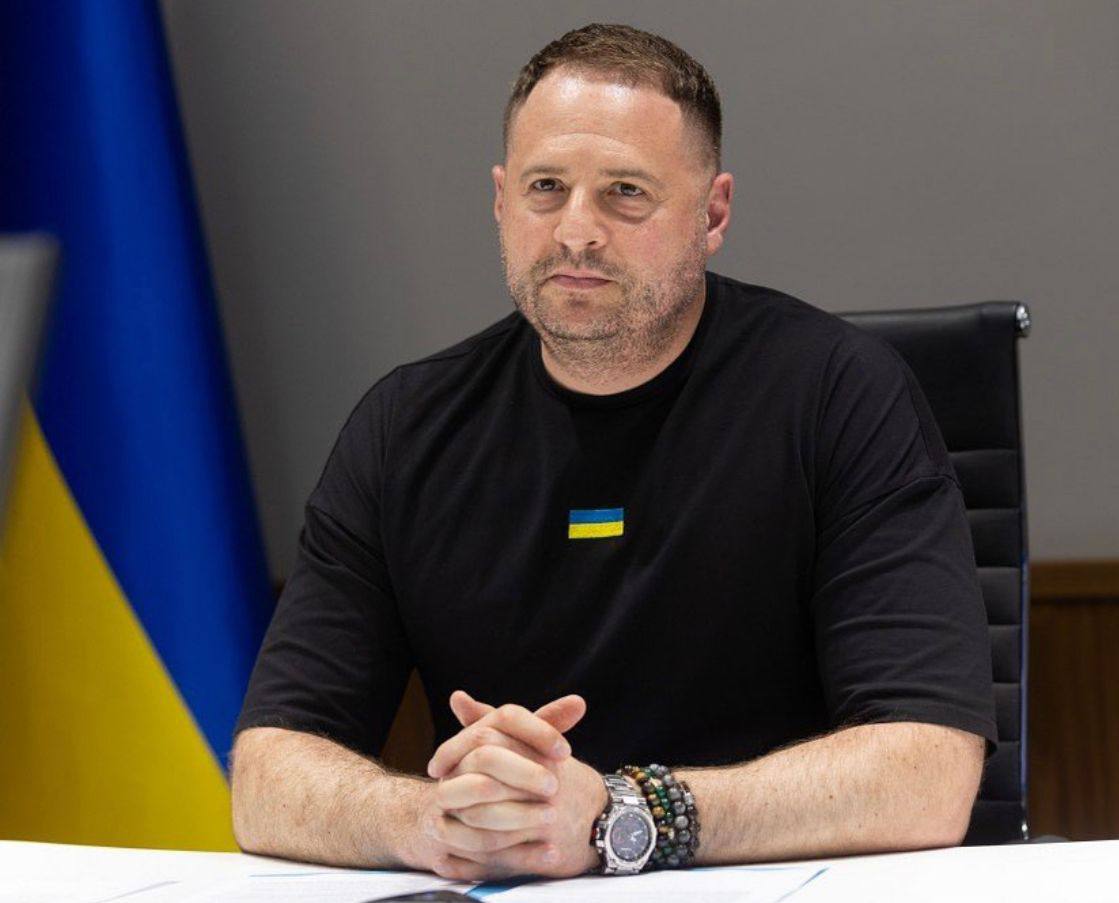
Ukrainian society has long been demanding a government reboot and has demanded Yermak’s dismissal. After his name appeared on the NABU and SAPO records in the “Midas” case, many deputies from the pro-government Servant of the People party expressed support for the idea of Andriy Yermak’s resignation from the post of head of the President’s Office of Ukraine. In addition, Western media have repeatedly written that “everyone is tired” of him and that his behavior is increasingly irritating his partners.
Next, we will analyze how the world media reacted to the dismissal of Andriy Yermak.
Reuters
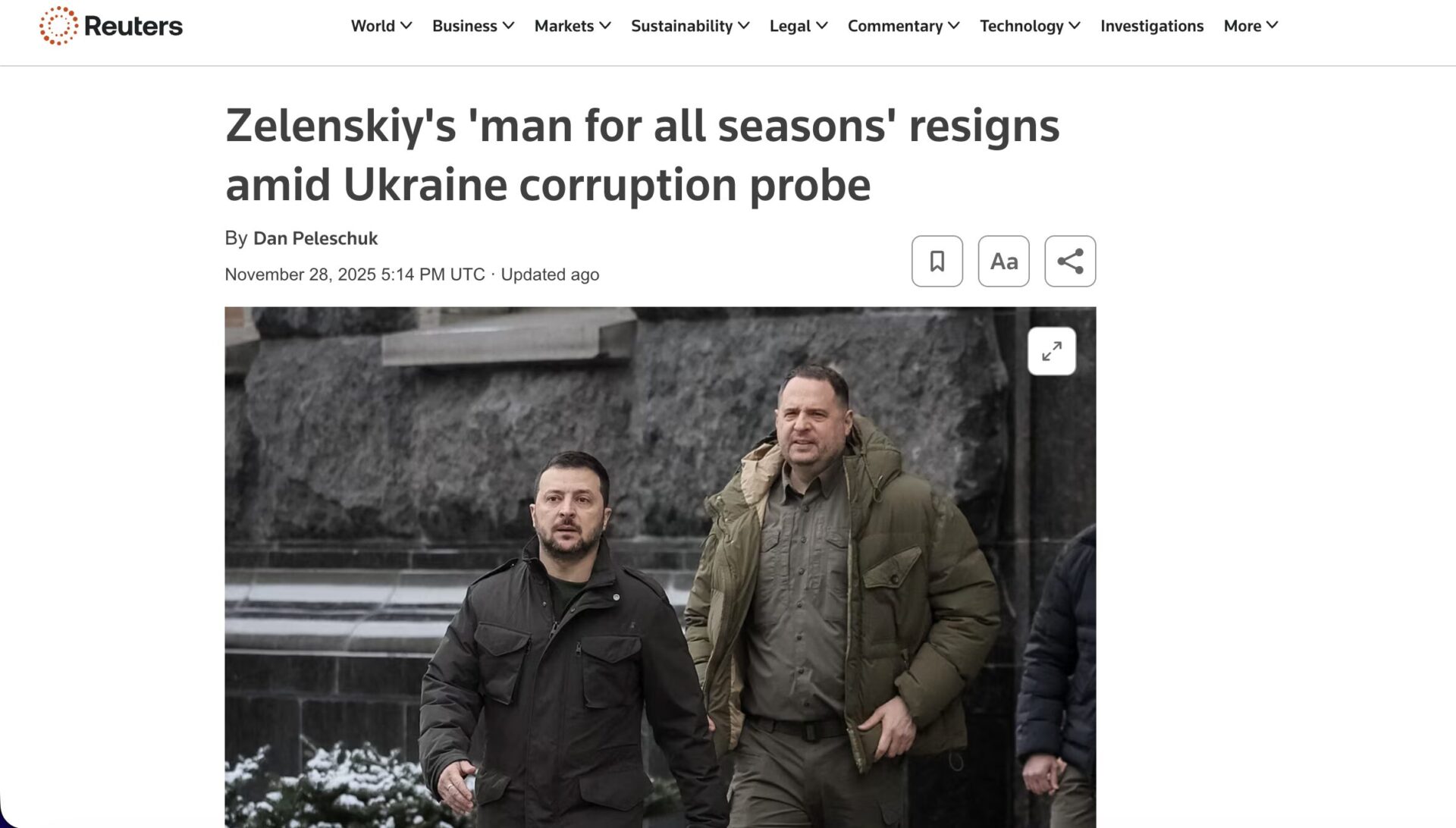
The article explains that the dismissal of Andriy Yermak, Zelensky’s long-time closest ally, was the result of a corruption scandal that unfolded around high-ranking officials. The author emphasizes that Yermak, who was often called the most influential figure after the president, resigned after searches of his apartment, although he is not officially a suspect. This step is presented as an attempt to reduce political tension, restore the trust of society and international partners, and demonstrate the government’s willingness to fight corruption.
The text notes that Yermak’s resignation makes Zelensky more isolated in power, because he was his key negotiator, mediator in important contacts with the US and Europe, and a constant participant in military-diplomatic processes. The event comes at a difficult time for Ukraine, when the US is pressuring Kyiv to accept peace proposals, and corruption suspicions against high-ranking officials are causing concern among Western partners.
The article also notes that the resignation is welcomed by some deputies and officials, who consider it necessary to strengthen the president’s position and maintain trust at home and abroad.
BBC
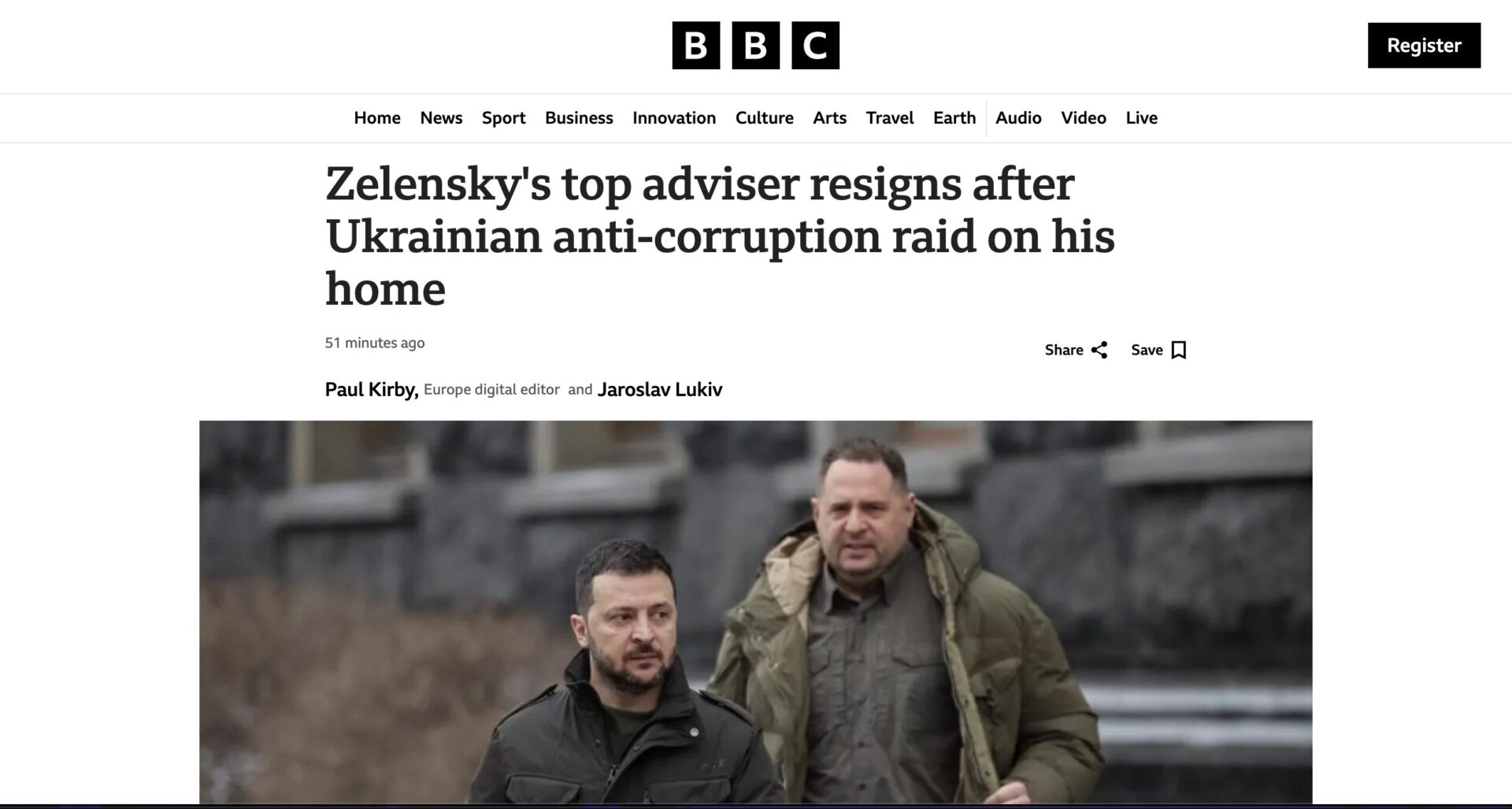
The BBC article describes the resignation of Andriy Yermak as one of the most resonant consequences of a major corruption scandal that has shaken Ukraine in recent weeks and weakened President Zelensky’s position.
The resignation was a response to pressure that was growing after an anti-corruption raid on his apartment, although Yermak himself is not accused of any wrongdoing. The article emphasizes that he acknowledged the great pressure to dismiss and called for an objective and independent investigation.
The BBC presents Yermak’s departure as a serious blow to Zelensky, as he loses his most important advisor at a time of critical international negotiations. The article also mentions the risks that the corruption scandal will cast doubt on Ukraine’s anti-corruption reforms and affect its position in the European integration process. Overall, the article describes the resignation as a politically forced step that should contain the crisis and maintain trust both within the country and among international partners.
CNN
The main idea of the CNN article is that Andriy Yermak’s resignation has become a serious political crisis for Ukraine at a time when Kyiv is under strong US pressure to agree to a peace deal with Russia.
The article emphasizes that Yermak was the second most influential person in the state and Ukraine’s main negotiator in negotiations with the US. His resignation after an anti-corruption raid on his home weakens Kyiv’s position ahead of new rounds of peace talks and creates uncertainty about who will lead the delegation.
CNN emphasizes that the corruption scandal is part of a broader crisis that has already affected several ministers and close associates of Zelensky, and that these events are putting both the country’s anti-corruption image and its negotiating power at a critical moment in the war under attack.
Al Jazeera
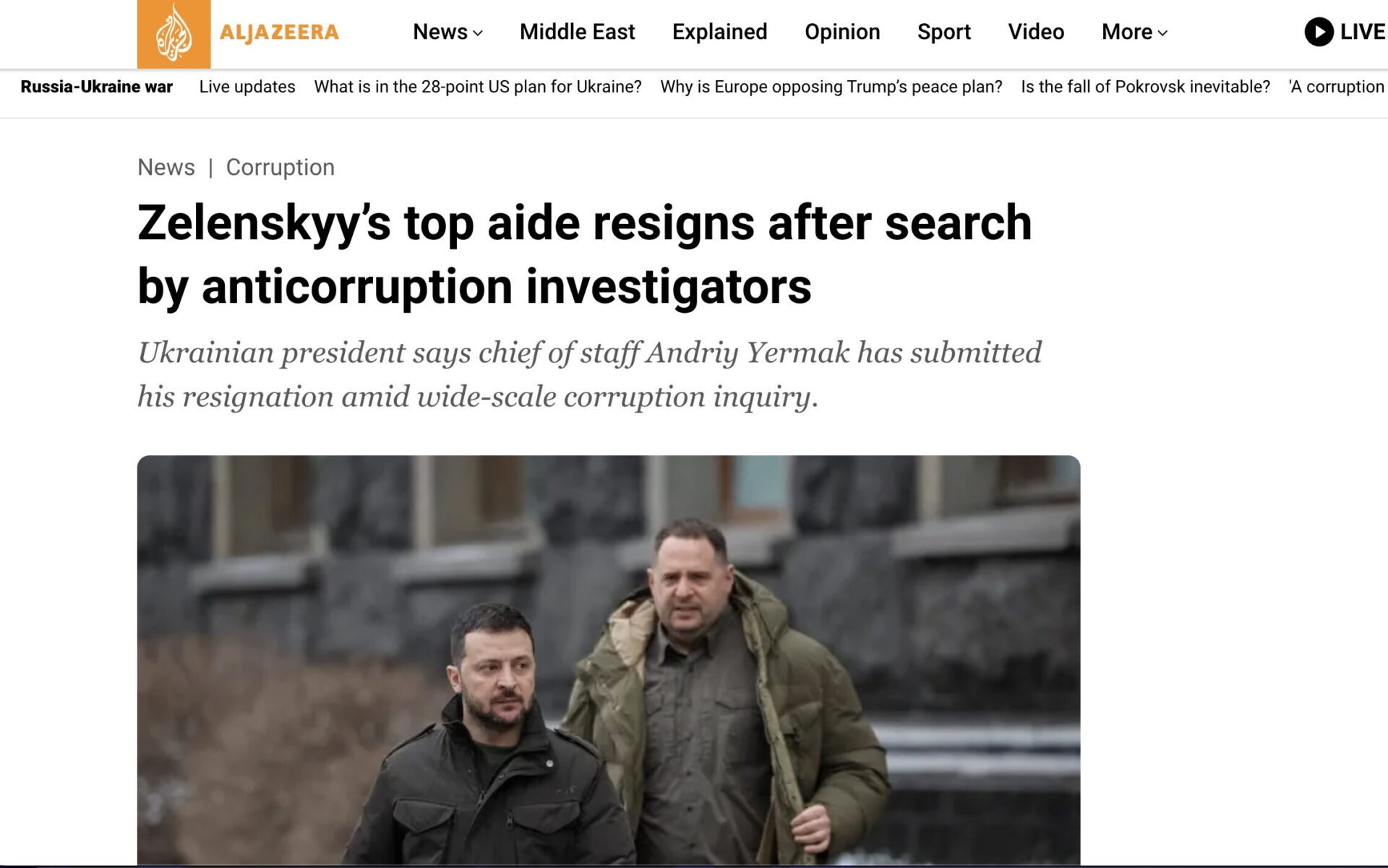
The Al Jazeera article reports that Andriy Yermak’s resignation came after anti-corruption investigators searched his apartment amid a large-scale corruption investigation.
The article emphasizes that Yermak was a key figure in power, effectively the second most influential person in the country and the main negotiator on the American plan to end the war.
His resignation comes at a time when Kyiv is under intense pressure from the United States to agree to peace proposals that include concessions to Russia. The article also notes that the scandal has exacerbated the domestic political situation: the opposition has criticized Yermak, investigators are investigating a large-scale corruption scheme at Energoatom, in which a former business partner of Zelensky is involved. The resignation is presented as a blow to the president’s team at a critical moment when Ukraine is conducting negotiations that determine its future.
Bloomberg
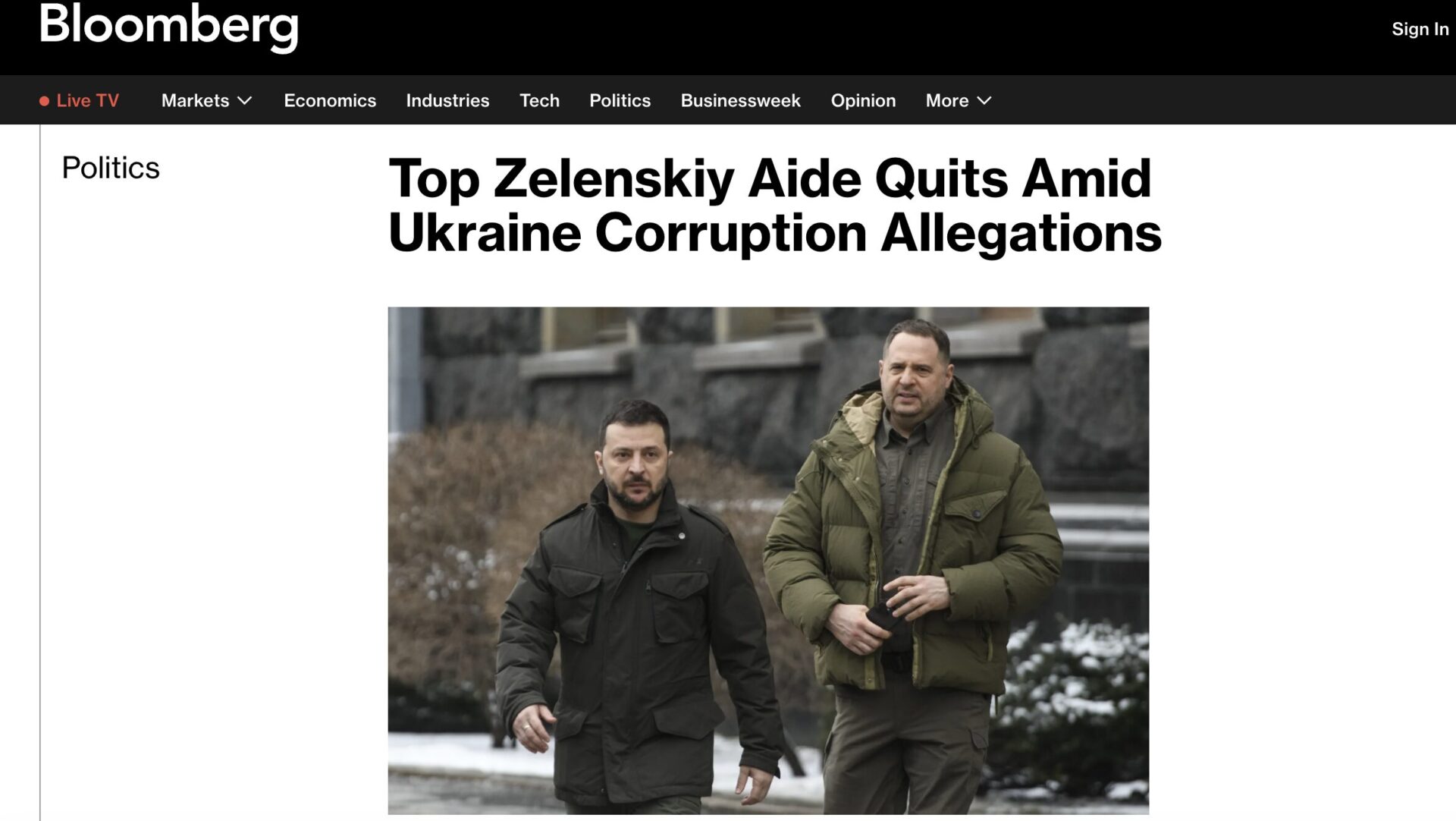
Bloomberg describes the resignation of Andriy Yermak as an event with political and diplomatic resonance. His resignation came immediately after a search of his apartment by anti-corruption investigators, which appears to be part of a broader corruption investigation that has already affected several ministers and a former business partner of Zelensky.
The publication emphasizes that Yermak was not only Zelensky’s closest and most influential aide, but also the main Ukrainian negotiator in the peace talks with the United States to end the war.
Yermak’s dismissal comes at a very sensitive moment: American officials are due to arrive in Kyiv with a new version of the peace plan, the previous version of which was unacceptable to Ukraine. Yermak was in Geneva last weekend, where he was negotiating changes to this proposal – that is, playing a key role in the negotiations that determine the future of the country.
The article emphasizes that Yermak’s resignation demonstrates a deep conflict between the president’s inner circle and the anti-corruption agencies, which have been stepped up after Zelensky’s failed attempt to weaken them in the summer. These agencies are investigating a large-scale scheme to withdraw money from a state-owned energy company, in which a former business partner of the president is allegedly involved.
Politiсo
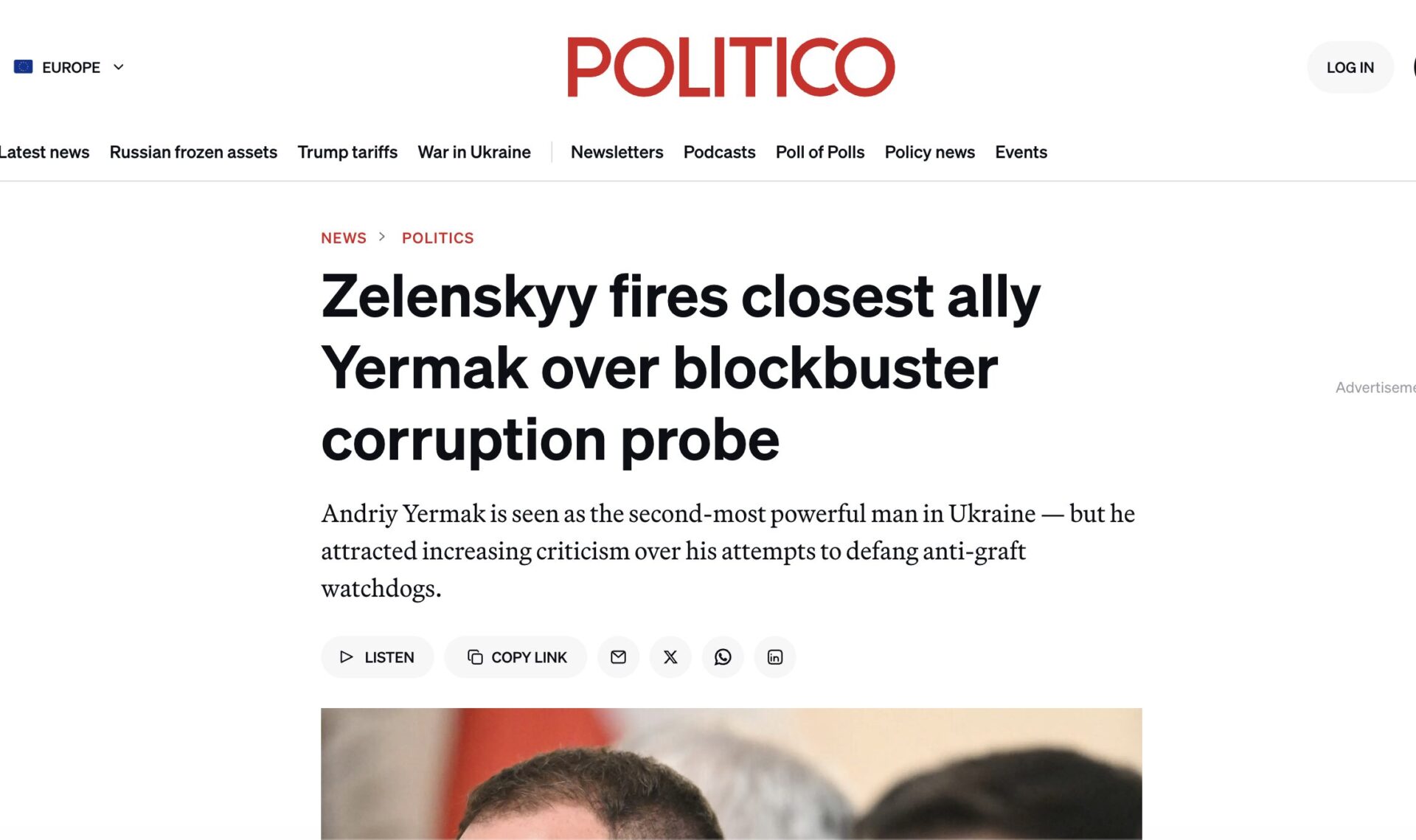
Politico also reports that Ukrainian President Volodymyr Zelensky has fired his top adviser, Andriy Yermak, amid a large-scale corruption investigation.
Yermak, considered the second most powerful person in the country and a key negotiator with Western allies, has been criticized for trying to limit the independence of anti-corruption agencies. The resignation came hours after the National Anti-Corruption Bureau and the Specialized Anti-Corruption Prosecutor’s Office searched his home as part of an investigation into a $100 million energy corruption scheme involving a former business partner of Zelensky who fled the country.
The publication emphasizes that Yermak’s resignation comes at a critical moment: Ukraine is under pressure from the United States, trying to force it to agree to a peace agreement with Russia, while Russia continues the war. Also, this internal corruption scandal is combined with pressure from Western allies and public outrage, putting Zelensky in a difficult political situation during the war.
***
Andriy Yermak’s resignation is a landmark political step that reflects both the internal crisis and external pressure on Ukraine. As the second most influential person after the president and the main negotiator with Western allies, Yermak was a key player in the peace talks process and the formation of international support for the country.
Yermak’s resignation shows that Ukraine cannot ignore the issue of corruption even at the highest echelons of power. This step is aimed at reducing political tension within the country, restoring the trust of citizens and international allies, and confirming the seriousness of the government’s anti-corruption efforts. At the same time, it leaves President Zelensky in a situation where the absence of a key advisor complicates negotiation processes and the management of critical state issues during wartime.
Anna Romaniv