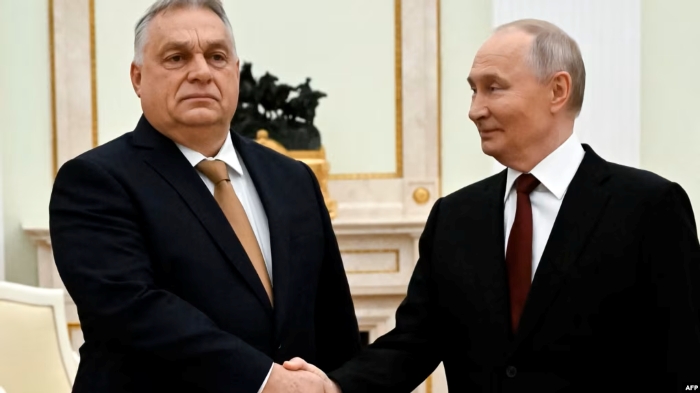


Hungarian Prime Minister Viktor Orbán is again in Moscow. At the meeting with Putin, he immediately mentioned Ukraine and complained about the “consequences of the war,” which he keeps calling a conflict, for Hungary. He says the main purpose of the visit is to discuss oil and gas supplies, and he presents these issues as critical for his government. Orbán also claims he wants to talk about a “peaceful settlement” of Russia’s war against Ukraine. This is already their fourth meeting since the full-scale invasion, and their regular contacts now look like a steady political routine. Putin praised Orbán’s position on Ukraine and thanked him for it.
Strengthening energy dependency
U.S. sanctions on the Russian energy sector do not apply to Hungary because Orbán secured a personal exemption and tied it to Hungary’s “energy security needs.” The postponement was supposed to last one year, but Budapest insists on an open-ended regime and uses it as a political tool. At least, Orbán insists that it works as long as he remains the Prime Minister. This might change after the April 2026 elections, which now look unpredictable. A Závecz Research poll from early November shows a shift: the Tisza Party leads with 48% among decided voters, while Fidesz has only 37%.
Orbán’s new visit highlights that he aims to deepen Hungary’s dependence on Russian energy, even though the current level is already extremely high. This dependence could reach up to 92% of the country’s total energy balance, which makes Hungary highly vulnerable.
Orbán’s recent statements about Ukraine
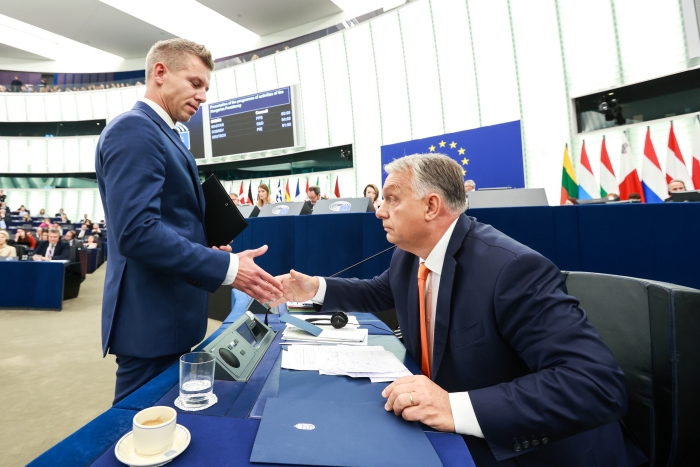
Orbán now claims that Ukraine will end up “divided” into three parts: a Russian zone, a demilitarized zone, and a Western-aligned zone. He calls the Russian zone “inevitable.” He also repeats that Hungary will not support Ukraine’s EU accession because, in his opinion, it would “bring the war to Europe” and drain Hungarian taxpayers’ money. Orbán insists that Ukraine is “not a sovereign country” and describes it as a territory controlled by “the West.” Although Hungary remains part of the Western community, he continues to draw a line between Budapest and others, presenting Hungary as a special case.
Conclusion
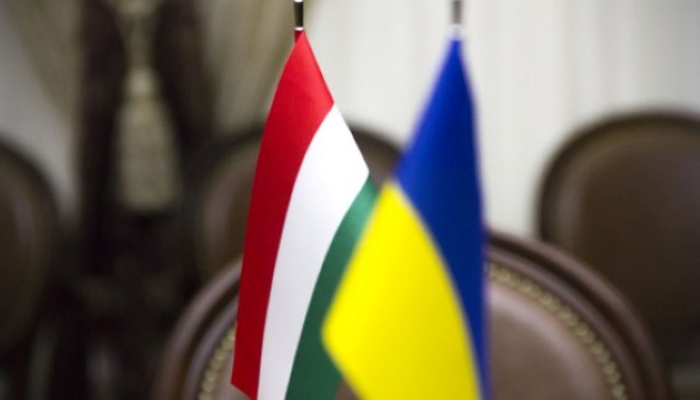
Orbán’s hostility toward Ukraine grows more explicit, and he now speaks about the Russian-Ukrainian war as if he has the authority to define its outcomes. He promotes the idea that Hungary could host hypothetical negotiations, even though Türkiye stands as a far more realistic venue. Orbán wants to show geopolitical relevance before the elections and uses foreign policy to increase his weight at home. He was the first leader of a democratic country to visit Putin after the start of the full-scale invasion, and he now acts more confidently as Russia is not isolated by the U.S. anymore.