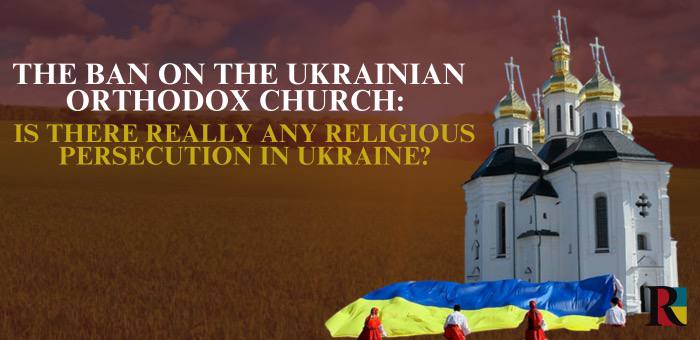


The Ukrainian Orthodox Church (Moscow Patriarchate) is the first Orthodox church in Ukraine in terms of the number of churches, with millions of parishioners and about ten thousand religious buildings.
On October 19, 2023, the Verkhovna Rada of Ukraine adopted draft law No. 8371 “On Amendments to Certain Laws of Ukraine Regarding the Activities of Religious Organizations in Ukraine.”
It provides for a ban on the activities of religious organisations whose management centre is located in a state that carries out armed aggression against Ukraine. In addition, according to the draft law’s wording, a religious organisation’s activity can be terminated in a court of law at the request of the authorised central authority.
At that time, opinion polls showed that most Ukrainians supported the ban of the Ukrainian Orthodox Church of the Moscow Patriarchate (UPC-MP).
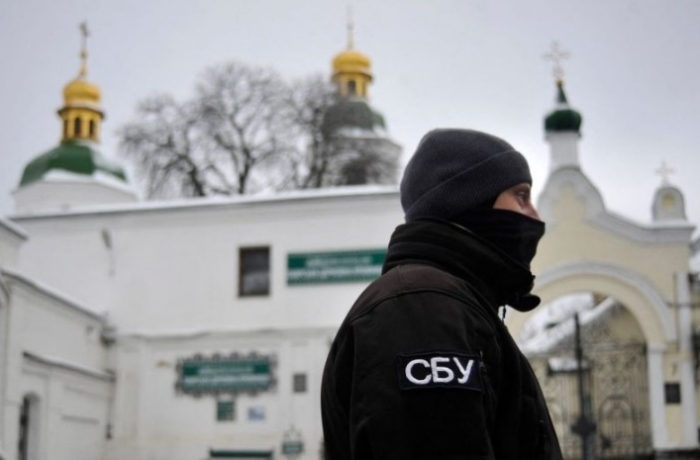
Earlier, the Security Service of Ukraine (SSU) initiated a draft law to expand the grounds for banning religious organisations. In particular, the SSU proposed stopping the activities of religious organisations whose authorised persons were convicted of crimes against Ukraine’s national security, propaganda of war and participation in it on the side of the aggressor, violation of the equality of citizens, participation in terrorist acts, etc.
After that, conflicts or skirmishes took place around UOC-MP churches in many regions of Ukraine, local authorities took land and churches from the UOC-MP. However, some joined the Orthodox Church of Ukraine independently and voluntarily.
All this became the basis for Russian propaganda. The Russians used the situation with the UOC MP in Ukraine as a springboard to incite even greater enmity between Ukrainians and to paint Ukraine in a negative light in front of other countries.
One of the main narratives of the Russians is: “Ukraine carries out and has carried out religious oppression.”
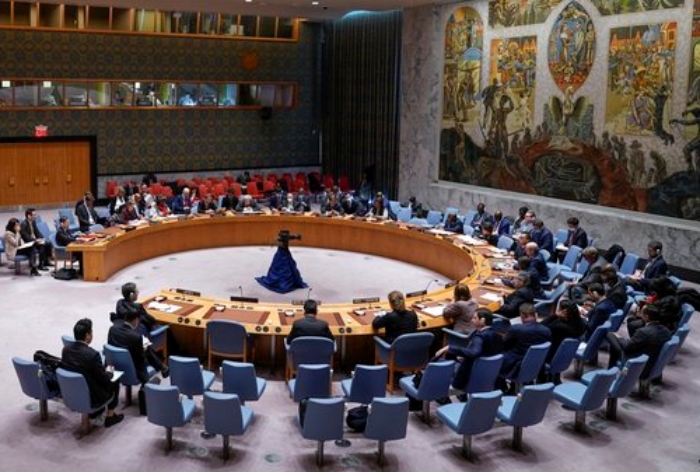
Russia also initiated a meeting of the UN Security Council regarding the alleged persecution of the Ukrainian Orthodox Church in Ukraine.
This narrative spread abroad. For example, Tucker Carlson said that “Zelenskyy announced his plan to ban the Ukrainian Orthodox Church and confiscate its property for not being sufficiently loyal to his regime.” We discussed this in more detail in this article.
So, let’s analyse why the UOC-MP was banned, its impact on Ukraine, and the history of the Ukrainian church.
Why was the UOC-MP banned?
In 2022, the SSU began regularly conducting searches in monasteries and dioceses of the UOC-MP throughout Ukraine.
The impetus for conducting inspections of UOC churches was the public disclosure of a video showing a service glorifying “Russian peace” in one of the churches of the Kyiv Pechersk Lavra.
The searches were carried out in the most famous shrines—Kyiv Pechersk Lavra and Pochaiv Lavra. They also took place simultaneously in nine regions: Zakarpattia, Chernivtsi, Rivne, Volyn, Mykolaiv, Sumy, Lviv, Zhytomyr, and Kherson.
Pro-Russian literature, suspicious persons, including those with Russian citizenship, etc. were reported almost everywhere.
In the spring of 2022, a few months after the full-scale Russian invasion, the UOC-MP formally dissociated itself from the Russian Orthodox Church (ROC).
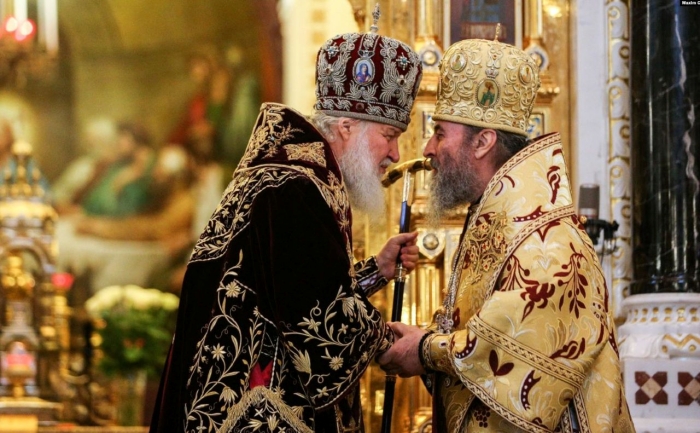
However, such a “break” with the Russian Orthodox Church took place only on paper. In January 2023, the religious examination of the State Service for Ethnopolitics and Freedom of Conscience confirmed that the UOC-MP actually remains a structural unit of the Russian Orthodox Church and has not severed the church-canonical connection with it.
In the conclusions of this examination, which was carried out by the decision of the National Security Council, it is stated that:
- The UOC-MP does not have the status of an autonomous or autocephalous church, which other churches would recognise, and therefore remains a structural unit of the Russian Orthodox Church, although it has separate rights of independent formation;
- The UOC-MP continues to be subject to the ROC (which is enshrined in the Statute of the ROC), while the decisions of the governing bodies of the ROC are binding for the UOC-MP;
- no documents or actions that would testify to the transformation of the Ukrainian Orthodox Church into a religious organisation independent of the Russian Orthodox Church were found.
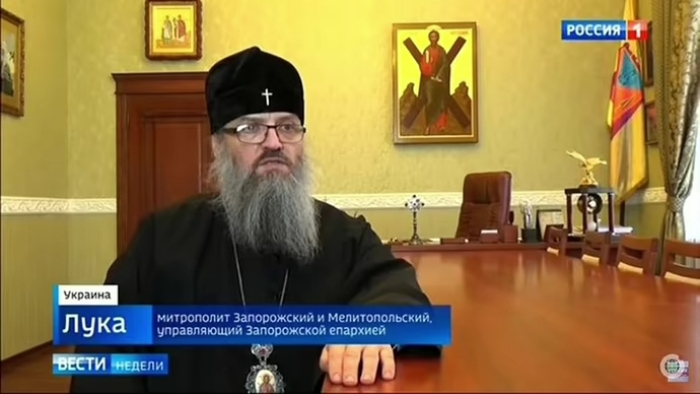
Also, a large part of the bishops and priests of the UOC-MP still consider themselves to belong to the Russian Orthodox Church and commemorate the Moscow Patriarch Kirill in church services.
In addition, the Ukrainian Orthodox Church of the Russian Orthodox Church is practically the only church whose activities the Russians allow in the occupied territories of Ukraine.
Some ministers of the Moscow Patriarchate helped the enemy during the occupation and spread the narratives of Russian propaganda. For example, in the Kyiv region, priests kidnapped people. One of these priests took the stolen humanitarian aid and kept the volunteers in locked cells. Another is that they met the occupiers with the icons. The investigation against the traitors is still ongoing.
The consequence of these events is the banning of the UOC-MP.
How significant is the influence of the Moscow Patriarchate in Ukraine
Almost all Ukrainian presidents recognised the problem of the Moscow Patriarchate’s influence on the country’s situation, except for the pro-Russian Viktor Yanukovych. All of them, in one way or another, sought to “jump out from under Moscow.”
After the declaration of the autocephaly of the Orthodox Church of Ukraine, the Security Council of Russia was immediately convened, hackers were tasked with breaking into the mailboxes of the metropolitans of Constantinople, and the Greek archbishop was threatened that he would be responsible for the territorial integrity of Greece if he recognised Ukrainian autocephaly. That is, it became the subject of a very serious geopolitical struggle.
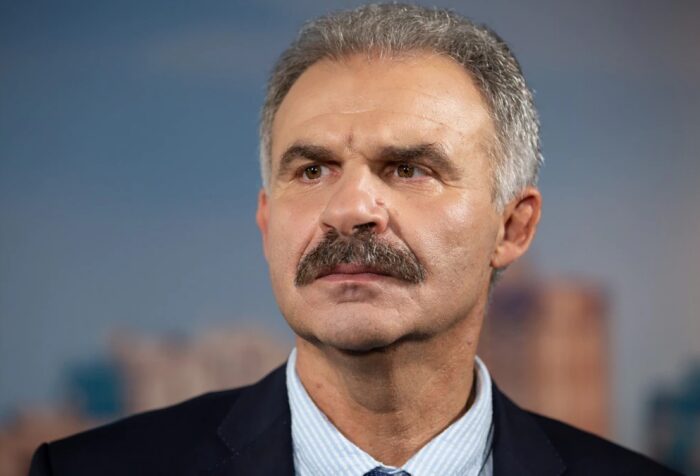
The problem with the UOC-MP’s influence was that for many years, they told their followers about the “brotherly peoples,” about the three-united Rus, etc. The structures of the Moscow Patriarchate can, in one way or another, be channels of Moscow’s influence, – says Viktor Yelenskyi, head of the State Service of Ukraine for Ethnopolitics and Freedom of Conscience.
The Council of Bishops of the Ukrainian Orthodox Church adopted a resolution condemning the process of granting the Tomos on autocephaly:
The process of granting the so-called Tomos on autocephaly is artificial, imposed from the outside, does not reflect the internal church necessity, will not bring real church unity and will deepen divisions and intensify conflicts.
Tomos – a decree of the synod and/or the head of the local Orthodox church on important issues of church organisation or creed; recently, it most often refers to the decision of the mother church to grant autocephaly to a new local church.
Autocephaly is the independence of a local church, administratively independent from other Orthodox churches, but united with them canonically.
I think this the UOC-MP can better provide this answer Why they are still closely connected with the Russian Orthodox Church is easy to understand even by visiting their website. It is clearly visible there, that they are in complete unity.
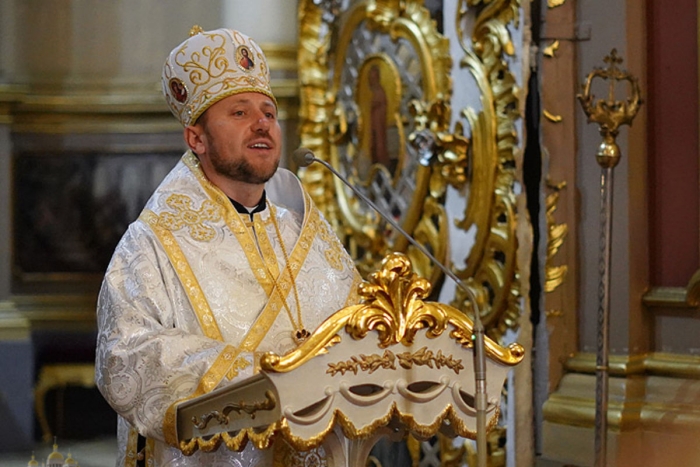
It is certain that they are very dependent and have become a tool in Moscow’s hands. But why they don’t do it (didn’t declare autocephaly), is a question for them, – says Mykola Bychok, bishop of the Ukrainian Greek Catholic Church.
The Ukrainian Review contacted the representatives of the UOC-MP for a comment on this topic, but we have not yet received a response.
How did the UOC-MP come to be
First of all, the Kyiv Metropolitanate in Kyivan Rus-Ukraine (10th–13th centuries) was founded in the early 990s. The Russian Orthodox Church received autocephaly in 1448.
The church has always played an important role in the state and the lives of its citizens. It was a large sphere of influence on society. Therefore, the invaders of the Ukrainian lands tried to seize the Ukrainian Church, in particular, Russia wanted to create a single church with its center in Moscow:
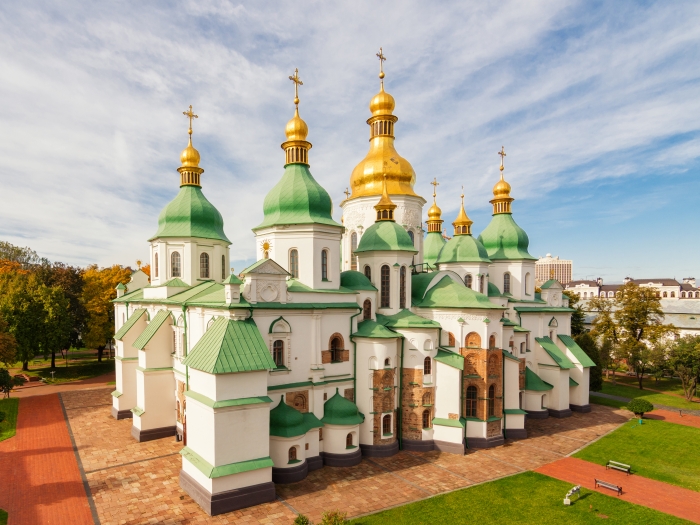
In 1162, the Volodymyr prince Andriy Bogolyubsky unsuccessfully tried to obtain the blessing of the Patriarch of Constantinople for the formation of a separate Vladimir metropolis. As a result, he attacked Kyiv, burned the Pechersk Monastery and St. Sophia’s Cathedral.
The result was the transfer of the seat of the metropolitans to the north of the territory, although this contradicted the canonical rules.
In 1448, the Kyiv Metropolis was finally divided into two separate ones—Kyiv and Moscow. In 1686, the Kyiv Metropolitanate’s non-canonical accession to the Moscow Patriarchate took place.
During the years 1721-1917, the ecclesiastical policy of the Russian imperial government was aimed at the Russification and denationalisation of Ukrainian church life: the Ukrainian language was prohibited during services, and Ukrainian theological seminaries were closed.
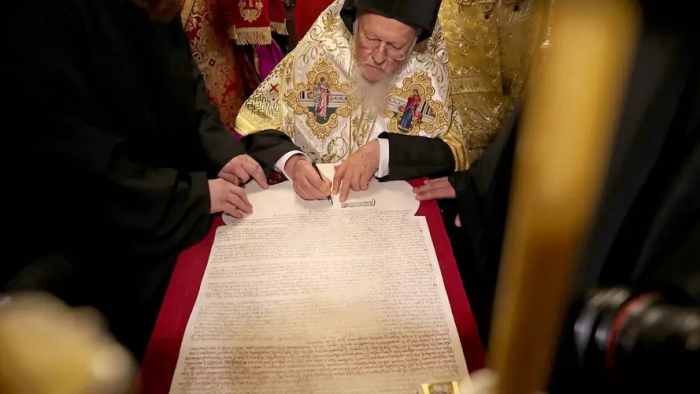
The consequence is the bureaucratisation of church life, the Russification of liturgical, educational, and publishing activities, the decline of Ukrainian church traditions and customs, etc. In the following decades, Ukraine tried hard to restore the UOC. On January 5, 2019, His Holiness the Ecumenical Patriarch Bartholomew signed the Tomos on the Autocephaly of the Orthodox Church of Ukraine, – says the OCU historical reference.
Why the banning of the UOC-MP became the cause of disputes among Ukrainians
In fact, 63% of surveyed Ukrainians believe that the Ukrainian Orthodox Church (Moscow Patriarchate) should be completely banned in Ukraine. That is, more than half.
Also, 83% of Ukrainians believe that the state should intervene in the activities of the UOC-MP to one degree or another.
Sociologists also asked respondents whether they trust the UOC -MP – 82% of Ukrainians do not trust it.
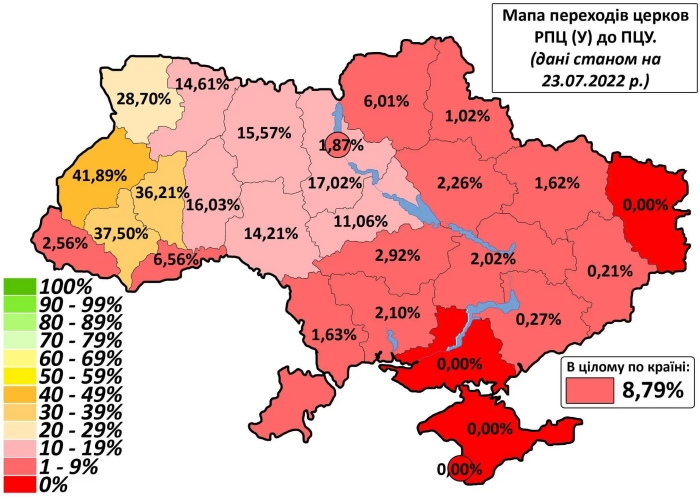
As of the end of 2023, almost 900 UOC-MP religious communities have transitioned to the OCU.
The citizens of Ukraine extremely negatively assess the role of the UOC-MP in the Great War with Russia, a study by the Razumkov Center found:
- 65% of Ukrainians believe that the Russian Orthodox Church and Moscow Patriarch Kirill encourage and support the aggression of the Russian Federation against Ukraine;
- 47% of respondents believe that representatives of the UOC-MP clergy spread Russian propaganda and justify Russia’s actions, in particular in the occupied territories;
- 34% of respondents are of the opinion that representatives of the UOC- MP cooperate with the Russian occupation authorities.
Of course, some Ukrainians continue to go to the churches of the Moscow Patriarchate and even actively oppose the transition of the UOC-MP to the OCU.
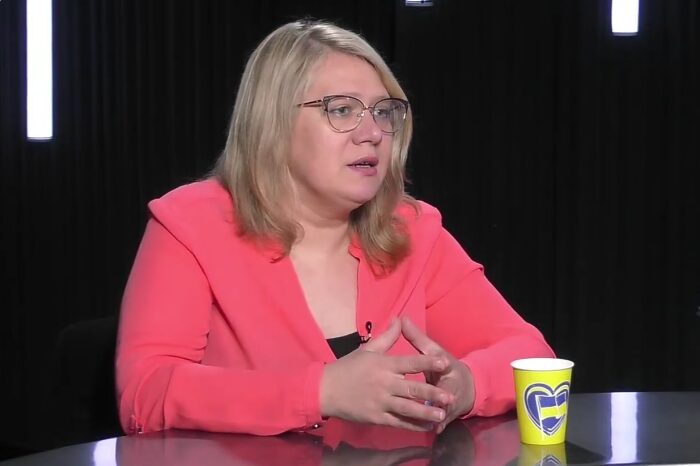
Parishioners who have a high level of faith in any religion, have a high level of trust in their superior, and therefore are strongly influenced by him, are not critical of the one who conducts services – explains Iryna Gubeladze, PhD in psychological sciences, senior research associate of the Institute of Social and Political Psychology
Who is oppressing whom?
According to the Department of Religions and Nationalities, 35,646 religious organisations were officially registered in Ukraine at the beginning of 2014. In contrast, 29,831 organisations operated in the Russian Federation, which is approximately 30 times larger in size.
Even after part of Ukraine’s territory was occupied, the number of religious organisations in the Russian Federation did not equal the number of religious organisations in Ukraine. This emphasises the distinct and vivid religious diversity that characterises Ukrainian society.
It is important that none of the churches in Ukraine ever became a monopoly. It means, that it never was like the Russian Orthodox Church (ROC), which would have more than half of all religious organisations and would receive a privileged status in interaction with the state authorities.
According to the world survey of the level of religious freedom conducted by the American Sociological Service Pew Research Center, Ukraine has a good level of religious freedom and average state regulation of the religious sphere. We are in the same group as European countries such as Germany, Belgium, Denmark, or Austria.
In addition to Christianity, Ukrainians belong to other religions, such as Greek Catholicism, Roman Catholicism, Islam, Judaism, and others. There are churches of various religions in Ukraine, such as Catholic churches, Orthodox and Greek Catholic churches, synagogues and mosques.
Theology received the status of a scientific discipline, and this speciality can now be studied at state institutions of higher education (for example, at the Drahomanov National University of Science and Technology). Churches received the right to establish secondary education institutions, and the state recognised the diplomas of religious educational institutions.
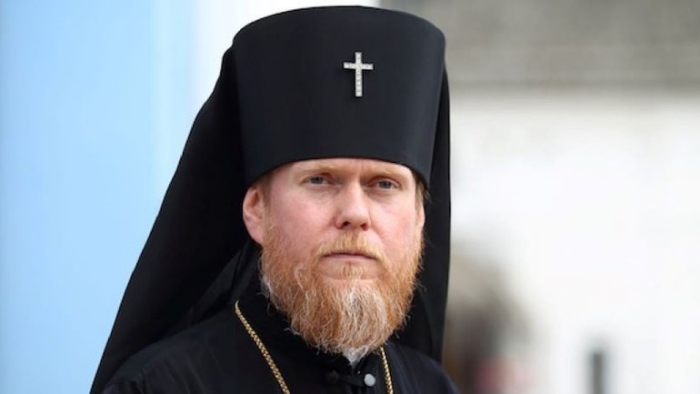
In its entire history, Ukraine has never had such a level of religious freedom as it has during its independence – says Metropolitan Evstratiy (Zorya) of the Orthodox Church of Ukraine.
Instead, in the Russian Federation, the formation of a rigid hierarchical model of state-church relations, restrictions on religious freedom and even the banning of the activities of some religious communities due to accusations of extremism is observed.
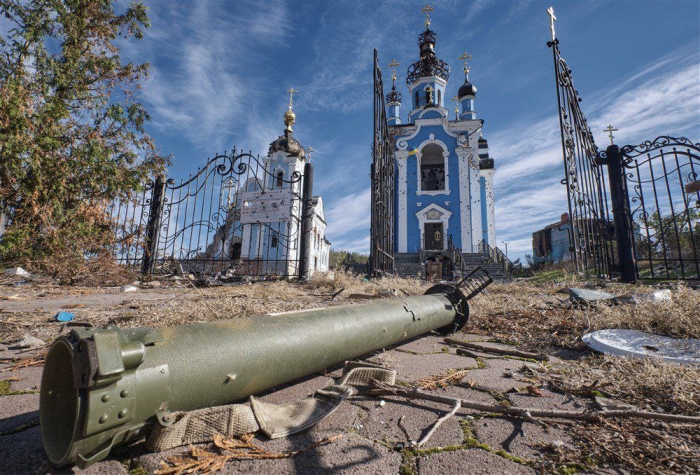
Almost all religious communities in the temporarily occupied territories of Ukraine were subjected to repression. Churches in these regions clashed with the Russian military.
They are charged with cooperation with the SSU, storage of weapons, transportation of explosives and calls for an armed uprising against the occupation authorities. This escalation of aggression against religious institutions is a gross violation of human rights and religious freedoms, further worsening the already dire situation in the region.
The Ukrainian Review wrote more about how Russia oppresses the Ukrainian churches in the temporarily occupied territories in this article.
Also, we invite you to read our interview with Father Vasyl Vyrozub, who spent 70 days in Russian captivity.
On the one hand, one can agree with the statement that “there is no religious freedom in Ukraine” but reject it on the other. Because Article 35 of the Constitution grants freedom of religion to all religious denominations.
However, since Ukraine is now in a state of war, other relevant by-laws are coming into force. And churches are also subject to following the laws of the land. Therefore, if this or that church does not represent the interests of the state of Ukraine, there may be religious freedom restrictions.
However, in general, there is religious freedom in Ukraine, even during the war – says Mykola Bychok, bishop of the Ukrainian Greek-Catholic Church.
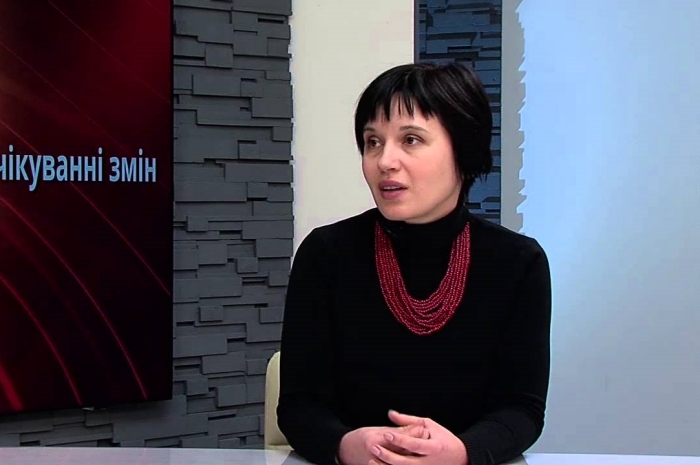
Nataliya Nechayeva-Yuriychuk, PhD in historical sciences, and regional coordinator of the National Platform for Sustainability and Cohesion in the Chernivtsi region, also commented:
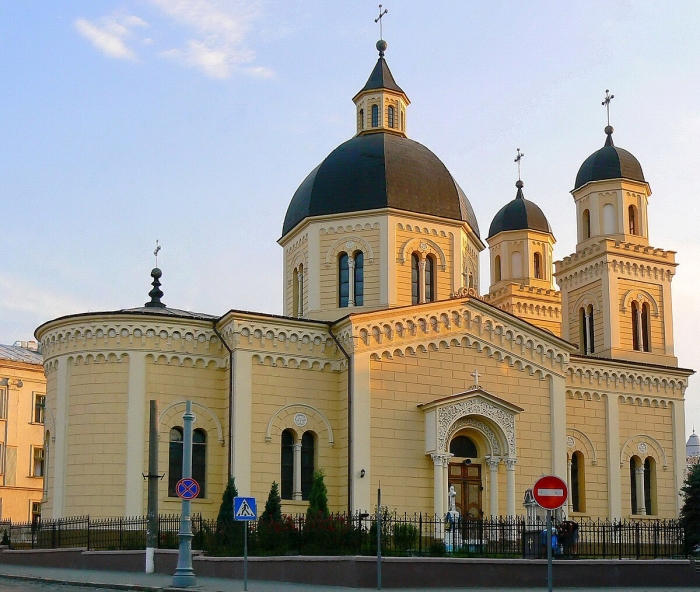
The Chernivtsi region is one of the most religiously diverse regions in Ukraine. The dominant position is occupied by the Ukrainian Orthodox Church, known as the UOC-MP. The number of parishes belonging to this church in the region is 365 (as of March 2024). Since 2019, only 40 regional parishes have transferred from the UOC-MP to the OCU. This year – 5. In my opinion, these numbers are the most vivid example of the attitude towards the UOC-MP in the region and Ukraine as a whole. Moreover, the Holy Spirit Cathedral continues to gather believers of the UOC-MP in the city centre. The same as the St. Nicholas church on Ruska street.
In fact, I do not see any oppression or problems for believers who go to the churches of the UOC-MP. On the other hand, we have examples when the priests of the Ukrainian Orthodox Church of the Russian Orthodox Church refused to honor the soldiers who died at the hands of the Russian invaders (the village of Zadubrivka, 2023, the village of Vyzhenka, 2024).
Natalia Nechayeva-Yuriychuk says that the Russian side is actively using the church issue to discredit Ukraine in the eyes of the world community and neighbouring states:
In the case of Chernivtsi region – due to the spread of disinformation narratives about the real state of affairs in the region with respect to the right to freedom of conscience and the use of the native language. Various videos, messages, etc. are produced with the aim of forming a negative attitude of the wider circles of Romanian society towards Ukraine. Any actions of the Ukrainian side, aimed at protecting public peace, are presented as hostile to the UOC-MP. So, for example, last year, the law enforcement officers stated Father Longin (Zhar) was suspected of inciting inter-religious enmity, which caused a flurry of various information aimed at discrediting the Ukrainian side. And this is just one of the many examples.
In my opinion, it is extremely important that the Ukrainian state builds its relations with churches exclusively on the legal basis, in compliance with the Constitution and legislation. Unfortunately, in the interaction with the UOC – MP, this principle is presented as oppression and an attack on the church. Although, when the Russian army occupies Ukrainian lands, the OCU is simply banned.
***
The ban on the Ukrainian Orthodox Church of the Moscow Patriarchate (UOC MP) in Ukraine was enacted due to its close ties with the Russian Orthodox Church and its support for Russian aggression against Ukraine. Many UOC-MP churches have become a tool of Russian propaganda. In Ukraine, there is religious freedom, and state interference in the activities of religious organisations is due to national security in the conditions of war.
Anya Ostymchuk