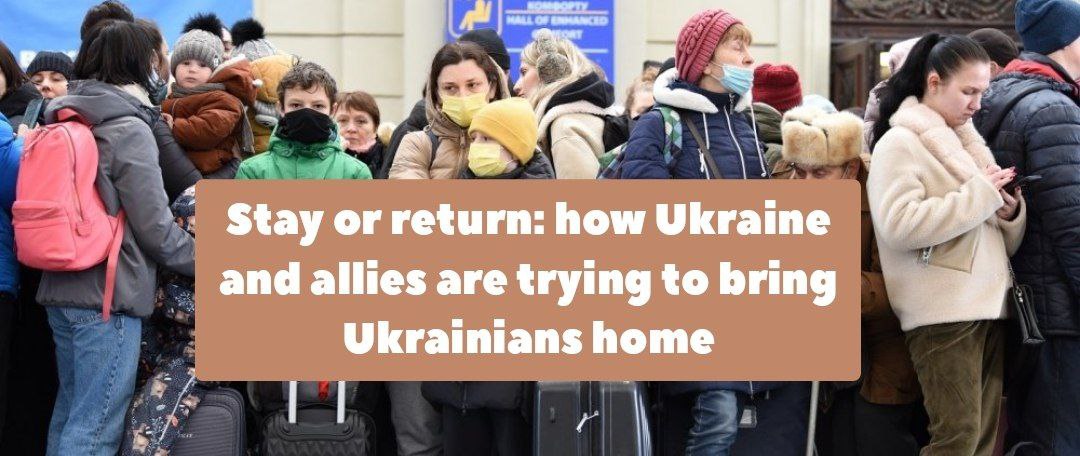


As a result of Russia’s war against Ukraine, thousands of Ukrainian families have lost their homes, jobs, loved ones, and their usual way of life. According to UN data, over 12 million Ukrainians have been displaced due to the occupation of Ukrainian territory or hostilities.
In this article, we have collected views from the representatives of the Ukrainian government, representatives of the legislature and diplomatic corps of allied countries, as well as civil society on how to create conditions for Ukrainians to come back home from abroad.
Current situation with internally displaced persons and refugees
According to the Ambassador of Canada to Ukraine Natalka Cmoc and the latest survey of the Centre for Economic Strategy between 5.6 and 6.7 million Ukrainians left Ukraine because of the war. Many people have returned to Ukraine to help renovate and rebuild their communities. The reality is that the longer people live outside of Ukraine, the more they will integrate into their new communities, and the more difficult it will be for them to return to Ukraine. The same survey supports this assumption estimating that between 1.3 and 3.3 million Ukrainians are likely to choose to remain abroad.
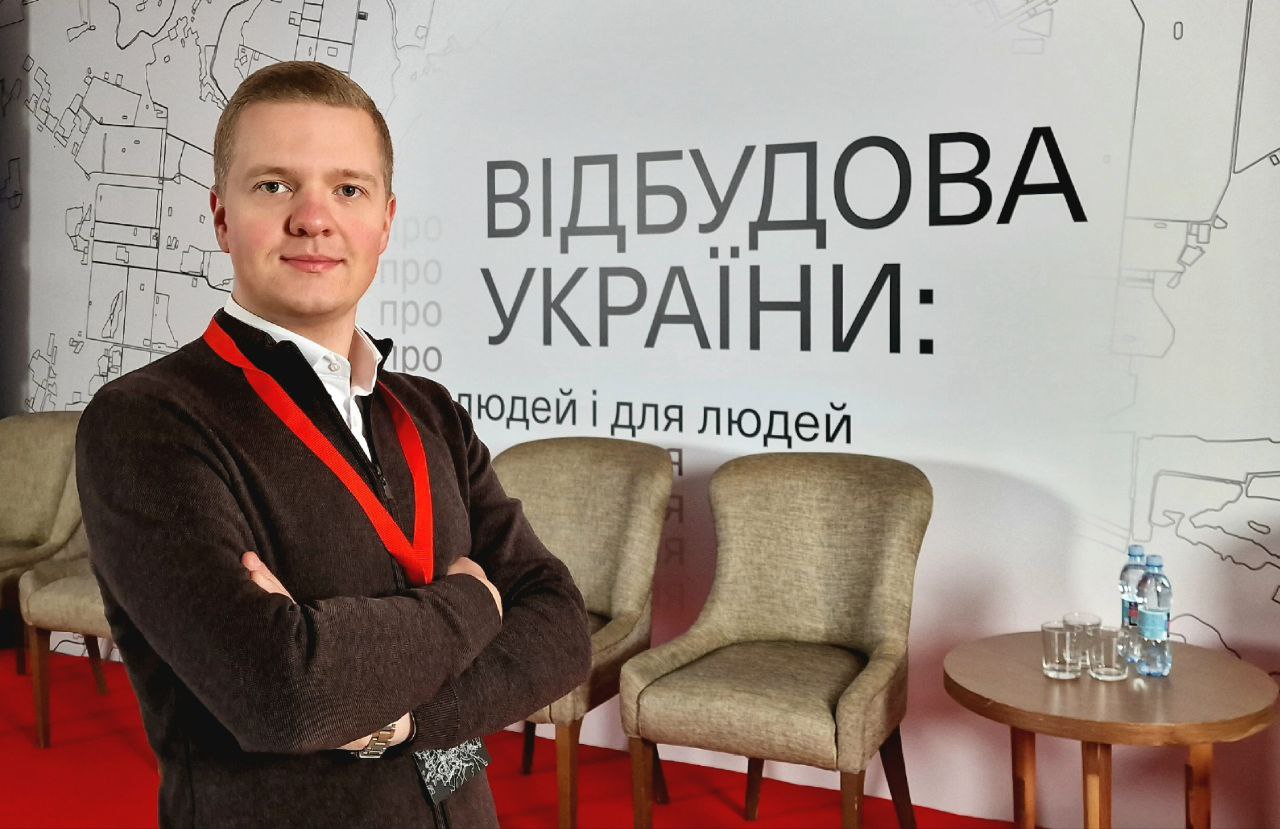
Oleksandr Yavtushenko, Vice-President of the World Displaced Persons Organization, Chairman of the Council for Internally Displaced Persons and the Council of Volunteers at the Kyiv Regional State Administration, believes that most of these individuals are young, economically active people who are a significant driving force for Ukraine’s economy and its primary labor resources.
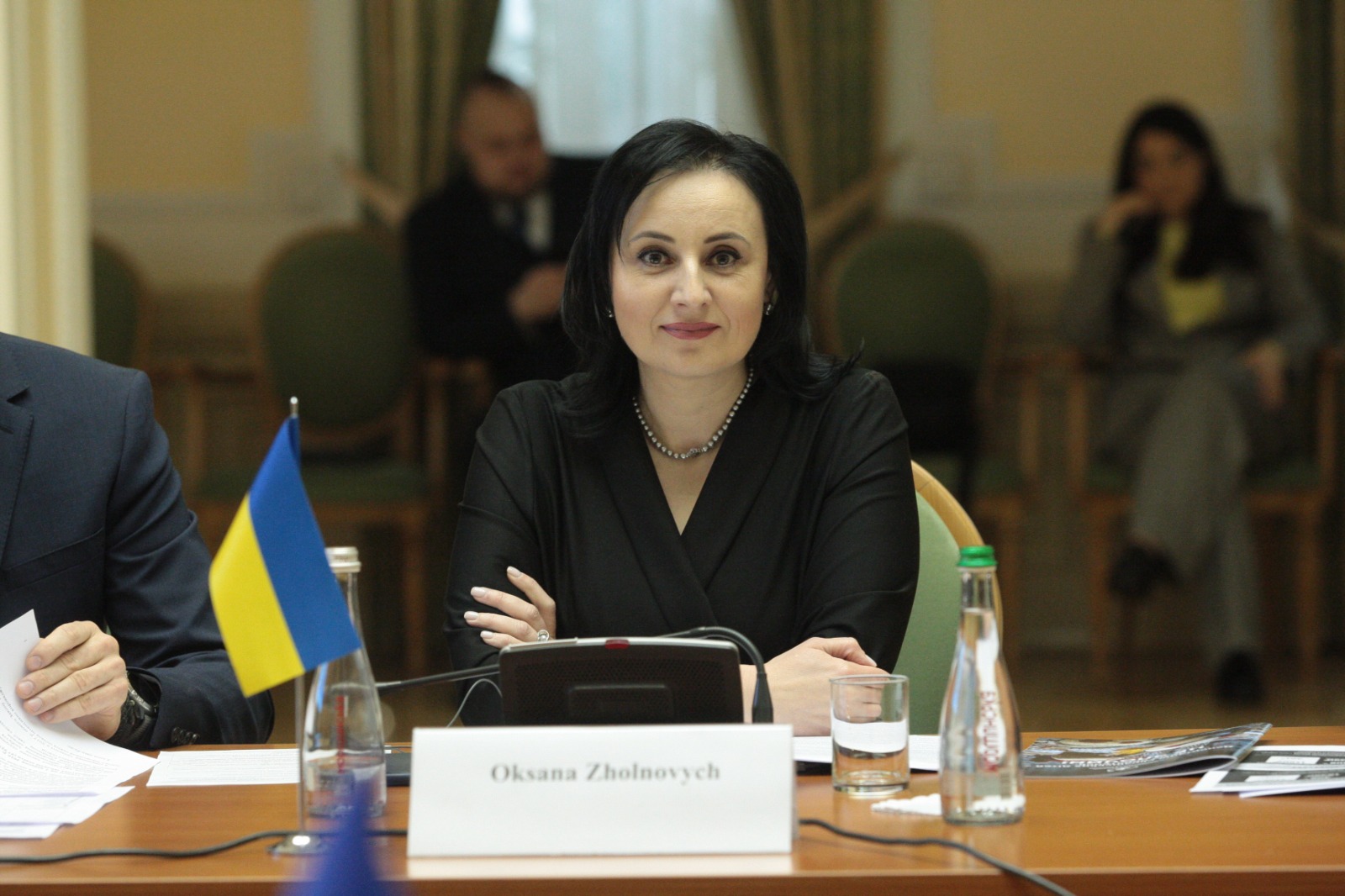
Oksana Zholnovych, Ukrainian Minister of Social Policy, says: “According to the Ukrainian Center for Economic Strategy, among those Ukrainians who are abroad, in the spring of 2023, 63% of Ukrainians abroad planned to return to Ukraine, 14% did not plan to return, and another 23% hesitated to answer. Ukrainians want to return, because there is a home, a working infrastructure and friends waiting for them. People left not because things are bad in Ukraine, but because Ukraine was attacked. The main reasons why migrants do not want to return are lack of security – 47%, lack of work and livelihood (mainly due to the war) – 31%.
The outstanding efforts of the Defense Forces of Ukraine, the return to Ukrainian control of a large part of the captured territories, and the general stability of the Ukrainian state under the conditions of war create the basis for the return of many migrants to their homes. The International Organization for Migration estimates the number of Ukrainians who returned to their homes from both external and internal migration as of September 2023 at 4.6 million people.
We need the help of our Western partners both in the military and financial and humanitarian dimensions. In particular, in strengthening the ability of the Ukrainian state to financially support citizens in the initial period after their relocation – until they are integrated in the new community, as well as develop the ability of local communities to provide the necessary services to our citizens. The ability of each local community to provide effective support to citizens in need is crucial to the return of Ukrainian migrants from abroad. And their return, in turn, is extremely important for ensuring the economic and security stability of our country as a whole.”
At the same time, in some areas Ukraine may also benefit from the prolonged presence of some categories of its refugees abroad until the situation remains not so safe. For example, Canada and Ukraine signed a bilateral Youth Mobility Agreement, which young people from both countries will benefit from when travel to Ukraine becomes safe. The agreement further deepens the strong ties between our peoples and our two countries. It will open up new opportunities for youth to work and travel, including opportunities for Canadian youth to help rebuild Ukraine.
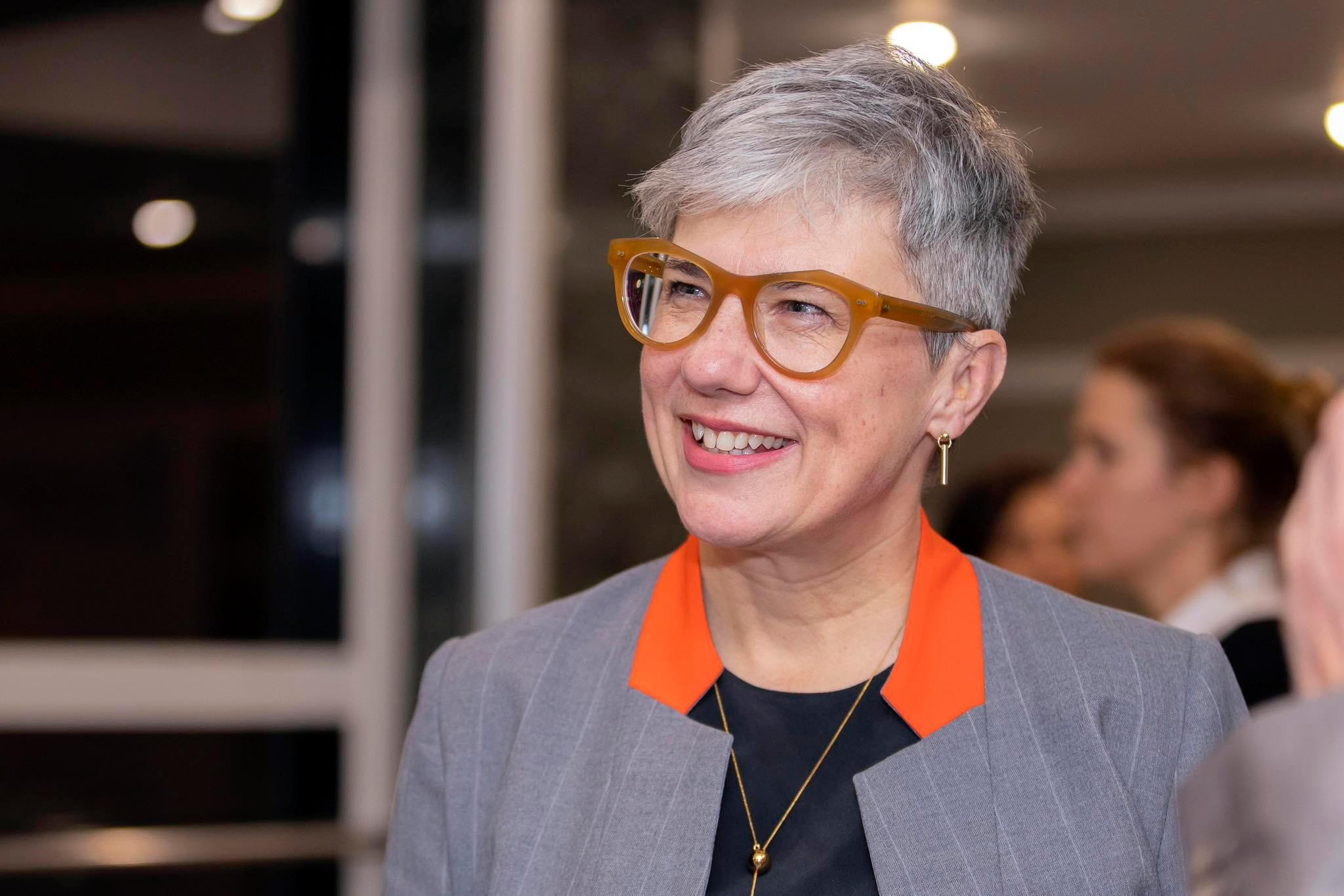
According to the Ambassador of Canada to Ukraine Natalka Cmoc, since the beginning of the full-scale war, more than 210,000 Ukrainians arrived in Canada under the Canada-Ukraine Authorization for Emergency Travel (CUAET) measures, launched in March 2022 and closed in July 2023). While many will stay in Canada, they have proven to be strong advocates for Ukraine in Canada, and as such, they are important voices in ensuring that Ukraine continues to be supported in its goal of Euro-Atlantic integration.
Many will undoubtedly choose to return to Ukraine when the conditions are right, including safety, access to jobs and a favourable environment for entrepreneurship. They want to ensure that their children have the support mechanisms for their reintegration. When they return, they will bring their valuable experiences with them. Even with the return of overseas Ukrainians, Ukraine will still face a demographic challenge from the impact of the war. This will challenge Ukraine’s ability to recover and rebuild.
Oleksandr Yavtushenko says that the ongoing armed conflict, the bleak security situation, and the lack of a systemic vision for solving the internally displaced persons (IDP) problem continue to force people to emigrate. In order to retain people in Ukraine and facilitate the return of those who have left, the state and our international partners must propose a strategic vision for addressing this issue. Clearly, this requires the creation of a comprehensive set of socio-economic conditions. He refers to his concept of the “Ukrainian Dream” drawing an analogy with the so-called “American Dream”. This concept should provide answers to key questions such as employment opportunities, creating conditions for business development, and providing housing for those citizens who have lost it. Let’s consider these issues one by one.
Addressing the housing problem
Individuals who have lost their homes due to hostilities or whose homes are located in occupied territories should be given the right to use alternative housing or given the opportunity to obtain preferential long-term mortgage financing to purchase such housing. In particular, it is necessary to expand relevant programs offered by the Fund for Support of Youth Housing Construction and Ukrfinzhytlo (eHome).
For example, the Ukrainian government has spent over ₴73 billion on payments to internally displaced persons (₴2,000 for adults and ₴3,000 for children and disabled individuals per month). With these funds, the state could have built more than 300 apartment complexes, each with 280-350 apartments (for comparison, based on the average cost per square metre of housing approved by the Ministry of Infrastructure, ₴73 billion would have been sufficient to build 3.4 million square metres of housing, while in the first nine months of 2023, construction began on 3.1 million square metres of housing). These apartments could have been made available for over 100,000 people who lost their homes. Additionally, a significant part of the population could have been employed in the construction industry (for comparison, in 2021, over 690,000 people worked in construction).
An alternative to apartment complexes could be a model similar to Israeli kibbutz settlements, with five-story houses where displaced individuals live and work in agricultural or processing enterprises within the kibbutz’s territory. Such a solution may be somewhat more expensive than regular houses, but it provides immediate employment for the population and often includes necessary social and psychological programs for the kibbutz residents. The integration effects of such settlements can be truly significant.
Men involved in such construction could be granted deferments from mobilization. A similar large-scale project would significantly boost economic development, support local production of construction materials, and, as a result, the state would acquire a substantial asset. In the long term, these apartments could be used as a flexible housing reserve, to which low-income individuals could have free access, and others could buy through favorable state-sponsored mortgage programs.
The availability of such apartments where people can live for free and have the opportunity to get back on their feet while having a roof over their heads would encourage a certain part of those who left, especially among the youth who do not have their own homes , to return to Ukraine if they were guaranteed access to these apartments. For those planning to leave Ukraine, this could become an argument in favor of staying.
Funding for such large-scale housing construction projects could be proposed to international donors who have already expressed their willingness to provide additional compensation to Ukrainian returnees. Providing them housing could not only motivate them to return but also to stay if the condition of living in the apartment is set as a requirement for the possibility of obtaining ownership or purchasing it at a certain discount.
Overall, the state could implement such a large-scale project. For example, it could breathe new life into Ukraine’s largest state construction holding, “Ukrbud”. Under the proper management and close scrutiny by international observers and the public, it could become the general contractor for mass housing construction projects in Ukraine.
Oksana Zholnovych, Minister of Social Policy also supports this approach: “The Ministry of Social Policy has developed a draft of Strategy for Demographic Development of Ukraine until 2040, one of the focuses of which is the policy of returning Ukrainian migrants. Important elements of such a policy are the creation of housing funds and assisting in renting housing for citizens who have lost it; safety issues, including the creation of a sufficient number of shelters; the development of labour market opportunities for citizens of working age, and the development of the service market and effective and high-quality support for those citizens who cannot work, so that their able-bodied loved ones can work instead of caring for them. We have to create a humane environment in Ukrainian cities. And, of course, systematic communication with our citizens abroad is extremely important, not only with forced migrants, but also with the Ukrainian diaspora”.
Additionally, it would be advisable to create a platform where internally displaced professionals (e.g., doctors and teachers) could find communities willing to invite them to work and provide them with suitable conditions, including housing. In this way, it would be possible to simultaneously meet the labour needs of the respective community, address the integration problem of displaced persons and their families, and encourage highly qualified professionals to remain in Ukraine.
Employment and the creation of business conditions
Ukrainians are a nation of entrepreneurs, so the state’s first priority should be to simplify the business environment as much as possible. This includes implementing straightforward and transparent reporting and taxation rules, as well as establishing clear, automatic tax monitoring.
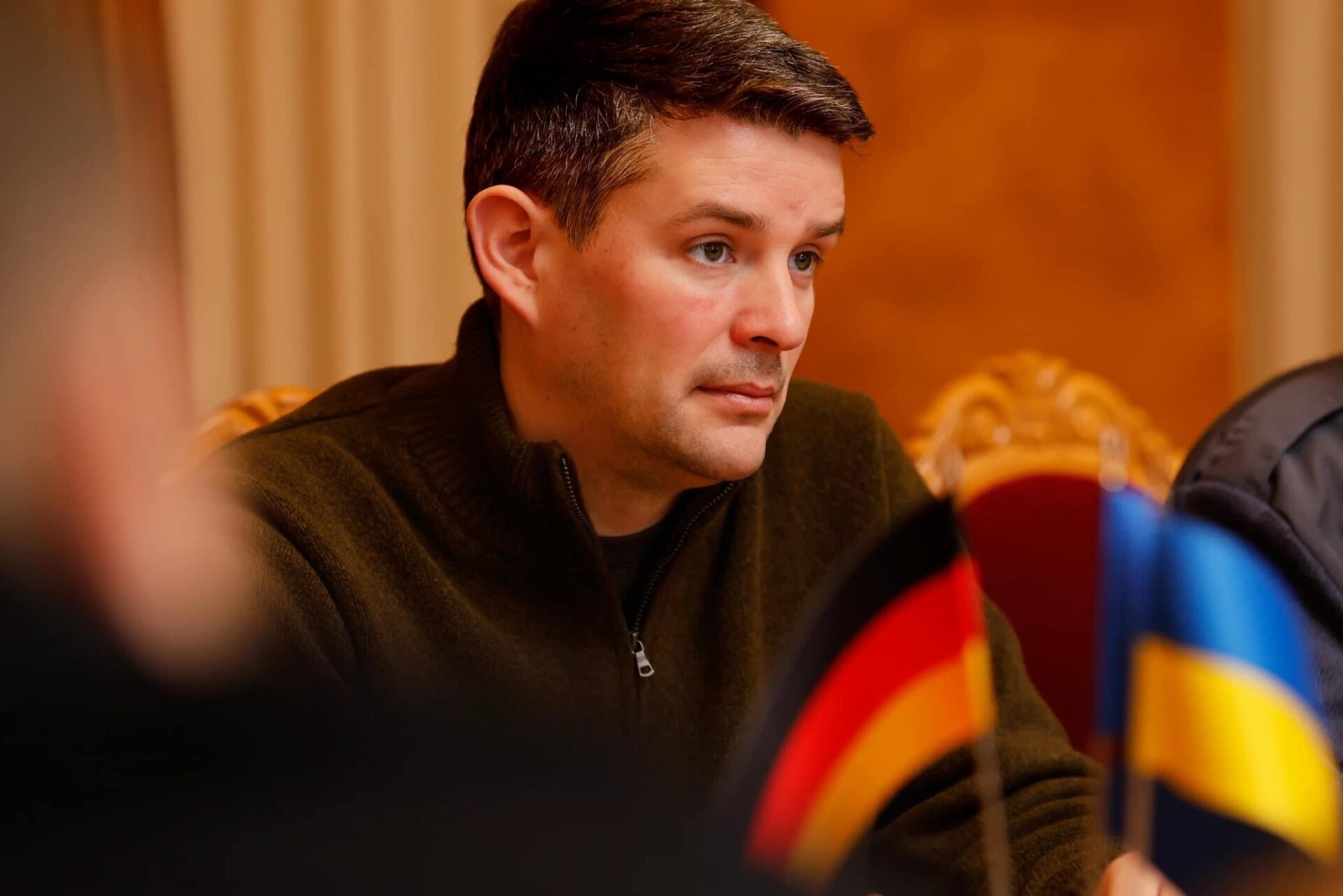
Dr. Marcus Faber (Free Democratic Party), a member of the German Bundestag, notes that a key aspect is economic reconstruction. This includes job creation , restoration of infrastructure and measures for the social and economic integration of returnees, including housing, education and health services. These programmes are crucial to give returnees to lead a stable life and facilitate the transition. International support for reconstruction in the form of relief supplies, financial aid and expertise is crucial to the stabilisation of Ukraine. It helps to sustain support and strengthen the country.
According to Oleksandr Yavtushenko, the state should actively support entrepreneurial education and provide grants for creation and development of small businesses. Within these grant programs, it would be beneficial to allocate specific quotas for young entrepreneurs and internally displaced persons. For the latter, it is essential to consider their successful entrepreneurial experience prior to displacement, which demonstrates their aptitude and necessary business skills to restart their businesses in their new communities. Such an approach would, among other benefits, promote employment opportunities for IDPs. With the help of grants, IDPs would create employment opportunities for themselves and potentially for other displaced persons.
Security and safety
Dr. Marcus Faber points out that in order to facilitate the reintegration of refugees, geopolitical stability in Ukraine, and the recognition of its territorial integrity and sovereignty within the 1991 borders by all international states, is a crucial step. In this context, comprehensive security guarantees for Ukraine are essential to reassure the people there that they can return to their country.
Equally important are conditions of the security policy . This includes the establishment of sustainable peace and order in Ukraine. Measures such as eliminating the dangers of war, for example from mines, ensuring public order and protection against potential future aggression are essential. Furthermore psychological and social support also play an important role. Psychological counselling and social integration services are essential for those who have suffered trauma and loss. Political stability is a key factor. Stable, transparent and inclusive governance would strengthen citizens’ confidence in Ukraine and help create a safe and welcoming environment.
Conclusions
Both Ukraine and its allies have an urgent need for a comprehensive strategy to address the challenges faced by displaced Ukrainians, emphasising housing, employment, and international cooperation as key pillars for successful reintegration and return of Ukrainians home. By proposing innovative housing models and advocating for simplified business conditions, Ukraine and its allies should suggest tangible solutions that could not only facilitate the return of Ukrainians but also contribute to the national economic recovery.