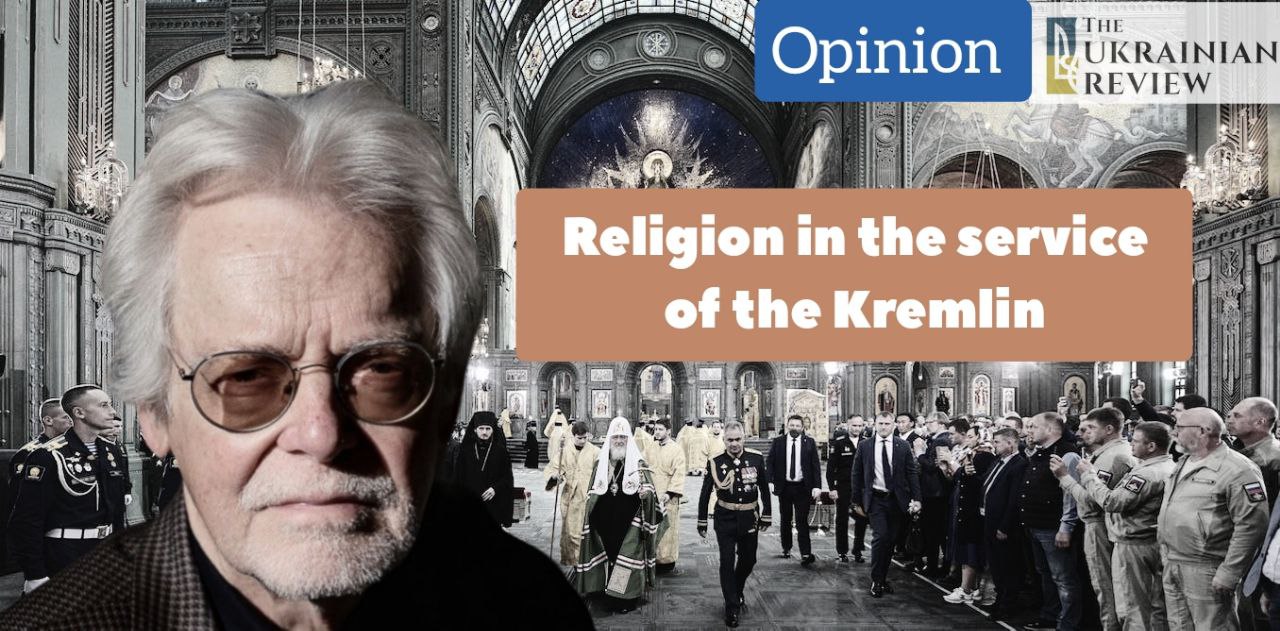


When Russian Orthodox congregations in Denmark provide the Patriarchate in Moscow with money and other assistance, they know beyond any doubt that they are supporting the Russian war of aggression in Ukraine. Patriarch Kirill is not an ordinary village priest, but the very guarantor of Putin’s authenticity as “God’s gift” to holy Russia.
“Putin’s career in the KGB was mediocre. Kirill must have convinced his masters from the beginning. He rose to prominence as the Patriarchate’s representative on the World Council of Churches, a position whose first prerequisite was close and active collaboration with the Communist Security Service”.
Wien
My Ukrainian readers will excuse me, I hope, for commenting upon a scandal in Denmark, far away from your war-ravaged country, but sympathetic to your plight and much aware that the Ukrainians are defending not only themselves, but the rest of Europe against fascist Russia.
In this spirit, a colleague of mine, Anders Redder, has been writing page up and page down in Jyllands-Posten, my Danish daily, about Russian orthodox communities in Denmark providing the patriarchate in Moscow and an especially militant priest, father Dmitrij Krotkov, with money and other supplies, officially for civilian purposes, in reality supporting the Russian war of aggression in Ukraine.
The Russian ambassador to Copenhagen, a rather mediocre figure by the name of Vladimir Barbin, on Saturday reacted with a diatribe in Jyllands-Posten, claiming that the newspaper was involved in a vicious campaign, aimed at discrediting the Moscow Patriarchate and the orthodox congregations in Denmark, adding for good measure – and thereby exhibiting himself as either naiv or a lair – that the Russian church, contrary to the situation in other countries, is an independent institution, protected by the law. Very funny!
The scandal has opened the eyes of many Danes to the tandem operation of political and spiritual forces in Russia. It gave me an opportunity to write the following column, dealing not so much with the matter in Denmark itself (where the government is being criticized for having ignored it), but with the role of the Russian Orthodox Church in the present Ukrainian War and its historic submission to any Russian state, whether czarist, communist or as of now fascist.
The main orthodox community in Denmark, congregating around the Nevskij Church in Denmark, belongs to the Russian Orthodox Church Abroad, based in New York and supervised from Munich in Germany. Officially, it has nothing to do with Moscow. Unofficially, though, parts of the clergy and parts of the congregation are suspected of cooperating with the All Russian Patriarchate and of supporting the war of aggression against Ukraine.
Denmark is home to an estimated 100 000 orthodox believers, not all of them Russians, and even the Russians are split in groups for or against the Putin-regime. Those against are seen mainly as descendants of a Russian emigration before and immediately after the 1918-revolution. The Aleksandr Nevskij Church, situated only a few hundred meters from the Royal Palace, is a well known sight in Copenhagen, its golden cupolas glittering in the sunshine – when the sun is there. The church was a gift from the Empress Marija Fjodorovna (1847-1928) to the Russian community in the Danish capital.
The empress was a daughter of Danish king Christian IX and married to the bone reactionary Aleksandr III. As she arrived in St. Petersburg in 1866 Russian liberal circles nourished a faint hope that she would have a beneficial effect on her husband and the imperial court. It turned out the other way around. The Danish princess converted to the Orthodox Church and quickly became more Russian than her Russian entourage. During the Bolshevik revolution, now for years a widow, she fled to the Crimea. From there she escaped on a British frigate to England, then to Denmark. There, quite isolated, but guarded by her life Cossacks, she spent her last years in a great villa with a view to the Danish-Swedish water of Øresund, never really believing that her family had perished. In 2006 she was reburied by the side of her husband in the Peter and Paul Cathedral of St. Petersburg, an elaborate affair, remembered for the ridiculous fact that one of the Danes present in the crowd fell into the grave.
The Nevskij church in Copenhagen was built to designs by David Grimm (1823-93), a Russian architect, specializing in Byzantine historicism.
And here you have the column itself as published by Denmark´s leading liberal daily:
When the West has difficulty understanding Russia and Russian mentality, it is often due to historical experiences and the resulting cultural differences. In the early Middle Ages, there was nothing or very little speaking against a belief that the Rus-people could develop — just like Poles, Ukrainians, Hungarians, Czechs and others — parallel to Europe further out in the west. But then, in the middle of the 13th century, the so-called Mongol Storm occurred, for centuries cutting off the Muscovites from the Renaissance and thus from a natural role as the Canada of Europe, a sparsely populated, colossal territory, tolerant, well-educated and prosperous.
In Central Europe the Mongol rule was over earlier on easily and with less damage, also politically. Poland, along with large parts of present-day Ukraine, reinvented itself in the Lithuanian-Polish Commonwealth. The Hungarians, the Czechs and other smaller nations also recovered from the shock. Not the Muscovites. In their priests they had, to the later misfortune of themselves and others, found a substitute for their prolonged lack of genuine secular leadership. When finally, in the late 14th century, they drove out the Mongols, they knew all about brutality and deceit, but nothing about democracy or human rights.
In the West, politics is usually about the safety and prosperity of citizens – and the re-election of politicians. Russia does not exist for its citizens, and those in power do not see themselves as replaceable democrats. Russia, according to its state rationale, is a sacred assignment, Russki Mir, its own world, consisting of concentric circles, first a national or popular core, Old Russia around Moscow, then a Slavic empire, consisting of ethnically, culturally and religiously related peoples such as Belarusians and Ukrainians, finally an external empire, preferably, but not necessarily, Slavic and Orthodox, especially Poland, the Baltic countries and Crimea, but also Bessarabia or Moldova, which the current ruler, Vladimir Putin, has set out to restore after the fall in 1991 of the Czarist-Communist Empire, still carrying the marks of its long gone Mongol oppressors.
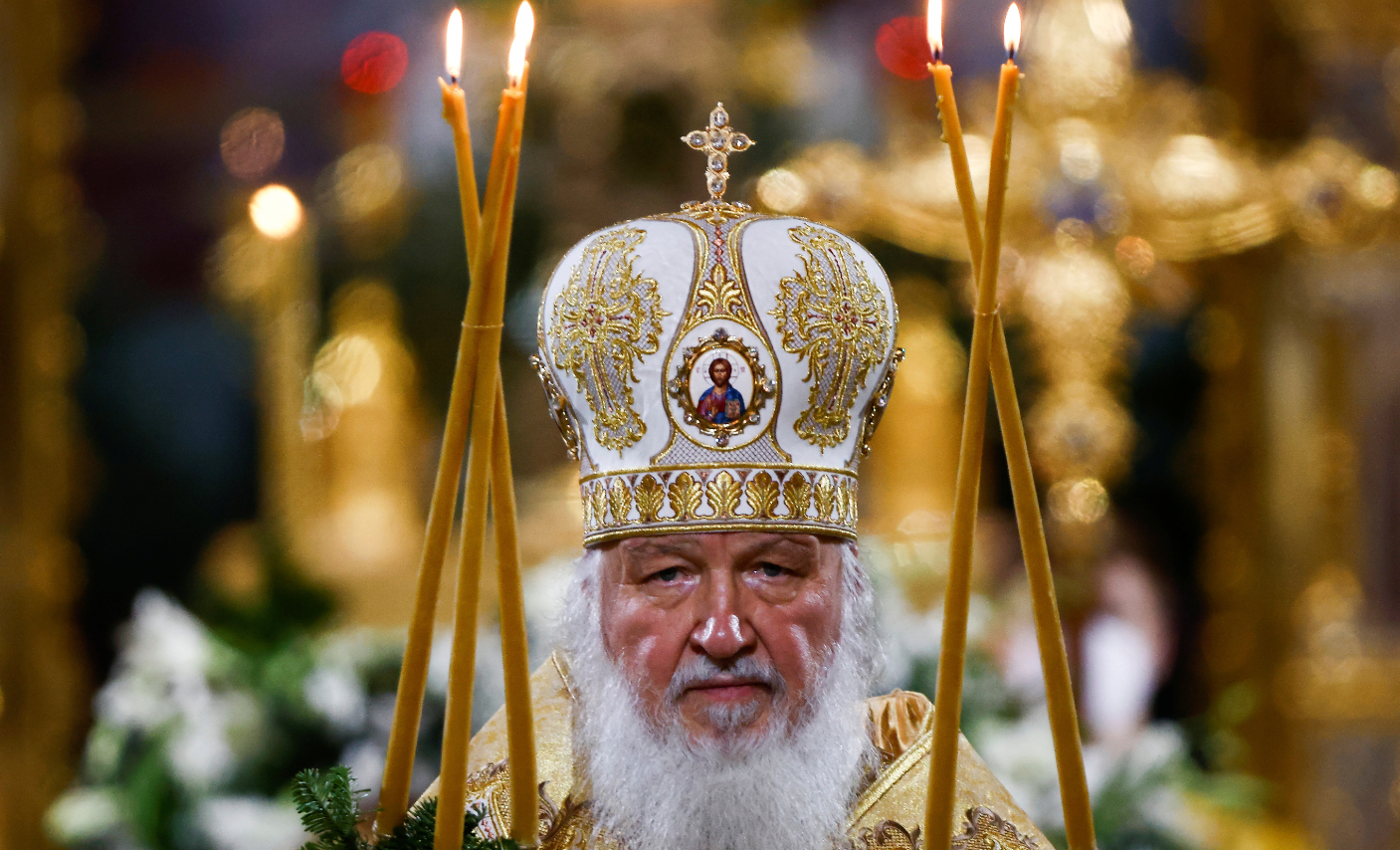
In this Russian World, the Moscow Patriarchate constitutes an institution on par with czardom (currently Putin’s fascist regime), as important as the papacy in Rome next to the empire in medieval Europe. So when Russian Orthodox congregations in Denmark provide the patriarchate with money and other assistance, they know beyond any doubt that they support Russia´s war of aggression in Ukraine. Patriarch Kirill is not an ordinary village priest, but the very guarantor of Putin’s authenticity as “God’s gift” to holy Russia.
Even under the Communists, this view – the unbreakable connection between an obedient church and the political regime – was present, especially with in the KGB terror-machine, which actually educated Kirill and Putin. Both grew up in Leningrad, today’s St. Petersburg, Putin as a neglected, rather troublesome street boy, Kirill as the son of a priest and a German teacher. Putin’s career in the KGB was mediocre, first various small posts at home, then chief-clerk in Soviet-occupied Dresden. Kirill, in those days Vladimir Mikhailovich Gundyaev, must have convinced his KGB-masters from the beginning. He graduated in 1970, cum laude, from the Leningrad Theological Academy and was placed in the foreign department of the KGB-controlled state church. From there he moved to the top as the Moscow Patriarchate’s and therefore the Kremlin representative on the World Council of Churches, with the opportunity to travel the world, a position whose first prerequisite was close and active cooperation with the KGB.
Kirill and his priests bless Putin’s war in Ukraine, considered by the Orthodox to be a God-pleasing crusade, the purpose of which is to punish the Ukrainians for the sacrilege of having turned their backs on Mother Russia in favor of the sins and decadence of the West. In this matter, Kirill, appointed Patriarch of Moscow and All Russia in 2009 with Putin’s support, works within his church’s century-old teaching that the Ukrainians, called Little Russians by Putin and other Russian imperialists, are part of a Great Russian people, ruled by the united worldly and spiritual powers in Moscow, without their own identity and their own sovereignty, an attitude so stubborn that it has led to a break between Moscow and the Ecumenical Patriarchate of Constantinople.
It can be considered absolutely certain that Kirill — just like Putin, to whom the Russian patriarch is personally close, and who claims to have been baptized by Kirill’s father — has passed from the KGB to the current fascist state´s security service, known as the FSB, without it making a big difference.
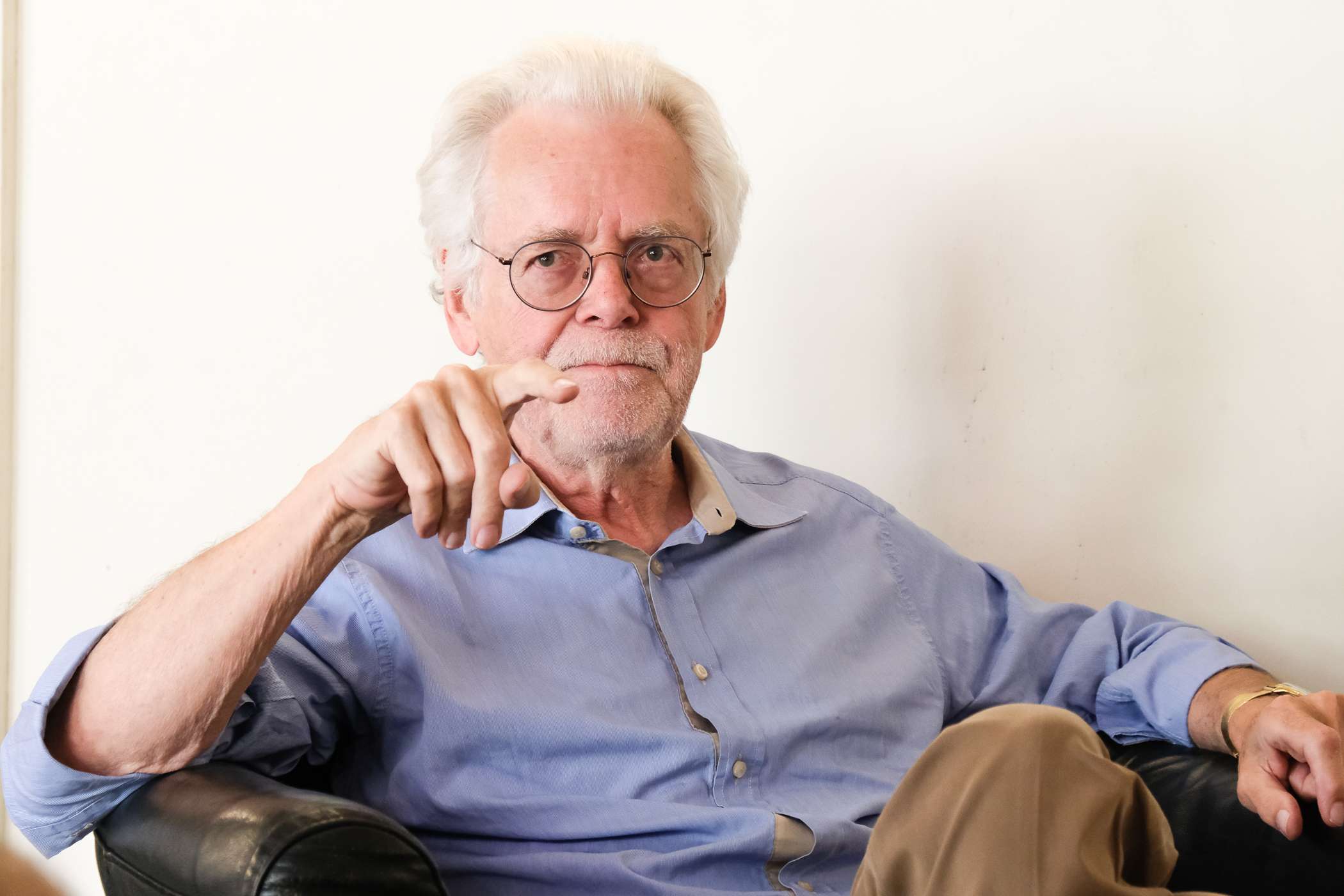
Author: Per Nyholm
Danish journalist since 1960, based in Austria, columnist and foreign correspondent at the liberal Danish daily newspaper Jyllands-Posten. This text was translated and adapted for The Ukrainian Review by Stanislav Kinka.