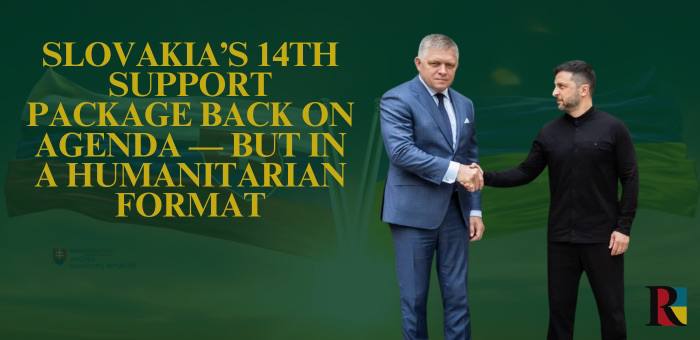


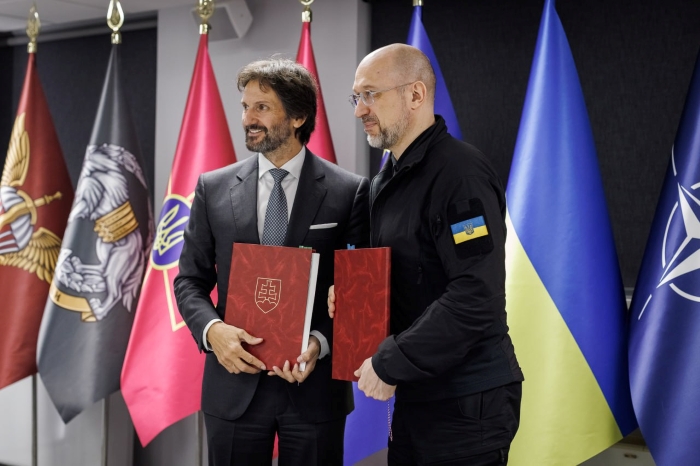
During his opening speech at the Third International Defence Industries Forum in Kyiv, Slovak Minister of Defence Robert Kaliňák announced that Slovakia is preparing a new support package for Ukraine — its 14th since the start of the full-scale invasion. This time, however, the package will focus on humanitarian aid, including engineering and mine action assistance.
The previous, 13th package, was delivered in 2023 under the former Slovak administration. Meanwhile, Ukrainian Prime Minister Denys Shmyhal noted that Slovakia is already working on a 15th support package. According to Kaliňák, it may include components for energy infrastructure and additional demining equipment.
Though limited in scope, this signals a modest yet noteworthy improvement in Ukrainian–Slovak relations.
Slovakia’s Military Donations
Since the beginning of Russia’s full-scale invasion, Slovakia has been one of the most active European partners providing military assistance to Ukraine. The country has supplied weapons, equipment, ammunition, air defence systems, and more — some from army warehouses, others through volunteer initiatives and government decisions.
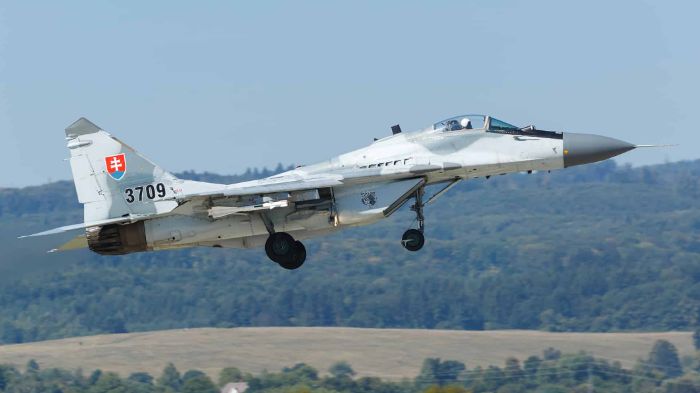
Slovakia was one of the first countries to transfer the S-300 air defence system to Ukraine, setting a precedent for others. It also donated dozens of MiG-29 fighter jets, artillery systems, vehicles, BMP-1s, large quantities of ammunition, and other military equipment. In total, the country donated nearly €700 million worth of military assets.
The situation changed when Robert Fico came to power in 2023. The new Slovak government refused to deliver the 14th military aid package — worth €40.3 million — which had been approved by the previous Ministry of Defence. The rhetoric shifted to prioritizing “Slovakia’s own needs” and emphasizing cooperation with Ukraine only on a paid basis.
Commercial Supplies
Despite increasingly pro-Russian rhetoric and domestic propaganda hostile to Ukraine, commercial cooperation between Slovak, Ukrainian, and European partners continued and was gaining momentum.
A contract for 16 Zuzana-2 self-propelled howitzers, manufactured by KONŠTRUKTA-Defence (Slovakia) and co-financed by Denmark, Germany, and Norway, was signed for approximately €92 million. The first batch of two units was delivered in 2023. During the 2025 forum, Deputy Prime Minister and Defence Minister Robert Kaliňák noted that he was happy to see Danish partners, as the howitzer project had just been completed.
In addition, Slovakia and Ukraine have agreed to localize the production of ammunition and demining vehicles (Božena), involving both countries in joint manufacturing efforts.
Now Robert Kaliňá emphasiseded:
We have clearly stated that we will no longer give weapons and similar things to Ukraine, but we will continue to provide only non-lethal, i.e. humanitarian assistance to individual states, and we are sticking to that.
Conclusion
Following the meeting between Robert Fico and Volodymyr Zelenskyy in Uzhhorod in September, tensions between the two countries eased slightly. However, this does not signal a complete normalization of relations — Fico continues to claim that Russia’s defeat is not Slovakia’s goal and insists he does not want Slovakia involved in the war.
Still, the reality is that Slovakia’s defence industry benefits economically from producing weapons for Ukraine. The decision to resume limited or volunteer-based assistance marks a significant diplomatic step, which may further deepen economic cooperation.
For Slovakia — a country bordering Ukraine and integrated into the European space, maintaining constructive relations with Kyiv is far more beneficial than courting an aggressor with a collapsing economy. Moreover, Slovakia considers itself as one of the closest to the U.S. European country, so shifts in Trump’s administration position lead to reconsidering the questions in Slovakia as well.