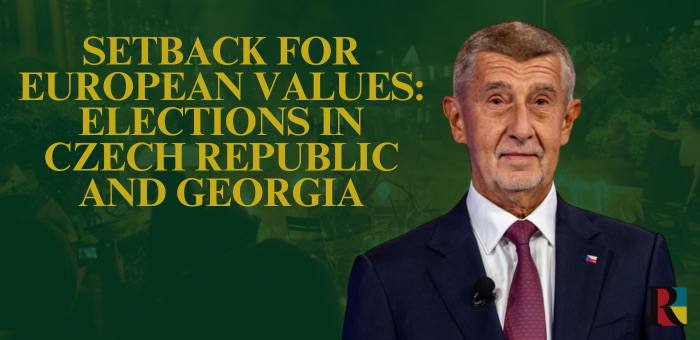


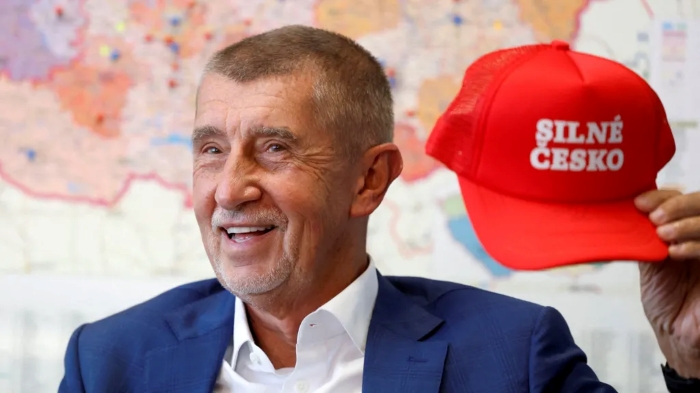
The recent parliamentary elections in the Czech Republic (3–4 October 2025) ended with the victory of former Prime Minister Andrej Babiš’s ANO party, which won about 34.7% of the vote. The opposition coalition Spolu and other parties that previously formed the government lagged far behind.
The ruling Georgian Dream party, known for its pro-Russian views, also won the local elections in Georgia. Representatives of the opposition protested. How will this impact the unity of the EU, and how are Georgian citizens trying to break Russian chains?
Czech Republic
The rhetoric of Andrej Babiš, a billionaire and populist, toward Ukraine is rather sceptical. After being elected, he said that assistance to Ukraine would continue through the EU, but hinted that other initiatives would be shut down. The new Czech political vector can be seen in the fact that the ANO party is an ally of Hungary’s Viktor Orbán in the Patriots for Europe group in the European Parliament, known for its Euroscepticism and pro-Russian stance. Babiš also claimed that the shells initiative, launched by the Czech Republic, is corrupted and too expensive. In the spring, Ukrainian President Volodymyr Zelenskyy said that by the end of this year, Kyiv was supposed to receive 1.8 million pieces of artillery ammunition as part of the Czech initiative.
On the eve of the election, Czech President Petr Pavel warned that he could not guarantee the new government would maintain the same level of support for Ukraine as the previous one. Foreign Minister Jan Lipavský told DW that, for the first time, forces openly cooperating with Putin’s Russia could come to power.
The positive aspect is that the party did not win by a vast majority, which complicates the formation of Eurosceptic coalitions.
Georgia
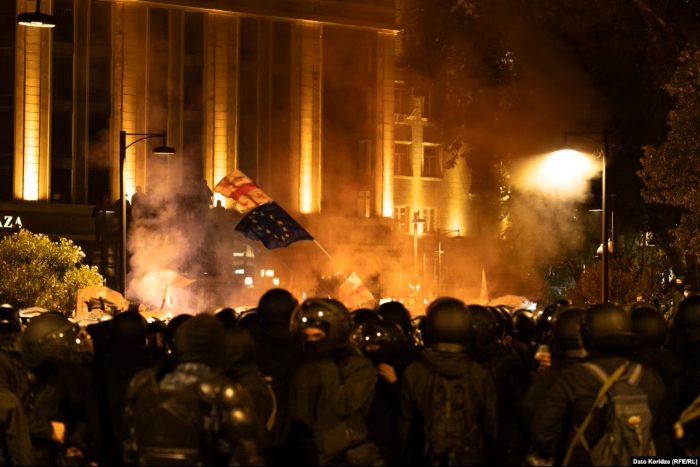
The country, partly occupied by Russia, is again trying to resist authoritarianism. The ruling Georgian Dream party has been widely criticized for decreasing transparency. According to the Georgian CEC, Georgian Dream candidates won in all cities and municipalities. Protesters tried to occupy the presidential palace, some of them holding Ukrainian flags alongside Georgian and EU flags.
The 2025 local elections were partially boycotted by the opposition, protesting irregularities and what they see as fraud. The ruling party in Georgia has repeatedly used the image of the war in Ukraine in its campaign materials to emphasize its ability to ensure peace and avoid the impact of conflict.
During his speech at the UN General Assembly, Zelenskyy mentioned that Georgia is dependent on Russia. In response, the head of the Georgian Dream faction, Irakli Kirtshalia, called Zelenskyy a “puppet”.
The number of observers has decreased. Notably, that among those present were representatives from 24 countries, including Hungary and Belarus.
Conclusion
Ukraine has potentially lost significant part of support from one of its prominent partners — Czech aid to Ukraine has reached almost CZK 7 billion over the entire period of the full-scale Russian invasion. Sceptical Slovakia and Hungary have gained a new ally in their anti-European political agenda. Yet, there is still hope that pro-European and pro-Ukrainian parties remain in power, even if no longer in the majority as well as Andrej Babiš does not claim to halt all assistance so far, calling to refer this issue to NATO and the European Union, also repeating the U.S. agenda this way.
As for Georgia, another wave of protests only emphasizes the illegitimacy of the current government. However, the failure of protests after the parliamentary elections does not give much hope for change, as the authoritarian ruling party was better prepared for new elections and brutally suppressed demonstrations. Yet, concerned Georgians keep trying despite dangers.