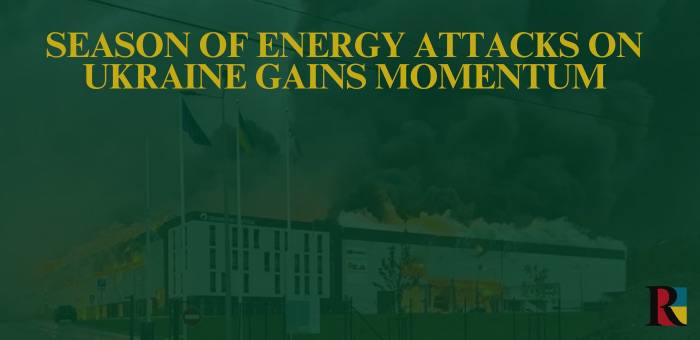


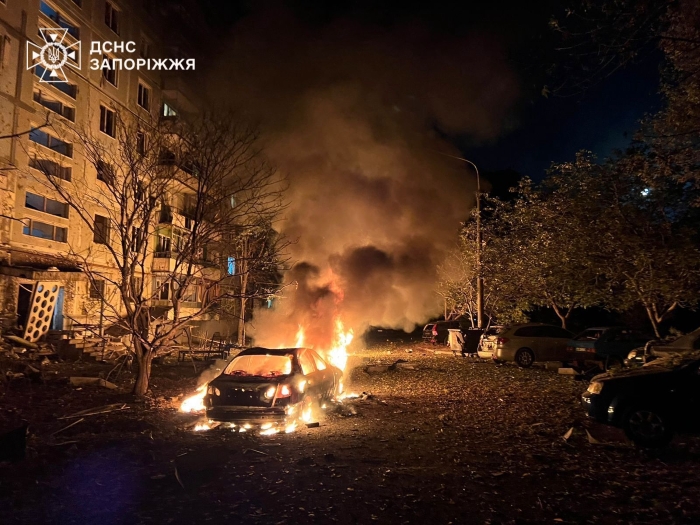
On the night of October 5 Russia launched another large-scale combined attack on Ukraine’s energy infrastructure and civilian storage facilities. Ukrainian authorities report more than 50 missiles and roughly 500 attack drones used in the strikes. Parts of Lviv were left without electricity and the city is shrouded in smoke. At least two people were killed in Lviv and four more across Lviv region. In Chernihiv, the premises of an enterprise were attacked, triggering a fire and damaging a power facility. In Zaporizhzhia, the enemy launched at least ten strikes, disrupting power and water supplies in several areas. One person was killed and more than 73 thousand subscribers were left without electricity. A civilian facility was hit in Vinnytsia region and a series of explosions were heard in Ivano-Frankivsk.
Blackouts return
The onset of colder weather intensifies attacks on energy infrastructure.
The strategy appears calibrated to hit both electricity generation and gas production: earlier in the eve of the heating season, a massive assault struck several major gas production facilities, increasing the risk that a loss of electricity cannot simply be compensated by gas or vice versa.
A new element is the deliberate targeting of railway logistics. Russian strikes on Ukrzaliznytsia energy facilities and direct attacks on trains and stations are intended to slow and terrorize passenger and break logistics.
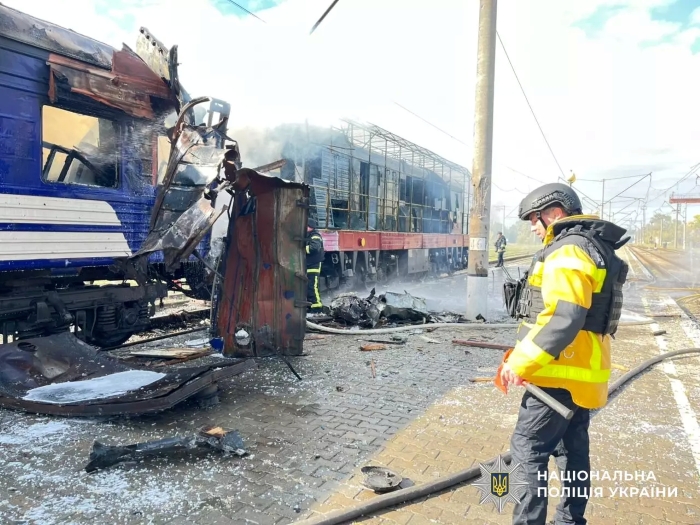
On October 4 in Sumy region, at Shostka (a frontline town) station, a passenger train on the Shostka–Kyiv route was hit by a drone. Russians struck a carriage nearby again as evacuations were already underway. The episode left at least one person dead and dozens wounded, including children. By making trains as a core public transport and supply way of transportation dangerous to use, the tactic seeks to paralyse supply chains, delay deliveries, and undermine civilian confidence.
Previous Seasons and Consequences
When this form of terror began in 2022, damage to the energy sector alone was estimated at roughly USD 6.8 billion by the end of that year. By 2024 Kyiv School of Economics (KSE) estimated cumulative devastation to Ukraine’s energy sector at about USD 56.2 billion.
International partners helped stabilise the situation after earlier waves of attacks. The Energy Support Fund of Ukraine was created in April 2022 and collected contributions reported at around $1.2 billion. Since the start of the full-scale war, the EBRD has already provided around €2 billion for energy security. This list is not exhaustive.
In February 2024, the USAID Administrator reaffirmed the Agency’s commitment to supporting Ukraine in the face of Russian attacks and the allocation of $422 million was announced, In January 2025, the US Department of State decided to terminate the USAID assistance programme to restore Ukraine’s power grid.
Importantly, synchronization with European grids allowed electricity exchanges that mitigated the worst shortages.
After the attack on October 5, 2025, President Volodymyr Zelenskyy wrote on X:
Today, the Russians once again targeted our infrastructure – everything that ensures normal life for our people. We need more protection and faster implementation of all defense agreements, especially on air defense, to deprive this aerial terror of any meaning. A unilateral ceasefire in the skies is possible – and it is precisely that which could open the way to real diplomacy. America and Europe must act to make Putin stop.
Conclusion
Today’s attacks are not isolated incidents but part of a systemic strategy: to disrupt energy systems, paralyse logistics, sow fear among civilians and intensify humanitarian hardship. The immediate priorities are clear — strengthen air defence. Equally important is a strategic response that increases the cost to the aggressor: sustained diplomatic pressure, sanctions, and attacks on the enemy’s facilities as the primer sources for war. The stronger and faster the combined technical and political response, the better Ukraine will reduce the frequency and impact of these attacks.
Daria Maslienkova