

According to Reuters and The Wall Street Journal, the United States could significantly expand intelligence sharing with Ukraine — in particular, by providing data to guide long-range missile strikes on Russia’s energy infrastructure, including oil refineries, pipelines, and power plants. After a shift in Washington’s rhetoric, this appears to be the first decision based on a new approach to regulating the Russian-Ukrainian war. However, official U.S. sources have not yet confirmed the implementation of this decision.
Fuelling the war
The U.S. strategy aims to minimize Russia’s revenues that allow it to sustain the war, while also pursuing its own energy interests, such as expanding American oil exports. Nevertheless, it could provide significant support to Ukraine. Since the start of the full-scale invasion, Russia has earned enormous sums from energy exports. The Centre for Research on Energy and Clean Air estimated that by summer 2025, Moscow had received $939 billion from oil and gas sales, and the figure continues to grow. Donald Trump recently emphasized that Russia’s revenues significantly outweigh Western military assistance to Ukraine, and promised to raise the issue with Hungarian Prime Minister Viktor Orbán, whose country continues buying Russian energy.
Changing the situation
Russia was the first to attack energy infrastructure back in 2022, violating later agreements not to target such facilities. On 23–25 March 2025, Ukraine, Russia, and the U.S. had briefly reached a ceasefire arrangement on the Black Sea and on energy infrastructure. The White House then issued two separate statements: one concerning Ukraine, the other concerning Russia.
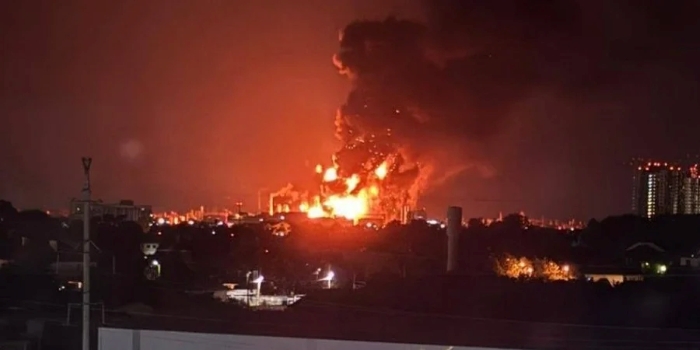
Yet, after Russia has violated them right after they were signed, strikes have since resumed. Ukraine has been targeting oil refineries, while Russia has struck Ukrainian Railways’ energy facilities and then cities’ grids. The latest attacks left Slavutych (Kyiv region) without centralized power, caused a temporary blackout at the Chernobyl nuclear plant, and forced rolling outages in Chernihiv and the wider region.
Ukraine has begun to respond in kind: on 28 September, drones hit the Russian city of Belgorod, where residents reported losing electricity and water supplies. If Washington’s new intelligence initiative is launched, it could mark a strategic turning point, enabling Ukraine to plan attacks more effectively. Until now, U.S. support has been limited to satellite imagery, surveillance data, and general military information, mostly for defence or localized strikes. Expanded intelligence could allow Ukraine to target critical facilities deeper inside Russia, accelerating identification processes and complicating Russian logistics.

Conclusion
The reported intelligence-sharing plans are promising, but they will only be truly effective if paired with concrete military support. Ukraine needs not only data, but also the weapons to act on it. No final decision has yet been made on the supply of Tomahawk missiles. The Kremlin’s reaction remains dual. On the one hand, Moscow claims that the U.S. has already been providing Ukraine with such intelligence. On the other, it issues empty threats of escalation that never materialize. With winter approaching, Russia’s energy attacks and the risk of nationwide blackouts will only intensify, so Ukraine, in turn, should have both the capability and the right to mirror such actions. This is also a reputation issue: Russia has again broken a deal, set with the U.S. and should be punished accordingly.
Daria Maslienkova