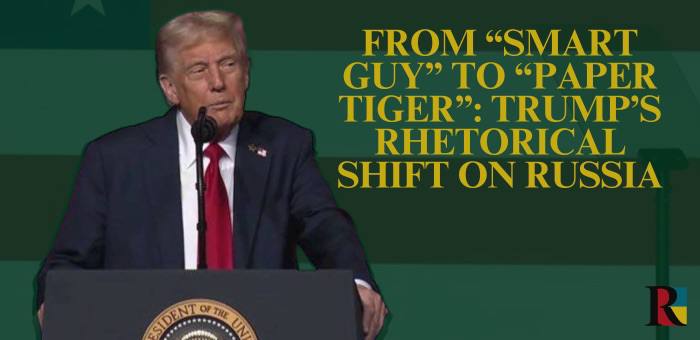


After a relatively friendly meeting of Trump and Putin in Alaska, for the first time the U.S. President shifted his rhetoric during the UN Summit, calling Russia “a paper tiger.” He has since stuck to this metaphor, repeating it during a speech at the Marine Corps base in Virginia. Trump recalled as he asked Putin personally whether he is “a paper tiger”. Moreover, he openly referred to Dmitry Medvedev as “stupid”. This style stands in stark contrast with formal diplomacy, which usually seeks carefully calibrated language.
Donald Trump in Quantico
In his Virginia speech, Trump also emphasized that in late summer he had moved “a submarine or two” closer to the Russian coast as a backup measure. Earlier, however, his tone was quite different. Trump had once praised Putin as “a smart guy,” for example, in a CNN interview during the election campaign.
Strongly worded remarks directed at dictators are not new for Donald Trump: back in 2017, he mocked North Korean leader Kim Jong-un as “little rocket man”.
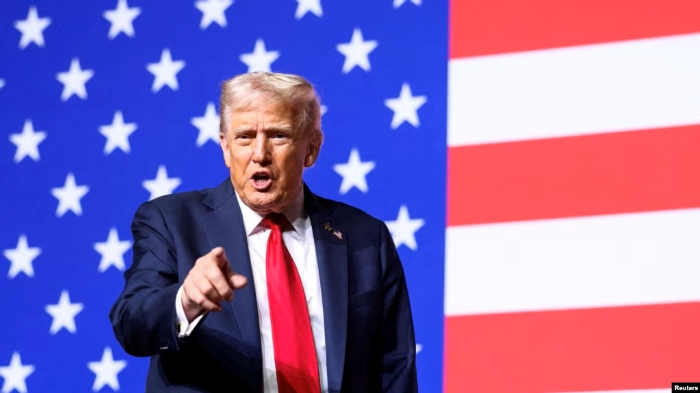
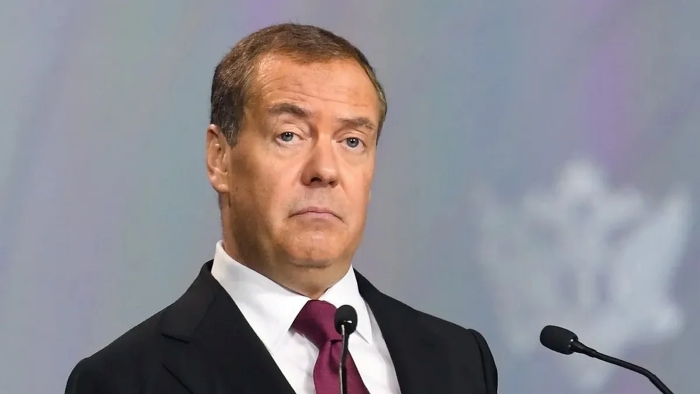
Medvedev`s audacity
Trump’s accusations are not entirely new, yet they drew a public response only recently. Dmitry Medvedev, Deputy Chair of Russia’s Security Council, has long provoked U.S. authorities with inflammatory statements. For instance, after the U.S. struck Iranian nuclear sites, Medvedev wrote on X that Trump could “forget about the Nobel Peace Prize”. Medvedev knows how sensitive the Nobel Prize issue is for Trump. More recently, he ridiculed claims about submarines allegedly deployed near Russia, posting:
New episode of the thriller series ‘Nuclear Subs for Posts on X.’ Trump once again brought up the subs he allegedly sent to the Russian shores, insisting they are very well hidden. As the saying goes, it’s hard to find a black cat in a dark room — especially if it’s not there.
Former Russia’s President scoffed openly after Alaska, hinting that the U.S. could have been deceived so easily with the continuation of war (“special military operation” in his vocabulary).
Medvedev has a long record of using public statements to demonstrate power and intimidation — from direct warnings to apocalyptic predictions of global war, echoing Soviet-style rhetoric. His current mocking tone toward Trump exemplifies a hybrid media tactic: undermining an opponent’s credibility through humour and irony.
Conclusion
Trump now appears convinced that Russia’s economy is weaker, and that Ukraine is stronger than was previously considered. While U.S. assistance to Kyiv has not yet shifted dramatically, this rhetoric already had tangible consequences: Washington has allowed Ukraine to strike deeper inside Russia. Still, according to The Guardian, U.S. special envoy Keith Kellogg stressed there is no final decision on the possible provision of Tomahawk cruise missiles to Ukraine. As before, Washington continues to expect Europe to take on more responsibility. Yet, there is now a room for hope that the U.S. will not pressure Ukraine into capitulation in a deal favouring the aggressor.
Daria Maslienkova