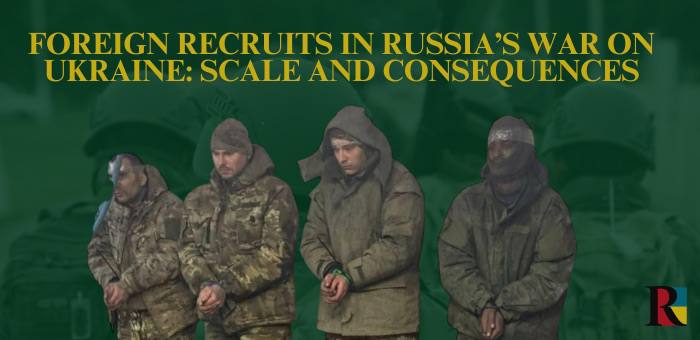


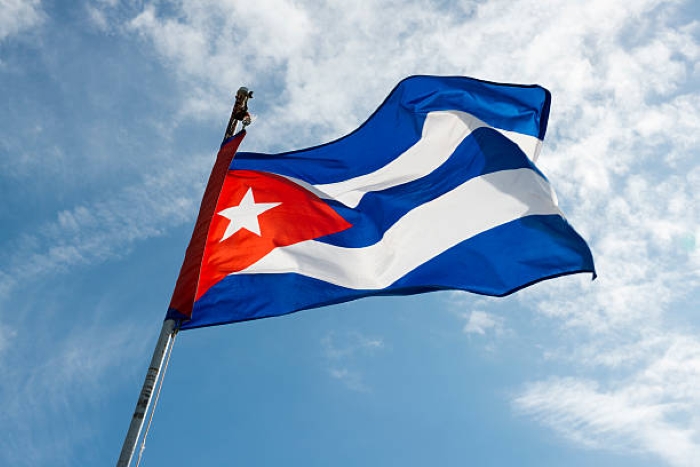
Up to 5,000 Cubans are currently fighting alongside Russian forces against Ukraine, as Reuters reported, citing an internal U.S. State Department telegram. As a result, Washington is lobbying against a UN resolution which has no binding force that is calling for the lifting of the embargo against Cuba.
While Ukraine welcomes foreign volunteers who join the Armed Forces of their own free will, authoritarian regimes are forcibly or aggressively recruiting citizens to fight for Russia — with no fear for escalation. Who is fighting against Ukraine besides Russians, and are governments facing any punishment?
The Axis of Evil
In September 2025, Ukrainian intelligence revealed that about 20,000 Cubans had already been recruited to Russia’s war effort since 2022, with at least 39 confirmed killed. Havana claimed it had uncovered a human-trafficking network responsible for sending Cubans to the front and promised to “neutralize and dismantle” it. But U.S. officials dismissed this explanation, accusing the Cuban government of failing to protect its citizens.
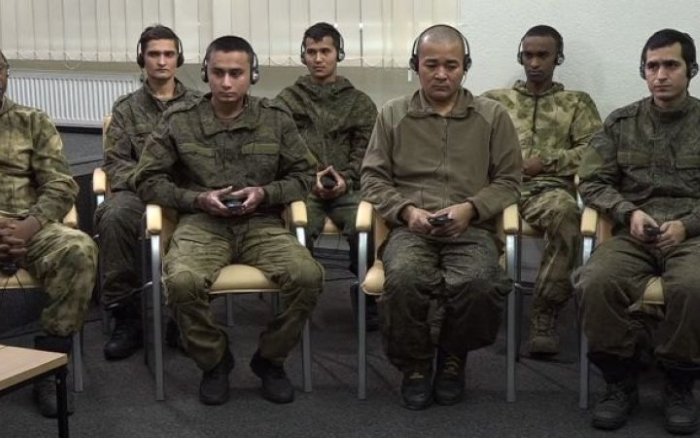
In response, U.S. diplomats urged countries to oppose the symbolic UN General Assembly resolution demanding the end of the embargo, arguing that Cuba’s complicity in the war undermines its case. According to Ukrainian intelligence, the number of foreign mercenaries from Cuba is the second largest after North Korea. President Volodymyr Zelenskyy also named China, Pakistan, Tajikistan, Uzbekistan, and several African states as additional sources of mercenaries fighting alongside Russia. Some governments, such as Pakistan, categorically deny the accusations, while China continues to stress its “neutral” stance.
Problems with Punishment
North Korea appears to only benefit from the war. Unlike Cuba, it makes little attempt to hide its support for Moscow. According to the Korea Institute for Defence Analyses, Pyongyang earned more than $20 billion in one year of participation in the Russian-Ukrainian war. Moreover, North Korean soldiers gained valuable combat experience. South Korea, despite these developments, has so far been hesitant to supply Ukraine with weapons.
Belarus, which has recently received sanctions relieve, is also in this scheme. Investigations by Slidstvo.Info, the Belarusian Investigative Center, and KibOrg revealed a dramatic increase in contracts signed by Belarusians: 596 recruits in the first half of 2025 alone, compared to only 6 in 2022 and 518 in 2024. Ukrainian intelligence confirms the earlier figures but reports 157 for 2025.
Nevertheless, Minsk continues to position itself as a mediator between Ukraine and Russia, all while manipulating the fate of political prisoners.
Conclusion
For Cuba, revelations of mass recruitment of its citizens destroyed hopes of improving its economy through rapprochement with the West. Across all these cases, one common denominator stands out: poverty. Financial desperation drives them into Russian contracts. For Russians themselves, ideology mixes with economic need in what becomes a vicious circle.
And here lies the paradox: authoritarian regimes — already sanctioned and diplomatically isolated — face few real consequences for sending their citizens to commit atrocities in Ukraine. Instead, they profit politically, militarily, and economically, while showing little regard for the human cost paid by their people.
Daria Maslienkova