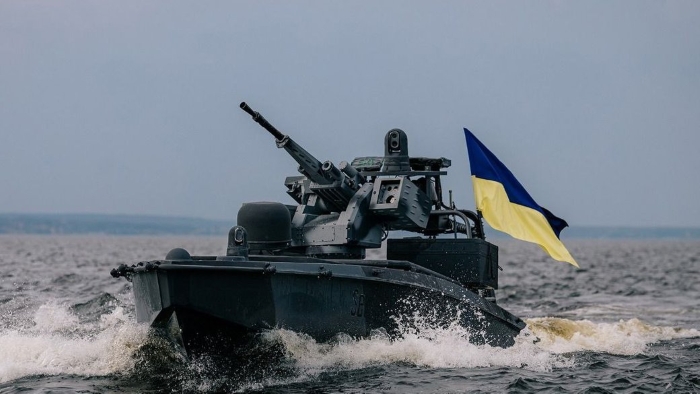


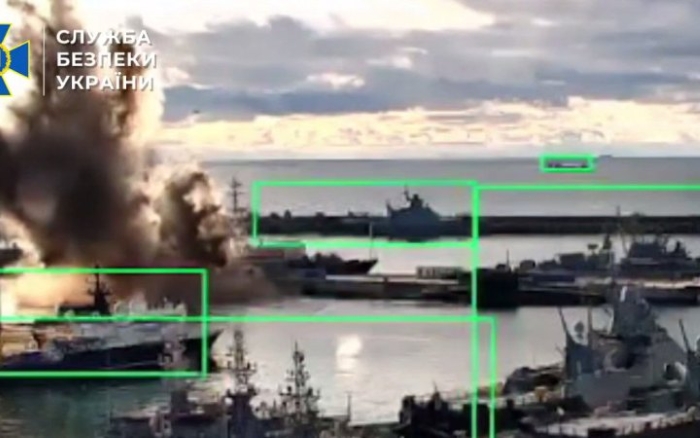
The Security Service of Ukraine reported that it had carried out a unique special operation targeting the port of Novorossiysk. For the first time in history, Sub Sea Baby underwater drones struck and detonated near a Russian Project 636.3 Varshavianka-class submarine. According to the Ukrainian side, the damage was severe enough to disable the vessel.
The Security Service reported that the submarine was equipped with four launchers for Kalibr cruise missiles. Russia regularly uses them to strike targets across Ukraine. The estimated cost of such a submarine is approximately USD 400 million. Taking into account sanctions, the price could reach USD $500 million. By comparison, as of 2024, the Head of the Security Service of Ukraine, Vasyl Malyuk, estimated the cost of a single Sea Baby maritime drone at around USD 300,000 — roughly ten times less.
Russia is now attempting to downplay the incident and present the damage as insignificant. However, it has so far failed to provide convincing evidence.
About Sea Baby
Sea Baby drones are a product of the full-scale Russian invasion. They were developed by the Security Service of Ukraine together with Ukrainian engineers starting in 2022–2023 and designed as an alternative to large but easily detectable foreign unmanned systems. The symbolism is notable. The surname “Malyuk” translates as “baby”. Over time, Sea Baby platforms have evolved into versatile combat tools capable of destroying naval targets, mining maritime areas, and conducting special operations in the Black Sea.
Upgraded Sea Baby drones can travel distances exceeding 1,500 kilometers, carry payloads of up to two tonnes, and are equipped with reinforced engines and modern navigation systems. Novorossiysk, for example, is located east of occupied Crimea.
In previous years, Sea Baby drones had already demonstrated their military effectiveness. According to the Security Service of Ukraine, they destroyed more than a dozen Russian military vessels and struck strategic targets, including the Crimean Bridge.
Intensification of Ukrainian Attacks
In the first half of December 2025, Ukrainian forces carried out a series of drone strikes against Russian oil platforms in the Caspian Sea. This caused significant disruption to the production and operation of facilities linked to Lukoil.
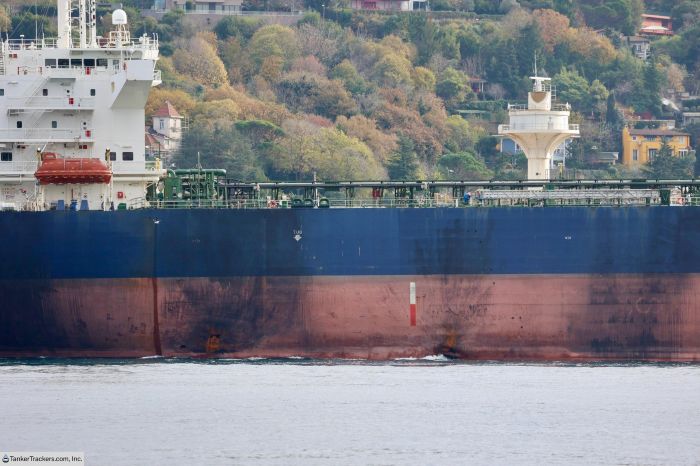
This month, Ukraine also carried out its first attacks against Russia’s so-called shadow fleet. Notably, even under conditions of existential threat, Ukrainian forces attempted to minimize environmental risks. They hit particular areas of tankers, reducing the likelihood of oil spills, as noted military outlet Militarnyi.
Conclusion
Amid ongoing negotiations, Ukraine is demonstrating its “cards” across multiple dimensions, from the frontline to deep strikes inside Russian territory. While Russia continues to target civilian energy infrastructure in southern Ukraine, the operation in Novorossiysk serves both as retaliation for civilian terror and as a preventative measure aimed at reducing the intensity of future attacks.
The strike on Novorossiysk sets a new precedent in the war. This illustrates how technology, innovation, and strategic planning can compensate for the lack of costly conventional resources.