

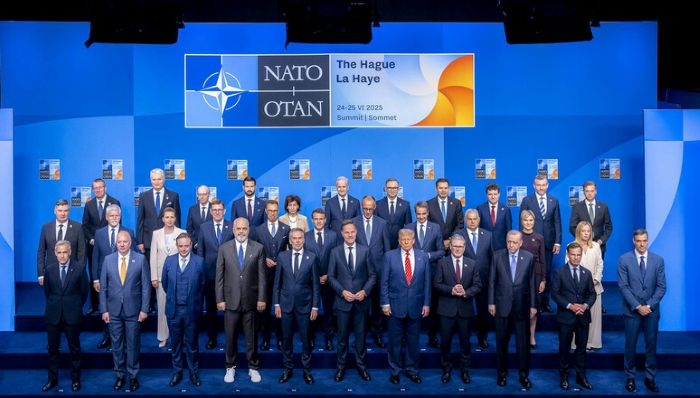
So far, the U.S. intends to continue imposing sanctions on Russia, which brings cautious optimism, though the situation may always change. At the same time, Washington’s foreign policy toward its allies — from whom it is increasingly distancing itself — creates a favorable environment for Russia to destabilize the situation and undermine NATO’s unity. On one hand, the requirement for European countries to reach 5% of GDP in military spending stimulates them to be genuinely prepared for Russia’s probable future direct aggression. On the other, such international unpredictability remains a concern. Even a possible freeze of the frontline would only lead to rearmament of invaders unless Russia is indeed deprived of its economic sources to continue the war, not only until they join the negotiation table.
Pressure on Russia
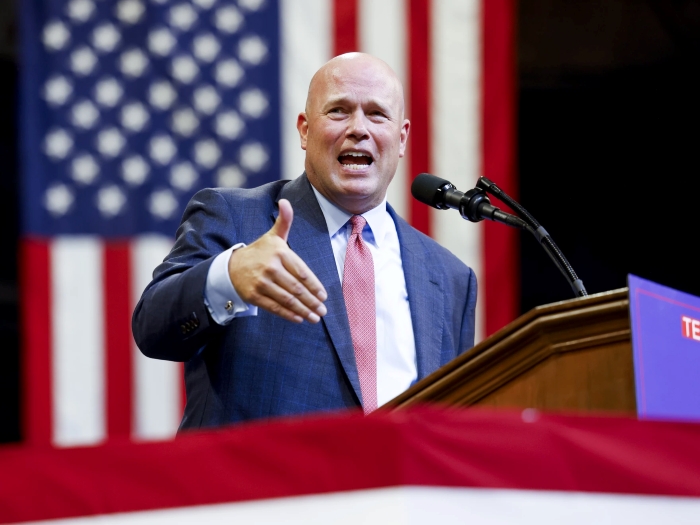
U.S. President Donald Trump is expected to follow through on enforcing harsh new oil sanctions against Russia to pressure Vladimir Putin into negotiations to end the war in Ukraine, U.S. Ambassador to NATO Matthew G. Whitaker told Bloomberg.
According to NBC News, citing a senior U.S. official and a senior congressional source, American intelligence has detected no signs of Russia being willing to stop the war, therefore new sanctions are necessary.
Within days of the latest sanctions announcement, Lukoil shares lost 7.2% of their value, while Rosneft shares fell by 3%. Yet these losses are insufficient to halt the Russian war machine. Despite mounting economic problems, Moscow continues to choose war.
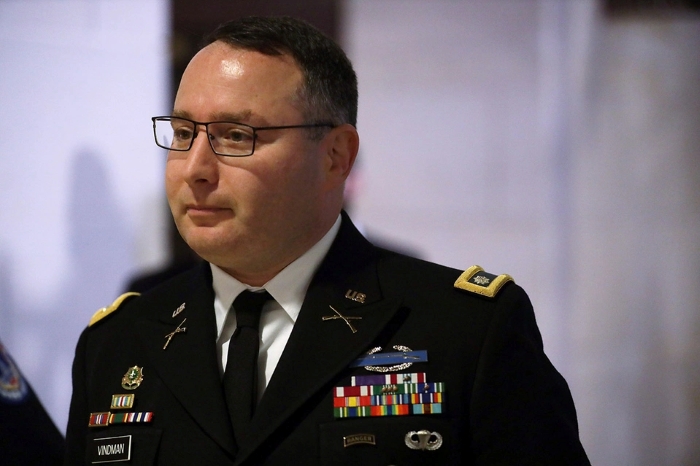
Alexander S. Vindman — a former member of the U.S. National Security Council and White House staff, Senior Advisor at VoteVets, Doctor of International Affairs, and Senior Fellow at the Foreign Policy Institute of the Johns Hopkins School of Advanced International Studies — believes that a ceasefire under current U.S. policies is improbable:
It is highly unlikely that the Trump administration will achieve a ceasefire in Ukraine within the next year. Trump’s behavior has incentivized the opposite outcome, emboldening Putin to continue the war despite severe economic strain, mounting personnel losses, and limited military success. Trump has generated chaos in the international system—precisely the environment Putin seeks to exploit to fracture NATO and undermine multilateral support for Ukraine. The administration’s erratic swings between pro-Russia and pro-Ukraine rhetoric have made U.S. policy incoherent. Putin will likely attempt to manipulate Trump to secure U.S. concessions or, at minimum, to delay sanctions and military aid to Kyiv, said Vindman in his commentary for The Ukrainian Review.
Economic pressure alone is insufficient. Sanctions are effective only when combined with military pressure — which means Ukraine urgently needs more advanced weapons, especially long-range missiles.
Vindman adds:
Compounding this problem is the lack of diplomatic expertise within the Trump administration. Figures such as Whitaker, involved in ad-hoc negotiations, lack the experience and authority to articulate acceptable conditions for conflict resolution or to push back against Moscow’s maximalist demands. Moreover, Trump’s reluctance to provide Ukraine with the military equipment necessary to shape battlefield conditions undermines any credible path to negotiations. The administration lacks both a strategic vision for a durable peace and the resolve to confront Russian aggression. So-called ‘diplomatic breakthroughs’ reported over the past year have largely amounted to pressure on President Zelenskyy to accept Russia’s terms in exchange for an immediate ceasefire. Despite asymmetries in manpower and resources, Ukraine—backed by sustained European financial and military support—has greater long-term staying power than Russia. By late 2026, Moscow will likely have to consider genuine off-ramps to the war.
Relationships with Allies
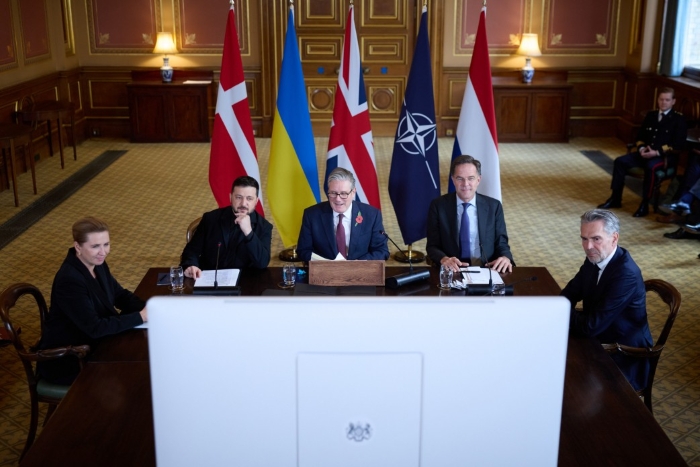
The new U.S. administration has clearly shifted its political vector, restraining cooperation with European partners. Another visible withdrawal is the reduction of USAID’s presence in several regions, creating an opening for China and Russia to expand their influence.
Donald Trump’s policies are already having a major impact on global perceptions of the United States as a guarantor of democracy and security. His administration has embraced isolationism and withdrawal as central tenets of foreign policy, abandoning the promotion of democracy as a guiding principle in decision-making. Trump is not ideologically driven; he is short-term oriented and hyper-focused on immediate transactions, often disregarding the context of long-standing alliances and adversarial relationships. His worldview resembles Vladimir Putin’s in that both see international politics as a jungle where might makes right. Because the Trump administration is unreliable, U.S. allies are establishing alternative, less potent security arrangements that weaken collective deterrence and increase the risks of aggression, accidents, and miscalculation. Although confidence in the United States as a democratic security guarantor may recover in a post-Trump era—as allies and partners seek to excuse the aberration of the Trump years—it will nevertheless take years for Washington to rebuild trust and reassert its normative, stabilizing role in the international system, said Alexander S. Vindman
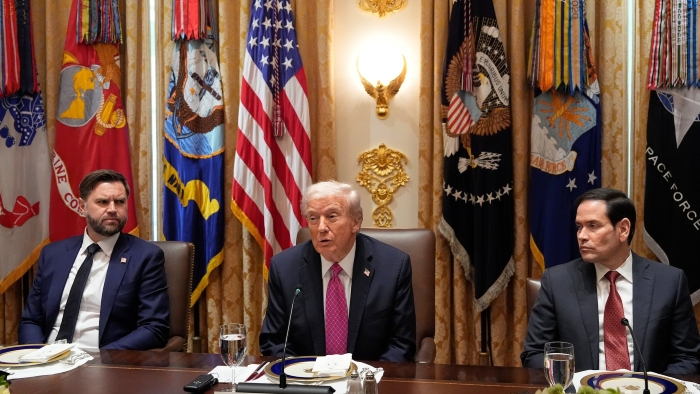
Moreover, Trump has stated that he would like to run for a third term. Since the Constitution does not allow it, he has suggested Marco Rubio or J.D. Vance as potential successors. Europe must therefore accept a new reality — one in which it cannot rely on the U.S. to the same extent as before, and the decisions must be rather strategic.
Despite Russian hybrid attacks, the U.S. has also begun to reduce its military presence in Europe. For instance, according to the official website of the Romanian Ministry of Defence, the U.S. plans to scale down its forces in Romania as part of NATO’s eastern flank reassessment.
Vindman believes that the normalization of U.S. relations with its allies is possible, but it will be time-consuming:
The United States can begin rebuilding relationships with allies in Europe, Latin America, and the Global South by adopting trade and investment policies that redirect American capital toward friendly democracies. This approach—often referred to as ‘friendshoring’—would link economic growth and trade to shared democratic governance while reducing collective dependence on China and other authoritarian states. However, rebuilding trust and institutional capacity will take years. U.S. agencies such as USAID must be reformed and modernized to deliver support efficiently, effectively, and at scale. Another possible strategy is to leverage existing multilateral institutions as channels for assistance and engagement, though this would be challenging given Washington’s historic preference for direct control over such bodies.
Conclusion
The U.S. shift toward pressuring Russia rather than encouraging premature negotiations is strategically justified and reflects the need to confront aggression, not accommodate it. However, Moscow continues to resist sanctions, betting on war. The weakening of transatlantic ties and the reduced American presence in key regions have allowed authoritarian powers, particularly China and Russia, to expand their influence through investment, propaganda, and hybrid operations.
Russian airspace provocations over NATO territory were deliberate tests of the Alliance’s cohesion — and the resulting confusion revealed. Europe is gradually arming and adapting, but without consistent American engagement, its deterrence capacity remains vulnerable.
Rebuilding U.S. credibility as a reliable democratic leader will require strategic consistency and commitments to allies. Only by reestablishing trust and restoring the functionality of institutions, Washington can counterbalance authoritarian expansion and preserve a stable international order. Otherwise, the global system risks sliding toward fragmentation, where opportunism replaces cooperation.