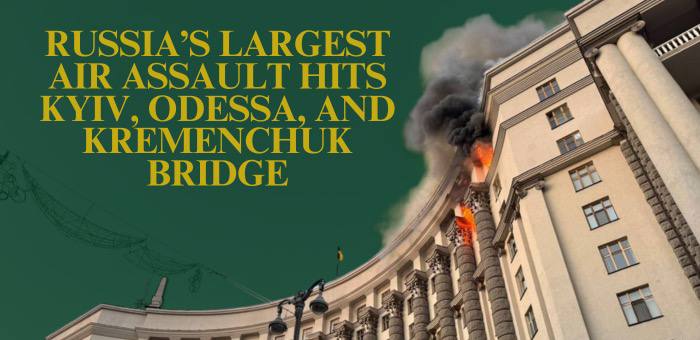


On September 7, 2025, Russia launched its largest air attack of the war, deploying more than 800 drones and over a dozen missiles across Ukraine. The strikes targeted both critical infrastructure and civilian sites — from the Cabinet of Ministers building in Kyiv to residential neighborhoods in Odesa and the strategically vital Kremenchuk bridge. The attacks raise alarm over Ukraine’s military logistics and represent acts of terror against civilians — all on the eve of what appears to be Russia’s preparation for a decisive battle in Donbas.
Kyiv: A Symbolic Strike on the Cabinet of Ministers
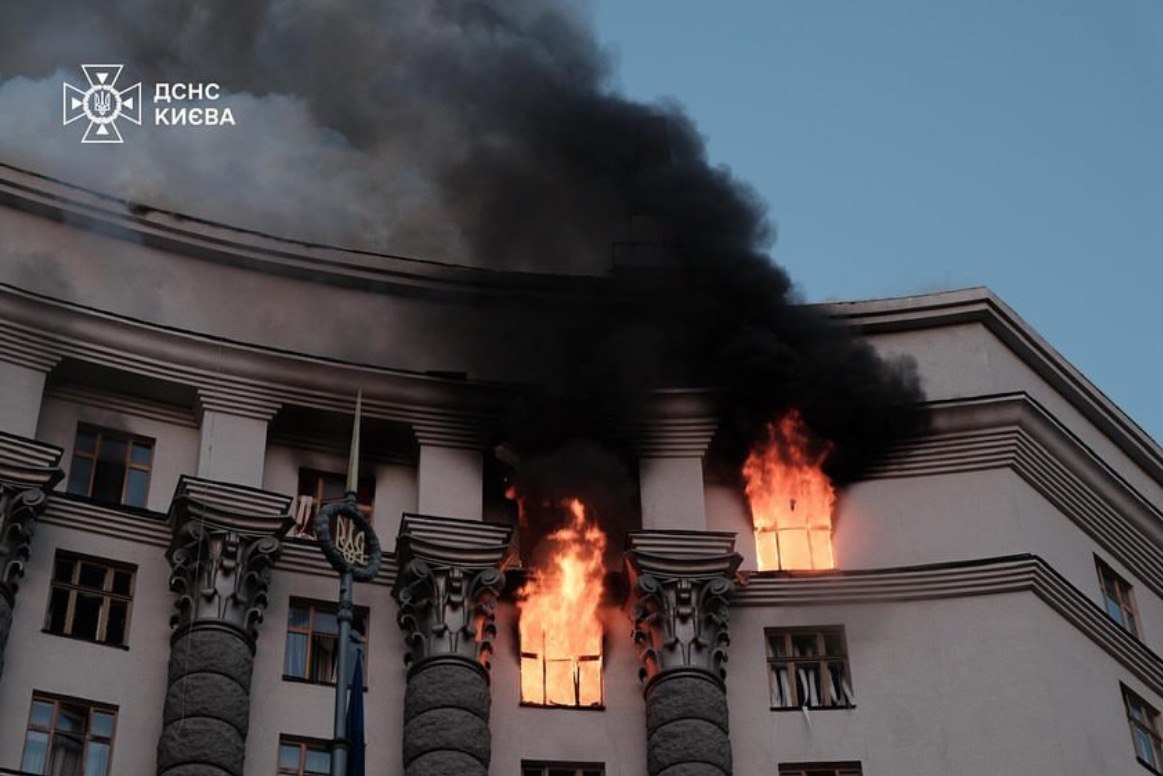
For the first time since the war began, the Cabinet of Ministers building in Kyiv was struck, catching fire after a missile hit. The attack carried a powerful symbolic meaning, striking at the heart of Ukraine’s government. Authorities confirmed that there are civilian casualties as a result of the strike.
Residential areas across Kyiv were also hit — some buildings partially collapsed, others caught fire, spreading panic among the population. Ukrainian officials condemned the attack as “deliberate terror” and again appealed to allies to accelerate deliveries of modern air defense systems.
Odesa: Terror Against Civilians
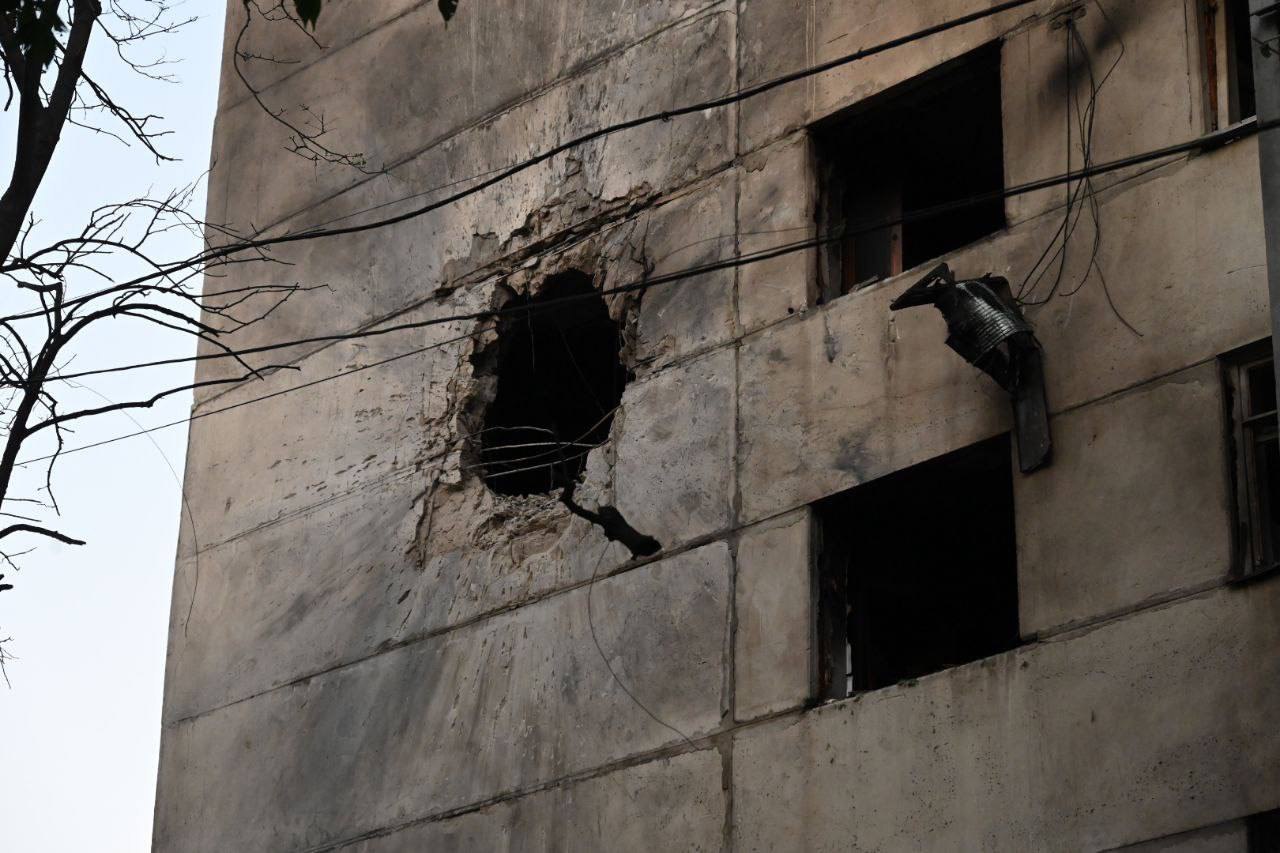
In Odesa, strikes hit not only infrastructure but also apartment buildings and the Palace of Sports. Local authorities reported destruction and casualties among civilians, stressing that Russia is deliberately targeting non-military sites. These attacks once again confirm that Moscow’s strategy is based on intimidation and terror.
Kremenchuk Bridge: A Blow to Ukraine’s Logistics Backbone
In Kremenchuk, dozens of explosions were reported, including a strike on the Dnipro River bridge, a vital supply route for Ukrainian forces. The bridge plays a crucial role in sustaining troops on the Sumy and Kharkiv fronts. The targeting of bridges marks a dangerous shift in Russia’s strategy — aiming to cripple both military logistics and civilian evacuation routes.
Other cities also came under attack: Zaporizhzhia, Kryvyi Rih, Dnipro, as well as areas of Sumy and Chernihiv regions. Although Ukraine’s air defenses intercepted most drones and missiles, significant infrastructure damage was recorded, with more civilian casualties reported.
Strategic Context: Prelude to a Major Donbas Offensive
Analysts stress that today’s massive assault is not random but part of preparations for a full-scale offensive in Donbas. Intelligence assessments suggest Russia has already concentrated around 120,000 troops there, signaling plans for a decisive battle in eastern Ukraine.
The Danger of Strikes on Bridges
Bridges, such as the one in Kremenchuk, are lifelines for supplies, reinforcements, and civilian evacuations. Their destruction could paralyze Ukraine’s operational flexibility and severely complicate frontline logistics. This escalation signals a new phase in Russia’s tactics, aimed directly at disrupting Ukraine’s ability to sustain the war effort.
Ukraine’s Response: Hitting Russia’s Oil Infrastructure
Ukraine, however, is not silent. It has been methodically striking the Druzhba oil pipeline and multiple Russian oil refineries, deepening the crisis inside Russia. These attacks have already triggered fuel shortages in many Russian cities.
Experts war that if such strikes continue for several more weeks, Russia may face the worst fuel crisis in its history as an independent state. Ukraine is thus demonstrating that it can not only defend itself but also strike deep into the aggressor’s economy, undermining Moscow’s capacity to wage war.
Conclusion
Russia’s unprecedented assault of September 7, 2025 — targeting government buildings in Kyiv, residential districts in Odessa, and the strategic Kremenchuk bridge — is both an act of terror against civilians and a calculated attempt to cripple Ukraine’s logistics. Yet Ukraine is responding forcefully: by striking Russia’s oil infrastructure, Kyiv is fueling an internal crisis that threatens to undermine Moscow’s war machine.
As Russia prepares for a decisive battle in Donbas, the international community must act with determination: provide stronger air defenses, tighten sanctions, and support Ukraine in defending not only its sovereignty but also the security of all Europe.
Artem Kasparian