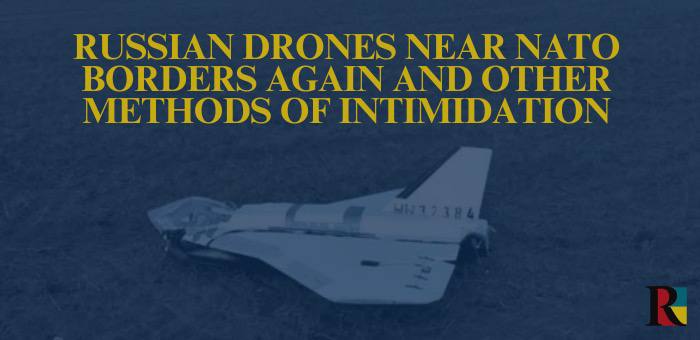


Poland and Romania faced an air threat on September 13. NATO-country citizens heard air raid sirens. Due to aircraft activity used in case of attack, Lublin Airport was closed, as it had been during the September 10 incident. A drone reportedly spent almost an hour in Romanian airspace before returning to Ukraine. This was another deliberate provocation designed to sow panic and challenge NATO principles. At the same time, Reuters reported that although Senator Marco Rubio called the attack three days before the second provocation “unacceptable,” he was still unsure whether it had been deliberate. Russia also achieved the goal of making a NATO country experience a taste of a potential logistic problem.
Demonstration of Power
The Russian military knows exactly where their drones are headed and how long they can operate in the air. Their routes are always calculated. This cannot be a coincidence, a mistake, or the initiative of some lower-level commanders, — wrote Volodymyr Zelenskyy on X.
Romanian Foreign Minister Oana Țoiu announced on X that she would raise the issue of sanctions following the violation of Romania’s airspace: We need to effectively increase the cost of Russia’s blatantly illegal and provocative actions by rapidly adopting the 19th sanction package and the full spectrum of measures under NATO operation “Eastern Sentry”.
I will also raise Russia’s actions at UNGA, urging a strict international adherence to sanctions.
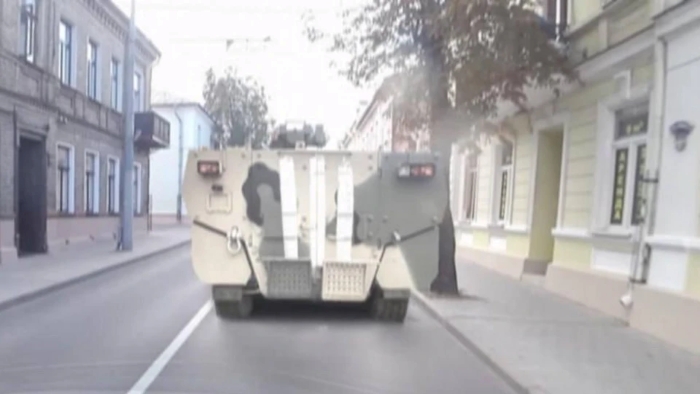
According to a Belarusian opposition Telegram channel, new markings on Russian combat transport vehicles were spotted in Grodno during the “Zapad (West) 2025” military training exercises. Another provocative video from Russian propagandists showed Iskander missile systems on the road in the Kaliningrad region, reportedly deployed toward Poland. These pieces of content still need verification but have clearly appeared in the media space as hints and allusions — just as previous “trainings” near Ukraine’s border ended with a full-scale invasion. Notably that the previous joint Russian–Belarusian operational exercises took place in February 2022 — a parallel Russia and Belarus apparently want Western countries to draw.
InformNapalm analysts have suggested that military personnel with combat experience may take part in West-2025. In the new reality, the Russian and Belarusian economies are much weaker than at the beginning of 2022, but the Russian army is far more experienced — and no longer under any illusion that it would be welcomed without resistance.
The New Reality of Drones
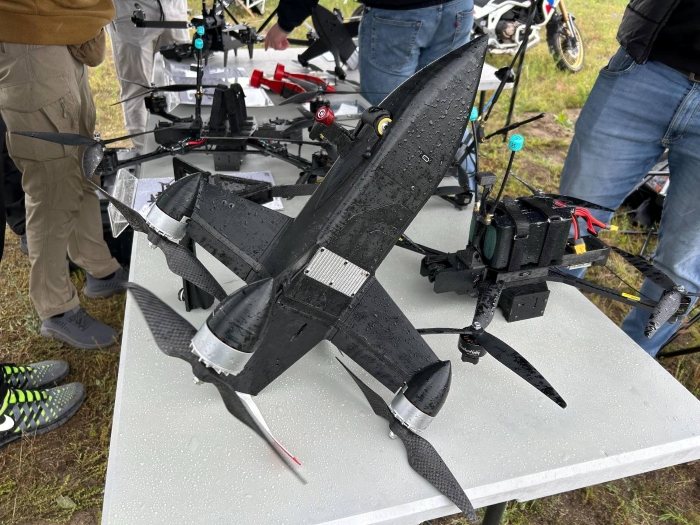
Recently, Ukraine began using interceptor drones to neutralize Shaheds, expanding its range of tools and solutions, among which are also, for example, mobile fire teams. Politico has compared costs: a Patriot missile costs about $4 million; an IRIS-T about $400,000; while new drone-interceptor technology is estimated at just $1,000–5,000 per unit. This raises a discussion about NATO countries’ readiness to shoot down Russian drones cost-effectively, considering the danger of its numbers increment.
At the YES 2025 conference, Keith Kellogg admitted that Ukraine is ahead of its partners in drone technology, referring to the frontline experience, and emphasized that knowledge-sharing should be better developed.
Conclusion
Russia continues to intimidate Western countries, challenging NATO’s famous Article 5 again and again and involving Belarus to sow panic as part of hybrid aggression. The absence of a strong response encourages new experiments with attacks, which can hardly be considered accidental given the context of military exercises and the deployment of equipment near borders. In turn, the reaction of Ukraine’s neighbouring countries highlights the need for closer cooperation with Kyiv to optimize military spending.