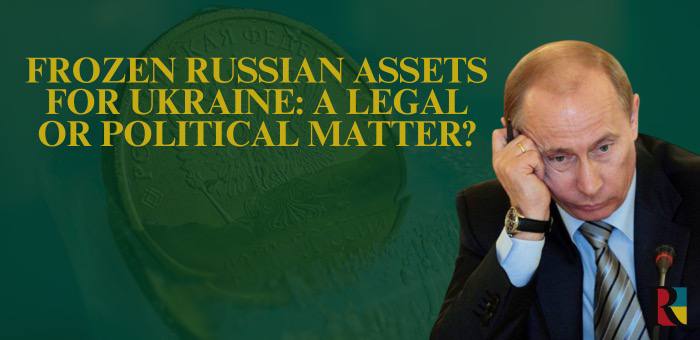


As approximately estimated, the total amount of frozen Russian assets since 2022 is about $500 billion. Of that, around $300 billion in sovereign Russian assets, mainly located in European countries. These figures could be compared to the GDP of Singapore ($501.4 billion) or Finland ($295.5 billion).
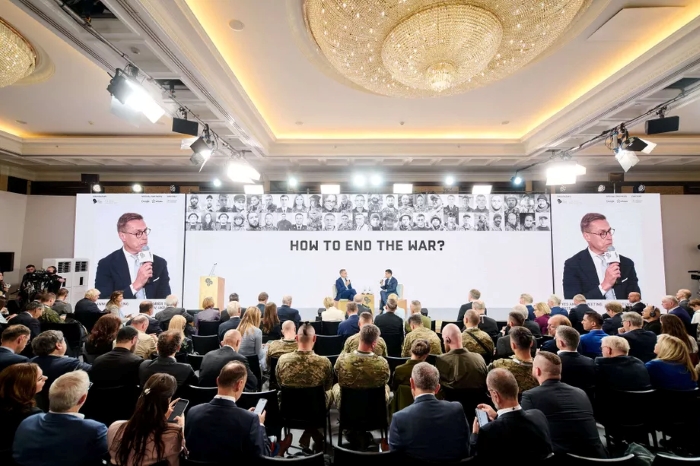
This topic came up an s an emotional discussion during the Yalta European Strategy (YES) conference in Kyiv, where former UK Prime Minister Boris Johnson asked Finnish President Alexander Stubb from the audience why the €300 billion in frozen Russian assets had not yet been used for Ukraine’s benefit. President Stubb replied that the assets should be used to rebuild Ukraine, but that some EU countries — especially Belgium — fear legal consequences. Johnson also raised the question whether Western troops might be deployed to relatively safer parts of Ukraine.
Russian Money for European Cost Savings
As noted, the amount of Russian money held in partner countries is big indeed. By the end of 2024, Ukraine had received €267 billion in aid from all its partners — still less than what Russian assets could provide. Yet by 2024 the estimated losses caused by Russian aggression had already reached €500 billion, and that figure is still growing.
At the fourth Ukraine Recovery Conference in Rome in July 2025, German Chancellor Friedrich Merz stated that until Moscow compensates Ukraine for the €500 billion in losses, it should not regain access to its frozen assets. The precise total remains undisclosed, but available data suggest that Moscow would never willingly pay the full amount in order to have its funds returned to the same extent— especially since Russia shows no interest in ending the war at all. According to Reuters sources, Moscow might hypothetically agree to the use of €300 billion if part of the sum were spent on rebuilding occupied territories, which it has never cared to restore itself.
Ways to Send the Money
Each new legal mechanism is a Pandora’s box for European policymakers: every tool can be used in unpredictable ways, so risks must be carefully considered. Yet, uncertainty also postpones potentially decisive solutions. The EU is now developing a new method of channelling frozen Russian assets to Ukraine. Politico reports that, under one proposal, the assets would be converted into riskier investments such as zero-coupon bonds jointly guaranteed by EU countries. However, this plan has so far met only cautious enthusiasm.
From the U.S. perspective, Treasury Secretary Scott Bessent has said he considers immediate confiscation of frozen Russian assets ineffective, arguing that the issue could instead serve as leverage in negotiations with Putin. But the Russian president neither prioritizes his country’s economic prosperity nor shows any willingness for peace — especially if reparations are on the agenda.
Conclusion
The decision to transfer frozen Russian assets to Ukraine is both a legal and a political issue. Changes to international law may be perceived as a source of instability in Europe. However, investment flows are more likely to be disrupted by Russian military aggression than by unpopular policy decisions. Far-sighted European policymakers therefore recognize the importance of such measures. Leaving hundreds of billions of Russian assets untouched while Ukraine endures war-related losses is perceived by Moscow as another signal for impunity.
Daria Maslienkova