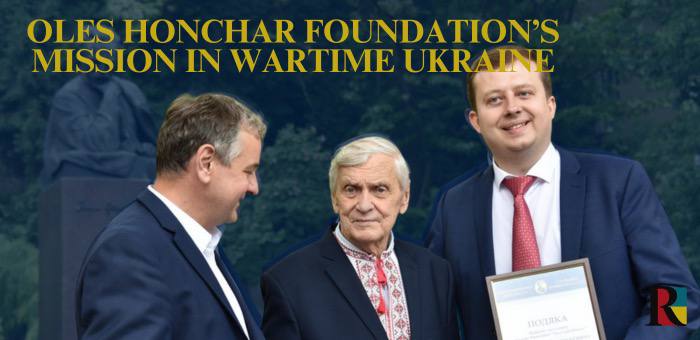


Ukrainian identity cannot be destroyed by tanks, but it can be erased by destroying churches, fortresses, museums and memorials. This stark warning underlies the work of the Oles Honchar Foundation, a nationwide charitable organization devoted to restoring Ukraine’s historical and architectural heritage. As Russia’s war on Ukraine targets not only cities but also culture, the foundation’s mission – to safeguard and rebuild the physical anchors of Ukrainian history – has become more crucial than ever. Western leaders increasingly recognize that attacks on cultural sites are “intentional and targeted” assaults on Ukraine’s identity, and the Honchar Foundation stands at the forefront of the fight to prevent cultural erasure.
Three Decades Rebuilding a Nation’s Landmarks
Established by the decree of the President of Ukraine in 1996, the All-Ukrainian Oles Honchar Heritage Foundation was born out of a national drive to resurrect treasures lost under Soviet rule. Its creation was tied to ambitious early projects: facilitating the reconstruction of Kyiv’s medieval St. Michael’s Golden-Domed Monastery and the Dormition Cathedral of the Pechersk Lavra – both sacred sites blown up by the Soviet authorities in the 1930s. Under the leadership of academician Petro Tron’ko (the founding chairman) and later notable figures like diplomat Roland Franko (a grandson of writer Ivan Franko) and politician, banker, ethnographer Stanislav Arzhevitin, the foundation grew into a guardian of Ukraine’s cultural memory. Over the past 30 years, it has marshaled donations and expertise to restore dozens of major monuments nationwide, including:
- St. Michael’s Golden-Domed Cathedral in Kyiv – rebuilt and reopened in 1999 after decades in ruin.
- The Dormition (Assumption) Cathedral of Kyiv-Pechersk Lavra – resurrected to its former glory.
- Kyiv’s Church of the Nativity of Christ – a historic downtown church brought back to life.
- The “Golden Rose” Synagogue in Lviv – an important Jewish heritage site carefully reconstructed.
- Tustan Rock Fortress in the Carpathians – conserved as a unique medieval defense monument.
- Poltava’s Cathedral of the Assumption – the main Orthodox cathedral of Poltava, restored after years of neglect.
- The iconostasis of Mgarsky Monastery – a priceless sacred artwork rehabilitated for future generations.
In total, the Honchar Foundation has taken under its wing 56 architectural monuments across Ukraine, ranging from baroque churches and Cossack-era monasteries to a historic palace ensemble in Sharivka. This impressive portfolio of projects – achieved through public-private partnership and charitable fundraising – mirrors the impact of some of Europe’s leading heritage organizations. For instance, Germany’s private Monument Protection Foundation (DSD), founded in 1985, has supported restoration of over 7,500 sites to date, and the Honchar Foundation aspires to similarly broad civic engagement in Ukraine. Much like the UK’s National Trust pioneered saving threatened landmarks “by taking monuments into its care”, the Honchar Foundation filled a void in Ukraine’s post-Soviet era by mobilizing citizens, diaspora, and the state to rescue endangered monuments. Each church dome regilded or fortress wall reinforced under its programs has helped restore not just bricks and mortar, but a piece of the nation’s soul.
War’s Cultural Front: Documenting and Defending Heritage
Russia’s full-scale invasion in 2022 opened a devastating new chapter for Ukrainian heritage. Historic city centers and landmarks have been shelled alongside civilian infrastructure, in what observers see as an attempt to wipe out symbols of Ukrainian identity. The toll is staggering: by early 2023 the Ministry of Culture had documented damage to over 1,300 cultural sites (museums, libraries, theaters, churches) across the country. By mid-2025 UNESCO had independently verified at least 501 notable cultural properties – including 151 religious buildings, 262 historic structures, 34 museums and 33 monuments – damaged or destroyed since the war began. Each ruined church or shattered museum is a wound to Ukraine’s historical fabric. In the words of Canada’s foreign minister Mélanie Joly, “Canada will not let Russia strip Ukraine of its cultural heritage… [these] attacks on Ukraine’s cultural property cannot remain unpunished.” Western allies have not only condemned the destruction but also started funding emergency protection – from providing fireproof storage for artifacts to imposing sanctions on those stealing art from occupied territories.
In this crisis, the Honchar Foundation swiftly reoriented its work. Instead of launching new restorations, it turned to emergency documentation and safeguarding of at-risk heritage. Foundation teams and volunteers began surveying war-damaged monuments to catalogue the losses and plan for eventual reconstruction. This effort dovetails with wider international initiatives: global heritage NGOs have been training Ukrainians in crisis conservation, while the Swiss-based ALIPH foundation has even deployed “heritage ambulances” and 3D-scanning crews to capture detailed models of vulnerable monuments. The Honchar Foundation is contributing on the ground by compiling a digital registry of damaged cultural sites in need of urgent repair – essentially drawing up a blueprint for Ukraine’s post-war restoration campaign. “This is not just about bricks and stones, it’s about memory,” the foundation stresses in its outreach. By meticulously recording what was lost, they are laying the groundwork to rebuild when peace comes – just as European cities once restored bombed cathedrals after World War II. Every fallen statue or charred church hall logged today is a candidate for resurrection tomorrow.
New Leadership and a Global Vision
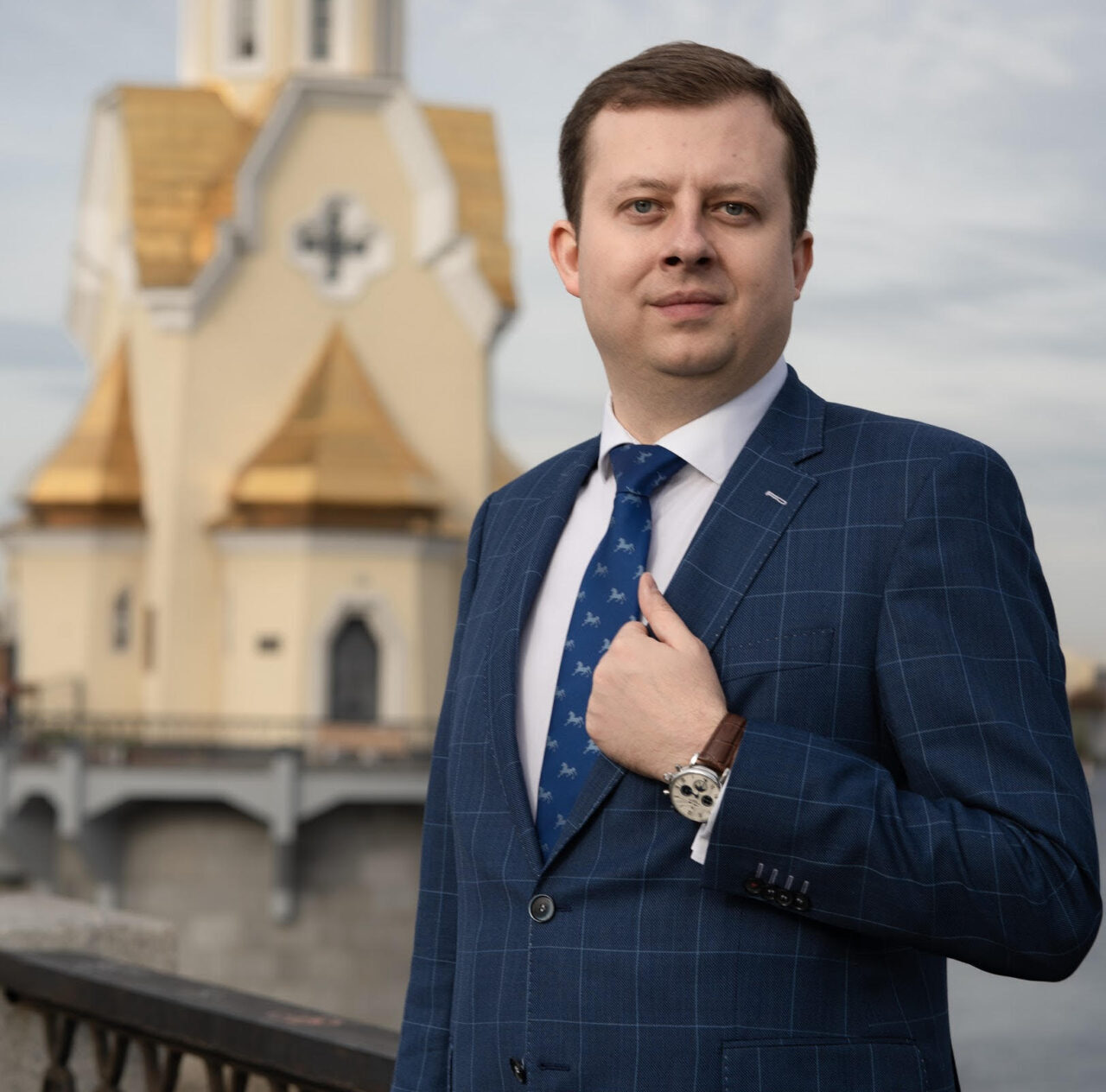
Amid these wartime challenges, 2025 marked a new era for the Honchar Foundation. The board welcomed a new chairman: Vitaliy Romanchukevych, a well-known banker, philanthropist and Doctor of Economic Sciences, to steer the organization into the post-war recovery phase. Romanchukevych’s background is atypical for a heritage NGO leader – a Ph.D. economist and former bank executive – but it signals a strategic focus on management expertise and international fundraising. He is also a patron of Ukrainian culture in his own right. In early 2025, Romanchukevych’s family donated five newly cast bells to his hometown church of St. Nicholas in Dolyna, Ivano-Frankivsk region. The pealing of those bells – bearing the names of saints and fallen heroes – was a poignant symbol of faith and continuity in a community rebuilding during war. Such personal acts underscore his commitment to preserving Ukraine’s spiritual heritage at the grassroots. Now at the helm of the Honchar Foundation, Romanchukevych is championing a bold vision to harness global support for Ukraine’s cultural revival.
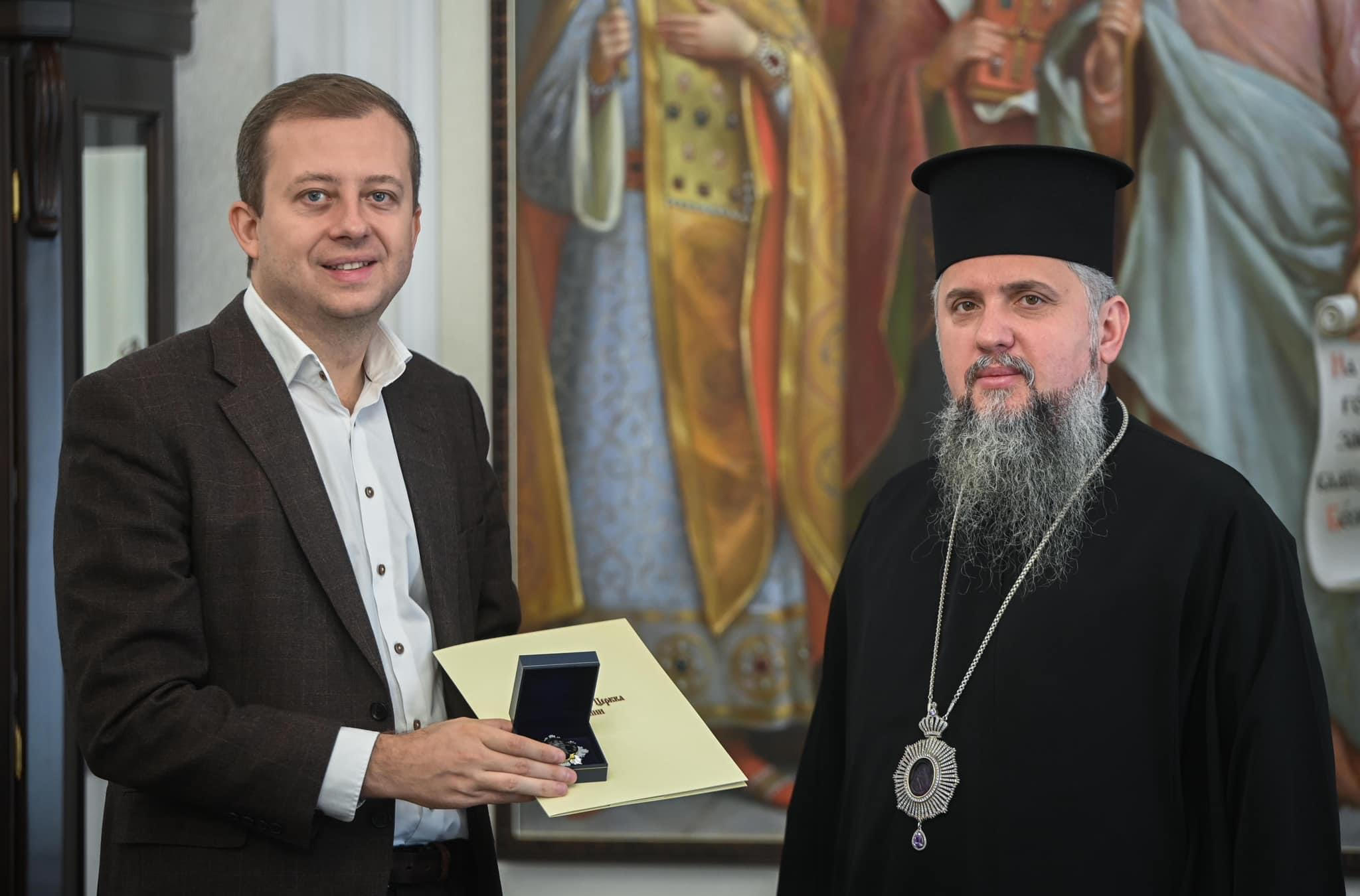
“We need a collective effort to protect the Ukrainian soul,” the foundation proclaims. Under Romanchukevych’s leadership, plans are underway to launch targeted reconstruction programs once it is safe to do so – starting with the restoration of destroyed churches, museums and memorials in liberated areas. The foundation is actively forging partnerships with international bodies, diaspora groups and private benefactors to prepare for this massive task. Collaboration with global heritage experts is a top priority: from learning best practices in post-conflict restoration to securing grants from abroad. The emphasis is on openness and dialogue – Romanchukevych has made himself accessible to cultural organizations worldwide, signaling that the Honchar Foundation is ready to coordinate with anyone who shares its mission. This inclusive approach also involves transparency and community engagement; the foundation intends to involve local historians, architects, and communities in planning restorations, ensuring that rebuilding respects each site’s historical integrity and local significance.
Rallying a Worldwide Network of Heritage Allies
One of the Foundation’s innovative approaches is the creation of an international volunteer ambassador program. Acknowledging that Ukraine’s heritage struggle resonates far beyond its borders, the Honchar Foundation is inviting supporters around the globe to become its representatives and advocates. “If you wish to be an ambassador of the Foundation in your country – to help connect with donor programs, museums, charities or simply amplify our voice – we welcome you,” Romanchukevych announced, extending a hand to the Ukrainian diaspora and cultural professionals abroad. Volunteer ambassadors will serve as liaisons to cultural institutions, philanthropies, and media in their respective countries, effectively building a worldwide coalition for Ukraine’s heritage. Each ambassador is to be officially recognized as a representative of the O. Honchar Foundation outside Ukraine, reflecting the organization’s open-door policy and willingness to embrace new partners. This strategy draws on Ukraine’s strong diaspora networks (over 8 million Ukrainians abroad) and the goodwill of international arts communities, ensuring that Ukraine’s rebuilding plans remain on the radar of global decision-makers and grant-givers. To become an ambassador of the foundation, simply write to Vitaliy on Facebook and he will respond to you personally.
+380 (67) 000 19 96
Crucially, the Honchar Foundation’s appeal for support is framed not as charity but as mutual enrichment. In forming alliances with foreign museums and foundations, Ukraine offers something in return: a model of cultural resilience and a wealth of shared heritage. Western cultural leaders have noted how Ukraine’s fight to protect its heritage reaffirms universal values. As an example, the World Monuments Fund launched a Ukraine Heritage Response Fund in 2023 to assist local professionals and highlighted that protecting Ukraine’s patrimony is safeguarding “places at the very center of the country’s national identity”. By partnering with such entities, the Honchar Foundation situates itself within a broader movement that sees heritage preservation as vital to peace and human dignity. The foundation also benefits from the experience of its global peers – learning from organizations like the Deutsche Stiftung Denkmalschutz, which grew from a modest civic initiative into a powerhouse supporting 600 projects annually across Germany. These parallels offer encouragement that Ukraine’s own heritage fund can scale up with the right international backing.
Culture as Future: A Call to Action
Even as war rages on, the restoration of Ukraine’s cultural monuments has become synonymous with hope. Each ruined temple or museum awaiting repair represents not just past glory, but the promise of national renewal. The Honchar Foundation encapsulates this ethos in its motto: “Culture is not the past – it is the future we are fighting for.” The foundation’s leadership is candid that it cannot do this alone. They call upon governments, institutions, and individuals who believe in Ukraine’s cause to join in a grand restoration effort. Contributions can take many forms – donations, technical expertise, material support, or simply advocacy to keep Ukraine’s heritage in the global conversation. Every contribution, large or small, helps ensure that when the guns fall silent, Ukraine’s churches will ring their bells again, its museums will reopen, and its historic towns will be rebuilt stone by stone. In the words of one volunteer, in saving frescoes and statues “we are preserving a part of the future victory.”
The Oles Honchar Foundation remains optimistic that with sustained support, Ukraine’s cultural losses can be reversed. Its doors are open to all who share the conviction that preserving cultural heritage is defending the identity and dignity of a nation. As Western allies plan massive post-war reconstruction aid, cultural recovery is emerging as a key pillar – on par with infrastructure and economy – and the Honchar Fund is poised to be a leader in this domain. The legacy of Oles Honchar himself, the famed writer for whom the foundation is named, looms large: in his 1968 novel The Cathedral, Honchar portrayed a community’s struggle to save a beloved church as a metaphor for spiritual survival. That novel was banned by the Soviet regime, but its message endures today on the very real front lines of Ukraine’s heritage war.
In sum, the battle to protect and rebuild Ukraine’s cultural monuments is about more than restoring old buildings – it is about affirming that Ukraine’s identity, history, and future will endure. The Honchar Foundation’s quiet, determined work in archives, workshops and ruins is itself an act of resistance against aggression. And it is an invitation to the world: to stand with Ukraine not only in defending its territory, but also in reviving its heritage for generations to come.