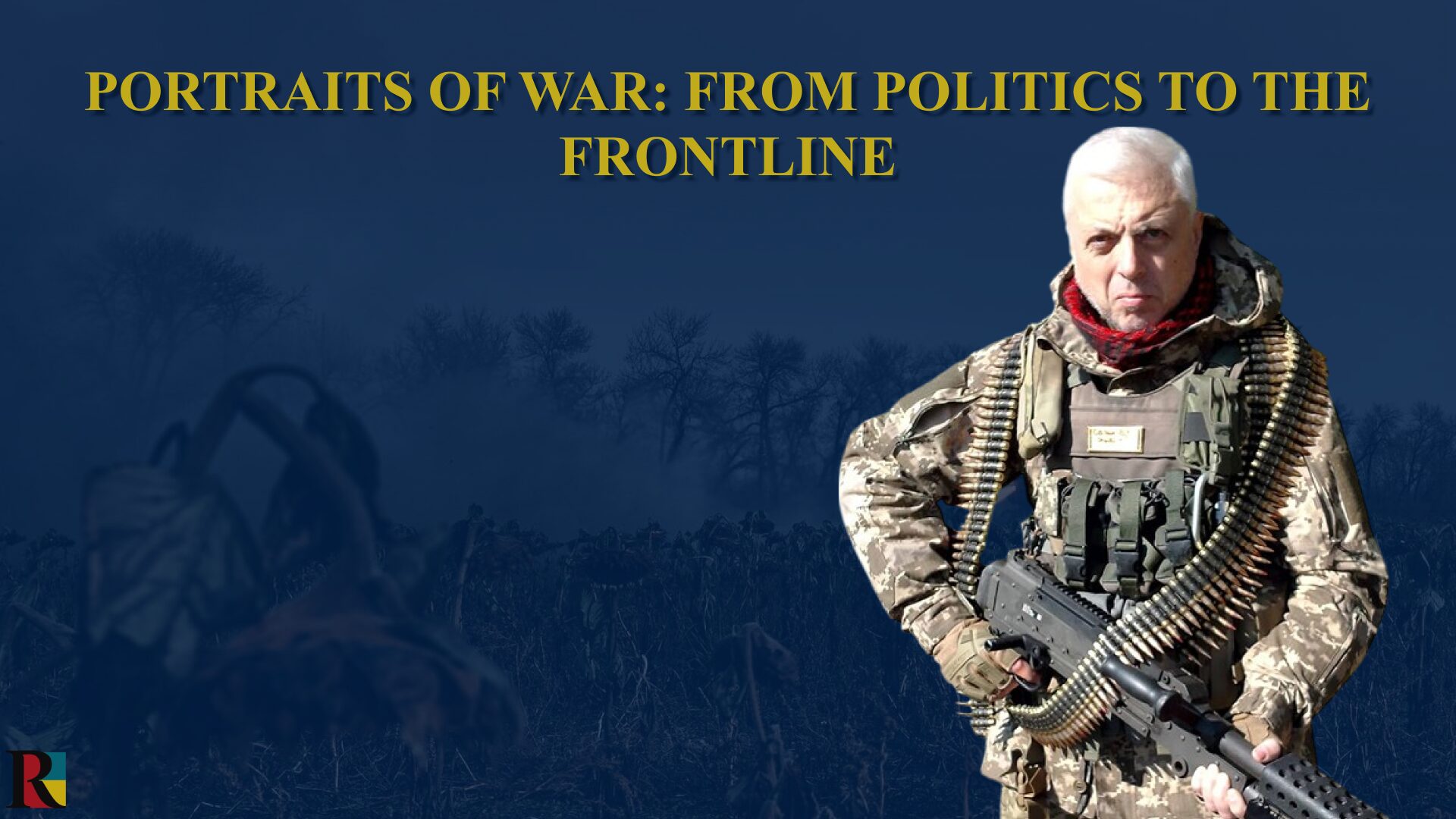


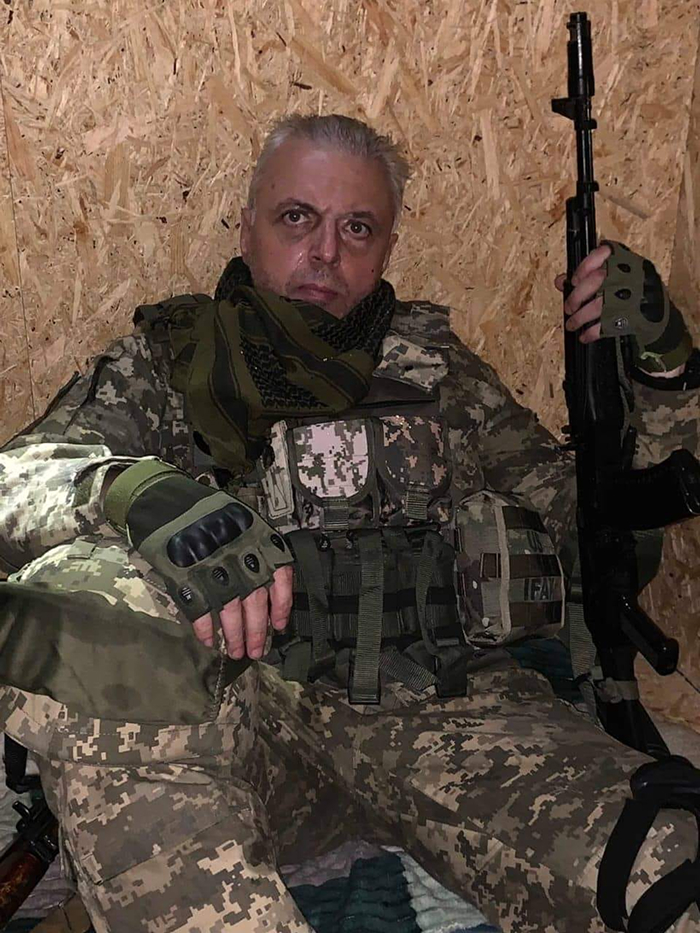
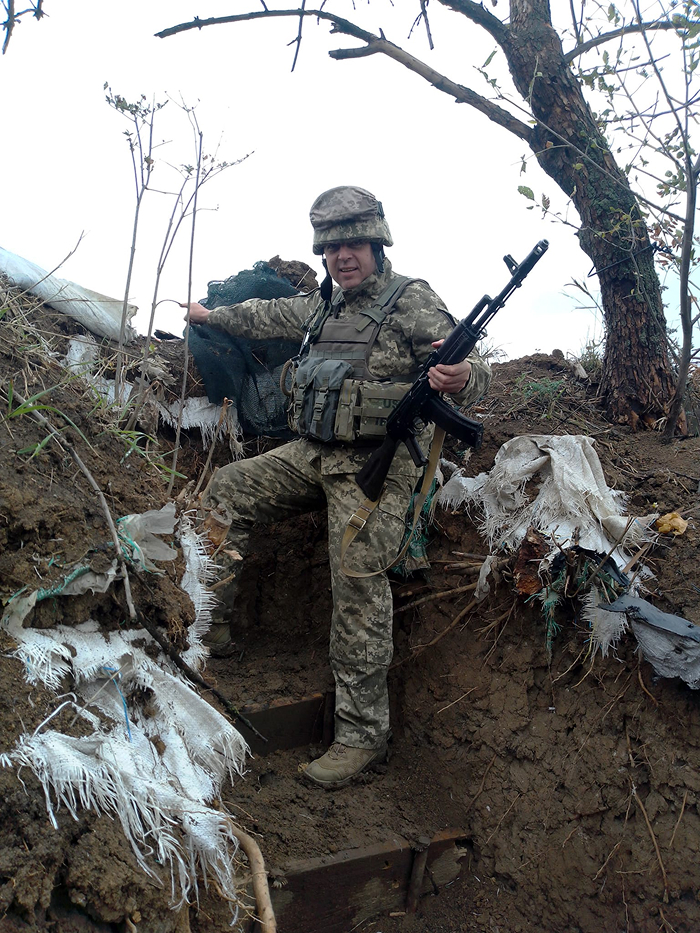
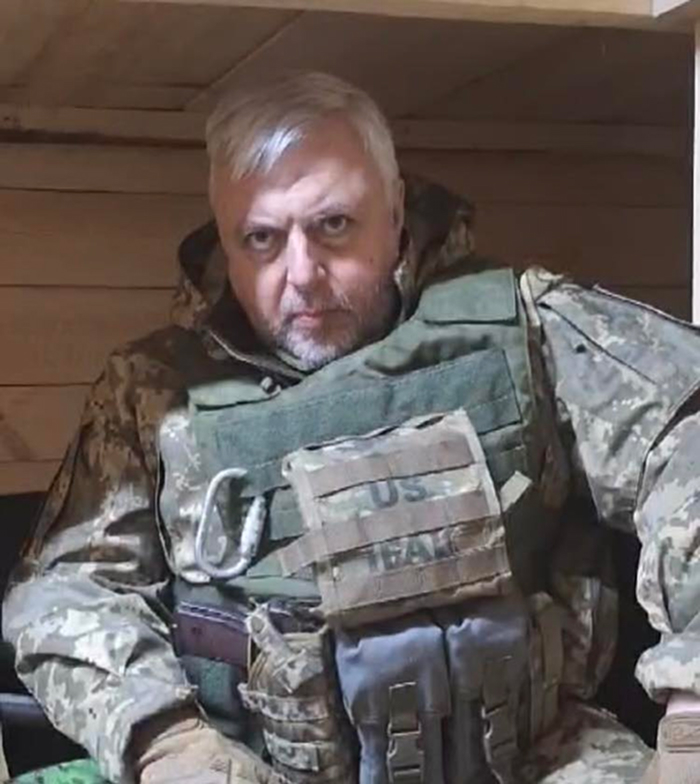
Before the war, Captain Vasyl Savin, a company commander of the 56th Separate Motorized Infantry Brigade of the Mariupol Brigade of the Armed Forces of Ukraine, was a highly successful official and politician. But in 2014, he took up arms and went to war to destroy the myths. Since then, there have been battles for Mariupol, Donetsk airport, Hulyai Pole, Bakhmut, and Chasiv Yar. Numerous injuries, contusions and 5 years in captivity. It’s hard to imagine how steely a person’s character can be. The Ukrainian Review asked Captain Vasyl Savin of the Armed Forces of Ukraine to tell us about his military and life path, as well as about the motivation and psychological resilience of our soldiers at the front.
Life at war
Kostyantyn Grechany (K.G.): Vasyl Konstantinovich, how did you end up at war, what was your motivation, what was your military path?
Vasil Savin (V.S.): He went to war from the first days of the occupation of Donbas. It was 2014. We were creating the Shakhtarsk and Makiivka volunteer battalions there. I was performing tasks for our special services on the enemy’s territory and was taken prisoner. I was held captive for five years, tortured and abused. At the end of 2019, the president exchanged me. I spent several years recovering.
Since the large-scale invasion from the first days, I took up arms again. At first, as part of the Kyiv terrorist defense, I fought for the city of Irpin. I was wounded. Since May 2022, I have been a member of the 56th Separate Motorized Infantry Brigade of Mariupol. Together with Azov, the 36th Marine Brigade, and the terrorist defense, he fought for the city of Mariupol. You know these battles. We did not surrender. It took us eight days to reach Zaporizhzhia on foot. In Zaporizhzhia, we re-formed and joined our ranks. Then we went to the Donetsk airport (based in the village of Pisky). We fought there for six months. From there we went to Hulyai Pole (a village in the Kharkiv region – ed.). And then (in early 2023) we fought for Bakhmut. Now we are defending Chasiv Yar. We hold our positions without rotation, without anything.
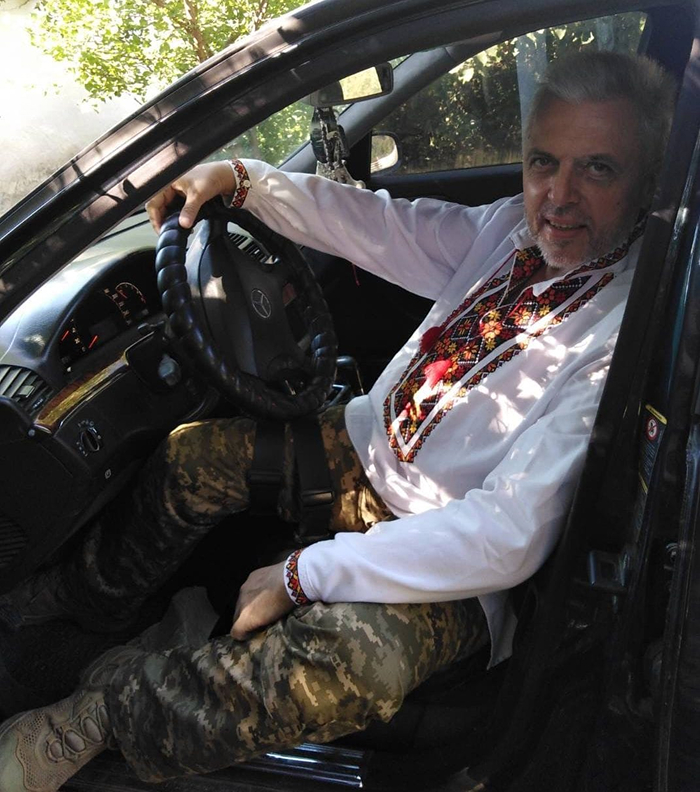
K.G.: What was your life like before the war? What did you do for a living? Did your professional skills help you at the front?
V.S.: I once served in the airborne troops. After the collapse of the USSR, I was engaged in business and political activities. I was a deputy of the Donetsk Regional Council from the city of Makiivka and headed the opposition faction. He was also the head of the administration in the city of Makiivka. That is, he helped people, organized their lives. And as a deputy of the regional council from Makiivka, I promised to protect my voters in every way possible. No one thought at the time that I would literally have to defend them. Since the occupation of my native land, I have taken up arms. Of course, knowledge of life, knowledge of people, knowledge of the occupied territory helps me in many ways.
The psychology of indestructibility
K.G.: You were captured, tortured, and wounded. How did you manage to stay mentally strong in these circumstances? What are the methods of dealing with extreme stress at the front?
V.S.: I do not struggle in any way, because I am used to it. There is constant stress here. The situation is constantly changing. You know what kind of battles are going on for Chasiv Yar. We will fight stress after the victory. I have four wounds, eight contusions… Now I can’t pay attention to such things.
We are very short of people. So now all my comrades fighting on the front line are highly motivated people who have personal scores with the occupiers. We are honest with ourselves that we will not leave. We will fight to the end. We have practiced here, we know every inch of it, so it is basically impossible to get us out of here. A new untrained brigade will be destroyed in a moment. We understand this and do not demand rotation.
K.G.: At the same time, there is a certain recruitment. New fighters are coming in who do not have the same combat experience as you. How can a person who has been on the verge of life and death for the first time hold on psychologically? What advice do you give to less experienced comrades?
V.S.: To young or new fighters (because new fighters are not always young) we say only one thing: “Do as I do”. Experienced fighters always take patronage over newcomers. It never happens that a unit consists only of inexperienced people and this unit is thrown into a task. The task is performed by experienced fighters and one or two new ones are introduced to them to gain experience. This is the only way.
K.G.: Are there any methods of fostering morale in such a situation?
V.S.: I’ll say it again: all those who are fighting here at zero [military slang; [the term “zero” or “zero position” refers to the line where troops are in direct contact with the enemy – ed.] They do not need additional motivation. Although the psychological support service for the staff works perfectly. It goes to the training ground to talk to the soldiers, conducts work, and even goes to the trenches to talk to them. It stimulates in various ways.
K.G.: That’s exactly what I meant: a person is very motivated and wants to defend his homeland, but when he arrives at zero, his hands start shaking, and a psychological barrier appears. How do you help them overcome it?
V.S.: It does happen. It depends on each person. After one or more hard fights, sometimes a person “breaks down”. It is clear that no one is forced to leave. They are transferred to the rear services, to other reserve units.
As for the psychological aspects, we demonstrate by personal example. Over the years, we have become so hardened and adapted to the war that various stressful situations can no longer make us angry. Constant mortar, artillery, and tank shelling… Drones are of great importance now. However, a sense of danger has long been developed on a subconscious level. This is what we teach new fighters.
K.G.: Mr. Vasyl, how do people at the front perceive the peace talks now?
V.S.: I will say this: we have no illusions. Remember the Easter truce. It was not observed for a single minute. Then on Victory Day, they continued to storm our positions just as they had been storming them. There are no illusions, we are not waiting for peace initiatives, we are doing our job, beating the enemy, holding our positions.
Kostyantyn Grechany