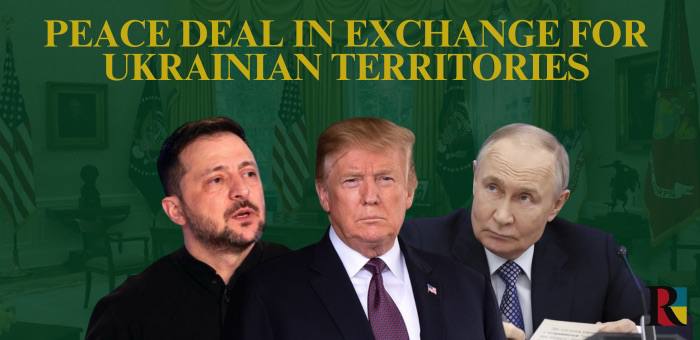


According to Reuters, during a meeting with Volodymyr Zelenskyy in Washington, Donald Trump urged Ukraine to concede some territories in exchange for a peace deal. Later, Trump denied these accusations, claiming they had discussed only a freeze of the frontline.
Another report by the Washington Post noted that Steve Witkoff pressed the Ukrainian delegation about handing over Donetsk, parroting Russian propaganda that it is mostly Russian-speaking.
If these insights are true, they indicate that Ukraine is being forced to surrender in exchange for nothing.
Fake Concessions
Commenting on the plausibility of claims about forcing Ukraine to give up its territories, Trump said:
Let it be cut the way it is. It’s cut up right now. I think 78% of the land is already taken by Russia. You leave it the way it is right now. They can negotiate something later on down the line.
There are also reports that Putin might be willing to return parts of Zaporizhzhia and Kherson regions in exchange for Donetsk and Luhansk ones. Essentially, Ukraine is being asked to choose which of its citizens’ homes should be restored and which abandoned.
Without any security guarantees, such “concessions” cannot be trusted. Russia would undoubtedly use the time to rearm and rebuild its economy, while any weakening of sanctions would only accelerate this process.
Occupation Is Not Peace
After the meeting with Zelenskyy, Trump wrote that it was time for both sides “to go home.”
However, as of March 2025, the number of internally displaced persons in Ukraine is around 11.4% of the population, or approximately 3.8 million people — many of whom have no home to return to.
More alarming are the atrocities committed by Russia in the occupied territories.
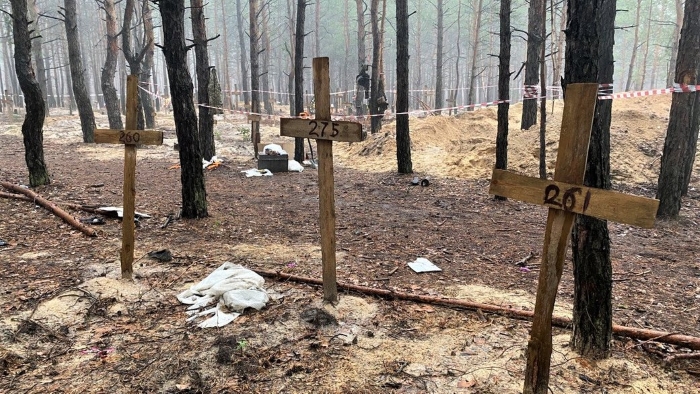
For example, after the liberation of Izium in Kharkiv Region — which had been occupied for only about half a year — around 500 civilian graves were found in a forest. It is difficult to imagine what is happening in territories occupied for four or even eleven years. This month, reports emerged that Russian forces tortured and killed teenagers in occupied Melitopol, accusing them of “sabotage.” This is just one example of systematic terror.
Conclusion
Under the current negotiation narrative, Ukraine — the victim — is being pressured to make concessions, while Russia’s proposals remain senseless and cynical.
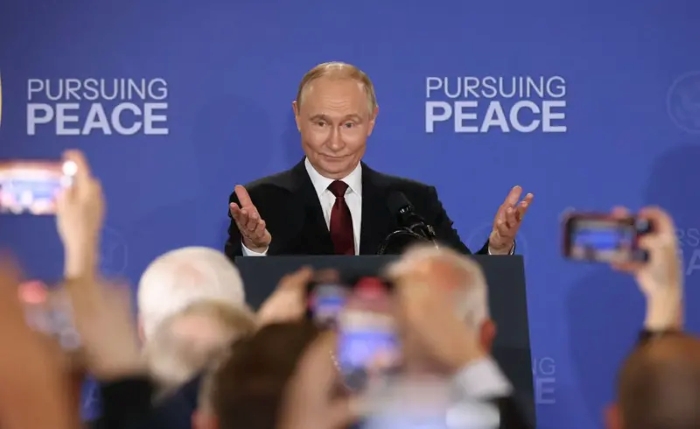
Moreover, even this outcome seems unlikely, as reports from the meeting in Alaska indicate that Putin rejected all peace initiatives, believing he can still achieve Ukraine’s capitulation.
From the very beginning of the war and throughout the full-scale invasion, Russian soldiers have always had the option to go home — Ukrainians already are home. The aggressor must be forced to negotiate through sanctions pressure and military defeat, not appeased.
For the United States, a weakened Russia is strategically beneficial — both in terms of energy market opportunities and global political leadership.