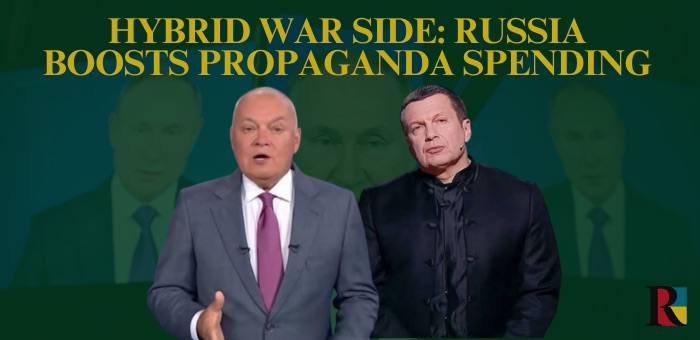


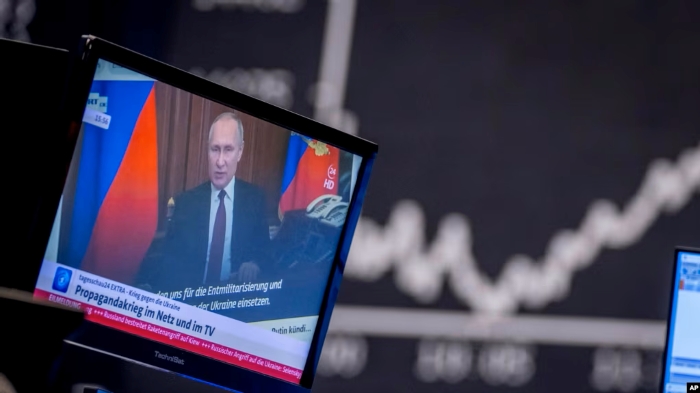
Russia plans to increase its propaganda spending by 54% in 2026, according to the Ministry of Foreign Affairs of Ukraine and its head, Andrii Sybiha. Kremlin propaganda continues to target the domestic audience, destabilize Ukraine, undermine societies worldwide, and prepare the ideological ground for possible future attacks.
Despite the unstable economic situation, propaganda remains one of the top priorities of the Russian government. State-owned TV channels will continue to be the main recipients of funds. Russia Today, which targets foreign audiences, is expected to receive approximately $0.3 billion, covering content in English, Arabic, Spanish, Russian, and German.
Propaganda Targets
Until 2022, Russian state media and Kremlin-linked platforms maintained a significant presence in the European information space through cable and satellite broadcasting, local-language versions of RT and Sputnik, and collaborations with local media outlets and distributors.
After the full-scale invasion of Ukraine, the EU and a number of countries restricted access to these resources, identifying them as systematic sources of disinformation. In March 2022, the European Union imposed restrictions on RT and Sputnik, which sharply reduced their visibility in the traditional European media landscape. However, it has not eradicated propaganda completely.
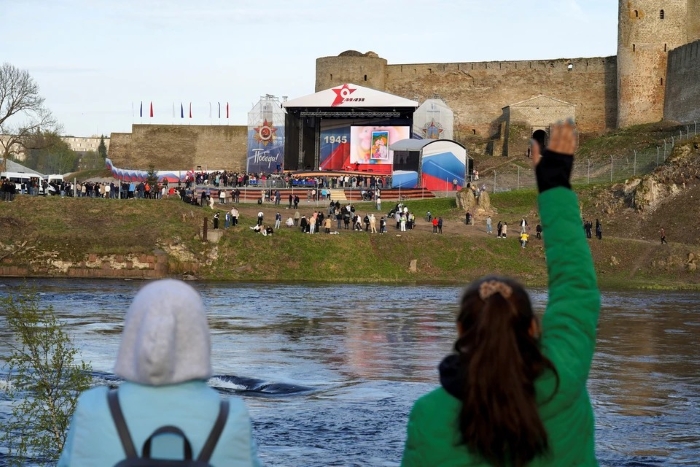
Russia has recently intensified its informational activity in the Baltic States. Experts from Ukraine’s Center for Countering Disinformation have analyzed the media environments of Lithuania, Latvia, and Estonia, identifying the same patterns observed before the 2022 invasion of Ukraine. The most prominent narratives suggest that NATO is preparing to attack Russia and that Russian-speaking citizens in the Baltics must be “protected.”
According to a study by the Technical University of Munich, based on surveys conducted in 19 countries between April and May 2022, the overall impact of Russian propaganda is moderate but still concerning. 23% of respondents were “very or fairly sure” that the claim about “bioweapons being developed in Ukraine” was true. In countries where Russia had already cultivated ideological influence, the results were predictably worse.
Diversification of Sources
The regulation of Russian propaganda in social networks remains a major challenge and the ground to spread fakes and manipulations. The Digital Services Act (DSA), which came into force in August 2023, aims to force major platforms to actively counter disinformation, including Kremlin-backed content.
Nevertheless, Russian actors continue to look for alternative channels and loopholes. This includes launching “Europe-oriented” projects that present themselves as independent outlets while being funded from Russia, as well as the active use of messengers like Telegram, small local websites, and bot networks.
Conclusion
Russia’s decision to invest a significant portion of its budget in propaganda highlights the urgent need to strengthen media literacy and regulation that restricts Kremlin-linked content and encourages high-quality counter-narratives.
For the domestic audience, propaganda will serve to justify deficits in other sectors and to fuel anger, transforming citizens into a mobilized ideological resource for future aggression. Meanwhile, so-called Russian opposition media often mimic freedom of speech yet continue to spread similar narratives under a different guise.